Snowflake(SNOW)

Search documents
瑞银企业调查:六成企业选择“自制”AI而非购买现成,“AI智能体”仅有5%真正落地
Hua Er Jie Jian Wen· 2025-12-17 08:43
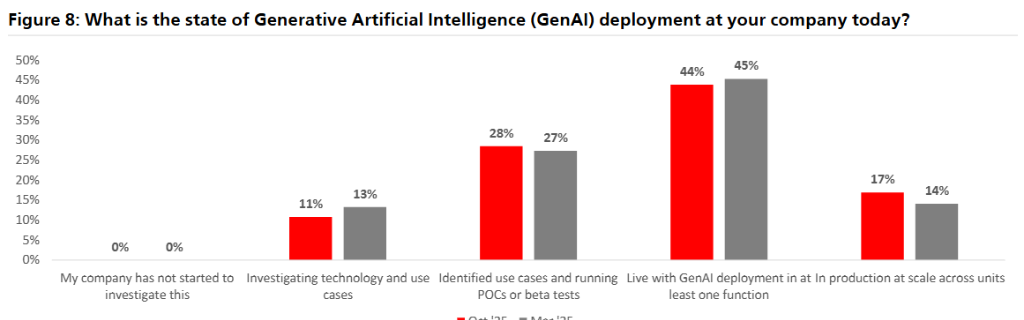
Core Insights - Despite the ongoing rise of artificial intelligence technology, the large-scale deployment of enterprise AI applications is progressing slowly, with only 17% of surveyed companies achieving large-scale production, a slight increase from 14% in March 2023 [1] Group 1: Market Leaders and Trends - Microsoft, OpenAI, and Nvidia continue to dominate the enterprise AI market, with Microsoft Azure leading in cloud infrastructure and OpenAI's GPT models occupying three of the top five spots in large language models [3] - Microsoft M365 Copilot remains the preferred enterprise AI tool, although OpenAI's ChatGPT commercial version is rapidly closing the gap [3][10] - The survey indicates a significant preference for self-built AI applications, with 60% of companies opting for a hybrid model of self-building or fully self-building, compared to only 34% relying entirely on third-party software vendors [4][5] Group 2: Deployment Challenges and Workforce Impact - The main challenges for AI deployment include unclear ROI, cited by 59% of respondents, up from 50% in March 2023, followed by compliance concerns (45%) and a lack of internal expertise (43%) [3] - AI applications are not leading to mass layoffs; 40% of companies expect AI to drive employee growth, while only 31% anticipate a reduction in workforce [3] Group 3: AI Agent Deployment and Market Outlook - The deployment of AI agents is still in its early stages, with only 5% of companies achieving large-scale production, while 71% are in pilot or small-scale production phases [9] - The slow progress in AI agent deployment supports the view that AI agents will not significantly replace human labor in the short term, and investors should maintain realistic revenue expectations for related technology suppliers [9] Group 4: Data Infrastructure and Spending Trends - There is a notable increase in demand for data infrastructure driven by AI projects, with an average of 52% of respondents expecting to increase spending across various data software categories [12] - The cloud data warehouse sector is expected to benefit significantly, with 69% of respondents anticipating increased spending, and 25% expecting substantial growth [12][14] - In contrast, the operational database sector shows a more moderate AI-driven spending increase, with only 10% of respondents expecting significant growth [14]





Databricks CEO Ali Ghodsi: Wouldn't rule out going public in 2026
CNBC Television· 2025-12-16 22:02
Financial Performance - Data Bricks 的收入运行率接近 50 亿美元,增长率为 55% [2] - Data Bricks 在过去 12 个月内实现了自由现金流为正 [4] Market Position & Valuation - Data Bricks 最新一轮融资对公司的估值为 1340 亿美元 [1] - 这一估值几乎是其最大竞争对手之一 Snowflake(市值 750 亿美元)的两倍 [1] Strategy & Future Plans - Data Bricks 计划将自由现金流重新投资于 Agents、数据库和 Lakebase [4] - Data Bricks 专注于投资数据智能应用程序这一新类别 [4] - Data Bricks 不排除明年上市的可能性 [6] - Data Bricks 关注 AI 在各行业的应用,例如软件工程,并认为这种趋势将持续 [7][8] Concerns & Considerations - Data Bricks 担心上市后市场可能要求过高的利润率(30% EBITDA),从而限制其在增长领域的投资 [7] - 投资者对 AI 领域是否存在泡沫表示担忧 [9]


Snowflake Rival Databricks Raising New Funds At $134 Billion Valuation For AI Startup
Investors· 2025-12-16 16:11
Core Insights - The article discusses the latest trends and developments in the investment banking sector, highlighting key performance indicators and market dynamics. Group 1: Industry Trends - Investment banking is experiencing a shift towards digital transformation, with firms increasingly adopting technology to enhance efficiency and client engagement [1] - The demand for advisory services in mergers and acquisitions (M&A) is on the rise, driven by a robust market environment and increased corporate activity [1] Group 2: Company Performance - Major investment banks reported a significant increase in revenue, with an average growth rate of 15% year-over-year, attributed to higher deal volumes and improved market conditions [1] - Cost management strategies have been effective, leading to a reduction in operational expenses by approximately 10% across the sector [1]
从业务系统到数据智能:数据分析系统的完整演进
3 6 Ke· 2025-12-16 08:07
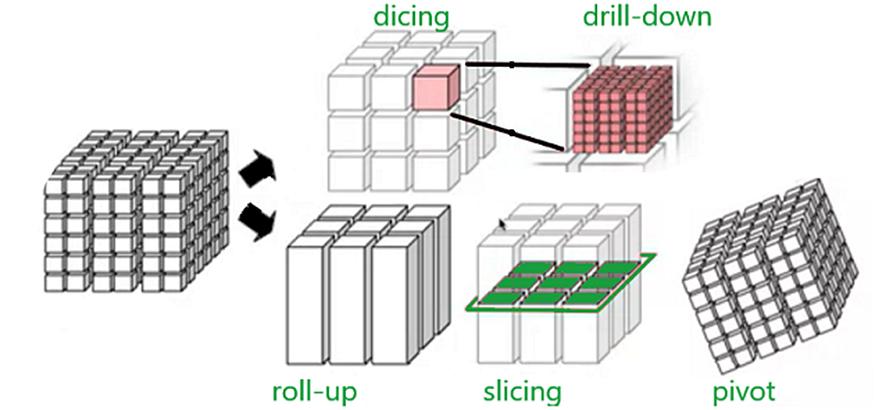
Core Insights - The article discusses the evolution of data systems from traditional OLTP to modern AI-driven analytics platforms, highlighting the importance of understanding this transformation for better architectural decisions. Group 1: OLTP and OLAP Systems - OLTP systems are designed for daily operations, focusing on fast and accurate transaction processing, while OLAP systems are tailored for analysis and reporting, emphasizing the interpretation of historical data [2][5] - The fundamental difference between OLTP and OLAP lies in their optimization goals: OLTP aims for quick writes and specific record reads, whereas OLAP focuses on reading vast amounts of data and performing complex calculations [2][5] Group 2: Rise of OLAP and Data Cubes - In the 1990s, the need for faster data analysis led to the introduction of dedicated OLAP systems and the concept of data cubes, which pre-aggregate data across multiple dimensions for quicker query responses [3][4] - Data cubes allow for rapid retrieval of complex queries that previously took hours, now achievable in seconds [3] Group 3: Data Warehouse Boom - The late 1990s saw the emergence of data warehouses, designed as centralized repositories optimized for analysis, utilizing ETL pipelines to integrate data from various sources [7][8] - Star schema and snowflake schema became dominant models for organizing data within these warehouses, optimizing read performance at the cost of storage efficiency [8][9] Group 4: Big Data and Hadoop Era - The late 2000s introduced the Hadoop ecosystem, which addressed the challenges of handling unstructured and semi-structured data, enabling the storage of massive datasets at lower costs [13][14] - Hadoop's architecture allowed for distributed storage and processing, but it faced limitations in query performance and operational complexity [15] Group 5: Cloud Data Warehousing - The 2010s marked the rise of cloud-native data warehouses like Snowflake and Google BigQuery, which separated compute and storage, allowing for scalable and cost-effective analytics [17][19] - These systems introduced features like on-demand resource allocation and zero management, significantly enhancing performance and accessibility [21][23] Group 6: Open Table Formats and Lakehouse Architecture - Open table formats like Apache Iceberg and Delta Lake brought ACID transactions and schema evolution to data lakes, enabling a hybrid architecture known as Lakehouse that combines the flexibility of data lakes with the performance of data warehouses [27][32] - This architecture allows for seamless integration of various data workloads, supporting both BI and machine learning applications [32] Group 7: AI-Driven Analytics - The current trend is towards AI-native analytics platforms that integrate machine learning and natural language interfaces, simplifying complex data interactions for users [35][38] - These platforms aim to democratize data analysis, allowing non-technical users to perform sophisticated queries and derive insights without needing extensive SQL knowledge [38] Group 8: Future Outlook - The future of data systems is expected to focus on self-optimizing capabilities, real-time intelligence, and natural language interfaces, enhancing user experience and decision-making processes [43][44] - Companies that prioritize openness, intelligence, and user empowerment in their data strategies are likely to succeed in the evolving landscape [45]
Snowflake (NYSE:SNOW) Targets Growth in Cloud Analytics Market
Financial Modeling Prep· 2025-12-16 04:06
Core Insights - Snowflake is a significant player in the cloud data warehousing and analytics sector, competing with major companies like Google Cloud [1] - Raymond James has set a price target of $250 for Snowflake, indicating a potential price increase of approximately 16.03% from its current price of $215.47 [2][6] - Snowflake has introduced 370 new product capabilities, representing a 35% increase year-to-date, showcasing its commitment to innovation [2][6] - The global cloud analytics market is projected to grow from $35.39 billion in 2024 to $130.63 billion by 2030, with a compound annual growth rate of 25.5% from 2025 to 2030, positioning Snowflake to capitalize on this growth [3] - Snowflake's customer base has expanded to over 7,300 customers utilizing its AI and machine learning tools weekly [3] - Google Cloud reported a backlog of $155 billion by the end of Q3 2025, reflecting a 46% sequential increase, indicating strong competition in the cloud data and analytics sector [4] Stock Performance - Snowflake's current stock price is $215.47, reflecting a decrease of $2.47 or -1.13% from the previous trading session [5] - The stock has traded between a low of $212 and a high of $217.63 on the current day, with a market capitalization of approximately $72.13 billion [5]
Snowflake Inc. (SNOW) Down 17.7% Since Q3 2026, Here’s What You Need to Know
Yahoo Finance· 2025-12-16 03:47
Snowflake Inc. (NYSE:SNOW) is one of the Best SaaS Stocks to Buy Right Now. The share price of Snowflake Inc. (NYSE:SNOW) has fallen more than 17.7% since its fiscal Q3 2026 earnings release on December 3. The cautious investor sentiment comes despite the company exceeding Wall Street estimates and is mainly due to concerns regarding slowing growth. However, Wall Street maintains a positive outlook with analysts’ 12 month average price target reflecting more than 29% upside from the current level. Recen ...
Snowflake vs Alphabet: Which Cloud Data Stock Has an Edge Now?
ZACKS· 2025-12-15 18:56
Core Insights - Snowflake (SNOW) and Alphabet (GOOGL) are significant players in the cloud data and analytics market, with Snowflake focusing on cloud data warehousing and analytics, while Alphabet offers similar services through Google Cloud's BigQuery [1][2] Market Overview - The global cloud analytics market was valued at $35.39 billion in 2024 and is projected to reach $130.63 billion by 2030, with a CAGR of 25.5% from 2025 to 2030, indicating strong growth potential for both Snowflake and Alphabet [2] Snowflake (SNOW) Performance - Snowflake reported a net revenue retention rate of 125% in Q3 of fiscal 2026, with a 20% year-over-year growth in customers, totaling 12,621 [3] - The company has 688 customers generating over $1 million in trailing 12-month product revenues, a 29% increase year-over-year [3] - AI has been a significant growth driver, influencing 50% of bookings in Q3, and the company achieved a $100 million AI revenue run rate earlier than expected [4] - Snowflake introduced 370 new GA product capabilities year-to-date, a 35% increase from the previous year [5] - Over 7,300 customers are utilizing Snowflake's AI and ML technology weekly [6] Alphabet (GOOGL) Performance - Alphabet's Google Cloud revenues grew by 33.5% year-over-year to $15.16 billion in Q3 2025, reflecting strong growth in the cloud computing market [8] - Google Cloud ended Q3 2025 with a backlog of $155 billion, a 46% sequential increase, and saw a 34% year-over-year increase in new customers [9] - 70% of Google Cloud customers are now using Alphabet's AI products, indicating strong demand for its offerings [9] - Google Cloud has expanded its global presence with 42 cloud regions and 127 zones across more than 200 countries [10] Valuation and Earnings Estimates - In the past six months, SNOW shares gained 4.2%, while GOOGL shares surged 75%, attributed to Alphabet's AI initiatives [12] - SNOW shares are trading at a forward Price/Sales ratio of 13.36X, higher than GOOGL's 9.68X, indicating potential overvaluation for both [15] - The Zacks Consensus Estimate for SNOW's fiscal 2026 earnings is $1.20 per share, a 44.58% year-over-year increase, while Alphabet's 2025 earnings estimate is $10.52 per share, reflecting a 30.85% year-over-year increase [17] Conclusion - Both Snowflake and Alphabet are well-positioned to capitalize on the growing cloud analytics market, but Alphabet's broader ecosystem, stronger infrastructure, and consistent earnings growth make it a more stable investment choice [19]


The AI Application Giant Prints Cash at 51% Margins While the Data Warehouse Burns Through Hundreds of Millions
247Wallst· 2025-12-15 11:50
Core Insights - Palantir and Snowflake are approaching AI from different angles, with Palantir focusing on application deployment and Snowflake on data infrastructure [1][5][6] Financial Performance - Palantir reported a 63% revenue growth with a 51% operating margin, generating $393 million in operating income and $540 million in free cash flow, marking its first time crossing $1 billion in trailing 12-month free cash flow [2][4] - Snowflake achieved $1.21 billion in revenue, a 29% increase, but reported a negative 27% operating margin, losing $329 million operationally [3][4] Market Positioning - Palantir's U.S. commercial revenue surged 121% to $397 million, benefiting from government contracts and high customer conversion rates [2][7] - Snowflake's net revenue retention was 125%, but it faces challenges in convincing customers to consolidate workloads on its platform amid competition [3][6] Valuation Metrics - Palantir trades at 112x sales, reflecting market expectations for continued AI dominance, while Snowflake trades at 17x sales, viewed as a turnaround play [8] - Institutional ownership is higher in Snowflake at 74% compared to Palantir's 60% [8] Strategic Focus - Palantir emphasizes the importance of application and workflow in AI, showcasing significant efficiency gains for clients [5] - Snowflake's strategy revolves around data warehousing, with a need to establish a clear path to profitability [6][11]


跑输纳指22%后,BTIG押注2026安全软件V型反转:Zscaler(ZS.US)、Netskope(NTSK.US)双雄称霸
智通财经网· 2025-12-15 03:00
Core Viewpoint - BTIG identifies Zscaler as the top large-cap pick and Netskope as the top small-cap pick in the security and infrastructure software sector for the first half of 2026, with other recommended stocks including Snowflake, SailPoint, and Datadog [1] 2025 Review - The security and infrastructure software sector faced challenges in 2025, with a median return of -0.8%, significantly lagging behind the Nasdaq index, which rose by 22% [2] - The best-performing companies included Cloudflare, MongoDB, CrowdStrike, Snowflake, and CyberArk Software, all expected to benefit from AI in various ways [2] - Poor performers were typically single-solution providers in commoditized markets or those facing adverse AI-related factors [2] 2026 Outlook - The cybersecurity sector is expected to stabilize, with projected growth of 16% in 2025 and similar growth anticipated for 2026 [4] - Key areas of focus include cloud security, security services, and identity authentication, with ongoing market disruption opportunities in the SIEM sector [4] - Despite the importance of AI security, most organizations are expected to rely on existing vendor solutions for AI workload protection in the next 12 to 18 months [4] - Top AI-related picks include Netskope, SailPoint, Cloudflare, Zscaler, Palo Alto Networks, and CrowdStrike [4] - The integration of platforms remains a primary theme, with a preference for companies with strong multi-product portfolios that can drive adoption across similar or adjacent procurement centers [4] Observability Sector - There is optimism in the observability space, with clients prioritizing vendor integration, benefiting companies like Datadog and Dynatrace [5] - The influx of AI-related workloads is expected to create favorable conditions for vendors [5] Competitive Landscape - Palo Alto's acquisition of Chronosphere introduces a potential disruptive catalyst in the observability market, although previous aggressive pricing strategies in other verticals did not significantly impact market leader CrowdStrike [6] - Similar competitive dynamics are observed in the observability sector with Datadog and Dynatrace [6]


Profitability Predictions and Paramount Pushes Back
Yahoo Finance· 2025-12-13 06:09
Earnings Overview - SentinelOne reported a 23% year-over-year increase in annual recurring revenue, reaching $1.05 billion, with total revenue up 23% to $258.9 million [3][5] - Non-GAAP operating margins improved to 7%, a 1,200 basis point increase, while non-GAAP net income margins reached 10%, up 1,000 basis points [3] - GAAP operating margin was negative 28%, and GAAP net loss margin was negative 23%, indicating significant losses [3][5] - Analysts predict SentinelOne will not achieve GAAP profitability until 2032, which may be acceptable to investors if growth and free cash flow remain healthy [5] Snowflake Performance - Snowflake's product revenue grew by 29% year-over-year, totaling $1.16 billion, with remaining performance obligations (backlog) increasing by over 37% to $7.88 billion [5][7] - Non-GAAP operating margin expanded by 450 basis points year-over-year to 11% [6] - Analysts forecast Snowflake will reach GAAP profitability by 2031, indicating a long wait for investors [8] Competitive Landscape - SentinelOne competes directly with CrowdStrike in the endpoint security market, emphasizing the importance of continued investment for growth [3][4] - Snowflake is recognized for its strong business fundamentals and strategic partnerships, although it faces high valuation concerns and slowing revenue guidance [7][8] - Both companies are investing heavily in AI, which may impact short-term profitability but is expected to drive long-term growth [8] Netflix and Warner Brothers Discovery Deal - Netflix has agreed to acquire Warner Brothers Discovery in a cash and stock deal valued at $72 billion, while also assuming over $10 billion in debt [12] - The acquisition is seen as a strategic move to strengthen Netflix's position in the streaming market, potentially enhancing its content library and subscriber base [14][16] - Analysts express mixed feelings about the financial burden of the deal, with concerns about increased debt levels for Netflix [16][17] Market Reactions - Paramount Skydance has made a hostile bid for Warner Brothers Discovery, offering a premium cash deal that could complicate Netflix's acquisition plans [21][22] - The competitive landscape is heating up, with potential implications for both Netflix and Paramount in terms of market positioning and regulatory scrutiny [22][23]