Sanofi(SNY)

Search documents
South Korea's ADEL signs up to $1.04 billion Alzheimer's drug development deal with Sanofi
Reuters· 2025-12-15 23:57
Core Insights - ADEL, a South Korea-based biotech company, has announced a partnership with French drugmaker Sanofi valued at $1.04 billion to develop and commercialize an experimental treatment for Alzheimer's disease [1] Company Summary - ADEL is focusing on the development of a new treatment for Alzheimer's disease, indicating a strategic move into a high-demand therapeutic area [1] - The partnership with Sanofi represents a significant financial commitment, highlighting the potential value of ADEL's research and development efforts in the biotech sector [1] Industry Summary - The collaboration between ADEL and Sanofi underscores the growing interest and investment in Alzheimer's disease treatments, reflecting the increasing urgency to address this global health challenge [1] - The $1.04 billion partnership may set a precedent for future collaborations in the biotech industry, particularly in the field of neurodegenerative diseases [1]


Sanofi: Today's Tolebrutinib Setback Shouldn't Worry Shareholders - This Is Why
Seeking Alpha· 2025-12-15 19:51
Group 1 - The article promotes a weekly newsletter focused on stocks in the biotech, pharma, and healthcare industries, highlighting key trends and catalysts that influence market valuations [1] - Edmund Ingham, a biotech consultant with over 5 years of experience, leads the Haggerston BioHealth investing group, which caters to both novice and experienced investors [1] - The investing group provides insights such as buy and sell ratings, product sales forecasts for major pharmaceutical companies, and detailed financial analyses [1]
Sanofi Expands Dren Bio Partnership With Potential $1.7 Billion Autoimmune Disease Collaboration
Benzinga· 2025-12-15 18:10
Core Insights - Dren Bio has entered a new collaboration with Sanofi SA, building on their existing relationship following Sanofi's acquisition of Dren Bio's DR-0201 program for deep B-cell depletion [1][2] Collaboration Details - The collaboration focuses on the discovery and development of a next-generation B-cell depleting therapy for autoimmune diseases [2] - Dren Bio will receive an upfront payment of $100 million and could earn up to $1.7 billion in development, regulatory, and commercial milestone payments [3] - The companies will work together on discovery and preclinical development, utilizing Dren Bio's proprietary platform [3] Development Responsibilities - After selecting a development candidate, Sanofi will take over the responsibilities for development, manufacturing, regulatory, and commercialization efforts [4] - Dren Bio has the option to enter a U.S. profit/loss sharing arrangement, co-funding 40% of ongoing global development costs in exchange for U.S. co-promotion rights and a 50/50 share of U.S. profits and losses [4] Financial Incentives - Dren Bio will also be eligible for milestones and tiered royalties on net sales outside the U.S. [5] - Sanofi's stock is currently down 2.87% at $47.29 [5]
Dren Bio to collaborate with Sanofi to develop autoimmune disease therapies for up to $1.7 billion
Reuters· 2025-12-15 13:21
Core Insights - Dren Bio has entered into a strategic collaboration with Sanofi to develop therapies for autoimmune diseases, with a deal valued at up to $1.7 billion [1] Company Summary - Dren Bio is a private biotech company focused on developing therapies for autoimmune diseases [1] - Sanofi is a global healthcare leader collaborating with Dren Bio for the development of these therapies [1] Financial Summary - The collaboration deal is worth up to $1.7 billion, indicating significant financial commitment from both companies [1]

Dren Bio Expands Strategic Collaboration with Sanofi to Develop Next-Generation B-Cell Depletion Therapy
Businesswire· 2025-12-15 13:05
Core Insights - Dren Bio has entered a strategic collaboration with Sanofi to develop a next-generation B-cell depleting therapy for autoimmune diseases [1][2] - The collaboration builds on Sanofi's earlier acquisition of Dren Bio's DR-0201 program, now known as SAR448501, which is currently in phase 1 studies showing robust B-cell depletion [2][4] Company Overview - Dren Bio is a clinical-stage biopharmaceutical company focused on developing first-in-class antibody therapeutics for cancer and autoimmune diseases [4] - The company's proprietary Targeted Myeloid Engager and Phagocytosis Platform is designed to induce potent depletion of disease-causing agents through multispecific antibodies [4] Financial Terms of the Agreement - Dren Bio will receive an upfront payment of $100 million and is eligible for up to $1.7 billion in milestone payments related to development, regulatory, and commercial achievements [3] - The agreement includes a U.S. profit/loss sharing option, allowing Dren Bio to co-fund 40% of global development costs in exchange for U.S. co-promotion rights and a 50/50 share of U.S. profits and losses [3]

美股前瞻 | 三大股指期货齐涨 非农与CPI本周齐袭
Sou Hu Cai Jing· 2025-12-15 12:49
Market Movements - US stock index futures are all up, with Dow futures rising by 0.47%, S&P 500 futures up by 0.50%, and Nasdaq futures also increasing by 0.50% [1] - European indices are also showing positive movements, with Germany's DAX up by 0.44%, UK's FTSE 100 up by 0.94%, France's CAC40 up by 1.13%, and the Euro Stoxx 50 up by 0.74% [1] Commodity Prices - WTI crude oil has decreased by 0.42%, trading at $57.00 per barrel, while Brent crude oil has fallen by 0.41%, priced at $60.87 per barrel [2] Economic News - The market is focused on the potential candidates to succeed Jerome Powell as the next Federal Reserve Chair, with President Trump suggesting Kevin Hassett or Kevin Warsh [3] - Key economic data, including the November employment report and CPI data, are set to be released this week, following a recent 25 basis point rate cut by the Fed [3][4] - The bond market is engaged in intense discussions regarding the Fed's future rate cuts, with expectations of two rate cuts next year despite persistent inflation [4] Company News - iRobot has filed for Chapter 11 bankruptcy protection, indicating that existing common stockholders will not receive any equity in the restructured company [6][7] - STMicroelectronics is expected to deliver over 5 billion Starlink chips in the next two years, reflecting the growing demand in the commercial space sector [7] - Sanofi's multiple sclerosis drug tolebrutinib faces delays in FDA approval and has failed in a late-stage trial, potentially threatening its projected $1.7 billion annual sales peak [8] - Argenx has terminated its trial for a thyroid eye disease drug based on recommendations from an independent data monitoring committee, impacting its treatment goals [8] - Rocket Lab has successfully executed its first dedicated launch mission for JAXA, marking a significant milestone for the company in the commercial space sector [9]



FDA延期叠加试验失败 赛诺菲(SNY.US)多发性硬化症药物遭双重暴击
智通财经网· 2025-12-15 11:05
Core Viewpoint - Sanofi's experimental multiple sclerosis drug tolebrutinib faces dual setbacks with regulatory delays in the U.S. and a failed late-stage clinical trial, impacting its potential annual sales peak of $1.7 billion [1][2]. Group 1: Regulatory Delays - The FDA's approval decision for tolebrutinib may be delayed, with further guidance expected by the end of Q1 [1]. - The review process was previously postponed by three months in September [2]. Group 2: Clinical Trial Results - In a late-stage trial for primary progressive multiple sclerosis, tolebrutinib failed to delay the progression of disability in patients [2]. - Sanofi will not seek regulatory approval for this indication, which accounts for approximately 10% of total patients [3]. Group 3: Market Impact - Sanofi's stock price fell by 6.4% in early trading, marking the largest drop in over three months, and has declined 15% year-to-date, underperforming its peers [1][3]. - Analysts express cautious optimism about the drug's approval potential despite current setbacks, citing unmet medical needs and ongoing data submissions for expanded access [2]. Group 4: Financial Implications - The company is conducting an asset impairment test related to tolebrutinib and will provide updates in January, with no impact expected on its main profit indicators or 2025 earnings guidance [2].
Sanofi shares slide as FDA delays MS drug decision and late-stage trial disappoints
Invezz· 2025-12-15 10:48
Core Viewpoint - Shares of French pharmaceutical group Sanofi experienced a significant decline following the announcement of another delay in the US regulatory decision for its experimental multiple sclerosis drug tolebrutinib [1] Group 1 - Sanofi's stock price fell sharply on Monday due to the regulatory delay [1] - The delay pertains to the US regulatory decision regarding the multiple sclerosis drug tolebrutinib [1]
Todd Combs, Key Investment Manager, Just Left Berkshire Hathaway for JPMorgan Chase. Does the Shakeup Bode Well For the Stock?
The Motley Fool· 2025-12-15 10:45
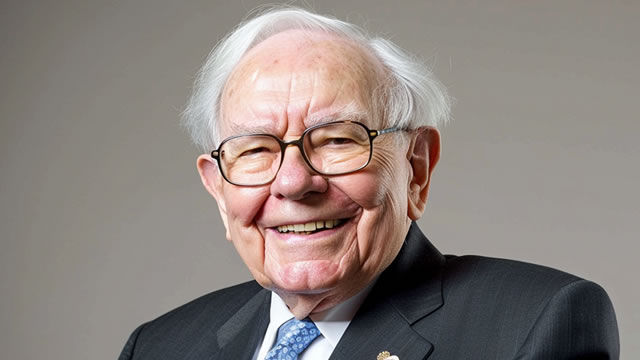
Core Insights - Berkshire Hathaway is undergoing significant management changes following Warren Buffett's announcement of his retirement after 60 years as CEO [2][3] - Todd Combs, who managed a portion of Berkshire's $312 billion equities portfolio and served as CEO of GEICO, is leaving to join JPMorgan Chase [2][6] - Greg Abel has been appointed as the new CEO, raising questions about his leadership style and the future direction of the company [3][5] Management Changes - Todd Combs' departure is notable as he was a key figure in managing about 10% of Berkshire's investment portfolio and overseeing GEICO, the largest insurance brand [5][9] - Adam Johnson, CEO of NetJets, will now also oversee consumer products, service, and retailing businesses at Berkshire [7] - Nancy Pierce will take over as CEO of GEICO, while Marc Hamburg, the CFO, is set to retire in 2027 [7] Future Outlook - The transition period may lead to uncertainty among investors, particularly regarding the stability of other key personnel like Ted Weschler [10][11] - Greg Abel's performance will be closely scrutinized as he assumes more responsibility for the company's decisions [11] - Despite the changes, there is confidence in Abel's capabilities as a capital allocator, given Buffett's endorsement [12]
Sanofi stock slumps after two setbacks on multiple-sclerosis drug
MarketWatch· 2025-12-15 09:43
Core Viewpoint - Shares of Sanofi experienced a decline following the announcement that the U.S. regulatory review of its multiple-sclerosis drug will not be completed by the end of the year [1] Group 1: Company Updates - Sanofi's multiple-sclerosis drug is facing delays in the U.S. regulatory review process, which is now expected to extend beyond the end of the year [1] - The company also indicated that a trial for a different form of treatment is ongoing, but specific details were not provided [1]