Toyota(TM)

Search documents
丰田性能车凉了吗?
汽车商业评论· 2025-11-12 23:07
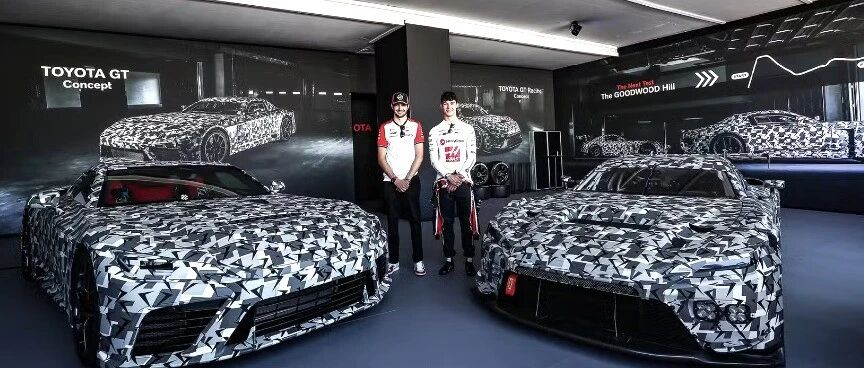
Core Viewpoint - Toyota is set to unveil its new GR brand, which signifies a new era of high-performance vehicles, with the GR GT supercar being a key highlight of this transition [5][6][12]. Group 1: GR Brand and GR GT Supercar - The GR brand, originating from Toyota's Gazoo Racing division, aims to infuse performance into Toyota's lineup, with models like the GR Corolla and the upcoming GR-Sport RAV4 [7][9]. - The GR GT supercar is expected to be officially launched online on December 5 and will make its physical debut at the Tokyo Auto Salon from January 9 to 11, 2026 [12][23]. - The GR GT will feature a new twin-turbo V8 engine integrated with an electrification system, focusing on performance rather than fuel efficiency [17][18]. Group 2: Technical Specifications and Performance - The GR GT's racing version is projected to produce between 500-600 horsepower, while the road version is expected to reach nearly 700 horsepower, competing with models like the Aston Martin Vantage S [20][21]. - Toyota's strategy includes a "multi-path" approach to performance, maintaining the potential of internal combustion engines while exploring hybrid technologies [20][21]. Group 3: Market Challenges and Sales Strategy - The GR GT's success in the U.S. market faces challenges due to complex dealership laws and the need for a dedicated retail network [30][31]. - Toyota's vision includes establishing GR as an independent brand, but the limited production of the GR GT may hinder the profitability of this model [33][34]. - The historical context of the Lexus LFA's limited production raises concerns about the viability of a standalone GR dealership network [34][35]. Group 4: Future Prospects and Expansion - Beyond the GR GT, Toyota is planning to expand its performance lineup with models like the FT-Se concept car and a potential revival of the Celica nameplate [52][53][54]. - The upcoming Tokyo Auto Salon may showcase not just the GR GT but also signify a broader revival of Toyota's performance heritage [55].


财经观察:关税损失近百亿美元,日车企齐喊“状况严峻”
Huan Qiu Shi Bao· 2025-11-12 22:58
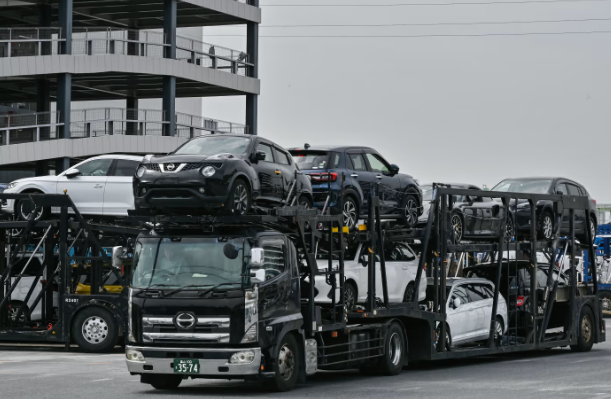
Core Points - Japanese automakers are collectively facing significant profit warnings due to U.S. import tariffs, marking the first time since 2020 that all seven major companies reported profit declines, totaling nearly $10 billion in losses [1][2] - The impact of U.S. tariffs, yen depreciation, supply chain disruptions, and intensified competition are creating a complex environment for Japanese automotive companies, with many executives indicating that the current "severe situation" may become the "new normal" [1][2][3] Group 1: Financial Impact - The seven major Japanese automakers reported a combined profit decline of 27.2% year-on-year, with Nissan, Mazda, and Mitsubishi posting losses, while the remaining four companies also experienced varying degrees of profit declines [2] - Toyota's operating profit in Japan and the U.S. decreased by approximately $4.32 billion, with expected losses from U.S. tariffs reaching about $9.4 billion for the fiscal year, exceeding previous estimates [3] - Honda anticipates a profit reduction of around $2.5 billion for the entire fiscal year due to U.S. tariffs, with executives acknowledging that the profit decline has become a "normal" situation [3] Group 2: Tariff and Trade Agreements - The recent performance warnings from Japanese automakers come shortly after a U.S.-Japan trade agreement, where Japan agreed to invest $55 billion in exchange for a reduction of tariffs on exports to the U.S. [6] - Despite the agreement, the high tariff rates remained applicable for most of the April to September period, leading to an estimated total profit loss of over ¥2.5 trillion for the fiscal year [6] - Executives express concerns that even a reduced tariff rate of 15% will further erode already thin profit margins, with fears that tariffs may persist beyond the current administration [6][8] Group 3: Market Challenges - The Japanese automotive industry is facing multiple challenges, including an unexpected depreciation of the yen, which is currently around 154 yen to the dollar, exceeding initial forecasts [9] - Supply chain disruptions, particularly in semiconductor availability, have led to production halts in various factories, further complicating the operational landscape for Japanese automakers [10] - The competitive landscape is intensifying, especially in the Chinese market, where Japanese brands have seen their market share drop significantly, from 24.1% in 2020 to 11.6% recently [11]


Toyota Fuels US Workforce With $14 Billion Battery Plant - Toyota Motor (NYSE:TM)
Benzinga· 2025-11-12 18:55
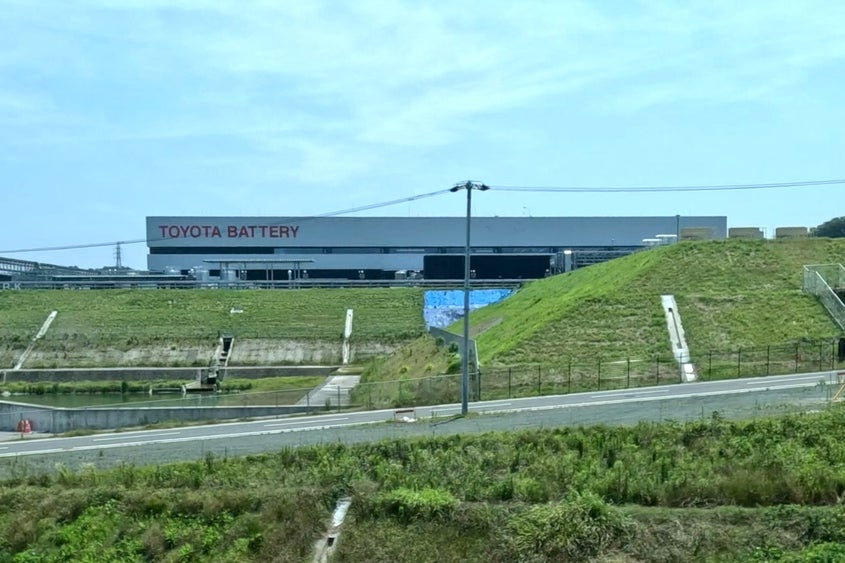
Core Insights - Toyota Motor Corporation has commenced production at its first battery plant outside Japan, located in Liberty, North Carolina, marking a significant expansion in its U.S. operations [1][5]. Investment Plans - The company plans to invest up to $10 billion over the next five years to enhance U.S. manufacturing and future mobility initiatives, bringing its total U.S. investment to nearly $60 billion since entering the market [2][3]. Economic Impact - The Liberty plant, with an investment of nearly $14 billion, is expected to create up to 5,100 jobs, significantly impacting the Piedmont Triad region known for its manufacturing and transportation ties [4]. Facility Details - The 1,850-acre facility will produce lithium-ion battery packs for various vehicle types, with plans to operate 14 production lines and achieve an annual output of 30 GWh by 2030 [7]. Supported Models - Batteries produced at the North Carolina facility will support models such as the Camry HEV, Corolla Cross HEV, RAV4 HEV, and a new three-row electric SUV planned for U.S. production [8]. Community Engagement - The Toyota USA Foundation has pledged $2.7 million to expand its Driving Possibilities program in two North Carolina school districts, reflecting the company's commitment to workforce development and STEM education [9]. Market Reaction - Following the announcement, Toyota's shares increased by 0.82%, trading at $207.68 [10].
Toyota to open North Carolina battery plant, confirms $10B investment in the U.S.
CNBC Television· 2025-11-12 17:01
Investment & Production - Toyota is making a $10 billion investment in US production, focusing on EV, hybrid, and battery production [1][6] - The company is starting battery production at a new plant in Liberty, North Carolina [1] - This investment includes adding 2,500 jobs at the North Carolina facility, in addition to the existing 200, totaling 5,100 jobs [2] - Toyota aims to increase its US footprint and production capabilities [7] Market Position & Strategy - Toyota dominates the US hybrid market with 51% of hybrid sales [3] - The company aims to shift more hybrid production to the US, exemplified by using batteries from the new plant for RAV4 hybrid production [3] - Toyota's investment signals a continued commitment to EV and battery production in the US, contrasting with some automakers reassessing their investments [2][4][5] External Factors - Clearer tariff rates with Japan have facilitated Toyota's investment [5] - Toyota telegraphed its investment commitment to the US administration [6]

Toyota to open North Carolina battery plant, confirms $10B investment in the U.S.
Youtube· 2025-11-12 17:01
Core Insights - Toyota is making a significant investment of $10 billion in the U.S. market, focusing on electric vehicle (EV) and hybrid production, as well as battery production [1][6] - The company is starting battery production at a new facility in Liberty, North Carolina, which will create an additional 2,500 jobs, increasing total employment at the site to 5,100 [2][3] - Toyota currently holds a dominant position in the hybrid market, accounting for 51% of hybrid sales in the U.S., and aims to increase local production to reduce reliance on imports [3] Investment Strategy - Despite a general trend of automakers scaling back EV investments in the U.S., Toyota is proceeding with its plans, indicating confidence in the market [2][5] - The investment will enhance Toyota's production capabilities, particularly for models like the RAV4 hybrid, which will utilize batteries produced at the new facility [3][6] - The company is also looking to benefit from clearer tariff rates established through trade agreements with Japan, which may further incentivize local production [5][7] Competitive Landscape - Toyota's investment comes at a time when competitors like General Motors are reassessing their own spending on battery and EV production in the U.S. [4] - The recent market dynamics show that Toyota and General Motors have been trading in tandem, reflecting a shift in the competitive landscape [4]

Toyota opens new U.S. battery plant, confirms $10 billion in new investments
CNBC· 2025-11-12 16:10
Core Viewpoint - Toyota Motor has initiated production at a new $13.9 billion battery plant in North Carolina and plans to invest up to $10 billion more in the U.S. over the next five years, marking a significant moment in the company's history [1][2]. Group 1: Investment and Production - The new battery plant is Toyota's first in-house facility outside of Japan, announced in December 2021 as part of the Biden administration's initiative to increase domestic battery production for electric and hybrid vehicles [2]. - The company has confirmed an increase in investment, although specific details were not disclosed, with the CEO describing it as a pivotal moment for Toyota [2]. - The announcement follows a statement from President Donald Trump regarding a $10 billion investment by Toyota in the U.S., indicating a potential alignment with governmental policies [3]. Group 2: Market Conditions and Sales Performance - Market conditions for electric vehicles (EVs) have deteriorated, while demand for hybrids has surged, benefiting Toyota, which holds over 51% market share in U.S. hybrid sales through Q3 of this year [3]. - Toyota's U.S. sales increased by 9.9% to over 1.3 million vehicles sold through the third quarter of this year, reflecting a positive sales trend amid changing market dynamics [4]. Group 3: Industry Challenges - The automotive industry, including Toyota, is facing challenges in production planning due to regulatory changes affecting EVs and tariffs imposed on new vehicles and parts [4].

X @Bloomberg
Bloomberg· 2025-11-12 15:10AI Processing
Toyota Pledges to Invest Up to $10 Billion in Its US Operations https://t.co/qKOAMblcZ8 ...
Toyota opens US battery plant, confirms up to $10 billion investment plan
Reuters· 2025-11-12 15:01
Core Points - Toyota Motor has commenced production at its $13.9 billion battery plant located in North Carolina [1] - The company has confirmed plans to invest up to $10 billion over the next five years in the United States [1]

Toyota Doubles Down on Hybrids in the U.S. With $14-Billion Battery Push
WSJ· 2025-11-12 15:00
Core Insights - A new plant in North Carolina is being established to increase the production and sales of hybrid cars and trucks in the American market [1] Industry Summary - The initiative reflects a growing trend in the automotive industry towards hybrid vehicles, aiming to meet rising consumer demand for more fuel-efficient options [1] - The establishment of the plant is part of a broader strategy to enhance the company's competitive position in the hybrid vehicle segment [1]
Toyota Charges into U.S. Battery Manufacturing
Prnewswire· 2025-11-12 15:00
Core Insights - Toyota has commenced production at its new battery plant in Liberty, North Carolina, marking a significant step in its global vehicle electrification strategy [1][2] - The facility represents a nearly $14 billion investment and is expected to create up to 5,100 jobs in the U.S. [1][3] - An additional investment of up to $10 billion over the next five years will bring Toyota's total U.S. investment to nearly $60 billion [1][2] Investment and Economic Impact - The new plant is Toyota's first battery manufacturing facility outside Japan and will serve as a hub for lithium-ion battery production [3][4] - The facility spans 1,850 acres and has the capacity to produce 30 GWh of batteries annually [3] - The investment is anticipated to have a substantial economic impact on the Piedmont Triad region of North Carolina [2][3] Job Creation and Community Development - The establishment of the plant will create over 5,000 new jobs for North Carolinians [4][5] - The facility will include amenities for employees, such as on-site childcare, a pharmacy, a medical clinic, and a fitness center [4] - Toyota is committed to workforce development through educational initiatives, including a $2.7 million grant to local schools [6][8] Product Focus and Future Plans - Batteries produced at the North Carolina plant will power various Toyota hybrid and electric vehicle models, including the Camry HEV and a new all-electric 3-row BEV [4][9] - Additional production lines are expected to launch by 2030, expanding the plant's capabilities [4] Commitment to Sustainability and Innovation - Toyota has sold over 6.6 million electrified vehicles in the U.S. since 2000, demonstrating its commitment to reducing carbon emissions [9] - The company emphasizes building where it sells, aligning with its sustainability philosophy [9][10]