Toyota(TM)

Search documents
Toyota to recall over 126K vehicles in US over engine stall risk
New York Post· 2025-11-13 17:05
Group 1 - Toyota is recalling 126,691 Tundra and Lexus vehicles in the U.S. due to manufacturing debris that may stall the engine [1][3] - The recall is being overseen by the U.S. National Highway Traffic Safety Administration (NHTSA) [1][3] - A remedy for the issue is currently under development and will be performed once available [3]


Toyota Q2 Earnings Miss Expectations, Revenues Rise Y/Y
ZACKS· 2025-11-13 16:11
Core Insights - Toyota reported fiscal second-quarter 2026 earnings per share of $4.85, missing the Zacks Consensus Estimate of $5.07 but increasing from $2.90 in the same quarter last year [1][8] - Consolidated revenues reached $83.94 billion, up from $76.92 billion in the prior-year quarter [1][8] - The company had consolidated cash and cash equivalents of ¥8.11 trillion ($54.6 billion) as of September 30, 2025, with long-term debt increasing to ¥23.63 trillion ($159 billion) [1] Segmental Results - The Automotive segment's net revenues increased 7% year over year to ¥11.06 trillion ($74.5 billion), but operating profit declined 39.5% to ¥574.1 billion ($3.9 billion) [2] - The Financial Services segment's net revenues rose 14.4% to ¥1.19 trillion ($8.01 billion), with operating income increasing 40.2% to ¥228.2 billion ($1.54 billion) [2] - All Other businesses reported net revenues of ¥393 billion ($2.64 billion), a 16.3% increase year over year, but operating profit fell 5.7% to ¥31.4 billion ($212 million) [3] FY26 Guidance - For fiscal 2026, Toyota projects total retail vehicle sales of 11.3 million units, up from 11.01 million units in fiscal 2025 [4] - Expected sales for fiscal 2026 are ¥49 trillion, compared to ¥48.04 trillion in fiscal 2025, while operating income is projected to decline by 29% to ¥3.4 trillion [4] - Pretax profit is estimated at ¥4.18 trillion, down from ¥6.41 trillion in fiscal 2025, with R&D expenses expected to rise to ¥1.5 trillion and capex forecasted at ¥2.3 trillion [5]

Northstar Clean Technologies ($ROOOF) | Toyota ($TM) | WeRide ($WRD) | ECARX ($ECX)
Youtube· 2025-11-13 13:57
Group 1 - Northstar Clean Technologies has signed a 5-year contract with the city of Calgary to reprocess asphalt shingles, supporting Calgary's waste diversion goals and securing feedstock for its Empower Calgary facility [1][2] - Toyota Motor has commenced production at its new $14 billion battery plant in North Carolina, which will produce 30 gigawatt hours annually, contributing to Toyota's total US investment of nearly $60 billion [2] - We Ride and Grab have received approval for autonomous vehicle testing in Singapore, planning to quadruple test runs by year-end and launch the first autonomous shuttle service by early 2026 [3] Group 2 - E-CARX has secured a second contract from Volkswagen to supply advanced digital cockpit solutions, enhancing in-car connectivity with integrated Google automotive services [3][4]
Toyota to invest US$10bn in the US in next five years
Yahoo Finance· 2025-11-13 10:19
Core Viewpoint - Toyota Motor Corporation plans to invest US$ 10 billion in its US operations over the next five years, reinforcing its commitment to the US market as part of trade negotiations with the US government [1][4] Investment Details - The new investment will increase Toyota's total investment in the US to US$ 60 billion since its establishment in the country approximately 70 years ago [2] - Currently, Toyota employs around 50,000 people in the US across 11 manufacturing plants and has produced over 35 million vehicles in the country [2] Battery Plant Opening - The announcement coincided with the opening of Toyota's first overseas electric vehicle battery plant in North Carolina, which involved an investment of US$ 13.9 billion [3] - The new facility, Toyota Battery Manufacturing North Carolina (TBMNC), is dedicated to producing lithium-ion batteries for battery electric vehicles and hybrid vehicles, and is expected to employ about 5,100 people at full production [3] Strategic Approach - Toyota's new battery plant is part of its 'best-company-in-town approach,' focusing on local investment and production while contributing to the local community [4] - Tetsuo Ogawa, president and CEO of Toyota Motor North America, emphasized that the investment marks a pivotal moment in the company's history and reinforces its commitment to various stakeholders [4]
【快讯】每日快讯(2025年11月13日)
乘联分会· 2025-11-13 08:40
Domestic News - The Ministry of Industry and Information Technology (MIIT) emphasizes the expansion of applications for power batteries across various sectors, including construction machinery, shipping, and robotics, highlighting the industry's promising future [2] - The Ministry of Public Security proposes a regulation that requires passenger vehicles to have a default acceleration time of no less than 5 seconds from 0 to 100 km/h, aiming to enhance vehicle safety [3] - Shandong Province reports a 4.7% year-on-year increase in foreign trade imports and exports for the first ten months, totaling 2.89 trillion yuan, with a notable 30.8% increase in commercial vehicle exports [4] - The 2025 World Power Battery Conference has signed 180 projects with a total value of 861.3 billion yuan, covering key areas in green energy, including power batteries and digital economy [5][6] - China FAW's Qiming Company has been approved for a key industry patent navigation project in Jilin Province, marking a significant achievement in the automotive sector [7] - Mercedes-Benz's virtual assistant has been approved for launch, becoming the first foreign enterprise AI model approved in Beijing, indicating progress in AI applications for foreign companies in China [8] - The first electric vertical take-off and landing (eVTOL) aircraft factory has begun trial production in Guangzhou, marking a significant step in the low-altitude economy [9] - The China Automotive Chip Innovation Alliance has established a RISC-V working group with several major manufacturers to promote the large-scale application of related chips [10] International News - Toyota has officially launched its battery factory in North Carolina, with plans to invest an additional $10 billion in the U.S. manufacturing sector over the next five years [11] - General Motors is developing two versions of its sixth-generation small-block V8 engines, focusing on fuel efficiency and high performance, with over $800 million already invested in R&D and production upgrades [12] - Rho Motion reports a 23% year-on-year increase in global electric vehicle sales in October, reaching 1.9 million units, driven by strong demand in major markets [13] - Waymo has launched the first highway autonomous taxi service in the U.S., providing 24/7 service in select cities [14] Commercial Vehicles - Dongfeng Dana Axle and Xirui New Energy Vehicles have entered a strategic partnership to promote the green transformation of commercial vehicles [15] - GAC's Lingcheng T9 pure electric heavy truck has officially started pre-sales, priced at 459,900 yuan, with promotional offers to stimulate market interest [16] - Ruichi Automobile's new pure electric light truck C9 has been officially announced, marking a strategic move in the new energy commercial vehicle sector [17] - Toyota has launched an upgraded version of the Hilux pickup truck in Thailand, aiming to increase production and sales in emerging markets [19]


Toyota to recall over 126,000 US vehicles over engine stall risk
Reuters· 2025-11-13 08:17
Core Points - Toyota is recalling 126,691 Tundra and Lexus vehicles in the U.S. due to manufacturing debris that may stall the engine [1] Group 1 - The recall affects both Tundra and Lexus models [1] - The action is initiated by the U.S. National Highway Traffic Safety Administration [1] - The potential issue involves manufacturing debris that poses a risk of engine stalling [1]

Will Burberry share price hit 1,500p as China return to growth?
Invezz· 2025-11-13 08:17
Core Viewpoint - Burberry's share price remained stable on November 13, following the release of positive financial results that indicate the company's turnaround efforts are beginning to yield results [1] Financial Performance - Burberry's share price increased to 1,253p, reflecting investor confidence in the company's recovery strategy [1]

丰田美国电池工厂投产,未来五年将在美投资100亿美元
Guan Cha Zhe Wang· 2025-11-13 06:41
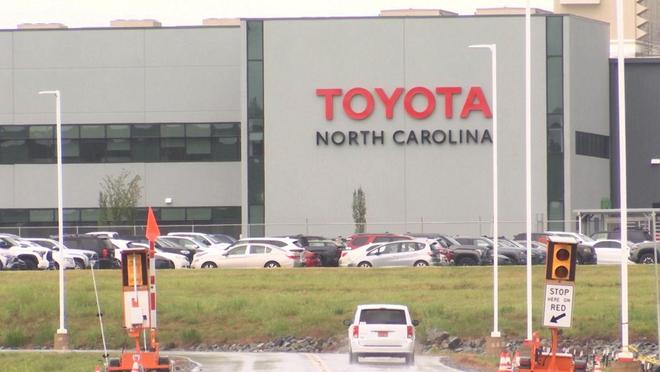
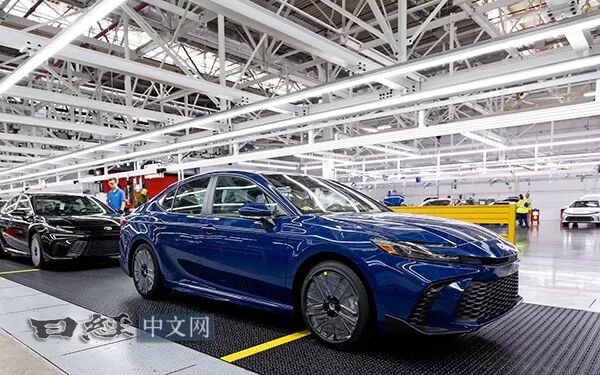
Core Insights - Toyota has commenced operations at its $13.9 billion battery plant in North Carolina to meet the rising demand for hybrid vehicles and confirmed a plan to invest $10 billion in U.S. manufacturing over the next five years [1][3] - The North Carolina plant is Toyota's 11th facility in the U.S., covering 1,850 acres and capable of producing up to 30 GWh annually, employing 5,000 workers [1][3] - The plant will supply batteries for popular models such as the Camry, Corolla Cross, RAV4, and an undisclosed three-row hybrid SUV [1] Investment Plans - Over the next five years, Toyota plans to invest an additional $10 billion in the U.S., bringing its total investment to over $60 billion [3] - This investment strategy aligns with Toyota's commitment to a multi-faceted energy transition, offering a range of vehicles including fuel-efficient, hybrid, plug-in hybrid, electric, and fuel cell vehicles [3] Market Context - The U.S. government is expected to relax fuel economy standards, which were previously deemed too aggressive, potentially impacting the market dynamics for electric and hybrid vehicles [3] - Other automakers, such as Volkswagen, are also responding to the changes in U.S. policy by increasing the availability of hybrid models in the market [4]
丰田今后5年对美追投100亿美元,扩大本地生产
3 6 Ke· 2025-11-13 04:51
Core Insights - Toyota announced a plan to invest up to $10 billion in the U.S. over the next five years, marking the largest investment by a Japanese automaker since the second Trump administration began [2][6] - The investment aims to expand the production system for hybrid vehicles (HV) and core components in response to strong market demand [2][3] - Despite recent losses in North America, Toyota is committed to increasing local production to improve its integrated production system [3][4] Investment Plans - The $10 billion investment will be used to enhance existing factories, although specific projects and factories have not yet been disclosed [2] - In April, Toyota announced an additional investment of $88 million in a West Virginia plant for HV-specific components [4] Market Performance - Toyota's sales in the U.S. reached 2.07 million units from January to October 2025, an 8% increase year-on-year [3] - The company holds over 50% market share in the U.S. HV market, including its luxury brand Lexus [3] Production Strategy - Toyota is increasing the local production ratio of vehicles and core components that were previously exported from Japan to the U.S. [3] - The CFO of Toyota expressed strong demand from customers for increased HV production, indicating a clear intention to strengthen production capabilities [3] Contextual Factors - The investment announcement coincides with the opening of Toyota's first battery factory in Greensboro, North Carolina, a key swing state in the U.S. elections [6] - The Trump administration's termination of tax incentives for electric vehicles (EV) has created a favorable environment for Toyota's HV offerings [3]
“TO YOU”视角下 丰田如何做大高质量发展的“朋友圈”
Zhong Guo Qing Nian Bao· 2025-11-13 00:18
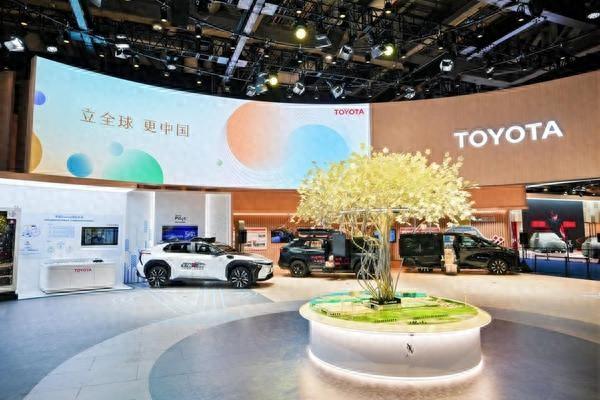
Core Viewpoint - Toyota, as a consistent participant for eight years, showcased its latest developments in China, localized product technology, collaborative achievements with Chinese partners, and diverse solutions for mobility freedom at the 8th China International Import Expo (CIIE) [2][3][12] Group 1: Product and Technology Innovations - Toyota emphasized its "TO YOU" concept, focusing on creating localized products and solutions tailored to individual user needs, contrasting with typical industry competition strategies [3][10] - The company introduced the bZ series of electric vehicles, including the bZ5 and the GR YARIS, highlighting their unique features and market positioning [5][6][11] - Toyota's hydrogen fuel cell technology was showcased with the 49t hydrogen fuel cell tractor, developed in collaboration with China National Heavy Duty Truck Group, aimed at enhancing green logistics [7][12] Group 2: Market Strategy and Localization - The company is committed to deepening its localization efforts in China, establishing the Lexus (Shanghai) New Energy Co., which combines global product offerings with local production [6][12] - Toyota's R&D system in China, known as RCE, aims to accelerate the development of products that meet local consumer preferences and driving habits [10][12] - The introduction of the "Multi-Pathway" approach in new energy technology reflects Toyota's strategy to provide diverse options for users [4][10] Group 3: Commitment to Sustainability and Mobility for All - Toyota's commitment to "Mobility for All" includes developing vehicles with welfare features for the elderly and disabled, such as the Elfa welfare version and RAV4 welfare trial version [9][12] - The company is actively pursuing carbon neutrality through initiatives like the Sweep energy storage system, which addresses battery recycling challenges [11][12] - Toyota's focus on intelligent manufacturing and collaboration with local partners aims to enhance the overall automotive ecosystem in China [9][12]