
Walmart(WMT)

Search documents
Alpine Income Property Trust Acquires Sam's Club for $15.4 Million
Globenewswire· 2025-11-12 11:55
Group 1 - The company announced the acquisition of a 131,039-square-foot property net leased to Sam's Club in Houston, Texas, enhancing its presence in a high-growth market [1] - With this acquisition, Walmart becomes the company's fifth largest tenant, joining a portfolio that includes investment grade-rated tenants like Lowe's and Dick's Sporting Goods [1] - Sam's Club has been operating at this location for nearly 25 years, situated in a densely populated area with strong demographics, including an average household income of $111,000 and a population exceeding 300,000 within a five-mile radius [2] Group 2 - Alpine Income Property Trust, Inc. is a publicly traded real estate investment trust focused on delivering attractive risk-adjusted returns and dependable cash dividends by investing in a diversified portfolio of single tenant net leased commercial properties [3]




Prediction: This Dividend-Paying Value Stock Will Join Berkshire Hathaway in the $1 Trillion Club Before Walmart
The Motley Fool· 2025-11-12 08:05
Group 1: Market Capitalization Trends - The $1 trillion club is expanding, driven by record earnings and investor enthusiasm, with Nvidia surpassing $5 trillion and Microsoft and Apple exceeding $4 trillion [1] - Other notable companies include Alphabet at over $3.3 trillion, Amazon around $2.6 trillion, and Broadcom, Meta Platforms, and Tesla all above $1.4 trillion [1][2] Group 2: Berkshire Hathaway's Position - Berkshire Hathaway is the only non-tech U.S. company with a market cap over $1 trillion, known for its strong positions in public equities and controlled businesses, particularly in insurance [2][3] - The company has been reducing its stakes in top holdings like Apple and Bank of America, focusing on growing operating earnings from its controlled businesses [4] Group 3: JPMorgan Chase's Growth Potential - JPMorgan Chase is positioned as a potential candidate to join the $1 trillion club, with a diversified business model generating revenues from commercial and investment banking, as well as net interest income (NII) [5][18] - NII has been steadily increasing, with projections showing growth from $66.71 billion in 2022 to $95 billion by 2025 [8] Group 4: Financial Performance Metrics - JPMorgan's return on tangible common equity (ROTCE) reached 20% in Q3 2025, indicating strong profitability compared to peers like Bank of America and Citigroup [10][11] - The bank's 10-year median price-to-earnings (P/E) ratio is 11.9, and its median price-to-book (P/B) ratio is 1.5, reflecting its relatively high valuation due to accelerated growth [13] Group 5: Comparison with Walmart - Walmart's stock price has also surged, with a market cap over $800 billion, but it lacks a clear path for accelerating earnings growth compared to JPMorgan [13][18] - Walmart's recent revenue growth of 4.8% year-over-year contrasts with its high P/E ratio of 38.7, indicating potential overvaluation [15][16]


山姆想变革,首先要学会抛弃“中产优越感”
3 6 Ke· 2025-11-12 07:48
Core Insights - Sam's Club has faced significant backlash from its members following an app update that introduced features perceived as overly complicated and less transparent, leading to a wave of negative reviews and calls for boycotts against new management [1][3][4] - The backlash reflects deeper issues regarding the brand's identity and its alignment with the values of its middle-class consumer base, who view Sam's as a symbol of quality and exclusivity [5][10][12] Group 1: Member Sentiment and Brand Identity - The dissatisfaction with the app update stems from a long-standing expectation among middle-class families for high-quality, carefully curated products that simplify their shopping experience [3][4] - Members are not just purchasing a membership; they are buying into an identity that signifies access to a superior lifestyle, which is threatened by perceived changes in product quality and brand strategy [7][10] - The rapid expansion of Sam's Club has diluted its exclusivity, leading to concerns that the brand may lose its appeal to its core demographic [12][17] Group 2: Competitive Landscape and Strategic Challenges - Sam's Club is under pressure from both traditional competitors like Costco and emerging players such as Hema and online platforms, necessitating a strategic shift to maintain market relevance [13][15] - The company has accelerated its store openings, planning to increase from 5-6 stores annually to 6-7 by 2024, with a record 8 new stores planned for this year [10][12] - The recent app update and product changes are seen as attempts to adapt to competitive pressures, but they risk alienating existing members who value the brand's traditional standards [17] Group 3: Future Directions and Strategic Focus - To navigate the current backlash and competitive environment, Sam's Club must balance its international brand identity with the need for local adaptation, ensuring that it meets the evolving demands of Chinese consumers [17] - Addressing operational issues, such as complex shipping rules and product selection, will be crucial for restoring member trust and satisfaction [17] - The company must prioritize maintaining its "member first" philosophy while exploring innovative ways to enhance the shopping experience without compromising its core values [17]

Thanksgiving Price Fight: Why One Cheap Turkey Dinner Doesn’t Mean Inflation Is Over
Investopedia· 2025-11-11 17:00
Core Insights - The controversy surrounding Thanksgiving dinner pricing highlights the complexities of measuring inflation, emphasizing the use of broad-based indexes over individual prices [1][2][5] - Walmart's Thanksgiving meal deal, priced under $4 per person, is the lowest since 2021, but comparisons to previous years are complicated by changes in the number of items included [1][3][5] - President Trump leveraged Walmart's pricing to argue that his administration's policies reduced living costs, contrasting with criticisms of the current administration's economic management [1][3][5] Economic Implications - Experts advocate for broad-based consumer price indexes to provide a clearer picture of living costs, rather than focusing on individual item prices [2][7] - The Consumer Price Index (CPI) is up 3% over the past year, with grocery prices specifically rising by 2.7%, which is above the Federal Reserve's target of 2% inflation [8] Political Context - Trump's assertion that Thanksgiving dinner costs 25% less than the previous year has been challenged by fact-checkers, noting that the meal deal's composition has changed significantly [3][5] - The White House supported its economic narrative with data from DoorDash, indicating a 14% decrease in a breakfast basics index since March, although the overall index was only down 1.7% over the past year [6][8]

5 Stocks to Buy Despite a Subdued Holiday Shopping Forecast This Year
ZACKS· 2025-11-11 14:11
Industry Overview - U.S. holiday sales are projected to exceed $1 trillion for the first time, with an expected growth of 3.7-4.2% year over year, translating to sales of $1.01-$1.02 trillion [3] - Last year's holiday sales rose 4.3% year over year to $976.1 billion [3] - An uncertain macroeconomic outlook, influenced by trade policies and the ongoing government shutdown, has negatively impacted consumer confidence [1] Retailer Recommendations - Five retailers are recommended for investment during the holiday season: Amazon.com Inc. (AMZN), Walmart Inc. (WMT), Tapestry Inc. (TPR), Dollar General Corp. (DG), and Expedia Group Inc. (EXPE), all carrying a favorable Zacks Rank 2 (Buy) [2] Amazon.com Inc. (AMZN) - Amazon is benefiting from growth in Amazon Web Services (AWS), which contributed $33.01 billion in Q3 2025, up 20.2% year over year [11] - Online sales and subscription revenues increased by 9.8% and 11.5% year over year, respectively, while advertising revenue climbed 23.5% [12] - Expected revenue and earnings growth rates for next year are 11.2% and 9.9%, respectively, with a 2.6% improvement in earnings estimates over the last 30 days [14] Walmart Inc. (WMT) - Walmart's diversified business model and strong omnichannel strategy have boosted traffic across physical and digital platforms [15] - The company has enhanced its delivery capabilities, including partnerships and new services, leading to steady grocery market share gains [16] - Expected revenue and earnings growth rates for next year are 4.4% and 12.5%, respectively, with a 0.7% improvement in earnings estimates over the last 60 days [17] Tapestry Inc. (TPR) - Tapestry is experiencing growth driven by strong engagement from Gen Z and millennials, with significant expansion in North America, Europe, and Greater China [18] - The company's international business saw a 10% year-over-year growth in Europe and an 18% surge in Greater China [19] - Expected revenue and earnings growth rates for the current year are 3.4% and 9.5%, respectively, with a 1.6% improvement in earnings estimates over the last seven days [20] Dollar General Corp. (DG) - Dollar General's growth is supported by disciplined cost management and a customer-centric model, with a focus on value pricing and supply-chain optimization [21] - The company is expanding its omnichannel presence through partnerships, which is driving higher store traffic and basket sizes [22] - Expected revenue and earnings growth rates for next year are 4.2% and 8.4%, respectively, with a 0.8% improvement in earnings estimates over the last 60 days [24] Expedia Group Inc. (EXPE) - Expedia benefits from a strong platform model that enhances customer insights and strengthens supplier relationships, driving revenue growth [25] - The company's diverse brand portfolio allows it to cater to a wide range of global traveler needs, boosting traffic and bookings [26] - Expected revenue and earnings growth rates for next year are 2% and 17.8%, respectively, with a 1.2% improvement in earnings estimates over the last 30 days [26]



Walmart: ChatGPT Partnership Reflects Competitive Pressures Ahead Of Q3
Seeking Alpha· 2025-11-11 12:30
Group 1 - Walmart's stock performance has been strong, increasing from $39 to over $100 between May 2022 and February 2025 [1] - The investment strategy focuses on companies with strong qualitative attributes, attractive pricing based on fundamentals, and a long-term holding approach [1] - The portfolio management aims to avoid underperforming stocks while maximizing exposure to high-performing companies, often rating great companies as 'Hold' due to growth limitations or high downside risks [1]
投入超11亿元 亦庄创意生活广场探索“山姆+”模式
Bei Jing Shang Bao· 2025-11-11 11:12
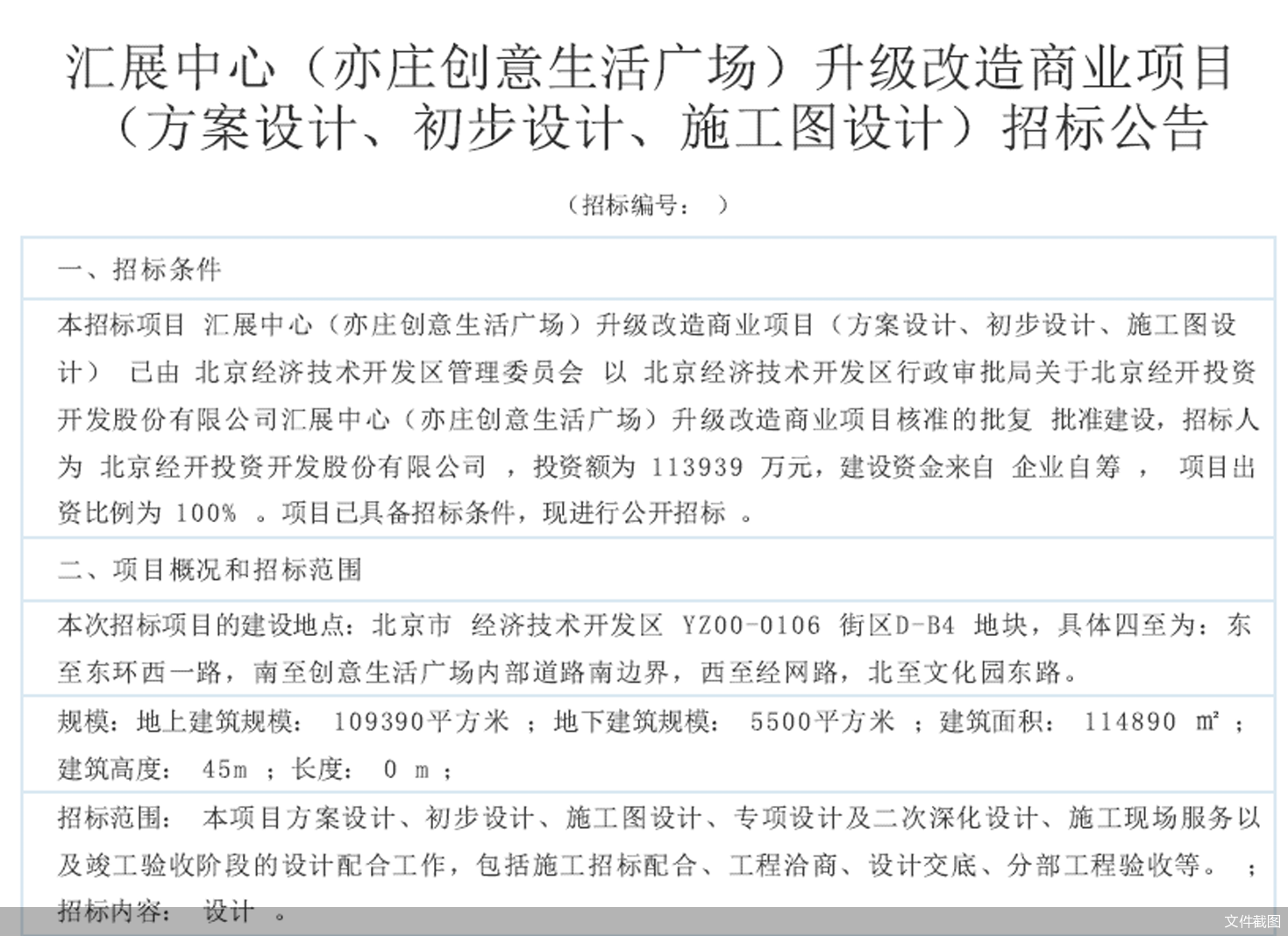
Core Insights - The rapid expansion of Sam's Club has diminished the competitive edge of Yizhuang Creative Life Plaza, which is currently undergoing hardware phase bidding for upgrades without a clear direction [1][3] - The project, once a vibrant commercial hub, has seen a decline in foot traffic and tenant presence, necessitating a significant renovation to meet the evolving demands of the tech-savvy consumer base [3][6] Project Status - Yizhuang Creative Life Plaza is set to undergo an investment of over 1.1 billion yuan for upgrades, with design bidding completed and construction bidding currently in progress [3][4] - The renovation will involve substantial demolition and functional restructuring, primarily affecting the first and second floors, while preserving the existing Sam's Club area [3][4] Market Dynamics - The plaza has faced challenges due to ownership disputes and a decline in tenant operations, leading to the exit of major brands like Starbucks and KFC, leaving only Sam's Club operational [6] - The competitive landscape in the Yizhuang commercial sector has intensified, with new projects like Longyue City and Longhu Beijing Yizhuang Tianjie introducing a variety of retail and entertainment options [7] Strategic Recommendations - Experts suggest that the renovation of Yizhuang Creative Life Plaza could foster differentiated competition among local projects, moving away from the current retail-centric model to a unique combination of Sam's Club and experiential offerings [8][9] - The plaza should aim to position itself as a regional commercial center, leveraging the industrial advantages of the Economic Development Zone to attract high-quality consumer demographics [9][10] Consumer Trends - There is a notable shift in consumer preferences towards quality experiences and family-oriented services, indicating a need for the plaza to adapt to these changing demands [10] - The renovation should focus on creating a "third space" that integrates shopping, socializing, and cultural experiences, aligning with the expectations of modern consumers [10]
3 Retail Stocks to Watch as Consumer Sentiment Weakens
Investing· 2025-11-11 10:47
Core Insights - The article discusses the impact of weakening consumer sentiment on retail stocks, highlighting the importance of consumer behavior over sentiment surveys [2][5][17] - The National Retail Federation anticipates a record holiday spending season, projecting over $1 trillion in spending, a 4% increase from the previous year [6][17] Retail Sector Overview - The University of Michigan Consumer Sentiment survey recorded the second-lowest reading in history, indicating a significant decline in consumer confidence [2][5] - Despite negative sentiment, historical trends suggest that consumer spending may not decline as sharply as sentiment indicates [8][17] Key Retail Stocks to Watch - **Walmart (WMT)**: The stock has shown resilience, steadily increasing since April and maintaining a bullish momentum with its 50-day moving average trending upwards [11][12] - **Target (TGT)**: The stock is underperforming, nearing six-year lows, and has not shown significant impact on broader market indices due to its smaller market capitalization of $42 billion [13][14] - **Home Depot (HD)**: The stock is in a weaker position compared to Walmart but stronger than Target, facing challenges from high mortgage rates and a sluggish housing market [15][16] Market Trends and Predictions - The retail sector is experiencing mixed signals, with the SPDR S&P Retail ETF (XRT) correcting after a significant rise earlier in the year [10][17] - Upcoming earnings reports from major retailers will provide critical insights into consumer spending patterns as the holiday season approaches [7][17]


TD Cowen调整塔吉特和沃尔玛目标价
Ge Long Hui· 2025-11-11 09:02
Group 1 - TD Cowen has lowered the target price for Target from $110 to $105 [1] - TD Cowen has raised the target price for Walmart from $115 to $120 [1]
Stocks to Watch for the First Trillion Dollar Holiday Shopping Season
ZACKS· 2025-11-10 23:13
Core Insights - The upcoming holiday shopping season in the U.S. is projected to exceed $1 trillion in retail sales for the first time in history, with consumer spending expected to reach between $1.01 trillion and $1.02 trillion during November and December 2025, marking a 3.7%-4.2% increase from last year's $976 billion [1][2]. Retail Leaders - Amazon (AMZN) and Walmart (WMT) are highlighted as leading retailers with robust business models capable of capitalizing on the holiday shopping season while generating multiple revenue streams [3]. - Amazon has transformed into a platform-based ecosystem, benefiting from its AWS cloud services and subscription services like Prime Video, which are enhanced by advertising revenue [4]. - Amazon's e-commerce operations have improved significantly through the deployment of over 1 million robots, enhancing productivity in its fulfillment network [5]. - Walmart has successfully transitioned from a traditional brick-and-mortar model to a significant online presence, achieving annual digital sales exceeding $100 billion, supported by its grocery niche and low-cost pharmacy services [6]. Stock Performance - Both Amazon and Walmart are rated with a Zacks Rank 2 (Buy) and are expected to achieve new sales peaks in Q4, following last year's quarterly sales of $187.79 billion and $169.59 billion, respectively [7]. Apparel Sector Insights - The apparel sector has faced challenges due to higher tariffs, with Crocs (CROX) identified as a potential rebound candidate, currently trading at a low forward earnings multiple of 6X [9]. - Crocs' EPS is projected to dip 8% this year but is expected to rebound by 4% in FY26 to $12.60, with recent estimates showing a 5% increase over the last 30 days [10]. Additional Retail Stocks and ETFs - Costco (COST) is noted as a retail leader with a Zacks Rank 3 (Hold), alongside other apparel stocks like Lululemon (LULU), Nike (NKE), and Under Armour (UAA) that may benefit from the anticipated record holiday shopping season [11]. - The Consumer Discretionary Select Sector (XLY) ETF is recommended for exposure to top retail stocks, including Amazon, Nike, and Lululemon, and currently holds a Zacks Rank 3 (Hold) [12].

