Walmart(WMT)

Search documents
山姆“人设”滑坡、沃尔玛“沃集鲜”成新宠 新老势力混战“自有品牌”谁能更胜一筹?
Mei Ri Jing Ji Xin Wen· 2025-12-05 13:37
Core Insights - Walmart is developing its private label "Wojixian" as a response to the competitive pressures from e-commerce and emerging retailers, positioning it as a "budget version" of Sam's Club [1][2] - The shift towards private labels by traditional retailers like Walmart and RT-Mart is driven by the need to compete with e-commerce platforms and new entrants in the retail market [1][3] Group 1: Private Label Strategy - Walmart's "Wojixian" focuses on affordability and health, with visible pricing strategies such as "everyday low prices" [2][3] - RT-Mart is also enhancing its private label offerings, emphasizing low prices and health trends, but adopts a dual-brand strategy for its private labels [2][3] - The competition in the retail sector is prompting established players to adopt private labels as a core strategy to attract customers and improve profit margins [4][6] Group 2: Market Performance and Challenges - RT-Mart's parent company, Gao Xin Retail, reported a revenue decline of 12.1% year-on-year, highlighting the financial pressures faced by traditional retailers [3] - Walmart's performance in China is primarily driven by the success of Sam's Club, while its traditional hypermarket format is facing challenges, including store closures [3][4] - The competition for quality suppliers and production sources is intensifying as retailers like Hema and Dingdong Maicai have already established strong private label brands [4][6] Group 3: Supply Chain and Brand Development - Successful private label development requires strong supply chain management and the ability to create distinct brand value [6][7] - Retailers are increasingly focusing on sourcing high-quality suppliers, with Walmart currently evaluating a limited number of potential suppliers for its private label products [6][7] - The competition for premium suppliers and production capabilities is expected to escalate as traditional retailers enhance their private label strategies [6][7]

MBMC观察:沃尔玛正式宣布:迁移至纳斯达克上市,创下交易所迁移规模历史之最
Xin Lang Cai Jing· 2025-12-05 12:49
Core Viewpoint - Walmart's decision to transfer from NYSE to NASDAQ on December 9 marks a significant transformation in the capital market, creating the largest exchange migration record in U.S. history with a market capitalization of $853.1 billion, attracting global attention without an IPO or financing [2][9]. Group 1: Reasons for Choosing NASDAQ - The transfer is a result of Walmart's deep investment in technology, with over $10 billion allocated to areas such as artificial intelligence, supply chain automation, and digital payments [2][9]. - NASDAQ is seen as an ideal platform for Walmart to achieve higher valuation premiums and a strong "tech label," which is essential for its future growth and investment strategy [2][9]. - Post-transfer, Walmart is expected to be included in the NASDAQ 100 index, which will attract more passive investment and enhance its image as a "tech retail" leader [2][9]. Group 2: Competitive Landscape of Stock Exchanges - The transfer reflects a decade-long competition between NYSE and NASDAQ, with NASDAQ successfully attracting over 40 S&P 500 companies, while NYSE has drawn 347 companies during the same period [5][12]. - This competition is not just about the number of companies but also about the narrative and branding of the exchanges, positioning them as platforms for corporate strategic transformation [5][12]. - The emergence of the Texas Stock Exchange (TSE), set to launch in 2026, adds pressure on traditional exchanges, emphasizing the need for established players to retain major clients like Walmart [5][12]. Group 3: Implications for the Retail Industry - Walmart's transfer signifies a pivotal moment in the retail industry's technological transformation, indicating that technological capability will become the core competitive advantage rather than just scale [6][13]. - The move is seen as a harbinger of a new technological wave in retail, where competition will increasingly rely on innovation and digital transformation [6][13].


Should Walmart Really Be Trading Like a Tech Company?
WSJ· 2025-12-05 10:30
Core Insights - The largest retailer in America is experiencing rapid growth in its e-commerce segment, indicating a strong shift towards online sales [1] - The company is expected to further enhance its e-commerce capabilities as it transitions to Nasdaq, which may provide additional visibility and investment opportunities [1] E-commerce Growth - The retailer's e-commerce sales have been increasing significantly, reflecting a broader trend in the retail industry towards online shopping [1] - This growth in e-commerce is likely to continue as consumer preferences shift and the company invests in its digital infrastructure [1] Nasdaq Transition - Moving to Nasdaq is anticipated to bolster the company's market presence and attract more investors, potentially leading to increased stock performance [1] - The transition may also facilitate better access to capital for further expansion in e-commerce initiatives [1]

彼得·林奇:不要把增长和赚钱混为一谈
Sou Hu Cai Jing· 2025-12-05 02:50
Group 1: Peter Lynch's Four Rules of Stock Investment - Rule 1: Understand the stocks held. Investors should be able to explain their reasons for buying a stock in simple terms. If the only reason for purchasing a stock is the expectation of price increase, it is advisable not to buy it [3]. - Rule 2: Economic predictions are futile. Investors should not attempt to predict interest rates or market movements, as even experts like Alan Greenspan cannot accurately forecast these [4]. - Rule 3: Do not worry about indices. Focus on individual companies like McDonald's and Walmart, as their performance can differ significantly from overall market trends [5][6]. - Rule 4: Patience is key. Investors have ample time to research companies before making purchases, and successful investments often come after years of observation [7][8]. Group 2: Common Dangerous Statements in the Stock Market - Dangerous Statement 1: "How much lower can the stock price go?" This mindset can lead to poor investment decisions, as seen with the example of Kaiser Industries [10][11]. - Dangerous Statement 2: "How much higher can the stock price go?" This can result in missed opportunities, as demonstrated by the case of Philip Morris [12]. - Dangerous Statement 3: "I can only lose a little since the stock price is low." This is misleading, as the potential loss is the same regardless of the stock price [15]. - Dangerous Statement 4: "Eventually, the price will rebound." Historical examples show that some stocks never recover to previous highs [16]. - Dangerous Statement 5: "It can't get any worse, so I should buy." This reasoning can lead to further losses, as seen in the railroad and oil drilling examples [17][18]. Group 3: Peter Lynch's Ten Pieces of Advice - Advice 1: Avoid long-shot companies that lack near-term earnings. These companies often do not succeed [26][27]. - Advice 2: Do not confuse growth with profitability. High-growth industries can lead to losses due to increased competition [28][29]. - Advice 3: Basic math is sufficient for investing. Investors do not need advanced mathematics to succeed in the stock market [30][31]. - Advice 4: Spend time reviewing balance sheets. A quick assessment can reveal a company's financial health [32]. - Advice 5: Research stocks as thoroughly as one would research a microwave. This diligence can lead to better investment outcomes [35]. - Advice 6: Great stocks are often unexpected. Investors cannot predict which stocks will become successful [36]. - Advice 7: Retail investors have significant advantages. They often have access to information that can inform better investment decisions [40][42]. - Advice 8: Professional investors may have biases that limit their investment choices. This can lead to missed opportunities in less conventional stocks [43][44]. - Advice 9: There will always be concerns. Investors must be prepared to tolerate uncertainty in the market [45][46].


Walmart Inc. (WMT): Our Calculation of Intrinsic Value
Acquirersmultiple· 2025-12-05 00:24
Core Insights - Walmart Inc. is the world's largest retailer with over 10,500 stores globally, combining physical retail with a growing e-commerce platform [2] - The company's retail model focuses on high volume, competitive pricing, and efficient supply chain management, which enhances customer traffic and competitive advantages [3] - Walmart's omnichannel strategy is evolving, integrating in-store pickup, delivery, and digital services to boost higher-margin revenue streams like advertising and memberships [3][4] Financial Analysis - Forecasted Free Cash Flows (FCF) from 2025 to 2029 show a steady increase, with total present value of FCFs estimated at approximately $65.0 billion [5] - The terminal value, calculated using a perpetuity growth model, is estimated at $275.2 billion, leading to a present value of the terminal value of $171.0 billion [5] - The enterprise value is calculated at $236.0 billion, with net debt of $34 billion, resulting in an equity value of $202.0 billion [6] Valuation Metrics - The intrinsic value per share is estimated at approximately $25.57, while the current market price is around $109, indicating a margin of safety of -77% [6] - The discount rate used in the DCF analysis is 10%, with a terminal growth rate of 3% [6] - Despite a premium valuation, Walmart's stock trades above its intrinsic value under conservative DCF assumptions focused on free cash flow rather than revenue growth [7]

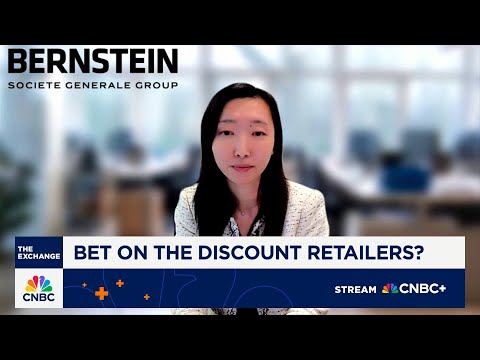
Grocery space is tough with Walmart doing so well, says Bernstein's Zhihan Ma
CNBC Television· 2025-12-04 19:22
For more, let's bring in Jihan Ma, senior analyst at Bernstein. Uh Jihan, it's great to have you here and of what do you think is going on with Kroger today. Is it that the dollar stores are taking share.>> Well, uh I think there's some grocery specific weakness we're seeing in there, but the dollar stores are broadly speaking having a great year, right. They are benefiting from some unique macro tailwinds including middle to high-inccome consumers trading down including for the more discretionary dollar st ...
Grocery space is tough with Walmart doing so well, says Bernstein's Zhihan Ma
Youtube· 2025-12-04 19:22
For more, let's bring in Jihan Ma, senior analyst at Bernstein. Uh Jihan, it's great to have you here and of what do you think is going on with Kroger today. Is it that the dollar stores are taking share.>> Well, uh I think there's some grocery specific weakness we're seeing in there, but the dollar stores are broadly speaking having a great year, right. They are benefiting from some unique macro tailwinds including middle to high-inccome consumers trading down including for the more discretionary dollar st ...

Walmart Inc. (WMT): A Bull Case Theory
Yahoo Finance· 2025-12-04 16:42
Core Thesis - Walmart Inc. is undergoing a significant transformation from a traditional retailer to a digitally enabled platform, with current valuation multiples reflecting high investor expectations for profit growth and margin expansion [2][5] Valuation Metrics - As of November 26th, Walmart's share price was $109.10, with trailing and forward P/E ratios of 37.41 and 35.21 respectively [1] - The company's P/E ratio is currently 36–37× and EV/EBIT is approximately 27×, which are 35–40% above decade-long averages [2] Strategic Initiatives - Walmart's strategy includes an omnichannel approach utilizing over 4,700 stores as mini-fulfillment centers, enabling same-day delivery and grocery pickup [3] - Higher-margin profit streams such as Walmart Connect advertising, marketplace seller fees, and Walmart+ memberships are expected to contribute over 20% of operating income in the near future [3] - The company aims to reduce costs by 20% through aggressive automation in fulfillment and distribution centers [3] E-commerce Growth - Walmart is the second-largest e-commerce player in the U.S., leveraging its grocery dominance and store-enabled last-mile delivery to enhance customer engagement and digital revenue [4] - International e-commerce expansion, particularly through platforms like Flipkart, is projected to double digital revenue by 2028 [3] Market Expectations - The stock has significant upside potential if execution of strategic initiatives is successful; however, the market is currently pricing in flawless performance [5] - Any delays in automation, marketplace growth, or digital adoption could lead to a notable re-rating of the stock [5]
Read This Before Buying Walmart Stock
The Motley Fool· 2025-12-04 08:25
If you're thinking about buying this top retail stock, here's what you need to know.Walmart (WMT +1.78%) is the largest company in the world by sales. It has more stores than any other retailer, and it continues to grow at a healthy pace. If you're considering buying Walmart stock, here's what you need to know.What does Walmart do?Walmart owns 10,700 stores worldwide, including 4,600 in the U.S. The company says that 90% of the U.S. population lives within 10 miles of one of its stores, but it continues to ...
Remote retreats, experiences give India hotels new growth driver
BusinessLine· 2025-12-04 04:21
Core Insights - India's largest hotel chains are focusing on curated luxury stays in unique locations to differentiate themselves in a crowded travel market [1] - The trend is driven by high-spending travelers seeking fresh and authentic experiences away from popular tourist destinations [2] Company Strategies - Indian Hotels Co., owner of the Taj brand, is aggressively expanding its portfolio, recently acquiring a majority stake in Sparsh Infratech Pvt. and partnering with boutique chain Brij [3][4] - Leela Palaces Hotels and Resorts Ltd. and boutique operators like Untitled Hotels & Resorts Pvt. are also expanding into lesser-known locations to keep pace with market demands [4] Market Potential - Analysts suggest that the luxury segment in offbeat locations could surpass the broader leisure travel market, providing alternatives for affluent Indians who prefer not to travel abroad [5] - The local travel agency WanderOn projects the segment to reach $45 billion by 2027, reflecting global trends [6] Growth Metrics - Cleartrip Pvt. reported a 300% growth in wellness-focused offerings in Q3 compared to the previous year, indicating a strong market shift [7] - Makemytrip Ltd. noted a 15% increase in packages featuring boutique properties, with nearly one-third of local holiday packages now including niche stays [8] Consumer Trends - The demand for unique travel experiences is growing, with offerings like dolphin watching and guided heritage walks becoming popular [8] - Aahana Forest Resort near Jim Corbett National Park is experiencing increased visitor numbers due to worsening pollution in Delhi, expecting a 20% revenue growth [11] Environmental Considerations - The rise in tourism is raising concerns about ecological damage, as India is now the third-largest source of tourism-related greenhouse emissions [9] - Overtourism has led to unregulated construction in fragile ecosystems, prompting calls for government intervention [10]