科技零售

Search documents
深圳打造科技零售新地标,逛街逛出“未来感”
Xin Lang Cai Jing· 2026-01-21 13:24
Group 1 - Shenzhen is emerging as a hub for immersive retail experiences, integrating cutting-edge technology into consumer shopping [3] - Various technology retail stores have opened in Shenzhen, allowing consumers to experience products like embodied robots, 3D printing, and smart glasses [3] - The city is enhancing its reputation as a leader in "Chinese manufacturing" by bringing futuristic technology closer to consumers [3]


深圳打造科技零售新地标逛街逛出“未来感”
Zhong Guo Zheng Quan Bao· 2026-01-20 21:04
Core Viewpoint - Shenzhen is emerging as a hub for immersive retail experiences, integrating advanced technology into consumer shopping environments [1] Group 1: Industry Trends - Multiple technology retail stores have recently opened in Shenzhen, showcasing the city's leadership in "Chinese manufacturing" [1] - Consumers can experience cutting-edge products such as embodied robots, 3D printing, and smart glasses in various shopping districts [1] Group 2: Consumer Experience - The retail environment allows shoppers to engage with technology, enhancing their sense of "technological and futuristic" experiences while shopping [1]
深圳打造科技零售新地标 逛街逛出“未来感”
Xin Hua She· 2026-01-20 13:52
Core Insights - Shenzhen is emerging as a hub for immersive retail experiences, showcasing cutting-edge technology in consumer interactions [2][4][10] Group 1: Technological Retail Developments - Multiple technology retail stores have opened in Shenzhen, allowing consumers to experience advanced products like embodied robots, 3D printers, and smart glasses [2][8][20] - The world's first robot 6S store has been established in Longgang District, featuring interactive experiences with robots [11][13] - INNO100 global innovation flagship store in Nanshan District offers customers the chance to engage with electronic products and witness robot demonstrations [5][8] Group 2: Consumer Engagement - Consumers can interact with various smart electronic products while shopping, enhancing their sense of "technological and futuristic" experiences [2][10] - The "万物定制工作站" (Everything Customization Workstation) at INNO100 allows for personalized product customization using 3D printing and other DIY equipment [14][20]

沃尔玛在纳斯达克上市
Sou Hu Cai Jing· 2025-12-11 05:58
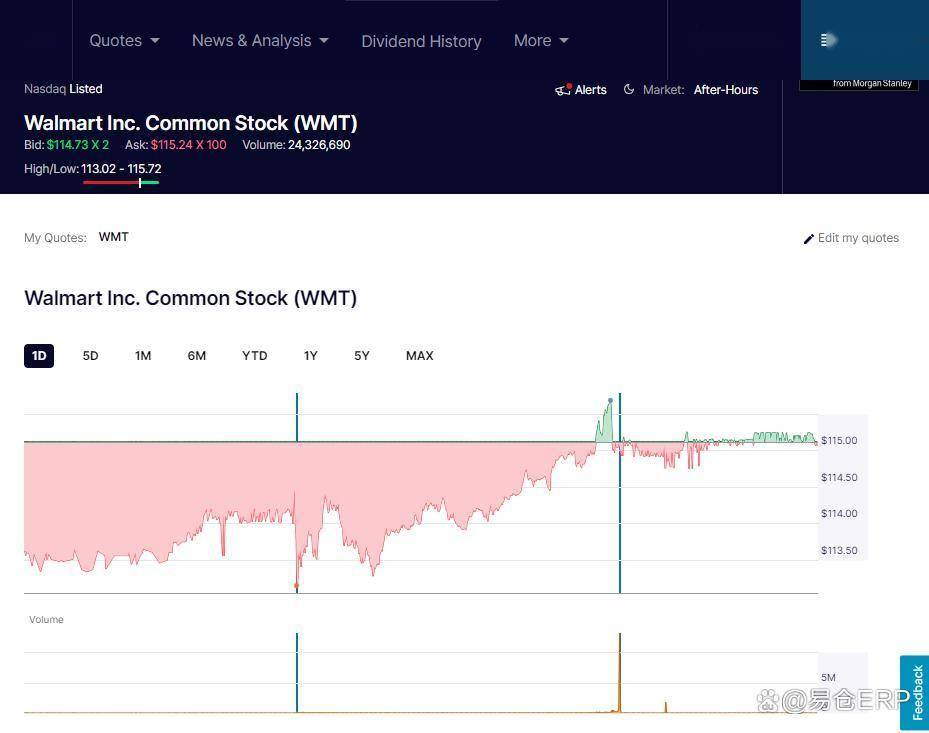
Core Viewpoint - Walmart has completed a significant strategic shift by moving from the New York Stock Exchange to the Nasdaq Global Select Market, aiming to be valued as a technology company rather than a traditional retail company, marking the largest exchange migration in U.S. history with a market capitalization of $853.1 billion [2][3] Group 1: Transition to Nasdaq - The transition does not involve issuing new shares or financing but includes an updated Form 10-K/A, positioning the company as "AI-First Retail" and revealing new quantitative metrics [6] - For the fiscal year 2025, Walmart expects a gross profit increase of $2.5 billion from AI pricing and inventory algorithms, accounting for 42% of the total gross profit increase [6] - The company plans to increase capital expenditures to $21 billion for fiscal year 2026, with 70% allocated to "Supply Chain AI" and "Retail Media AI" [6] Group 2: Financial Performance - In Q3 of fiscal year 2026, Walmart reported total revenue of $179.5 billion, a year-over-year increase of 5.8%, with e-commerce sales growing by 27% globally [7] - The adjusted net profit reached $6.143 billion, a significant increase of 34.2% year-over-year, with adjusted earnings per share of $0.62, exceeding analyst expectations [7] - The company raised its full-year revenue growth guidance to 4.8%-5.1% for fiscal year 2026, up from the previous estimate of 4.5%-5.0% [8] Group 3: Strategic Shift and Technology Focus - The decision to move to Nasdaq aligns with Walmart's strategic transformation towards technology-driven retail, responding to industry shifts and competitive pressures from companies like Amazon [9][10] - Walmart has invested over $10 billion in technology from fiscal years 2023 to 2025, enhancing its supply chain automation and AI capabilities [11] - The transition aims to redefine Walmart's identity as a technology retail company, allowing for a more favorable valuation in the capital markets [12] Group 4: Leadership Transition - John Furner will succeed Doug McMillon as CEO on February 1, 2026, aligning with the strategic shift towards technology retail [15] - Furner has extensive experience within Walmart and has been instrumental in the company's digital transformation and supply chain upgrades [15] - His leadership will focus on enhancing AI applications, accelerating supply chain automation, and expanding digital service offerings [17]


沃尔玛突然“搬家”!跑纳斯达克上市去了
Sou Hu Cai Jing· 2025-12-11 03:37
Core Viewpoint - Walmart's transition to Nasdaq marks a significant strategic shift, positioning itself as a technology-driven retail leader, competing with Amazon, rather than just a traditional discount retailer [2][5]. Group 1: Stock Market Transition - Walmart officially moved its stock trading to Nasdaq on December 9, 2025, ending over 50 years on the New York Stock Exchange, with a market capitalization of nearly $900 billion [1]. - The stock symbol remains "WMT," and this transition is noted as the largest in U.S. stock market history [1]. Group 2: Financial Performance - In Q3 of fiscal year 2026, Walmart reported total revenue of $179.5 billion and operating profit of $7.2 billion, indicating steady growth in both revenue and profit [2]. Group 3: Technological Integration - Over 60% of goods are transported through automated centers, and over 40% of new codes are generated by AI, highlighting Walmart's focus on technology in retail [2]. - The management has placed AI and automation at the core of its strategy, leading to rapid iterations in infrastructure and tools [4]. Group 4: Seller Implications - Sellers will face increased requirements for real-time, accurate inventory synchronization to participate in services like "two-hour delivery" and "in-store pickup" [7]. - The need for efficient cross-border e-commerce ERP systems is emphasized, as they are essential for managing inventory and optimizing sales opportunities on Walmart's platform [4][7]. Group 5: Competitive Landscape - The shift to Nasdaq is expected to elevate the overall competitive landscape of the platform, with a focus on operational efficiency rather than just price and product competition [7]. - Sellers who can leverage automation and intelligent inventory management will gain a competitive edge, aligning with Walmart's strategic direction [7].
沃尔玛转板至纳斯达克上市
Bei Jing Shang Bao· 2025-12-09 15:44
Core Viewpoint - Walmart's migration from the New York Stock Exchange to the Nasdaq marks the largest exchange migration in U.S. history, reflecting a shift towards a technology narrative in traditional industries [1][2] Group 1: Company Strategy - Walmart aims to enhance its image as a tech-driven retailer by integrating automation and artificial intelligence, setting new standards for omnichannel retail [1][3] - The company is positioning itself as a direct competitor to Amazon, rather than traditional discount retailers like Costco or Target, indicating a paradigm shift in the retail industry [3][4] - Over 60% of Walmart's goods are transported through automated distribution centers, with more than half of online orders completed in automated facilities, showcasing its commitment to technological advancement [3][4] Group 2: Market Implications - The move to Nasdaq allows Walmart to potentially be included in the Nasdaq 100 index, attracting more passive fund investments [1][4] - The migration is seen as a strategic effort to align Walmart with high-growth tech companies, enhancing its brand as a "tech retail" entity [4] - The lower costs associated with listing on Nasdaq, although minor for Walmart, align with the company's cost-saving ethos [4]
跌破眼镜!沃尔玛迁至纳斯达克上市
Sou Hu Cai Jing· 2025-12-09 14:30
Core Viewpoint - Walmart's migration from the New York Stock Exchange to the Nasdaq marks the largest exchange migration in U.S. history, reflecting a strategic shift towards a technology-oriented narrative in the retail sector [3][4]. Group 1: Company Strategy - Walmart aims to position itself as a tech-driven retail company by integrating automation and artificial intelligence, enhancing customer experience and setting new standards for omnichannel retail [3][5]. - The migration to Nasdaq is seen as a move to align Walmart with high-growth tech companies, potentially increasing its valuation and attracting passive fund investments [3][6]. - Over 60% of Walmart's goods are transported through automated distribution centers, with more than half of online orders completed in automated facilities, showcasing its commitment to technological advancement [5][6]. Group 2: Market Positioning - By choosing to compete with Amazon rather than traditional retailers like Costco or Target, Walmart signals a paradigm shift in the retail industry, emphasizing technology over store count [5][6]. - The move to Nasdaq is expected to enhance Walmart's brand as a "tech retail" entity, allowing it to be compared directly with tech giants and potentially increasing investor interest [4][6]. - The lower costs associated with listing on Nasdaq, while minor for Walmart, align with the company's ethos of cost-saving, further supporting its strategic decision [6].

跌破眼镜?沃尔玛今迁至纳斯达克上市,零售巨无霸转型科技企业
Feng Huang Wang· 2025-12-09 07:51
Core Insights - Walmart is migrating from the New York Stock Exchange to the Nasdaq, marking the largest exchange migration in U.S. history, which has garnered global attention [1] - The move reflects Walmart's strategy to align itself with high-tech narratives, as it aims to present itself as a company that integrates traditional retail with AI automation [1][3] - This transition is expected to enhance Walmart's valuation and attract passive investment funds by potentially including it in the Nasdaq-100 index [1][3] Company Strategy - Walmart has historically been viewed as a traditional retail giant, but it is now emphasizing its investments in automation and AI to reshape its image [3][5] - The company aims to position itself as a direct competitor to Amazon rather than other discount retailers like Costco or Target, indicating a shift in retail paradigms where technology is becoming more critical than store count [5][6] - In its third-quarter earnings call, Walmart reported that over 60% of its goods are transported through automated distribution centers, and more than 40% of new software code is generated or assisted by AI [5][6] Market Implications - The migration to Nasdaq is seen as a strategic move to signal to traders and investors that Walmart is a serious competitor in the tech-driven retail space [3][5] - By joining Nasdaq, Walmart is expected to attract more passive capital and enhance its brand as a "tech retail" entity, aligning itself with other tech giants [6] - The cost of listing on Nasdaq is generally lower than on the NYSE, which aligns with Walmart's cost-saving ethos, even if the financial impact is minimal for such a large company [6]
MBMC观察:沃尔玛正式宣布:迁移至纳斯达克上市,创下交易所迁移规模历史之最
Xin Lang Cai Jing· 2025-12-05 12:49
Core Viewpoint - Walmart's decision to transfer from NYSE to NASDAQ on December 9 marks a significant transformation in the capital market, creating the largest exchange migration record in U.S. history with a market capitalization of $853.1 billion, attracting global attention without an IPO or financing [2][9]. Group 1: Reasons for Choosing NASDAQ - The transfer is a result of Walmart's deep investment in technology, with over $10 billion allocated to areas such as artificial intelligence, supply chain automation, and digital payments [2][9]. - NASDAQ is seen as an ideal platform for Walmart to achieve higher valuation premiums and a strong "tech label," which is essential for its future growth and investment strategy [2][9]. - Post-transfer, Walmart is expected to be included in the NASDAQ 100 index, which will attract more passive investment and enhance its image as a "tech retail" leader [2][9]. Group 2: Competitive Landscape of Stock Exchanges - The transfer reflects a decade-long competition between NYSE and NASDAQ, with NASDAQ successfully attracting over 40 S&P 500 companies, while NYSE has drawn 347 companies during the same period [5][12]. - This competition is not just about the number of companies but also about the narrative and branding of the exchanges, positioning them as platforms for corporate strategic transformation [5][12]. - The emergence of the Texas Stock Exchange (TSE), set to launch in 2026, adds pressure on traditional exchanges, emphasizing the need for established players to retain major clients like Walmart [5][12]. Group 3: Implications for the Retail Industry - Walmart's transfer signifies a pivotal moment in the retail industry's technological transformation, indicating that technological capability will become the core competitive advantage rather than just scale [6][13]. - The move is seen as a harbinger of a new technological wave in retail, where competition will increasingly rely on innovation and digital transformation [6][13].

沃尔玛宣布转至纳斯达克上市 创史上最大规模交易所迁移纪录
Sou Hu Cai Jing· 2025-12-03 03:20
Group 1 - Walmart announced a significant decision to move its stock listing from the New York Stock Exchange to Nasdaq, marking a historic shift in its development strategy [1] - This migration is the largest in U.S. stock market history, with a market capitalization of $853.1 billion as of November 25, surpassing the previous record set by PepsiCo in 2017 [2] - The transition is set to take place on December 9, with the aim of aligning with Walmart's technology-driven development strategy [2] Group 2 - The move to Nasdaq reflects Walmart's substantial investments in technology, with over $10 billion allocated to AI, automated supply chains, and drone delivery from fiscal years 2023 to 2025 [4] - Walmart aims to enhance its competitive edge by launching services like Walmart GoLocal and partnering with tech giants like Microsoft and Nvidia to develop leading AI training platforms [4] - The transition to Nasdaq is expected to attract passive funds and enhance Walmart's image from a traditional retail giant to a technology retail pioneer [4] Group 3 - The competition between the New York Stock Exchange and Nasdaq has evolved beyond fee structures to include comprehensive services like index inclusion commitments and brand marketing support [6] - Over the past decade, Nasdaq has successfully attracted more than 40 S&P 500 companies from the NYSE, with many entering the Nasdaq-100 index [6] Group 4 - The competition among traditional exchanges is intensifying with the entry of new players, such as the Texas Stock Exchange, which is backed by major institutions like JPMorgan and BlackRock [8] - Walmart's migration may be a preemptive measure by traditional exchanges to retain core clients before new competitors fully enter the market [8]