Yatsen Holding(YSG)

Search documents
金十图示:2025年05月22日(周四)热门中概股行情一览(美股盘中)
news flash· 2025-05-22 16:41
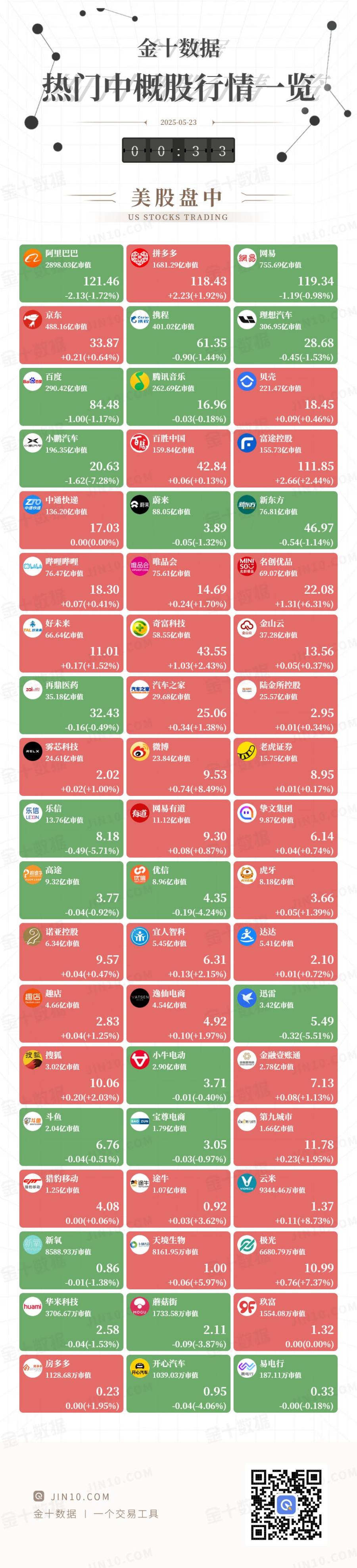
Market Capitalization Summary - The market capitalizations of various companies are listed, with notable figures including 136.20 billion for a leading company and 88.05 billion for another significant player [2] - Companies like MINISO and VIPSHOP have market caps of 76.81 billion and 75.61 billion respectively, indicating strong positions in the market [2] - TAL Education and other firms show varying market caps, with TAL at 66.64 billion and others like Zai Auto and Huya at 35.18 billion and 29.68 billion respectively [2] Stock Performance Overview - Stock price changes are noted, with MINISO showing a slight increase of +0.07 (+0.41%) and VIPSHOP increasing by +0.24 (+1.70%) [2] - TAL Education's stock rose by +1.03 (+2.43%), while other companies like Dada and Yatsen experienced minor fluctuations [2] - Companies such as Lexin and Huya saw declines, with Lexin down by -0.49 (-5.71%) and Huya down by -0.19 (-4.24%) [2] Company Specific Insights - MINISO and VIPSHOP are highlighted as strong competitors in the retail sector, with significant market caps and positive stock performance [2] - TAL Education continues to show resilience with a notable market cap and stock price increase, reflecting investor confidence [2] - Companies like Dada and Yatsen are also mentioned, indicating a diverse range of players in the market with varying performance metrics [2]






This Beauty Stock Poised For A Comeback?
Benzinga· 2025-05-22 13:19
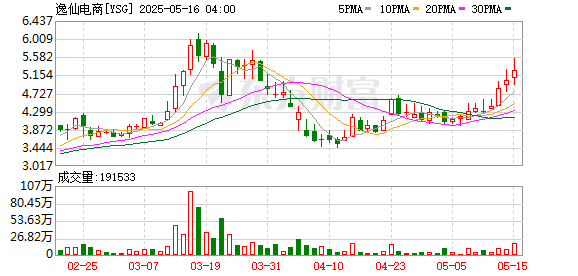
Core Viewpoint - Yatsen Holding Ltd. is experiencing a turnaround, driven primarily by a significant increase in skincare product revenue, marking a shift from its previous focus on color cosmetics [2][3][4]. Financial Performance - Yatsen reported a 7.8% year-on-year increase in first-quarter revenue, reaching 833.5 million yuan ($114.9 million), compared to 773.4 million yuan in the same quarter of 2024 [3][4]. - The company's net loss narrowed by 95.5% to 5.6 million yuan from 124.9 million yuan year-on-year, indicating improved financial health [3][4]. - Skincare revenue surged 47.4% year-on-year to 362.4 million yuan, increasing its share of total revenue to 43.5% from 31.7% a year earlier [4][8]. Market Position and Strategy - Yatsen's skincare segment is positioned as the fastest-growing area within China's 400 billion yuan beauty market, with skincare projected to reach over 700 billion yuan by 2028 [10]. - The company has invested heavily in R&D, filing 240 patents, primarily for skincare products, which has contributed to its recent success [3][4]. - Yatsen's market share in China's cosmetics market is currently only 1%, indicating significant room for growth [13]. Competitive Landscape - Yatsen's price-to-sales ratio (P/S) of 0.99 is significantly lower than that of profitable competitors like Shanghai Chicmax (3.88) and Proya Cosmetics (3.11) [6]. - The company has added several skincare brands to its portfolio, including DR. WU and Eve Lom, to enhance its market presence [9]. Consumer Trends - Chinese consumers are increasingly focused on skincare, particularly anti-aging and skin whitening products, which are perceived as essential rather than luxury items [11][14]. - The demand for innovative products is high among Chinese consumers, who are looking for value rather than just low prices [14].


金十图示:2025年05月16日(周五)热门中概股行情一览(美股盘中)
news flash· 2025-05-16 16:52
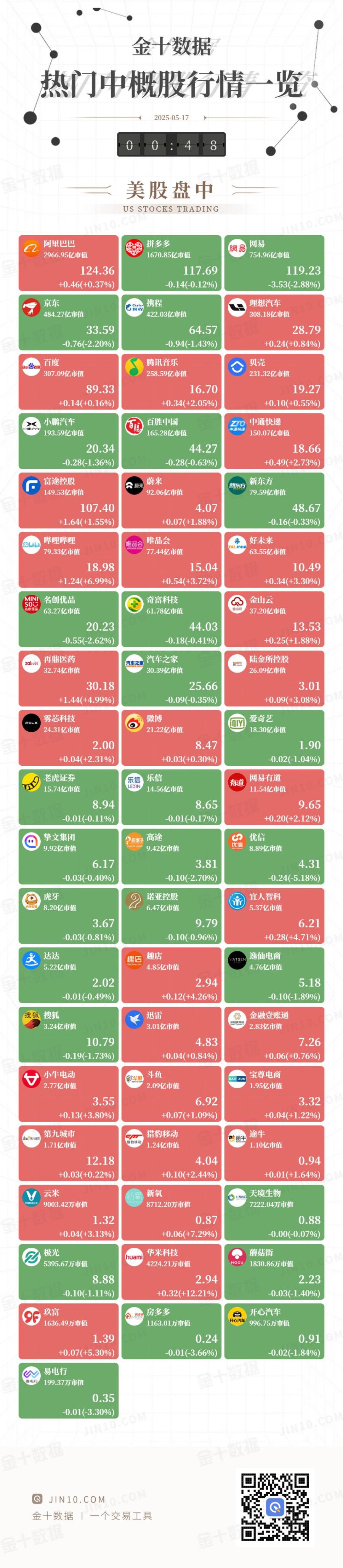
Market Capitalization Overview - The market capitalization of TAL Education Group is 14.95 billion, while Vipshop Holdings has a market cap of 9.21 billion [2] - Other companies such as Miniso and Qifu Technology have market caps of 7.77 billion and 6.33 billion respectively [2] - The market cap of various companies shows a range from 5.22 million to 149.53 billion, indicating a diverse market landscape [2] Stock Performance - TAL Education Group's stock increased by 1.64 (+1.55%), while Vipshop's stock rose by 0.07 (+1.88%) [2] - Miniso's stock saw a significant increase of 1.24 (+6.99%), indicating strong market performance [2] - Companies like Huya and Yiren Digital experienced slight declines in their stock prices, with decreases of -0.03 (-0.81%) and -0.10 (-0.96%) respectively [2] Comparative Analysis - The comparison of market caps shows that TAL Education Group leads with 14.95 billion, followed by Vipshop and Miniso [2] - The performance of stocks varies significantly, with some companies like Miniso showing robust growth compared to others that faced declines [2] - The data indicates a competitive environment among these companies, with varying degrees of market success and stock performance [2]


Yatsen Holding(YSG) - 2025 Q1 - Earnings Call Transcript
2025-05-16 12:32
Financial Data and Key Metrics Changes - Total net revenues for Q1 2025 increased by 7.8% year over year to RMB 833.5 million from RMB 773.4 million in the prior year period [16] - Gross profit for Q1 2025 increased by 9.7% to RMB 659.1 million, with gross margin rising to 79.1% from 77.7% in the prior year [17][18] - Non-GAAP net income for Q1 2025 was RMB 7.1 million, a significant turnaround from a non-GAAP net loss of RMB 83.8 million in the prior year [22] - Net loss for Q1 2025 was RMB 5.6 million, compared to RMB 124.9 million in the prior year, with a net loss margin of 0.7% versus 16.1% [22] Business Line Data and Key Metrics Changes - Net revenues from skincare brands rose by 47.7% year over year, while net revenues from color cosmetics brands decreased by 9.9% [16][17] - Selling and marketing expenses as a percentage of total net revenues decreased to 66.4% from 69.7% in the prior year, reflecting more strategic marketing spending [19] - General and administrative expenses as a percentage of total net revenues decreased to 7.8% from 18.1% in the prior year, attributed to lower share-based compensation and payroll expenses [20] Market Data and Key Metrics Changes - The beauty market in China saw a modest growth of 3.2% year over year, slightly trailing the 4.6% growth in total retail sales of consumer goods [5] - Combined beauty sales on Q1 and Douyin recorded low double-digit year-over-year growth, with Douyin outperforming Tmall in both skincare and color cosmetics categories [6] Company Strategy and Development Direction - The company is focused on accelerating growth for skincare brands and optimizing cost structure to prepare for profitable growth [8] - A new share repurchase program was approved, allowing the company to repurchase up to RMB 30 million worth of ordinary shares over the next 24 months, demonstrating confidence in future potential [14][15] Management's Comments on Operating Environment and Future Outlook - Management expressed encouragement regarding the progress made in executing strategic transformation despite complex market conditions [15] - The company expects total net revenues for Q2 2025 to be between RMB 810.4 million and RMB 889.9 million, representing a year-over-year increase of approximately 2% to 12% [23] Other Important Information - The company launched the third Bocawu Acne Research Fund project, which has reached over 20,000 doctors and received more than 350 clinical research proposals [12] - The global R&D center in Shanghai was accredited by the China National Accreditation Service, reinforcing the company's commitment to excellence in beauty research [14] Q&A Session Summary Question: How does the company plan to promote new products of Perfect Diary and Ganik? - The company emphasized that product innovation and efficacy are crucial for driving repeat purchases, with strong initial consumer feedback on new products [27] Question: How is the performance of the June 18 shopping festival so far? - Management indicated that it is still early to predict overall performance, but sales are currently in line with expectations [29]
Yatsen Holding(YSG) - 2025 Q1 - Earnings Call Transcript
2025-05-16 12:30
Financial Data and Key Metrics Changes - Total net revenues for Q1 2025 increased by 7.8% to RMB 833.5 million from RMB 773.4 million in the prior year period, primarily due to a 47.7% year-over-year increase in net revenues from skincare brands [15][21] - Gross profit for Q1 2025 increased by 9.7% to RMB 659.1 million from RMB 600.9 million, with gross margin rising to 79.1% from 77.7% [15][16] - The net loss for Q1 2025 was RMB 5.6 million, a significant improvement from RMB 124.9 million in the prior year, resulting in a net loss margin of 0.7% compared to 16.1% [21][22] Business Line Data and Key Metrics Changes - Skincare brands achieved a remarkable revenue growth of 47.7% year-over-year, while color cosmetics brands saw a decline of 9.9% [15][21] - Selling and marketing expenses as a percentage of total net revenues decreased to 66.4% from 69.7%, reflecting more strategic marketing spending [18][19] - General and administrative expenses as a percentage of total net revenues decreased to 7.8% from 18.1%, attributed to lower share-based compensation and reduced headcount [19] Market Data and Key Metrics Changes - The beauty market in China saw a modest growth of 3.2% year-over-year in retail sales, slightly trailing the 4.6% growth in total retail sales of consumer goods [5][6] - Online beauty sales mirrored this trend, with combined beauty sales on Q1 and Douyin recording low double-digit year-over-year growth [6] Company Strategy and Development Direction - The company is focused on accelerating growth for skincare brands and optimizing cost structures to prepare for profitable growth [7][14] - A new share repurchase program was approved, allowing the company to repurchase up to RMB 30 million worth of ordinary shares over the next 24 months, indicating confidence in future potential [13][14] - Continued investment in R&D is emphasized as a core competitive advantage, with a global R&D center in Shanghai receiving accreditation [13][14] Management's Comments on Operating Environment and Future Outlook - Management expressed encouragement regarding the progress made in executing strategic transformation despite complex market conditions [14] - For Q2 2025, the company expects total net revenues to be between RMB 810.4 million and RMB 889.9 million, representing a year-over-year increase of approximately 2% to 12% [22] Other Important Information - The company hosted an offline event to launch an upgraded product, enhancing brand awareness through targeted marketing efforts [9][10] - The company is committed to scientific research, having launched an acne research fund project that has reached over 20,000 doctors [11] Q&A Session Summary Question: How does the company plan to promote new products of Perfect Diary and Ganik? - The company emphasizes product innovation and efficacy as key drivers for consumer repeat purchases, with strong initial feedback on new products [25][26] Question: How is the performance of the June 18 shopping festival so far? - Management indicated that it is still early to predict overall performance, but initial sales are in line with expectations [28]
Yatsen Holding(YSG) - 2025 Q1 - Earnings Call Presentation
2025-05-16 11:26
Financial Performance - Total net revenues reached RMB 833.5 million, a 7.8% year-over-year increase[10] - The gross margin improved to 79.1%, up 1.4 percentage points year-over-year[10] - GAAP net loss margin narrowed significantly to 0.7%, a 15.5 percentage point improvement year-over-year[10] - The company achieved a non-GAAP net income margin of 0.9%, compared to a non-GAAP net loss margin of 10.8% in the prior year period[10] - Net cash generated from operating activities was RMB 23.8 million[10] Revenue Breakdown - Skincare brands experienced robust year-over-year growth, with net revenues increasing by 47.7% from RMB 245.3 million to RMB 362.4 million[20] - Combined net revenues for Galénic, DR.WU (mainland China business), and Eve Lom increased by 58.0% year-over-year[25] Market Context - Total retail sales of consumer goods in China grew by 4.6%[14] - Beauty product retail sales in China grew by 3.2%[14] Operating Expenses - Strategic marketing spending and selective closure of offline stores led to lower S&M expenses as a percentage of total net revenues[46] - Lower share-based compensation expenses and reduced headcount contributed to lower G&A expenses as a percentage of total net revenues[46]
逸仙电商业绩延续增长:第一季度营收增至8.3亿元 符合此前业绩指引
Zheng Quan Ri Bao· 2025-05-16 11:08
Core Insights - The company reported a revenue increase to 830 million yuan in Q1 2025, representing a year-on-year growth of 7.8%, continuing its growth trend [2] - The skincare segment, including brands Galénic, DR.WU, and EVELOM, saw a net income increase of 58%, contributing to a 47.7% growth in skincare revenue, totaling 360 million yuan [2] - The skincare segment accounted for 43.5% of total revenue, maintaining over 30% for 12 consecutive quarters [2] - Gross profit increased by 9.7% year-on-year, with a gross margin rising to 79.1%, marking a historical high for the quarter [2] - The company achieved a Non-GAAP net profit of 7.14 million yuan, marking two consecutive quarters of positive revenue growth and profitability [2] - The company emphasizes R&D as a core strategy for future growth, with Q1 2025 R&D investment nearing 22.64 million yuan, and a cumulative investment of over 580 million yuan since 2020 [2] Market Analysis - Analysts view the Q1 performance as a strong start, with strategic transformation yielding results, laying a solid foundation for stable growth throughout the year [3] - The company projects Q2 2025 total revenue between 810 million and 890 million yuan, indicating a year-on-year growth of approximately 2% to 12% [3] - The board has approved a new stock repurchase plan, allowing for the buyback of up to 30 million USD in common stock over the next 24 months, reflecting management's confidence in the company's long-term prospects [3]
Yatsen Announces First Quarter 2025 Financial Results and Provides Updates on Share Repurchase Program
Prnewswire· 2025-05-16 09:00
Core Viewpoint - Yatsen Holding Limited reported a 7.8% year-over-year increase in total net revenues for Q1 2025, driven by significant growth in skincare brands despite a challenging beauty market [3][4][6]. Financial Performance - Total net revenues for Q1 2025 reached RMB 833.5 million (US$ 114.9 million), up from RMB 773.4 million in the same period last year [4][6]. - Skincare brands contributed RMB 362.4 million (US$ 49.9 million) in net revenues, marking a 47.7% increase year-over-year [6]. - Gross profit increased by 9.7% to RMB 659.1 million (US$ 90.8 million), with gross margin rising to 79.1% from 77.7% [4][6]. Operating Expenses - Total operating expenses decreased by 8.6% to RMB 693.2 million (US$ 95.5 million) compared to the prior year [5][7]. - Selling and marketing expenses were RMB 553.8 million (US$ 76.3 million), with a decrease in percentage of total net revenues to 66.4% from 69.7% [7]. - General and administrative expenses dropped to RMB 64.9 million (US$ 8.9 million), representing 7.8% of total net revenues, down from 18.1% [7][8]. Loss and Income Metrics - The company recorded a net loss of RMB 5.6 million (US$ 0.8 million), significantly reduced from RMB 124.9 million a year ago [6][11]. - Non-GAAP net income for Q1 2025 was RMB 7.1 million (US$ 1.0 million), compared to a non-GAAP net loss of RMB 83.8 million in the previous year [12][36]. Cash Flow and Balance Sheet - As of March 31, 2025, Yatsen had cash and short-term investments totaling RMB 1.28 billion (US$ 176.4 million) [13]. - Net cash generated from operating activities was RMB 23.8 million (US$ 3.3 million), a turnaround from net cash used in operating activities of RMB 121.8 million in the prior year [13]. Business Outlook - For Q2 2025, Yatsen expects total net revenues to be between RMB 810.4 million and RMB 889.9 million, indicating a year-over-year increase of approximately 2% to 12% [14]. Share Repurchase Program - The company has initiated a new share repurchase program allowing for the repurchase of up to US$ 30.0 million worth of ordinary shares over the next 24 months [15][16].

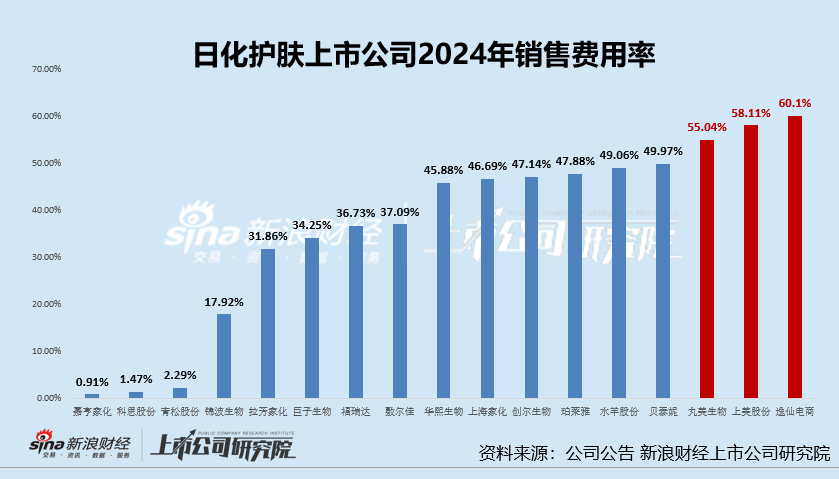
日化护肤年报|巨额营销侵吞利润:逸仙电商销售费用率60%登顶 丸美生物、上美股份超5成收入用于营销
Xin Lang Zheng Quan· 2025-05-16 07:50
Group 1 - The core viewpoint is that the high sales expenses in the daily chemical skincare industry significantly erode profits, leading to high gross margins but low net margins [1][3] - In 2024, over half of the selected companies in the daily chemical skincare industry have a sales expense ratio exceeding 40%, indicating that they allocate more than 40% of their revenue to marketing [1] - Yatsen E-commerce has the highest sales expense ratio at 60.1%, followed by Shangmei Co. and Marubi Biotechnology with ratios of 58.11% and 55.04% respectively [1] Group 2 - Many listed companies in the daily chemical skincare industry invest heavily in marketing while underinvesting in research and development, leading to severe product homogeneity and insufficient innovation [3] - The heavy reliance on marketing has resulted in a price war within the industry, which diminishes profitability and creates a vicious cycle [3] - Companies like Betaini have become overly dependent on a single brand, with over 90% of their main business revenue coming from the "Winona" brand, which has seen a sales decline of 5.45% in 2024 [3] Group 3 - The challenge for many companies in the daily chemical skincare industry in 2025 will be to balance marketing and research and development expenditures, transitioning from a marketing-driven approach to a product-driven one [4]

日化护肤年报|高毛利低净利现象明显 逸仙电商、上海家化、嘉亨家化净利率为负
Xin Lang Zheng Quan· 2025-05-16 07:48
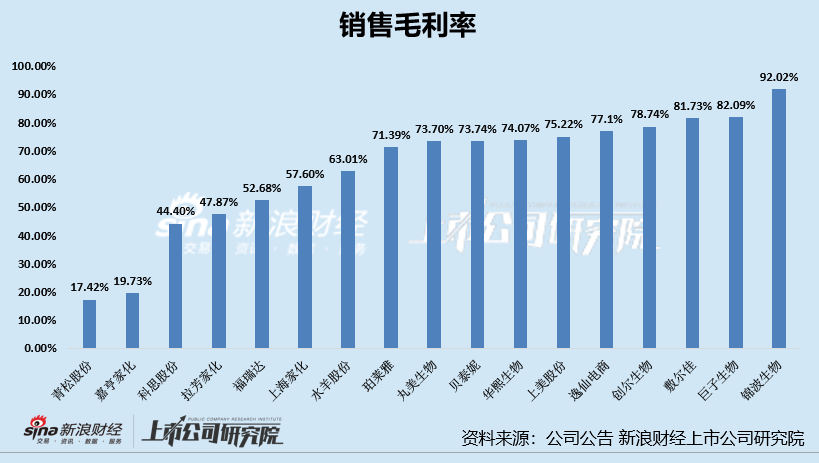
Core Insights - The analysis focuses on the financial performance of 17 representative listed companies in the daily chemical skincare industry, highlighting the significant disparity between sales gross margin and net profit margin [1][2]. Group 1: Financial Performance - In 2024, nearly 80% of the selected companies reported a sales gross margin exceeding 50%, with some companies achieving gross margins over 75% [1][2]. - The industry shows a trend of high gross margins but low net profit margins, with 70% of companies having net profit margins below 15% [1][2]. - The top three companies in terms of sales gross margin are Jinbo Biological (92.02%), Juzhi Biological (82.09%), and Fulejia (81.73%) [2]. Group 2: Sales Net Margin Analysis - The leading companies in sales net margin are Jinbo Biological (50.68%), Juzhi Biological (37.22%), and Fulejia (32.78%) [4]. - Companies such as Jiaheng Household Chemicals (-2.57%), Shanghai Household Chemicals (-14.67%), and Yixian E-commerce (-20.9%) exhibit significantly low net profit margins [4]. Group 3: Industry Challenges - The high sales expenses in the daily chemical skincare industry are identified as a primary reason for the low net profit margins, as substantial marketing costs erode profits [2]. - Qing Song Co. has the lowest sales gross margin at 17.42%, attributed to its positioning as an OEM, facing intense competition from thousands of domestic cosmetic OEMs [6]. - Yixian E-commerce's negative net profit margin of -20.9% is linked to ongoing losses and high marketing expenditures [6].