
维康药业

Search documents
维康药业(300878) - 关于召开2025年第一次临时股东大会的通知
2025-11-24 09:15
证券代码:300878 证券简称:维康药业 公告编号:2025-047 浙江维康药业股份有限公司 5、会议的召开方式:现场表决与网络投票相结合。 6、会议的股权登记日:2025 年 12 月 03 日 7、出席对象: 关于召开 2025 年第一次临时股东大会的通知 本公司及董事会全体成员保证信息披露的内容真实、准确、完整,没有 虚假记载、误导性陈述或重大遗漏。 一、召开会议的基本情况 1、股东会届次:2025 年第一次临时股东大会 2、股东会的召集人:董事会 3、本次会议的召集、召开符合《中华人民共和国公司法》《深圳证券交易 所创业板股票上市规则》《深圳证券交易所上市公司自律监管指引第 2 号—创业 板上市公司规范运作》等法律、行政法规、部门规章、规范性文件及《公司章程》 的有关规定。 4、会议时间: (1)现场会议时间:2025 年 12 月 10 日 14:00 (2)网络投票时间:通过深圳证券交易所系统进行网络投票的具体时间为 2025 年 12 月 10 日 9:15-9:25,9:30-11:30,13:00-15:00;通过深圳证券交易所互 联网投票系统投票的具体时间为 2025 年 12 月 1 ...

维康药业(300878) - 第四届监事会第八次会议决议公告
2025-11-24 09:15
浙江维康药业股份有限公司(以下简称"公司")于 2025 年 11 月 19 日以 电子邮件、专人送达或电话方式发出第四届监事会第八次会议通知,会议于 2025 年 11 月 24 日在浙江省丽水经济开发区遂松路 2 号研发大楼会议室以现场方式召 开,应参加表决的监事 3 人,实际参加表决的监事 3 人,会议由公司监事会主席 叶志学主持。本次会议的召集、召开和表决程序符合有关法律、法规、部门规章、 规范性文件和《公司章程》的规定,会议形成的决议合法有效。 二、监事会会议审议情况 1、审议通过《关于调整组织架构并修订<公司章程>的议案》 证券代码:300878 证券简称:维康药业 公告编号:2025-043 浙江维康药业股份有限公司 第四届监事会第八次会议决议公告 本公司及监事会全体成员保证信息披露内容的真实、准确和完整,没有 虚假记载、误导性陈述或重大遗漏。 一、监事会会议召开情况 表决结果:3 票同意,0 票反对,0 票弃权。 3、审议通过《关于拟变更会计师事务所的议案》 经审核,监事会认为:北京中天恒会计师事务所(特殊普通合伙)具备为上 市公司提供审计服务的经验和能力,能够遵循独立、专业、客观、公正的执业 ...
维康药业(300878) - 第四届董事会第八次会议决议公告
2025-11-24 09:15
证券代码:300878 证券简称:维康药业 公告编号:2025-042 浙江维康药业股份有限公司 第四届董事会第八次会议决议公告 本公司及董事会全体成员保证信息披露的内容真实、准确、完整,没有 虚假记载、误导性陈述或重大遗漏。 一、董事会会议召开情况 浙江维康药业股份有限公司(以下简称"公司")第四届董事会第八次会议 通知于 2025 年 11 月 19 日以电子邮件、专人送达或电话方式送达全体董事,本 次会议于 2025 年 11 月 24 日在浙江省丽水经济开发区遂松路 2 号研发大楼会议 室以现场结合通讯方式召开。本次会议由董事长刘洋先生主持,公司应出席董事 7 人,实际出席董事 7 人。本次董事会会议的召集、召开和表决程序符合有关法 律、法规、部门规章、规范性文件和《公司章程》的规定,决议内容合法有效。 二、董事会会议审议情况 1、审议通过《关于调整组织架构并修订<公司章程>的议案》 根据《公司法》《关于新<公司法>配套制度规则实施相关过渡期安排》《上 市公司章程指引(2025 年修订)》《深圳证券交易所创业板股票上市规则(2025 年修订)》《深圳证券交易所上市公司自律监管指引第 2 号——创业板上 ...
关注流感高发带来的呼吸系统用药需求增长
Xiangcai Securities· 2025-11-23 13:42
Investment Rating - The industry maintains an "Overweight" rating, suggesting a positive outlook for investment opportunities in the sector [5]. Core Insights - The demand for respiratory medications is expected to rise due to the increase in flu cases, with a reported 955 flu-like illness outbreaks, marking a 53.8% increase from the previous week [4]. - The market performance of the Traditional Chinese Medicine (TCM) sector showed a decline of 6.46% last week, ranking second among secondary pharmaceutical sectors [1]. - The TCM sector's Price-to-Earnings (PE) ratio (ttm) is 27.36X, down by 1.89X week-on-week, while the Price-to-Book (PB) ratio (lf) is 2.31X, down by 0.16X [2]. Market Performance - The TCM sector reported a closing index of 6419.16 points, down 6.46% for the week, while the overall pharmaceutical sector index fell by 6.88% [1][16]. - Among companies, *ST Changyao, Weikang Pharmaceutical, Jiangzhong Pharmaceutical, Yunnan Baiyao, and Dong'e Ejiao showed better performance, while Te Yi Pharmaceutical, Panlong Pharmaceutical, Zhendong Pharmaceutical, Yiling Pharmaceutical, and Enwei Pharmaceutical lagged [1]. Valuation Metrics - The TCM sector's PE ratio is at the 28.94% percentile since 2013, while the PB ratio is at the 5.93% percentile, indicating relatively low valuation compared to historical data [2]. Supply Chain Insights - The market for TCM raw materials is currently weak, with a price index of 224.73 points, reflecting a 0.3% decrease due to oversupply and inventory buildup [3]. Investment Recommendations - Three main investment themes are highlighted: 1. Price governance focusing on competitive advantages and innovation capabilities [5]. 2. Consumption recovery driven by macroeconomic improvement and aging population [5]. 3. State-owned enterprise reform, which is expected to enhance efficiency and performance [5]. Target Companies - Recommended companies include Zhaoli Pharmaceutical and Yiling Pharmaceutical, with a focus on those with strong R&D capabilities and unique products [9].
中药板块11月17日跌1.47%,万邦德领跌,主力资金净流出16.39亿元
Zheng Xing Xing Ye Ri Bao· 2025-11-17 08:49
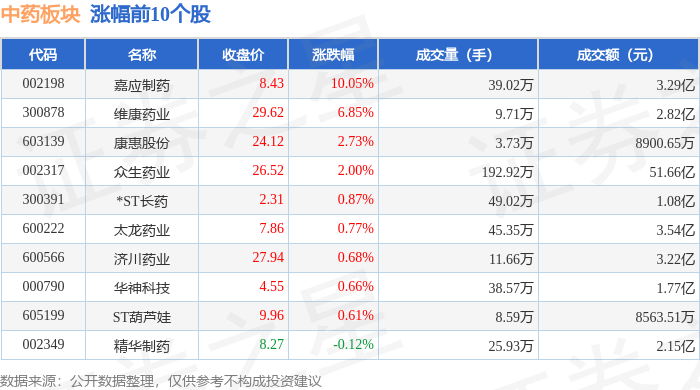
Market Overview - The Chinese traditional medicine sector experienced a decline of 1.47% on November 17, with Wanbangde leading the drop [1] - The Shanghai Composite Index closed at 3972.03, down 0.46%, while the Shenzhen Component Index closed at 13202.0, down 0.11% [1] Stock Performance - Notable gainers included: - Jiaying Pharmaceutical (002198) with a closing price of 8.43, up 10.05% and a trading volume of 390,200 shares [1] - Weikang Pharmaceutical (300878) closed at 29.62, up 6.85% with a trading volume of 97,100 shares [1] - Significant losers included: - Wanbangde (002082) closed at 13.61, down 6.91% with a trading volume of 186,000 shares [2] - Teyi Pharmaceutical (002728) closed at 14.17, down 6.84% with a trading volume of 1,277,300 shares [2] Capital Flow - The traditional medicine sector saw a net outflow of 1.639 billion yuan from institutional investors, while retail investors contributed a net inflow of 1.444 billion yuan [2][3] - The main stocks with significant capital inflow included: - Jiaying Pharmaceutical with a net inflow of 62.818 million yuan, accounting for 19.12% of its trading volume [3] - Huasheng Technology (000790) with a net inflow of 20.121 million yuan, representing 11.37% of its trading volume [3]


万联晨会-20251113
Wanlian Securities· 2025-11-13 00:59
Market Overview - The A-share market experienced fluctuations with the Shanghai Composite Index falling by 0.07% to 4000.14 points, the Shenzhen Component Index down by 0.36%, and the ChiNext Index decreasing by 0.39%. The total trading volume in the A-share market was 1.96 trillion RMB, with over 3500 stocks declining. The household appliances, comprehensive, and textile and apparel sectors led the gains, while the electric equipment, machinery, and computer sectors lagged behind [2][8] - In the Hong Kong market, the Hang Seng Index rose by 0.85% and the Hang Seng Technology Index increased by 0.16%. In overseas markets, the Dow Jones rose by 0.68%, the S&P 500 increased by 0.06%, while the Nasdaq fell by 0.26% [2][8] Important News - The Shanghai Stock Exchange International Investor Conference opened on November 12, 2025, focusing on "Value Leadership and Open Empowerment - New Opportunities for International Capital Investment and M&A." The event attracted over 400 representatives from more than 100 well-known investment institutions across Europe, America, Asia-Pacific, and the Middle East. Discussions centered on new opportunities for investment and M&A in China, driven by macroeconomic stability and policy optimization [3][9] Blood Products Sector - The blood products sector has faced profit pressure, with a year-to-date average stock price decline of 8.35%. The sector's revenue growth for the first three quarters of 2025 was 0.30% year-on-year, with a Q3 growth of 4.11%. However, the net profit attributable to shareholders saw a significant decline of 23.14% year-on-year, with Q3 showing a decrease of 30.89% [10][13] - The sales gross margin and net profit margin for Q3 2025 were 40.42% (down 7.26 percentage points year-on-year) and 18.74% (down 10.17 percentage points year-on-year), respectively. The sector's valuation as of November 10, 2025, had a price-to-earnings ratio (TTM) of 30.07, indicating a high percentile ranking since 2020 [13][14] Lithium Battery Sector - The lithium battery sector showed stable demand in the first three quarters of 2025, with overall revenue reaching 636.19 billion RMB, a year-on-year increase of 16.12%, and a net profit of 62.62 billion RMB, up 40.37% year-on-year. Q3 alone saw revenue of 235.43 billion RMB, a 20.42% increase year-on-year, and a net profit of 25.34 billion RMB, up 58.20% year-on-year [14][15] - The battery segment achieved revenue of 417.27 billion RMB in the first three quarters, with a year-on-year growth of 11.92%. In Q3, revenue reached 154.04 billion RMB, reflecting a 16.63% increase year-on-year [16][15] Traditional Chinese Medicine Sector - The traditional Chinese medicine sector faced ongoing performance pressure in Q3 2025, with an overall revenue decline of 1.57% year-on-year and a net profit decrease of 5.25% year-on-year. The sector's sales gross margin was 40.40%, with a net profit margin of 9.21% [20][23] - Among 69 listed companies in the sector, 49 saw stock price increases year-to-date, with notable performers including Wanbangde and Tianmu Pharmaceutical, which both exceeded 100% growth [23][24]
中药Q3:业绩持续承压,上市公司表现分化
Wanlian Securities· 2025-11-12 08:05
Investment Rating - The report maintains a "Hold" rating for the OTC leading companies in the traditional Chinese medicine sector, indicating resilience compared to the broader market [5]. Core Insights - The traditional Chinese medicine sector continues to face performance pressure in Q3 2025, with significant differentiation among listed companies [2]. - The overall revenue growth rate for the traditional Chinese medicine sector in Q3 2025 was -1.57% year-on-year and -6.15% quarter-on-quarter, with a net profit decline of -5.25% year-on-year and -29.32% quarter-on-quarter [4][43]. - The sector's performance is influenced by policy changes, market conditions, and cost pressures, particularly in retail and hospital channels [48]. Summary by Sections 1. Market Review - From the beginning of 2025 to November 5, 2025, 49 out of 69 listed companies in the traditional Chinese medicine sector saw their stock prices increase, with notable gains from Wanbangde and Tianmu Pharmaceutical exceeding 100% [4][36]. - In Q3 2025, 46 companies reported stock price increases, with Wanbangde, Zhendong Pharmaceutical, and Weikang Pharmaceutical leading the gains [4][38]. 2. Performance Review - The overall revenue for the traditional Chinese medicine sector decreased by 4.28% year-on-year in the first three quarters of 2025, with Q3 showing a smaller decline of 1.57% [43]. - The net profit for the sector also saw a year-on-year decrease of 1.23% in the first three quarters of 2025, with Q3 reflecting a decline of 5.25% [46]. - Among 69 listed companies, 26 reported year-on-year revenue growth, while 25 showed quarter-on-quarter growth in Q3 2025 [51]. 3. Valuation - As of November 10, 2025, the price-to-earnings ratio (TTM) for the traditional Chinese medicine sector was 28.51, with historical percentiles indicating a trend of increasing valuations since 2020 [4].
中药板块11月11日涨0.84%,维康药业领涨,主力资金净流入1.78亿元
Zheng Xing Xing Ye Ri Bao· 2025-11-11 08:39
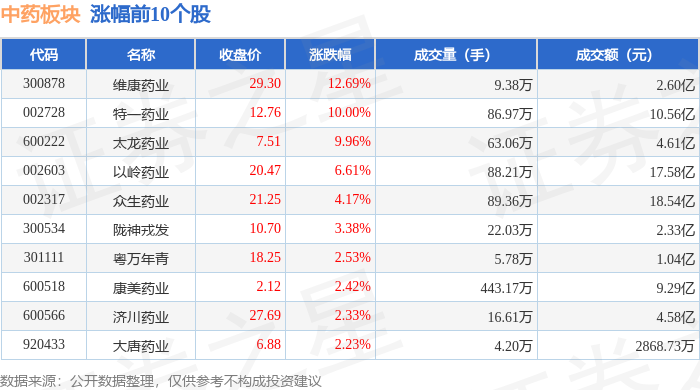
Core Insights - The traditional Chinese medicine sector experienced a rise of 0.84% on November 11, with Weikang Pharmaceutical leading the gains [1] - The Shanghai Composite Index closed at 4002.76, down 0.39%, while the Shenzhen Component Index closed at 13289.0, down 1.03% [1] Company Performance - Weikang Pharmaceutical (300878) closed at 29.30, up 12.69% with a trading volume of 93,800 shares and a transaction value of 260 million [1] - Te Yi Pharmaceutical (002728) closed at 12.76, up 10.00% with a trading volume of 869,700 shares and a transaction value of 1.056 billion [1] - Tai Long Pharmaceutical (600222) closed at 7.51, up 9.96% with a trading volume of 630,600 shares and a transaction value of 461 million [1] - Yi Ling Pharmaceutical (002603) closed at 20.47, up 6.61% with a trading volume of 1,882,100 shares and a transaction value of 1.758 billion [1] - Zhongsheng Pharmaceutical (002317) closed at 21.25, up 4.17% with a trading volume of 893,600 shares and a transaction value of 1.854 billion [1] Market Dynamics - The traditional Chinese medicine sector saw a net inflow of 178 million from institutional investors, while retail investors experienced a net outflow of 1.3583 million [2] - The main capital flow for Te Yi Pharmaceutical showed a net inflow of 225 million, while retail investors had a net outflow of 127 million [3] - Tai Long Pharmaceutical had a net inflow of 83.56 million from main capital, with retail investors seeing a net outflow of 472.73 million [3]


概念掘金 | 流感高峰将至,“流感链”全面升温!受益标的有哪些?
Ge Long Hui· 2025-11-11 06:48
Core Insights - The flu season in China is expected to start earlier than usual, with respiratory diseases entering a high incidence period [1][4] - A surge in flu-related stocks has been observed in the A-share market, with significant gains for companies like Weikang Pharmaceutical and Te Yi Pharmaceutical [2][3] Industry Overview - The China CDC has reported an increase in flu activity in southern provinces, indicating a potential early onset of the flu season [4] - Experts predict that the peak of the flu epidemic may occur in late December to early January, with a notable shift in circulating strains from H1N1 to H3N2, leading to lower immunity in the population [5][6] Market Response - Flu concept stocks have shown strong performance, with Weikang Pharmaceutical rising over 12% and several other companies reaching their daily limit [2][3] - The demand for antiviral medications is expected to surge as the flu season approaches, prompting pharmaceutical companies to ramp up production [8] Investment Opportunities - The year 2025 is anticipated to be a pivotal year for domestic flu medications, with several innovative drugs expected to receive approval, presenting both short-term and long-term investment opportunities [8] - The low vaccination rates in China highlight the urgent need for a comprehensive flu management system, which could benefit key sectors such as vaccine development, infection control, and antiviral drug production [8]

概念掘金 | 流感高峰将至,“流感链”全面升温!核心标的名单曝光
Ge Long Hui· 2025-11-11 06:20
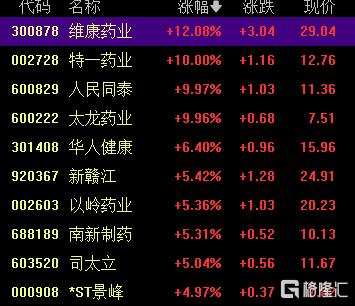
Group 1 - The flu season in China is expected to peak earlier this year, potentially in late December to early January, due to rising flu activity in southern provinces and different circulating strains compared to last year [4][5]. - The dominant strain this year is expected to be H3N2, which may lead to lower immunity in the population compared to last year's H1N1 strain [5]. - The demand for antiviral medications is anticipated to surge as the flu peak approaches, with several pharmaceutical companies ramping up production [8]. Group 2 - A-share flu-related stocks have shown strong performance, with notable increases in companies such as Weikang Pharmaceutical (+12.08%), Te Yi Pharmaceutical (+10.00%), and Renmin Tongtai (+9.97%) [2][3]. - The flu vaccine and antiviral drug sectors are expected to benefit from the anticipated increase in flu cases, highlighting a dual opportunity for investors in both short-term pandemic catalysts and long-term innovation [8]. - The overall flu-related industry, including vaccine development, infection control, and antiviral drugs, is likely to see a demand surge and value reassessment during the flu season [8].