
Lululemon

Search documents
关税风险基本落地,纺织制造龙头有望迎来重估
Shanxi Securities· 2025-10-27 07:51
Investment Rating - The report assigns an "A" rating for investment in the textile manufacturing industry, with specific buy recommendations for Shenzhou International (02313.HK), Yuanyuan Group (00551.HK), and Huali Group (300979.SZ) [1]. Core Insights - The global textile and apparel export value is approximately $900 billion, with an expected compound annual growth rate (CAGR) of 3.2% from 2020 to 2024. The export value is projected to reach $882.7 billion by 2024 [2][16]. - The apparel manufacturing industry is experiencing a trend of vertical integration, with some mid-to-large companies extending upstream into weaving and dyeing processes, while the footwear industry remains more concentrated in competition [3][4]. - The report highlights that the sportswear manufacturing sector has a low concentration level, with vertical integration becoming a trend. Shenzhou International is identified as the largest sports knitwear manufacturer globally, with a production capacity of 550 million garments and revenue of 28.7 billion yuan in 2024 [4][9]. Summary by Sections Textile Manufacturing Overview - The global textile and apparel export value is around $900 billion, with the EU, the US, and Japan being the top three importers. The CAGR from 1989 to 2000 was 5.6%, while from 2014 to 2020, it slowed to -0.3% due to inventory destocking and pandemic impacts [16][19]. - The report notes that the textile manufacturing industry is shifting globally, with China's export share declining to 34% in 2023 [19][20]. Apparel Manufacturing Industry - The apparel manufacturing supply chain includes six main areas: fiber, spinning, weaving, dyeing, garment making, and retail. The trend is towards vertical integration, enhancing product development capabilities [36]. - Major apparel manufacturers have high customer concentration, with the largest customer accounting for about 30% of revenue for many companies [50][52]. - The report indicates that overseas production capacity is expanding, with Vietnam, Cambodia, and Indonesia being the primary locations for apparel manufacturing [55]. Footwear Manufacturing Industry - The footwear manufacturing industry has a higher concentration level, with leading companies like Yuanyuan Group dominating the market. In 2024, Yuanyuan Group is expected to produce 255 million pairs of shoes, generating revenue of $5.621 billion [4][9]. - The report emphasizes that the competition in the footwear sector is more concentrated compared to apparel, with fewer suppliers for footwear than for apparel [3][43]. Investment Recommendations - The report recommends Shenzhou International due to its lower exposure to the US market and strong overseas fabric production capacity, which exceeds 50% [9]. - Yuanyuan Group is recommended for its strong upstream material control and potential for profit recovery as production capacity increases [9]. - Huali Group is noted for its average exposure to the US market and optimistic sales outlook due to new client acquisitions [9].
价值研究所|一纸任命47亿,波司登再追“高端梦”
Zhong Guo Ji Jin Bao· 2025-10-22 13:54
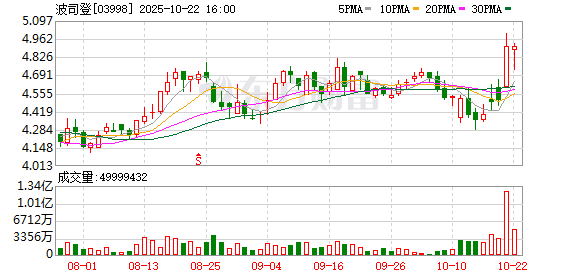
Core Viewpoint - The appointment of Kim Jones as the creative director for Bosideng's high-end series is seen as a significant step in the company's strategy to upscale its brand and product offerings, leading to a notable market response with a stock price increase of nearly 9% [2][4][10]. Company Strategy - Bosideng aims to transition towards a high-end market, as evidenced by its previous initiatives, including a logo redesign and the launch of its first high-end series "Dengfeng" priced above 10,000 yuan [7][8]. - The company has previously collaborated with various international designers, but Kim Jones's role marks a deeper involvement in design, visual arts, and global marketing strategies [6][8]. Market Dynamics - The global down jacket market is experiencing shifts, with traditional high-end brands like Canada Goose facing growth challenges, creating opportunities for domestic brands like Bosideng to capture market share [4][10]. - The competitive landscape is becoming more complex, with Bosideng needing to address both high-end competitors and cross-category challengers [12]. Financial Performance - Bosideng reported a revenue of 25.9 billion yuan for the 2024/25 fiscal year, marking a historical high for eight consecutive years, with a net profit increase of 14.3% to 3.51 billion yuan [10]. - The company's sales and distribution expenses have surged from 2.45 billion yuan to 8.055 billion yuan from 2018 to 2024, indicating a high dependency on marketing for growth [12]. Industry Impact - Kim Jones's appointment is viewed as a pivotal moment for Bosideng, potentially enhancing its brand perception and market positioning in the high-end segment [4][11]. - The fashion industry is witnessing a trend towards rational consumer behavior, where both high-end appeal and cost-effectiveness are prioritized [10].

Billionaire Bill Ackman Quietly Doubled Down on His Hedge Fund's $1.4 Billion Turnaround Bet
The Motley Fool· 2025-10-21 07:10
Core Viewpoint - Bill Ackman, a prominent investment manager, has made a significant investment in Nike, converting a $1.4 billion equity stake into deep in the money call options, anticipating that this strategy will yield double the returns compared to holding the stock directly [3][9]. Company Overview - Nike's revenue declined by 10% in the quarter ending August 2024, prompting a leadership change as the board replaced former CEO John Donahue with Elliott Hill, who initiated the "Win Now" strategy to revitalize the brand [5][4]. - The "Win Now" strategy focuses on enhancing brand marketing, accelerating product innovation, and improving wholesale relationships while restoring the direct-to-consumer model to premium status [5]. Recent Performance - Nike's revenue showed a slight increase of 1% year-over-year in the last quarter, although it was down 1% on an FX-neutral basis, with notable strength in the wholesale segment despite a decline in direct-to-consumer sales [6]. - The company is facing challenges in the sportswear market, with competitors like Under Armour and Lululemon also experiencing sales declines, and anticipates an additional $1.5 billion in expenses due to tariffs [7]. Future Outlook - Despite short-term challenges, Nike is expected to improve its inventory position and innovate new products, which should lead to a return to growth [8]. - Analysts predict a 41% improvement in earnings per share for fiscal 2027, with further growth expected in fiscal 2028, indicating a positive long-term outlook for the company [10]. Valuation - Nike's stock is currently trading at 27 times next year's earnings expectations and just 2 times trailing sales, suggesting it is undervalued with more upside potential than downside risk [11].

Nike CEO Elliott Hill's first year: Wall Street grades his comeback plan a B.
Business Insider· 2025-10-14 09:56
Core Insights - Elliott Hill has been working on revitalizing Nike since his return as CEO in October 2024, focusing on addressing declining sales and competition from smaller brands [1][2][4] - Hill's "win now" strategy aims to refocus Nike on sports categories, particularly running and basketball, moving away from a reliance on retro styles [2][8][17] Financial Performance - Nike's revenue fell 10% year-over-year to $11.6 billion in the quarter before Hill's appointment, with a total revenue of $46.3 billion for fiscal year 2025, down 9% [6][12] - Despite initial optimism, Nike's stock has decreased by about 19% since Hill's appointment, underperforming the S&P 500 and peers like Adidas [12][39] Strategic Initiatives - Hill's strategy includes improving relationships with wholesale partners, which had been strained due to a focus on direct-to-consumer sales [7][28] - Nike's wholesale revenues increased by 7% to $6.8 billion in the first quarter of fiscal year 2026, indicating a recovery in this area [30] - The company is also focusing on enhancing its digital and direct-to-consumer channels, although digital revenues fell 12% year-over-year last quarter [31][32] Market Positioning - Hill's turnaround plan emphasizes a return to Nike's running roots, with the running category experiencing a 20% growth last quarter [21] - Nike is actively targeting female athletes, launching initiatives like the NikeSkims brand and expanding partnerships with the WNBA [25][26] Analyst Perspectives - Analysts have given Hill a mixed review, with some rating his efforts a "B" due to slower-than-expected progress, while others have not assigned a grade yet [3][37] - Long-term optimism remains, with expectations for improved product creation and brand marketing, despite challenges in the competitive sportswear market and declining sales in China [39][40]

Lululemon founder says brand is 'losing its soul'
Youtube· 2025-10-09 18:26
Core Viewpoint - Lululemon is facing significant challenges, with its founder Chip Wilson expressing concerns about the company's direction and governance, stating it is losing its essence and vision [1][6]. Company Performance - Lululemon's shares have declined by 65% from their all-time high and are on track for their worst year since 2008 [3][10]. Competitive Landscape - The athleisure market has become increasingly competitive, with Lululemon not only competing against established brands like Nike but also facing pressure from new entrants such as Aloss and Vioris [5][10]. Governance and Leadership - Chip Wilson advocates for a return to prioritizing product and brand, suggesting that the board should include more entrepreneurial leadership and focus on customer needs rather than short-term financial results [2][6]. - The current board consists of 10 members, including CEO Calvin McDonald, with three members having previously overlapped with Wilson [7][8]. Board Composition - Six board members have experience in retail or consumer products, and two are founders of their own companies, indicating a mix of experience within the board [8][9].


硬核户外,走向“奢侈品化”丨消费专题
Sou Hu Cai Jing· 2025-10-08 01:52
Core Insights - The outdoor sports market is experiencing significant growth, driven by a shift in consumer preferences towards outdoor activities over urban street culture [2][4][10] - Companies like Amer Sports, which owns brands such as Arc'teryx and Salomon, have seen substantial market capitalization increases, reflecting the rising demand for outdoor apparel [2][3][8] - The outdoor apparel segment is projected to grow at a compound annual growth rate (CAGR) of 14% from 2019 to 2025, with expectations to surpass 400 billion yuan this year [3][4] Market Trends - Retail sales of sports and entertainment products have shown impressive growth, with a 20.6% year-on-year increase in the first eight months of the year [3] - The rise of "mountain culture" is influencing consumer behavior, leading to a broader acceptance of outdoor gear among urban households [4][10] - The emergence of niche outdoor brands is creating a more competitive landscape, resulting in a decrease in industry concentration [4][5] Brand Performance - Amer Sports reported a revenue of $2.708 billion and a net profit of $161 million in the first half of the year, with a 42% year-on-year increase in sales from the Greater China region [8] - Domestic brands like BERSHKA have seen rapid growth, with revenues projected to reach 1.766 billion yuan by 2024, driven by e-commerce and innovative product offerings [6][7] - Traditional brands like Hongdou have adapted to the trend by launching technologically advanced outdoor products, achieving a market cap increase of approximately 30% this year [6][7] Competitive Landscape - International giants like Adidas and Nike are struggling to gain traction in the outdoor segment despite launching sub-brands, while Amer Sports has successfully transitioned from a professional outdoor focus to urban consumer products [7][8] - The outdoor market is increasingly characterized by a luxury trend, with high-priced products becoming popular among consumers [11][12] - The rise of social media has transformed brand marketing, allowing new entrants to thrive by leveraging community culture and online engagement [13]




X @The Economist
The Economist· 2025-09-30 18:20
Today on “The Intelligence”: the Israel-Hamas peace plan, Lululemon leggings lose out and India’s urban wildlife. Listen now https://t.co/HMJskCTv3n ...
NIKE, Inc. (NKE): A Bull Case Theory
Yahoo Finance· 2025-09-30 14:42
Core Thesis - NIKE, Inc. is facing significant challenges in FY2025, including a 10% decline in annual revenue to $46.3 billion and a 44% drop in net income to $3.2 billion, marking its first revenue decline in years [2][3] Financial Performance - The footwear segment, NIKE's largest, experienced a 12% revenue drop due to excess inventory and product fatigue, while apparel and equipment segments showed more resilience, with apparel down 6% and equipment up 6% [2][3] - The company's trailing and forward P/E ratios are 32.97 and 41.67 respectively, with shares trading at $71.22 as of September 24th [1] Competitive Landscape - Competitors such as Adidas and Lululemon have gained market share, with niche brands like Hoka and On attracting consumer interest through innovation and community engagement [3] - Regional performance varied, with North America facing oversupply issues, Greater China declining 13% due to weaker demand, and EMEA revenue down 10% amid inflation and competition [4] Strategic Response - NIKE has initiated a "Win Now" turnaround strategy under new CEO Elliott Hill, focusing on leadership realignment, cost reductions, inventory normalization, and prioritizing core sports categories [5] - The company is recalibrating its channel mix to balance direct-to-consumer and wholesale approaches while addressing supply chain and tariff risks [5] Future Outlook - Early indicators suggest stabilization, including improved sell-through in North America and a cleaner inventory base, with a strong balance sheet and renewed strategic focus setting the stage for potential recovery in FY2025 [6] - The execution of the turnaround strategy will be crucial for NIKE to reclaim its leadership position in the competitive athletic apparel and footwear market [6]
X @The Economist
The Economist· 2025-09-30 14:20
“Lululemon leggings are not trendy.” Geopolitics, competition and the fickleness of fashion: on “The Intelligence” @AChilkoti explains why the athleisure brand is struggling https://t.co/UucoUV4wvE https://t.co/fZEZe8hBSB ...
Nike marketing plans in focus ahead of crucial year for sports events
Yahoo Finance· 2025-09-29 10:13
Core Insights - Investors are focused on Nike's marketing strategies for the upcoming year, especially after recent quarters of underperformance and market share loss to competitors [1][6] - Nike has increased its marketing expenditure to $1.63 billion, a 9% rise from the previous year, as it prepares for significant events like the World Cup [2][4] - The company faces challenges from high tariffs, which are expected to add approximately $1 billion in costs, while it aims to reduce imports from China [3][6] Marketing and Branding - Nike's recent marketing campaigns have aimed to reestablish its brand as the preferred choice for serious athletes, a position it has struggled to maintain [4] - The upcoming World Cup is a critical opportunity for Nike, as it sponsors five of the top-10 FIFA-ranked national teams, which could enhance its visibility and relevance [4] Financial Performance - Revenue for the quarter ending in August is projected to decline by about 5% year-over-year, with gross profit margins expected to decrease by approximately 3.7% [5] - The company has been losing market share to younger brands like On and Hoka, impacting its performance in key markets, particularly China [6] Product Strategy - Nike has faced difficulties in the women's athleisure segment against competitors like Lululemon, prompting the launch of NikeSKIMS in collaboration with Kim Kardashian's label [7] - The success of new product initiatives may take time to assess, especially given the ongoing impact of tariffs on sportswear demand [7]