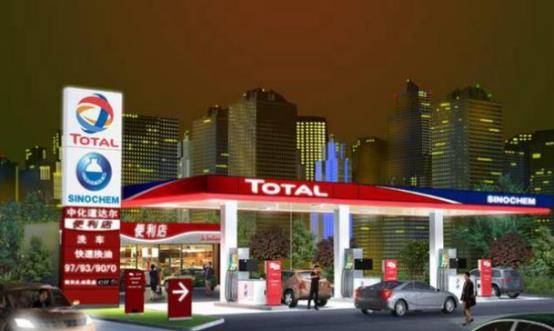
TotalEnergies SE

Search documents
Oil giants brace for a bruising earnings season — with shareholder returns at risk
CNBC· 2026-02-04 00:01
Core Viewpoint - European energy companies are facing significant challenges this earnings season, with shareholder payouts at risk due to cost-cutting measures amid declining crude prices [1][2]. Group 1: Earnings Outlook - Shell and TotalEnergies are anticipated to report their lowest fourth-quarter profits in nearly five years, reflecting a tough market environment for European energy firms [2]. - Analysts expect lower quarterly profits and free cash flow across the industry, indicating a challenging financial landscape [2]. Group 2: Strategic Responses - Companies are likely to prioritize maintaining dividends over cutting them, although they may reduce share buybacks and scale back capital programs [3].



$60 Oil Forces Europe’s Energy Giants to Rethink Buybacks
Yahoo Finance· 2026-02-03 23:00
Core Insights - The decline in oil prices over the past year has negatively impacted the earnings of major oil companies, with prices around $60 per barrel compared to $100 in 2022 and $80 in 2023 and 2024, indicating that shareholder returns may not be sustainable going forward [1] Group 1: Impact on European Oil Majors - European oil firms may announce cuts to their share buybacks in response to lower oil prices [2] - Analysts predict that European majors could reduce buybacks by 10% to 25% due to sustained low oil prices [6] - Companies like BP, Shell, TotalEnergies, Equinor, and Eni are expected to report lower earnings for the fourth quarter compared to the third quarter, influenced by low liquids prices and reduced chemicals margins [7] Group 2: Comparison with U.S. Peers - U.S. supermajors, such as ExxonMobil and Chevron, have maintained their share repurchase programs and reiterated buyback plans through 2026 under reasonable market conditions [3] - Unlike European firms, U.S. companies have not shifted their focus away from oil production, maintaining high-margin assets [4] Group 3: Strategic Adjustments - European majors are currently adjusting their strategies to focus back on oil and gas while reducing investments in renewables [4] - TotalEnergies has indicated plans to lower buybacks for the fourth quarter of 2025 and for 2026, aligning with hydrocarbon prices and refining margins [8]


DECARBON 2026: projects driving offshore carbon capture infrastructure in Europe
Yahoo Finance· 2026-02-03 15:56
Core Insights - The article discusses the advancements and challenges in offshore carbon capture and storage (CCS) projects in Europe, highlighting the importance of integrated systems and collaborative efforts among various stakeholders in the industry [6][18]. Group 1: Project Developments - Petrofac has been awarded a 12-month front-end engineering design (FEED) contract for the Aramis project, which involves developing a CO₂ transport and offshore storage system [3]. - The Aramis project includes a 200km offshore CO₂ pipeline with a design capacity of 22 million tonnes per annum (mtpa), linking the Port of Rotterdam to depleted gas reservoirs in the Dutch North Sea [2]. - The Northern Lights project in Norway serves as a global reference for open-access offshore CCS, demonstrating a scalable, ship-based model for CO₂ transport and storage [8][10]. Group 2: Industry Trends - Offshore CCS is transitioning from pilot initiatives to full-scale infrastructure development, with a focus on integrated transport and storage systems capable of handling millions of tonnes of CO₂ annually [6]. - The APOLLOCO₂ project aims to establish large-scale CCS infrastructure in southern Europe, securing €169.3 million ($201.9 million) in funding from the EU Innovation Fund [14][17]. - The upcoming DECARBON 2026 congress will address the integration challenges of offshore CCS and the need for flexible approaches to accommodate various industrial clusters and regulatory environments [18][20]. Group 3: Future Outlook - The second-phase expansion of the Northern Lights project will increase its transport and storage capacity to at least 5 mtpa of CO₂, positioning it as a central element in Europe's offshore CCS network [11]. - The integration of CCS with broader oil and gas decarbonisation strategies is becoming increasingly important, influencing investment decisions across the sector [19]. - Discussions at DECARBON 2026 will focus on accelerating deployment and moving towards commercially sustainable CCS systems [20].
Is Chevron the Smartest Dividend Investment You Can Make in 2026?
Yahoo Finance· 2026-02-03 13:25
Core Viewpoint - Chevron is considered a smart investment in the energy sector due to its vertical integration, attractive dividend yield of 4%, and strong financial position [1][5]. Group 1: Company Overview - Chevron is vertically integrated, owning assets across upstream, midstream, and downstream segments, which helps mitigate revenue and earnings volatility from commodity price fluctuations [2]. - The company has a long track record of annual dividend increases, with 38 consecutive years, second only to ExxonMobil [6]. Group 2: Competitive Position - Chevron competes with other large integrated energy companies like ExxonMobil, Shell, BP, and TotalEnergies, but stands out due to its combination of higher yield, financial strength, and consistent dividend history [5][6]. - Unlike Shell and BP, which cut dividends during the 2020 energy downturn, Chevron maintained its dividend, showcasing its financial resilience [7]. Group 3: Financial Strength - Chevron has lower leverage compared to its peers, except for ExxonMobil, allowing it to take on debt during downturns to support its business and dividends [8]. - The company's ability to pay down debt when oil prices recover positions it well for future downturns [8]. Group 4: Investment Recommendation - While both ExxonMobil and Chevron are viable investment options, Chevron is recommended due to its higher yield, reliable dividends, and stronger financial position [9].

汇丰降雪佛龙(CVX.US)评级至“持有”:业绩虽超预期,估值盛宴恐已近尾声
智通财经网· 2026-02-03 08:41
产量增长是雪佛龙的核心叙事之一。2026年上游产量预计增长7-10%,但第一季度将因哈萨克斯坦装置 检修及美国本土冬季天气影响,出现18.5-25.5万桶/日的临时性下滑。更具看点的是委内瑞拉业务—— 首席执行官Mike Wirth重申,在获得美国政府额外授权的前提下,未来18-24个月产量可增长50%,从当 前约20万桶/日提升至约30万桶/日。不过汇丰指出,即便实现这一目标,考虑到委内瑞拉业务仅占集团 现金流的1-2%,且增量约12万桶/日,对整体估值的拉动作用有限。这一判断与市场对委内瑞拉地缘政 治缓和的乐观预期形成微妙对比。 估值逻辑的转变是评级下调的关键。年初至今雪佛龙股价上涨16%,在综合性石油巨头中仅次于埃克森 美孚,跑赢同行5个百分点。这一涨幅主要由委内瑞拉预期与油价反弹驱动,但汇丰认为当前估值已透 支利好——雪佛龙2026年企业价值/折现现金流比率对埃克森美孚的折价已收窄至2%,被视为合理水 平。股东回报方面,季度股息从1.71美元/股上调4%至1.78美元/股,年化约140亿美元,但7.2%的2026年 分配收益率落后于英国石油和道达尔的约8.5%以及壳牌的超10%,与欧洲同行的差距重新拉 ...
全球乙烯产能格局调整,中国优势凸显:乙烯专题报告
Guo Lian Qi Huo· 2026-02-03 07:58
1. Report's Investment Rating for the Industry - No information provided in the report. 2. Core View of the Report - As of 2025, the global annual ethylene production capacity has exceeded 230 million tons. The ethylene production capacity expansion in the Americas, Middle East, and Europe faces challenges, while Asia will be the core contributor to global ethylene production capacity growth. - Europe, Japan, and South Korea are likely to shut down ethylene production capacity due to high raw material costs, competitive disadvantages under global over - capacity, and regional structural problems. After that, China may become the global core beneficiary and supply mainstay with its multiple advantages [4][8]. 3. Summary by Relevant Catalogs 3.1 America: Ethane Cracking Project Commissioning Pace May Slow Significantly - In 2025, the total ethylene production capacity in the Americas reached 60.338 million tons/year, with the United States accounting for 77.74% of the regional capacity at 46.907 million tons/year, being the core contributor to future ethylene production capacity growth in the Americas [10]. - The U.S. ethylene process mainly uses ethane. After three stages of development, the U.S. ethane cracking project will see a significant slowdown in the commissioning pace after 2025, mainly because of the decline in ethane supply growth and weakening ethylene market demand. The high - grade and easily - mined resources in core shale gas production areas are decreasing, the single - well production decline is accelerating, and the overall natural gas production has entered a medium - low growth stage. Also, the ethane recovery ratio is approaching the upper limit, and the ethylene demand growth has slowed down [14][16][20]. 3.2 Middle East: Facing Ethane Resource Constraints - As of 2025, the total ethylene production capacity in the Middle East was 35.67 million tons/year, with Saudi Arabia being the largest producer with a capacity of 17.63 million tons/year, accounting for 49.42%. After 2015, the growth rate of ethylene production capacity in the Middle East slowed significantly due to ethane resource constraints. The supply of NGLs in OPEC countries has decreased, and the ethane recovery ratio is saturated. Ethylene production in the Middle East is showing a trend of heavier raw materials [26][29][31]. 3.3 Europe: High Energy Costs and Weak Demand - As of 2025, the total ethylene production capacity in Europe was about 30.8 million tons/year, with Germany being the largest producer with a capacity of 5.82 million tons/year, accounting for 18.87%. European ethylene production has high costs due to a naphtha - based raw material structure, high energy prices, policy constraints, and industrial layout issues. The demand for ethylene in Europe is weak. Since 2021, the demand has declined significantly, and in 2025, the demand was about 23 million tons with a growth rate of only 1.71% [32][36][37]. 3.4 Asia: Will Contribute the Main Incremental Production Capacity Globally - As of 2025, the total ethylene production capacity in Asia reached about 110 million tons/year, with China being the largest producer with a capacity of about 62 million tons/year, accounting for 56.58%. From 2026 - 2027, Asia will still have a large amount of new ethylene production capacity, and China may be the main contributor. In 2026, China may have 9.11 million tons/year of new production capacity put into operation, with a production capacity growth rate of up to 14.69% [44][48][49]. 3.5 Europe, Japan, and South Korea: Likely to Shut Down Ethylene Production Capacity Concentratedly - The shutdown of ethylene production capacity in Europe, Japan, and South Korea is mainly due to high raw material costs, competitive disadvantages under global over - capacity, and regional structural problems. After the shutdown, China may become the global core beneficiary and supply mainstay due to its leading global ethylene production capacity scale, scale - effect of refining and chemical integration plants, diversified raw material routes, and lower costs compared to the single naphtha route in Europe, Japan, and South Korea [50][52].
道达尔能源莫桑比克LNG项目重启
Zhong Guo Hua Gong Bao· 2026-02-03 03:15
普亚内表示,项目重启是重要里程碑,将助力莫桑比克跻身全球主要LNG出口国。查波总统称,项目 复工印证了国际社会对莫桑比克的信心,将激活劳动力市场、巩固地区能源枢纽定位,提升该国地缘战 略价值。据悉,该合资项目由道达尔能源等多方持股。 中化新网讯 1月29日,道达尔能源董事长兼CEO帕特里克·普亚内与莫桑比克总统丹尼尔·查波共同宣 布,200亿美元莫桑比克LNG项目全面重启。此次重启源于2025年11月7日项目财团决议,解除2021年 宣布的不可抗力状态。 莫桑比克政府重申将全力支持项目重启,妥善处理不可抗力期间相关问题,并联合卢旺达采取安保措施 保障项目安全。目前,阿丰吉项目现场海陆施工已全面恢复,集结超4000名施工人员,其中本地员工超 3000人,项目整体进度达40%,主体设备设计与采购已完成,预计2029年产出首批LNG。该项目将为莫 桑比克带来显著经济收益,建设期间可提供至多7000个直接就业岗位,本土企业合同总额预计超过40亿 美元。 ...
National Fuel Gas Q1 Earnings Beat Estimates, Gas Production Up
ZACKS· 2026-02-02 14:46
Core Insights - National Fuel Gas Company (NFG) reported first-quarter fiscal 2026 adjusted operating earnings of $2.06 per share, exceeding the Zacks Consensus Estimate of $1.91 by 7.85% and increasing 24.1% from the previous year's $1.66 [1] - Total revenues for NFG reached $651.5 million, surpassing the Zacks Consensus Estimate of $647 million by 0.7% and reflecting an 18.6% increase from $549.5 million in the prior year [2] Financial Performance - NFG's total operating expenses decreased to $375.4 million, down 18.9% from $463.3 million in the year-ago quarter, while operating income surged to $276.1 million, up 220.3% from $86.2 million [4] - GAAP earnings for the quarter were reported at $1.98 per share, a significant increase of 304.1% from 49 cents in the year-ago quarter [1] Segment Analysis - Utility segment revenues totaled $259.05 million, up 13.4% from $228.4 million in the year-ago quarter [3] - Integrated upstream and Gathering and Other segments generated revenues of $323.2 million, reflecting a 28.1% increase from $252.4 million in the previous year [3] - Pipeline and Storage segment revenues amounted to $69.2 million, a slight increase of 0.6% from $68.8 million recorded in the year-ago quarter [3] Production and Cash Flow - Seneca produced 109 billion cubic feet (Bcf) of natural gas during the fiscal first quarter, an increase of 11 Bcf, or 12%, from the prior-year level, attributed to new Utica pads in Tioga County [5] - As of December 31, 2025, NFG had cash and temporary cash investments of $271.4 million, a significant rise from $43.2 million as of September 30, 2025 [6] - Net cash provided by operating activities for the first quarter totaled $274.9 million, compared to $220.1 million in the previous year [6] Guidance and Future Outlook - NFG reiterated its guidance for adjusted earnings per share for fiscal 2026, projecting a range between $7.60 and $8.10 [7] - The company expects capital expenditure for fiscal 2026 to be in the range of $0.96 billion to $1.07 billion, with production anticipated to be between 440-455 Bcf [8]

Murphy Q4 Earnings & Sales Beat Estimates, Reserve Replacement Is 103%
ZACKS· 2026-02-02 14:35
Core Insights - Murphy Oil Corporation (MUR) reported adjusted net earnings of 14 cents per share for Q4 2025, exceeding the Zacks Consensus Estimate of a loss of 7 cents by 300%, although this represents a 60% decrease from 35 cents in the same quarter last year [1] - The company's total revenues for Q4 2025 were $624.6 million, slightly above the Zacks Consensus Estimate of $622 million, but down 6.9% year over year [3] - For the full year 2025, adjusted earnings per share were $1.37, a decline of 50.4% from $2.76 in 2024 [2] Financial Performance - Murphy Oil's total revenues for 2025 were $2.72 billion, down 9.9% from $3.02 billion in 2024 [3] - The company produced 181,400 barrels of oil equivalent per day (BOE/D) in Q4 2025, within the guided range of 176,000-182,500 BOE/D [4] - Total costs and expenses for Q4 2025 were $565.2 million, a decrease of 3.5% from $585.8 million in the previous year [4] Operational Highlights - Murphy Oil achieved a reserve replacement ratio of 103% in 2025, with total proved reserves at 715 million barrels of oil equivalent (MMBOE) at year-end [6][8] - The company returned $288.8 million to shareholders in 2025, including $102.6 million in share repurchases and $186.2 million in dividends [5] Financial Condition - As of December 31, 2025, Murphy Oil had cash and cash equivalents of $377.2 million, down from $423.6 million a year earlier [7] - The company reported long-term debt of $1.38 billion as of December 31, 2025, compared to $1.27 billion at the end of 2024 [7] - Net cash provided by continuing operational activities in 2025 was $1.25 billion, down from $1.73 billion in 2024 [7] Future Guidance - For Q1 2026, Murphy Oil expects production (excluding non-controlling interest) to be in the range of 164,000-172,000 BOE/D [10] - The company plans to invest between $1.2 billion and $1.3 billion in 2026, with expected production for the year in the range of 167,000-175,000 BOE/D, of which 50% is anticipated to be oil [10] Dividend Information - The board of directors approved an increase in the quarterly dividend rate to 35 cents from 32.5 cents per share, resulting in an annualized dividend of $1.40 per share [9]


世界五百强企业:印度7家,德国27家,美国有121家,如今中国呢?
Sou Hu Cai Jing· 2026-02-02 07:08
Group 1 - The Fortune Global 500 list is a symbol of global economic competition, reflecting the scale and economic strength of companies and their countries' positions in the global economy [1] - The number of companies from China in the Global 500 has increased significantly from 10 in 2000 to 133 in 2020, surpassing the United States' 121 companies [10][12] - In 2020, the total revenue of global companies reached $30 trillion, with the United States and China being the primary contributors [3] Group 2 - France had 31 companies in the Global 500 in 2020, with Total ranking 25th, showcasing its economic competitiveness [5][6] - India's Reliance Industries entered the Global 500, marking a significant achievement for Indian companies as the country surpassed the UK and France in economic strength [8] - Germany had 27 companies in the Global 500, with automotive giants like Volkswagen, Mercedes-Benz, and BMW leading the way, reflecting Germany's strong industrial base [10]