
Intel

Search documents
Chart of the Day: INTC
Youtube· 2025-09-19 12:45
Time now for our chart of the day. Joining us for a breakdown, we've got Rachel Dashelle, senior manager of trading services, Charles Schwab. Rachel, really appreciate you joining us because I know you're on the road for our Schwab market drive event.So, you are wearing many hats today. All right. So, among those is a breakdown of this chart.Uh, I mean, a big move yesterday for Intel. Why don't you take us through, you know, some of the things you're noticing on trends for Intel with your short-term look fi ...


INTC stock price surges 30%: Could an Nvidia and Intel team-up be the best chance to beat China in AI?
Fastcompany· 2025-09-19 12:21
Core Insights - Nvidia has acquired a $5 billion stake in Intel Corp, following a similar move by the U.S. government which announced a $9 billion investment last month [1] Company Actions - Nvidia's acquisition of Intel shares indicates a strategic alignment with government initiatives in the tech sector [1] - The $5 billion investment reflects Nvidia's confidence in Intel's potential and the broader semiconductor market [1] Industry Context - The U.S. government's involvement in the semiconductor industry, including a $9 billion investment, highlights the increasing importance of this sector for national security and technological leadership [1] - Nvidia's actions may signal a trend of increased collaboration between tech companies and government entities in the semiconductor space [1]

This Intel Analyst Turns Bullish; Here Are Top 5 Upgrades For Friday - Fiverr Intl (NYSE:FVRR), Intel (NASDAQ:INTC)
Benzinga· 2025-09-19 11:53
Top Wall Street analysts changed their outlook on these top names. For a complete view of all analyst rating changes, including upgrades, downgrades and initiations, please see our analyst ratings page.Considering buying INTC stock? Here’s what analysts think: Read This Next: Photo via ShutterstockLoading...Loading... ...
What Nvidia Gets Out of the Deal With Intel
Youtube· 2025-09-19 11:38
Core Insights - Intel is positioned positively within the U.S. tech ecosystem, with partnerships enhancing its reputation and potential for leading-edge manufacturing [2][9] - NVIDIA is responding to client demands for x86 integration within its data center clusters, showcasing its dominant market position while fostering partnerships [3][4] - The collaboration between Intel and NVIDIA is primarily focused on integrating x86 chips into NVIDIA's high-speed interconnectivity fabric, rather than on foundry business aspects [5][6] Group 1: Intel's Strategic Position - The U.S. administration views Intel as a critical player in maintaining technological leadership and self-reliance in chip manufacturing [2][7] - Intel's new CEO has outlined priorities including regaining leadership in product business and strengthening the company's balance sheet after previous investments [8][9] - Attracting investments from the U.S. government and other entities is crucial for Intel's financial health and operational success [9][10] Group 2: NVIDIA's Market Strategy - NVIDIA's partnerships are aimed at demonstrating that it is not abusing its dominant market position, which is beneficial for its long-term strategy [3][4] - The integration of x86 chips into NVIDIA's infrastructure is a response to client requests, indicating a strong demand for such capabilities [3][4] - NVIDIA's collaboration with Intel does not currently involve foundry operations, leaving the manufacturing aspect open-ended [5][6] Group 3: Market Dynamics and International Relations - Intel's historical position in the Chinese market has been relatively protected due to ecosystem dependencies on x86 architecture, making it a challenging target for disruption [13] - The evolving relationship between the U.S. government and Intel may influence perceptions and strategies in international markets, particularly in China [11][12]


Intel Stock Falls After Best Day Since 1987. It's Time to Sell, Analyst Says.
Barrons· 2025-09-19 11:33
While a multibillion-dollar investment by Nvidia does provide some upside to the struggling businesses, some see minimal improvement and recommend selling Intel stock. ...
Intel-Nvidia Deal Extends Stock Markets' Good News Rally. Why There's More to Come.
Barrons· 2025-09-19 10:42
Group 1 - Live Nation is facing a lawsuit regarding its ticket resale practices, which may impact its reputation and operational strategies [1] - FedEx has indicated that uncertainties in its business environment are beginning to clear, suggesting potential improvements in logistics and delivery services [1] - Netflix's new series 'KPop Demon Hunters' is positioned to compete with Disney's offerings, highlighting the ongoing rivalry in the streaming industry [1]


Intel's Nvidia Investment Doesn't Change Things (NASDAQ:INTC)
Seeking Alpha· 2025-09-19 10:37
Retirement is complicated, and you only get one chance to do it right. Don't miss out because you didn't know what was out there.The Retirement Forum provides actionable ideas, a high-yield safe retirement portfolio, and macroeconomic outlooks, all to help you maximize your capital and your income. We search the entire market to help you maximize returns.Intel (NASDAQ: INTC ) rocketed up by 30% on Thursday on the announcement that Nvidia ( NVDA ) was investing $5 billion into the company. Intel has outperfo ...
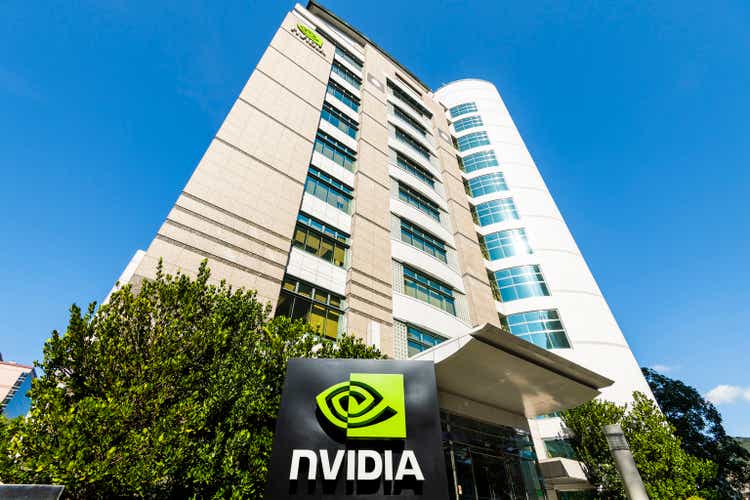
Intel Strikes Back With Massive $5.0B Nvidia Deal (NASDAQ:INTC)
Seeking Alpha· 2025-09-19 10:31
AI GPU maker Nvidia ( NVDA ) announced on Thursday that it would invest $5.0B into shares of struggling chip-maker Intel (NASDAQ: INTC ) and collaborate with the company in terms of the development ofAnalyst’s Disclosure:I/we have a beneficial long position in the shares of NVDA, AMD, INTC either through stock ownership, options, or other derivatives. I wrote this article myself, and it expresses my own opinions. I am not receiving compensation for it (other than from Seeking Alpha). I have no business rela ...
Intel Strikes Back With Massive $5B Nvidia Deal
Seeking Alpha· 2025-09-19 10:31
AI GPU maker Nvidia ( NVDA ) announced on Thursday that it would invest $5.0B into shares of struggling chip-maker Intel (NASDAQ: INTC ) and collaborate with the company in terms of the development ofAnalyst’s Disclosure:I/we have a beneficial long position in the shares of NVDA, AMD, INTC either through stock ownership, options, or other derivatives. I wrote this article myself, and it expresses my own opinions. I am not receiving compensation for it (other than from Seeking Alpha). I have no business rela ...
1 Hidden Benefit of Intel's Deal With Nvidia
The Motley Fool· 2025-09-19 10:20
Core Insights - Intel and Nvidia have formed a significant partnership to develop data center and PC chips that integrate both companies' technologies, with Nvidia investing $5 billion in Intel [1][2][3] - This collaboration is expected to last for multiple generations of chips, providing Intel with a foundry customer and financial support for its manufacturing investments [2][3] - The partnership may also help Intel mitigate competition from Arm-based CPUs, particularly as Arm technology begins to penetrate the PC market [5][13] Group 1: Market Dynamics - The PC CPU market has shifted from a duopoly of Intel and AMD to include increasing competition from Arm-based CPUs, particularly following Apple's transition to custom Arm chips [5][6] - Qualcomm has made strides in the Arm-based PC market, but its market share remains minimal, accounting for only 0.1% of PC performance benchmarks as of Q3 2025 [9] - Nvidia has been rumored to be developing its own Arm-based PC CPU, but performance issues and compatibility challenges have hindered its progress [8][10] Group 2: Strategic Implications - Nvidia's deal with Intel may indicate a shift away from its Arm-based CPU efforts, as the integration of Nvidia's graphics technology with Intel chips presents a more straightforward path to market entry [11][12] - Nvidia's CEO has stated that the company remains committed to its Arm roadmap, but no official announcements have been made regarding its Arm PC CPU plans [12] - If Nvidia abandons its Arm-based CPU ambitions, it could eliminate a potential competitor for Intel, allowing Intel to focus on countering AMD's market share gains [13]