Neuralink

Search documents
马斯克切脑全场震撼!深圳也出手了:完成高难度临床首秀,0.01毫米黑科技重塑患者运动功能!
Sou Hu Cai Jing· 2025-06-30 16:30
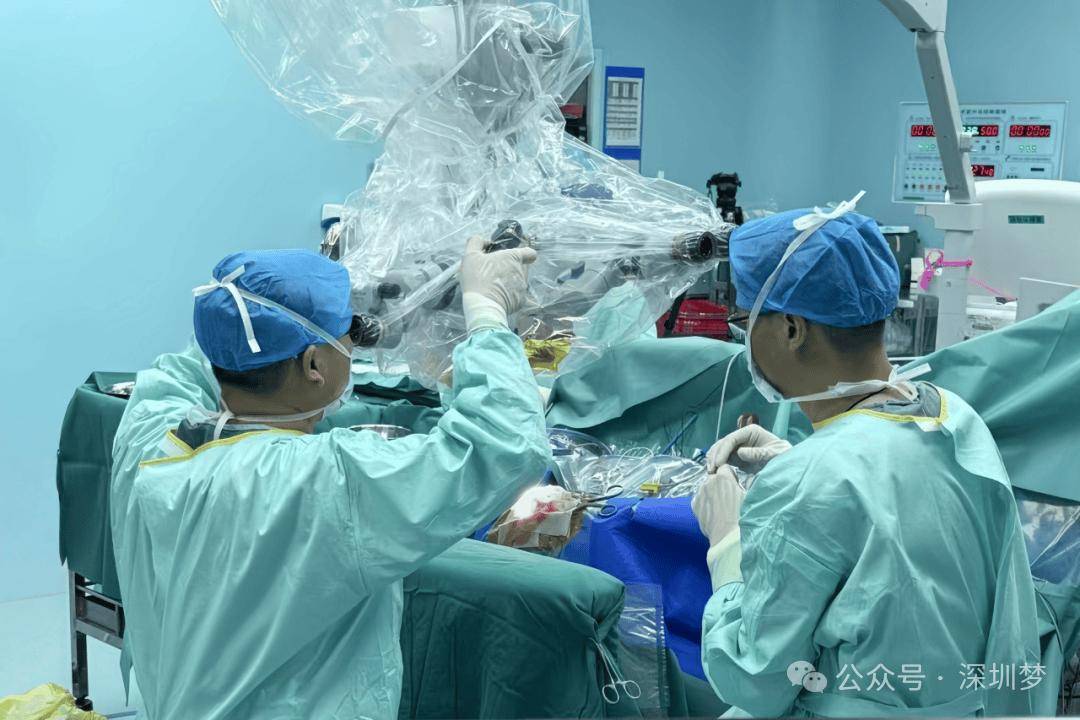
Core Insights - Neuralink has achieved a significant milestone with the ability to implant electrodes in the brain at a speed of 1.5 seconds per electrode, showcasing advancements in brain-machine interface (BMI) technology [26][66]. - The company has outlined an ambitious three-year roadmap aiming to restore vision to the blind by 2026 and integrate human consciousness with AI by 2028 [26][64]. - Seven volunteers have successfully used the Neuralink device to control games and robotic arms through thought, demonstrating the practical applications of this technology [28][34]. Group 1: Shenzhen's Breakthrough in Brain-Machine Interface - Shenzhen Second People's Hospital has successfully completed the first real-time decoding surgery in South China using high-density flexible film electrodes, marking a significant advancement in BMI technology [2][5]. - The surgery involved a 40-year-old patient with a brain vascular malformation, utilizing a 128-channel flexible electrode to achieve 97% accuracy in motion intention decoding with a 60-millisecond latency [2][10]. - This achievement represents a full cycle of "research-manufacturing-clinical validation" in Shenzhen's BMI technology, showcasing local innovation and collaboration [5][20]. Group 2: Clinical Application and Innovation - The high-density film electrodes developed by a local company, MicroLing Medical, are only 0.01 mm thick and provide excellent flexibility and biocompatibility, significantly improving signal acquisition quality [2][12]. - The establishment of the "Brain-Machine Interface Clinical Evaluation and Transformation Center" at Shenzhen Second People's Hospital aims to accelerate the clinical application of BMI technology, integrating research and clinical practice [22][24]. - The center will focus on standardizing data collection and management throughout the entire process from pre-operative assessment to post-operative rehabilitation, creating a closed-loop transformation path [24][22]. Group 3: Future Directions and Industry Impact - The successful application of BMI technology in Shenzhen is expected to serve as a model for the integration of medical and engineering resources, promoting innovation in treating neurological diseases [18][19]. - The collaboration between Shenzhen Second People's Hospital and MicroLing Medical exemplifies the synergy between academia, industry, and healthcare, aiming to enhance the clinical translation of advanced technologies [4][16]. - The advancements in BMI technology not only promise to improve patient outcomes but also position Shenzhen as a leader in the global neurotechnology landscape [20][19].

脑机接口领域持续突破 上市公司积极跟进
Zheng Quan Ri Bao· 2025-06-30 16:30
Core Insights - The brain-computer interface (BCI) sector is experiencing significant advancements, with both domestic and international developments highlighting its potential [1][2][3] Industry Development - The BCI technology is a crucial intersection of neuroscience and brain-like computing, categorized into invasive, semi-invasive, and non-invasive types based on signal acquisition and output methods [2] - The market size for BCIs in China is projected to reach 3.2 billion yuan in 2024, exceeding 5.5 billion yuan by 2027; globally, the medical application market for BCIs is expected to reach between 40 billion to 145 billion USD from 2030 to 2040 [2] - Various local governments in China are actively promoting BCI industry development, with plans to establish a robust ecosystem by 2030, including breakthroughs in foundational research and technology [2][3] Company Initiatives - Companies in China are leading in the development of intelligent BCI systems, with "Beijing Brain No. 1" and "Beijing Brain No. 2" systems currently in clinical validation stages [4] - Sanbo Brain Hospital recently completed a successful trial using an invasive BCI to assist a hemiplegic patient in regaining motor function [4] - Chengyi Tong is focusing on non-invasive BCI technologies while also preparing for potential invasive applications [4] - Entropy Technology has launched a non-invasive BCI product aimed at enhancing focus among youth, utilizing scalp electrodes and flexible sensors [4]
X @Tesla Owners Silicon Valley
Tesla Owners Silicon Valley· 2025-06-30 15:55
Life throws us some incredibly painful curveballs, knocks us right on our butt, and leaves us 1000x worse than we were before.But sometimes... it's all part of a plan far bigger than we could ever fathom.Neuralink's 3rd patient Brad Smith (@ALScyborg) - testifies- https://t.co/eYD2YNAIK9 ...
X @Tesla Owners Silicon Valley
Tesla Owners Silicon Valley· 2025-06-30 15:43
Neuralink is working to restore vision for the blind by bypassing damaged eyes and directly connecting to the brain’s visual cortex turning blindness into sight. https://t.co/u1VQWS3x2c ...
6月制造业PMI回升至49.7,A股半年度收官沪指涨2.76% | 财经日日评
吴晓波频道· 2025-06-30 14:58
1—5月份,单位与居民物品物流总额同比增长6.4%,较1—4月份提高0.5个百分点。即时零售等消费新业态日趋成熟,实物商品网上零售额同比 增长6.3%。1—5月份,工业品物流总额同比增长5.6%,增速较1—4月回落0.1个百分点。5月份同比增长5.5%,增速环比回落0.1个百分点。1— 5月份,进口物流总额同比下降4.1%,降幅与1—4月基本持平。5月当月,进口物流总额同比下降3.8%,降幅较4月扩大2.7个百分点。(综合央 视网) 点击按钮▲立即报名 6月官方制造业PMI回升至49.7 6月30日,国家统计局公布数据显示,6月份,制造业采购经理指数(PMI)为49.7%,比上月上升0.2%,制造业景气水平继续改善。在调查的 21个行业中有11个位于扩张区间,比上月增加4个,制造业景气面有所扩大。产需指数均位于扩张区间。生产指数和新订单指数分别为51.0%和 50.2%,比上月上升0.3%和0.4%。 6月份,非制造业商务活动指数为50.5%,比上月上升0.2%,非制造业总体继续保持扩张。服务业景气度基本稳定。服务业商务活动指数为 50.1%,比上月略降0.1%。建筑业扩张加快。建筑业商务活动指数为52.8% ...

Neuralink发布会公布三年计划,关注脑机接口进展
Minsheng Securities· 2025-06-30 12:49
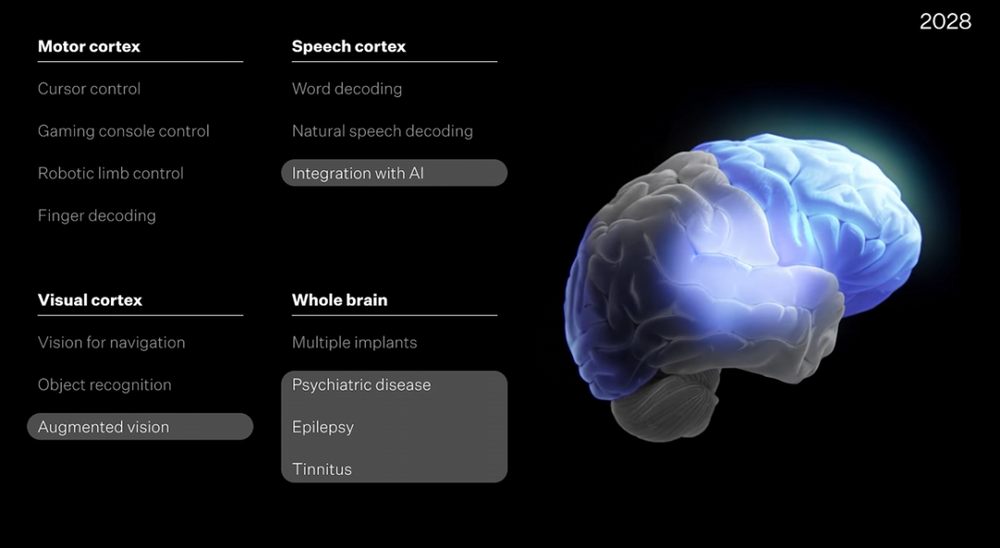
脑机接口行业点评 Neuralink 发布会公布三年计划,关注脑机接口进展 2025 年 06 月 30 日 ➢ 完成 E 轮融资加快研发,Neuralink 公布未来三年的发展计划。今年 6 月 上旬,Neuralink 宣布完成 6.5 亿美元的 E 轮融资,主要投资者包括方舟投资、 德丰杰成长基金、创始人基金、光速创投、红杉资本、兴盛资本等。发布会上 Neuralink 公布了未来的三年计划——2025 年第四季度:在言语皮层植入设备, 直接从大脑信号中解码有意识的词语,转换为语音。2026 年:将电极数量增加 到 3000 个,让首位「盲视」参与者重获视觉,初期是低分辨率导航,最终达到 超人多波段视觉。2027 年:增加通道数量至 10000 个,首次实现多设备植入 (运动皮层、言语皮层或视觉皮层)。2028 年:每个植入物达到超过 25000 个 通道,拥有多个植入物,能访问大脑的任何部分,治疗精神疾病、疼痛、失调, 并且与 AI 集成。马斯克宣称要在 2028 年实现将人类大脑与 AI 全面集成,实现 意识层面的互联。 ➢ 事件:6 月 28 日,马斯克召开 Neuralink 线上发布会,公布脑 ...
让盲人恢复视力,用人脑连接AI:马斯克的脑机接口想要“改变人类”
Sou Hu Cai Jing· 2025-06-30 12:44
Core Insights - Neuralink is making steady progress in the brain-computer interface (BCI) sector, with its plans aligning with current industry trends and expectations [1][4] - The company aims to create a universal human brain input/output interface, with a long-term goal of achieving unprecedented bandwidth in neural activity communication [3][4] Group 1: Technological Developments - Neuralink has demonstrated that implanted devices allow users to control computers, play games, and operate robotic arms using brain signals [3] - The company plans to decode "intent language" directly from the speech cortex by the end of 2025 and expand the number of electrode channels to 3,000 by 2026 [4] - By 2028, Neuralink aims to increase the number of electrodes to 25,000, enabling comprehensive access to different brain regions for treating mental illnesses and exploring AI integration [4] Group 2: Industry Context - A technology expert from a Chinese BCI company noted that Neuralink's advancements and plans are valuable references for the industry, particularly in areas like motor function replacement and sensory restoration [4][5] - The expert emphasized that while the long-term goals of their company align with Neuralink's, their implementation strategies will be tailored to meet the specific needs of Chinese patients and market characteristics [5]
脑机接口再迎重磅利好,有公司股价离奇暴涨82000%
Feng Huang Wang Cai Jing· 2025-06-30 12:24
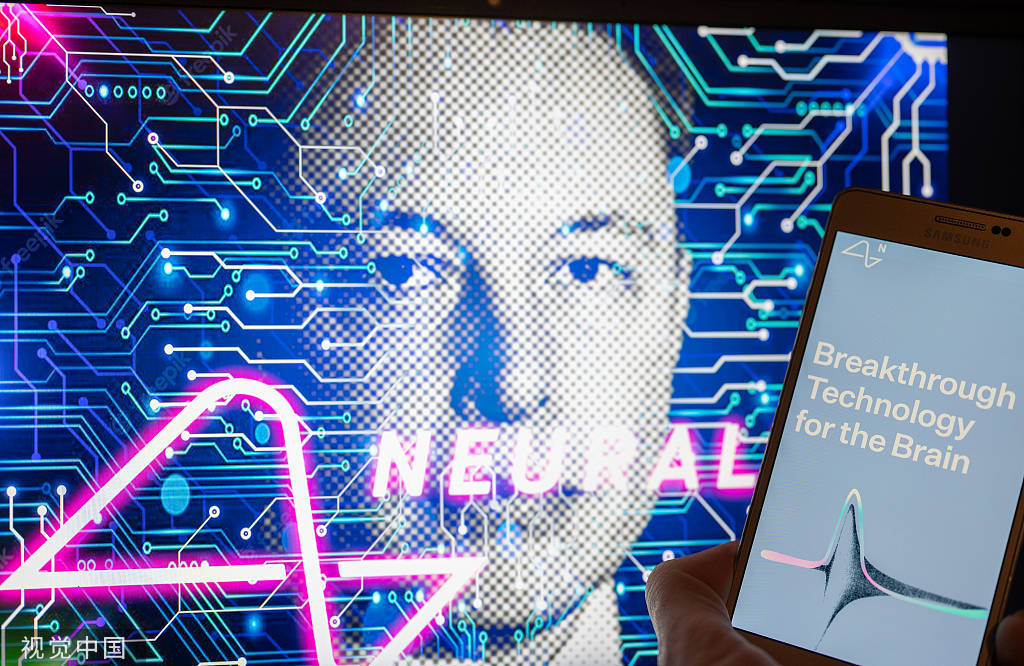
Market Overview - On June 30, A-shares experienced a volatile rise, with the ChiNext Index increasing by over 1% and more than 4,000 stocks rising. The trading volume was 1.52 trillion, down from 1.58 trillion the previous day [1] - The military industry stocks led the gains, with over ten stocks including Hengyu Xintong and Chenxi Aviation hitting the daily limit [1] - Gaming stocks also saw fluctuations, with companies like Giant Network and Kaiying Network reaching the daily limit [1] - The photovoltaic industry chain strengthened, particularly in the BC battery sector, with Guangxin Materials hitting the daily limit [1] - Stocks related to lithography machines were active, with companies like Blue Eagle Equipment and Kaimite Gas also hitting the daily limit [1] Banking and Securities Sector - Bank and brokerage stocks continued to adjust, with companies such as Qilu Bank and Zhengzhou Bank experiencing varying degrees of decline [2] Brain-Computer Interface (BCI) Sector - The brain-computer interface concept showed strong performance, with companies like Xiangyu Medical hitting the daily limit and Botao Bio rising over 8% [3] - Recent positive developments in the BCI sector have attracted global investor interest, with 2025 being highlighted as a critical year for BCI technology [4] - Neuralink, a company owned by Elon Musk, announced that seven individuals have implanted their N1 devices, allowing paralyzed individuals to control computers using their thoughts [5] - Neuralink's ambitious plans include a roadmap to develop a full-brain interface by 2028, enabling high-bandwidth connections between biological brains and external machines [7][9] Stock Performance and Market Reactions - The stock of Brain Regeneration Technology, a previously obscure company, surged by 13,192.24% this year after announcing FDA approval for its new neural modulation chip [11] - However, the stock price subsequently plummeted, leading to a loss of $33 billion in paper wealth, raising concerns among market observers [13] - Regulatory bodies may scrutinize the volatility in low-priced small-cap stocks, which are often susceptible to fraud [14] Future Prospects in BCI - The BCI market is expected to grow, with applications primarily in healthcare, and gradually expanding into education, gaming, and smart home sectors [14] - The development of higher precision sensors and lighter, more compatible devices is anticipated to enhance the BCI industry [14] - A list of BCI concept stocks shows several companies with strong institutional ratings and projected profit growth for 2025 and 2026, including Mindray Medical and Kailing Medical [16]
汽车行业点评报告:马斯克公布脑机接口进展,Neuralink估值快速上升
Huaxin Securities· 2025-06-30 12:03
Investment Rating - The report maintains a "Buy" rating for the automotive industry, indicating a positive outlook for the sector [7]. Core Insights - Neuralink has showcased new product directions aimed at linking the biological brain with external machines, with plans to implant devices in the speech cortex by Q4 2025 to decode silent "intent speech" [4][5]. - The ultimate goal of Neuralink is to create a "full-brain interface" that allows high-bandwidth connections between the biological brain and external machines, achievable through fully automated surgeries [5]. - Neuralink's recent funding round raised $650 million, bringing its valuation to over $10 billion, following a previous valuation of $9 billion [5]. Summary by Sections Market Performance - The automotive sector has shown varied performance, with a 1-month decline of 0.4%, a 3-month decline of 3.0%, and a 12-month increase of 30.0% compared to the CSI 300 index [1]. Investment Highlights - By 2026, the number of implanted electrodes is expected to increase to 3,000, with the first participant in the "Blindsight" project, which aims to help the blind regain vision [6]. - By 2027, the electrode count will rise to 10,000, enabling simultaneous implants in multiple brain areas, and by 2028, it is projected to exceed 25,000 electrodes for deeper brain area access [6]. - The report emphasizes the potential of humanoid robots and new technologies in the automotive industry, recommending component manufacturers with strong technological capabilities and cost control [7]. Company Focus and Earnings Forecast - The report provides earnings per share (EPS) and price-to-earnings (PE) ratios for several companies, all rated as "Buy": - Shuanglin Co., Ltd. (300100.SZ): EPS of 1.24 in 2024, PE of 38.67 [9]. - Rongtai Co., Ltd. (605133.SH): EPS of 0.88 in 2024, PE of 47.59 [9]. - Kaidi Co., Ltd. (605288.SH): EPS of 1.24 in 2024, PE of 41.72 [9]. - Kait Co., Ltd. (832978.BJ): EPS of 0.82 in 2024, PE of 31.06 [9].
马斯克出手砸饭碗:教育成重灾区,人类或永生
Sou Hu Cai Jing· 2025-06-30 10:39
Core Viewpoint - The advent of brain-machine interface technology by Neuralink is poised to disrupt various industries, including education, healthcare, and the arts, leading to significant changes in job markets and societal structures [1][11]. Group 1: Impact on Healthcare - The technology has entered clinical trials, with 7 patients successfully implanted with Neuralink devices, allowing them to control computers and mechanical arms through thought [4]. - Disabled individuals, such as those with paralysis, can regain mobility through thought-controlled devices, potentially eliminating outdated medical equipment manufacturers [6]. - Vision restoration for the blind is possible through "blindsight" technology, which could drastically reduce the need for eye care professionals and related industries [7][8]. Group 2: Transformation of Education - Future students may download knowledge directly into their brains, drastically altering the educational landscape and potentially rendering traditional teaching methods obsolete [12][14]. - The rapid acquisition of knowledge could lead to a significant reduction in the demand for conventional educators, particularly those who rely on rote teaching methods [15]. Group 3: Effects on the Arts and Creative Industries - Artists may utilize brain signals to create music and art, which could enhance creativity but also threaten the livelihoods of traditional artists and designers [17]. - The integration of AI with brain-machine interfaces could lead to a scenario where everyone has access to vast knowledge, resulting in intense competition in creative fields [19]. Group 4: Market Potential and Growth - The brain-machine interface market in China is projected to reach $7.63 billion between 2025 and 2029, with a current industry scale of 2.8 billion yuan in 2024, reflecting a 20.1% growth [23][25]. - Regulatory frameworks are being established in China to support the development of brain-machine interfaces, including pricing guidelines for invasive and non-invasive procedures [27]. Group 5: Future Developments and Timeline - Neuralink has outlined a timeline for technological advancements, including the ability to decode speech from brain signals by late 2025 and achieving multi-device implants by 2028 [21][22]. - The rapid advancement of surgical robotics for electrode implantation is expected to enhance the feasibility of widespread brain-machine interface applications [22].