科兴制药

Search documents
博安生物:阿柏西普眼内注射溶液博优景 在中国获批上市
Zhi Tong Cai Jing· 2025-11-26 11:31
Core Viewpoint - The company has received approval from the National Medical Products Administration of China for its self-developed product, Bo You Jing (Aflibercept Injection), to treat adult neovascular (wet) age-related macular degeneration (nAMD) and diabetic macular edema (DME) [1] Group 1: Product Development and Approval - Bo You Jing is a biosimilar to EYLEA, with a broader target action compared to anti-VEGF monoclonal antibodies, effectively inhibiting intraocular VEGF and improving vision with long-term efficacy and good overall safety [1][2] - The development process of Bo You Jing strictly followed biosimilar guidelines, demonstrating high similarity in quality, efficacy, safety, and immunogenicity to the reference drug [2] Group 2: Market Demand and Growth - The market for anti-angiogenic drugs for eye diseases in China is rapidly growing, with a projected increase from RMB 1.27 billion in 2018 to RMB 4.99 billion by 2024, reflecting a compound annual growth rate of 25.6% [3] - The significant patient population affected by eye diseases such as DME and nAMD drives the demand for effective treatments, with an estimated 148 million adults aged 20 to 79 suffering from diabetes in China by 2024, and 5.2% of them having DME [2] Group 3: Strategic Partnerships and Commercialization - The company has partnered with leading ophthalmic pharmaceutical platform, OcuMedi, to commercialize Bo You Jing in mainland China, leveraging OcuMedi's extensive commercial network and expertise [3] - The collaboration aims to enhance patient access to the medication and reduce treatment burdens while creating new growth opportunities for the company [3]
博安生物:阿柏西普眼内注射溶液博优景®在中国获批上市
智通财经网· 2025-11-26 10:05
Core Viewpoint - The company has received approval from the National Medical Products Administration of China for its self-developed product, Bo You Jing® (Aflibercept intravitreal injection solution), to treat adult neovascular (wet) age-related macular degeneration (nAMD) and diabetic macular edema (DME) [1] Group 1: Product Overview - Bo You Jing® is a biosimilar to EYLEA®, with the active ingredient Aflibercept, which has a broader target action compared to anti-VEGF monoclonal antibodies, effectively inhibiting intraocular VEGF for a prolonged period [1][2] - The product has shown significant improvements in best-corrected visual acuity (BCVA) during clinical trials, demonstrating comparable efficacy and safety to the reference drug [2] Group 2: Market Potential - The market for anti-angiogenic eye drugs in China is projected to grow from RMB 1.27 billion in 2018 to RMB 4.99 billion by 2024, with a compound annual growth rate (CAGR) of 25.6% [3] - The prevalence of DME among diabetic patients is approximately 5.2%, while age-related macular degeneration (AMD) affects 20.2% of individuals over 70 years old in China, indicating a significant patient population for Bo You Jing® [2] Group 3: Strategic Partnerships - The company has partnered with leading ophthalmic pharmaceutical platform, OcuVist, to commercialize Bo You Jing® in mainland China, leveraging OcuVist's extensive commercial network and expertise [3] - The collaboration aims to enhance patient accessibility to the drug and reduce treatment burdens while creating new growth opportunities for the company [3]
博安生物(06955):阿柏西普眼内注射溶液博优景®在中国获批上市
智通财经网· 2025-11-26 09:51
Core Viewpoint - The company has received approval from the National Medical Products Administration of China for its self-developed product, Bo You Jing (Aflibercept intravitreal injection solution), to treat adult neovascular (wet) age-related macular degeneration (nAMD) and diabetic macular edema (DME) [1] Group 1: Product Overview - Bo You Jing is a biosimilar to EYLEA, with the active ingredient Aflibercept, which binds to a broader range of targets compared to anti-VEGF monoclonal antibodies [1] - Aflibercept is an essential first-line treatment for various retinal diseases, effectively improving vision with long-lasting efficacy and good overall safety and tolerability [1] Group 2: Clinical Development - The development of Bo You Jing strictly followed biosimilar guidelines, demonstrating high similarity to the reference drug in quality, efficacy, safety, and immunogenicity [2] - Phase I clinical trial results showed comparable safety and tolerability between Bo You Jing and the reference drug, while Phase III trials indicated significant improvements in best-corrected visual acuity (BCVA) at multiple time points [2] Group 3: Market Potential - The market for anti-angiogenic drugs for eye diseases in China is rapidly growing, with a projected increase from RMB 1.27 billion in 2018 to RMB 4.99 billion by 2024, reflecting a compound annual growth rate of 25.6% [3] - The company has partnered with a leading ophthalmic pharmaceutical platform, Eucan Vision, to conduct Phase III clinical trials and grant exclusive commercialization rights in mainland China [3] Group 4: Patient Demographics - In 2024, approximately 148 million adults aged 20 to 79 in China are expected to have diabetes, with 5.2% of them suffering from DME [2] - Age-related macular degeneration (AMD) is a leading cause of vision loss in the elderly, with a prevalence of 20.2% in individuals over 70 years old in China [2]
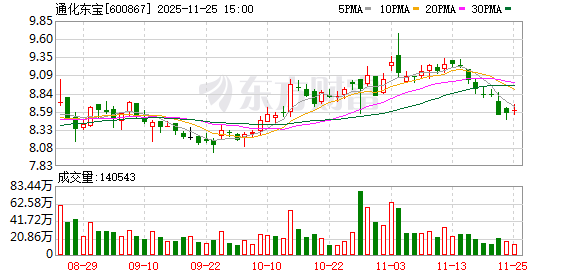
通化东宝:出海步伐加快 利拉鲁肽注射液通过巴西GMP现场审计
Zhong Guo Zheng Quan Bao· 2025-11-26 03:12
Core Viewpoint - The successful completion of the GMP audit for the liraglutide injection by Tonghua Dongbao and its partner Sinovac Biotech marks a significant step in the company's internationalization strategy and paves the way for market entry in Brazil and expansion in South America [1][2]. Group 1: Company Developments - Tonghua Dongbao and Sinovac Biotech have collaborated to obtain exclusive commercialization rights for liraglutide injection in 17 emerging markets [1]. - The GMP audit conducted by Brazil's ANVISA was based on PIC/S guidelines, covering the entire production and quality management chain, and resulted in a "zero defect" outcome [1][2]. - The successful audit is seen as a key breakthrough for the company's international strategy, facilitating rapid entry into the Brazilian market [2]. Group 2: Market Context - Brazil has seen an increase in diabetes prevalence, with 16.62 million patients aged 20-79 and a prevalence rate of 10.7% [2]. - The country has established itself as a benchmark in the emerging pharmaceutical market since joining PIC/S in 2021, known for its stringent GMP standards [2]. - The company plans to accelerate the commercialization of more high-value products globally, enhancing treatment options for patients and driving long-term growth [2].


科兴制药涨2.02%,成交额1462.65万元,主力资金净流入89.29万元
Xin Lang Cai Jing· 2025-11-26 02:04
Core Viewpoint - The stock of Kexing Pharmaceutical has shown significant fluctuations, with a year-to-date increase of 57.84% and a recent decline over the past 20 and 60 days, indicating volatility in its market performance [1]. Financial Performance - For the period from January to September 2025, Kexing Pharmaceutical achieved a revenue of 1.148 billion yuan, representing a year-on-year growth of 10.54% [2]. - The net profit attributable to shareholders for the same period was 111 million yuan, reflecting a substantial year-on-year increase of 547.70% [2]. Shareholder and Market Activity - As of September 30, 2025, the number of shareholders for Kexing Pharmaceutical increased by 25.03% to 11,800, while the average circulating shares per person decreased by 19.37% to 17,102 shares [2]. - The stock has appeared on the "龙虎榜" (a list of stocks with significant trading activity) six times this year, with the most recent appearance on July 3 [1]. Dividend Distribution - Since its A-share listing, Kexing Pharmaceutical has distributed a total of 51.5446 million yuan in dividends, with 15.7785 million yuan distributed over the past three years [3]. Institutional Holdings - As of September 30, 2025, notable changes in institutional holdings include a decrease in shares held by the second-largest shareholder, E Fund Medical Care Industry Mixed A, by 1.6069 million shares, while the fifth-largest shareholder, Fortune Tianhui Growth Mixed A/B, increased its holdings by 10,000 shares [3].
通化东宝:加强创新研发,力争实现国内外收入均衡增长
Zheng Quan Shi Bao Wang· 2025-11-25 08:24
Core Viewpoint - Tonghua Dongbao is focusing on expanding its product pipeline in diabetes and endocrine metabolic diseases, achieving significant revenue growth and international market expansion in 2025 [2][3][4]. Financial Performance - In the first three quarters of 2025, the company reported revenue of 2.18 billion yuan, a year-on-year increase of 50.55%, and a net profit of 1.202 billion yuan, compared to a loss of 66.37 million yuan in the same period last year [2]. - In Q3 2025, the company achieved revenue of 806 million yuan, a year-on-year growth of 13.9%, and a net profit of 984 million yuan, representing a staggering increase of 499.86% [2]. Product Development and Market Expansion - The sales volume of insulin analogs doubled year-on-year in the first three quarters of 2025, with revenue from these products surpassing human insulin, becoming the largest revenue contributor for the company [2]. - The company is expanding its research pipeline to include indications beyond diabetes, such as obesity and non-alcoholic steatohepatitis (NASH), as well as other endocrine metabolic diseases like gout and hyperuricemia [2]. International Strategy - In H1 2025, overseas revenue reached 110 million yuan, a year-on-year increase of approximately 187%, surpassing the total revenue for the previous year, indicating the effectiveness of the internationalization strategy [3]. - The company has made significant progress in international registrations, with insulin products approved in five emerging markets and ongoing BLA submissions for insulin products in the U.S. [4]. - The company is focusing on the U.S. market due to the large patient base and significant market opportunities, collaborating with Jianyou Co. to share risks and leverage expertise [5][6]. Future Outlook - The company aims to drive growth through a dual strategy of "innovation + internationalization," solidifying its leadership in diabetes treatment while expanding its product registrations in both developed and emerging markets [6].

海外MNC动态跟踪系列(十八):艾伯维发布2025Q3财报:自免双星销售强劲
Ping An Securities· 2025-11-25 03:32
Investment Rating - The industry investment rating is "Outperform the Market" [29] Core Insights - AbbVie reported a total revenue of $44.542 billion for the first three quarters of 2025, representing an 8.0% year-over-year growth, with Q3 revenue reaching $15.776 billion, up 9.1% [5][9] - The strong performance is primarily driven by two key immunology drugs, Rinvoq and Skyrizi, which have seen significant sales growth [5][19] - AbbVie has raised its full-year guidance, indicating positive momentum across its business segments, including immunology, neuroscience, and oncology [5][9] Summary by Sections Part 1: Financial Overview and Key Events - AbbVie’s revenue contributions from major segments include Immunology at $21.780 billion (+12.3%), Neuroscience at $7.806 billion (+20.3%), and Oncology at $4.991 billion (+2.6%) for the first three quarters of 2025 [5][9] - The company has advanced several projects into regulatory approval and submission phases, including Rinvoq for various indications [10][12][23] Part 2: Core Product Sales Analysis - Rinvoq generated $5.930 billion in revenue for the first three quarters of 2025, a 43.3% increase, while Skyrizi achieved $12.556 billion, growing 58.1% [19][17] - The combined sales of Rinvoq and Skyrizi reached $6.9 billion in Q3 alone, establishing them as leading products in the immunology sector [19][27] Part 3: Future Pipeline Milestones - In 2026, AbbVie anticipates five drug approvals, four regulatory submissions, and five Phase III data readouts, including Rinvoq for vitiligo and alopecia areata [22][23] - Key upcoming regulatory events include submissions for Tavapadon for Parkinson's disease and Venclexta for higher-risk MDS [22][23] Part 4: Investment Recommendations - The strong sales of Skyrizi and Rinvoq are expected to continue driving AbbVie's growth, with Skyrizi projected to become a "super blockbuster" in 2024 [27] - Investors are advised to monitor domestic companies targeting the IL-23 pathway, such as Innovent Biologics and Kintor Pharmaceutical [27]

港股创新药IPO大堵车
Sou Hu Cai Jing· 2025-11-24 12:35
来源:市场资讯 (来源:深蓝观) 李昀 | 撰文 王晨 | 编辑 今年,港股融资形式大好,不少公司想抓住这一波机会,因此IPO也出现了严重堵车的情况。 据中证报,今年以来,港股市场已有87只新股IPO上市,IPO募资总额超2400亿港元,位居全球交易所首位。今年以来共有16家 A股上市公司成功登陆港股市场,超80家A股上市公司已在港交所排队。 港交所行政总裁陈翊庭在接受媒体采访时也透露,目前正在处理的上市申请大概有300家。 今年在香港上市的生物医药企业也格外多。恒瑞、映恩等23家企业登录港股,仅上个月最后一周就有8家企业相继提交上市申 请。 "并不单单是要赶港股行情上升的窗口期,"一名投资人这样解释创新药的IPO热,"同时还要抓住这一波出海的机会。其实还是 挺生死攸关的。没有融资,就做不了BD需要的数据,很可能就错过这十几年难遇的红利。" 一位长期关注一级市场的投资人向我们表示,当前企业在选择上市地点时,港股依然是优先项:节奏更快、确定性更高、募资 更灵活、市场反馈更直接。尤其在创新药领域,大多数企业仍处于未盈利阶段,而科创板尽管近来有"开闸"迹象,但多数创新 药企业仍难以满足其盈利或细分指标要求。在这样的 ...


医药生物行业投资策略周报:理解MNC供应链的壁垒-20251124
CAITONG SECURITIES· 2025-11-24 09:01
Core Insights - The pharmaceutical MNC supply chain has extremely high entry barriers, requiring years for supplier certification through cross-departmental audits in technology, quality, EHS, and compliance. Once included in the qualified supplier list, a strong lock-in effect is formed, making it difficult for new entrants to disrupt the existing supply structure even if they meet technical standards, thus demonstrating a strong first-mover advantage [4][7]. - MNCs demand far more than conventional quality compliance, emphasizing full-process controllability and risk management capabilities. Compliance with guidelines such as EU GMP and ICHQ is required, along with the establishment of traceability systems and safety stock. Any process changes or relocation of production sites must undergo strict and time-consuming certification [4][7]. - In procurement decisions, MNCs are relatively insensitive to price factors, prioritizing the integrity of the supply chain over cost. For MNCs, API costs represent only a small portion of their terminal formulation sales, leading them to pay a premium for stable, traceable, and zero major quality incident supply capabilities, viewing supply chain resilience as a core competitive advantage rather than a cost item. Thus, entering the MNC supply chain often means effectively avoiding "price internalization" [4][7]. - Investment recommendations include innovative drug and device companies such as Furuya Co., Aonlikang, Shutaishen, Weichuang Bio, and others. From the perspective of CXO and raw materials, companies like WuXi AppTec, Jiuzhou Pharmaceutical, Chengda Pharmaceutical, and others are suggested for attention [4][7]. Market Performance Overview - As of November 21, 2025, the TTM-PE of the pharmaceutical and biotechnology industry is 48.84 times, which is 100% higher than the historical lowest PE valuation of 24.38 times on January 3, 2019. The premium rate relative to the CSI 300 is 252%, exceeding the historical lowest valuation premium of 124% on February 6, 2018, by 128 percentage points, and is 11 percentage points higher than the average valuation premium rate of 241% over the past decade [8][12]. - From November 17 to November 21, 2025, the pharmaceutical and biotechnology sector experienced a decline of 6.88%, ranking 22nd among 27 sub-industries. The chemical raw materials sector saw the largest decline at -8.60% [12][15]. Industry Dynamics - Pfizer's Class 1 new drug, Matacizumab, was approved for marketing on November 21, 2025, for the routine prevention and treatment of bleeding in patients with severe hemophilia A or B [20]. - Boehringer Ingelheim's Class 1 new drug, BI764198, was proposed for inclusion as a breakthrough therapy on November 18, 2025, targeting primary focal segmental glomerulosclerosis [21]. - The PD-1 inhibitor H drug, Surulutumab, developed by Fuhong Hanlin, was officially included as a breakthrough therapy on November 20, 2025, for gastric cancer treatment [22]. - On November 17, 2025, FDA approved the biosimilar of Tysabri, developed by Sandoz, for multiple sclerosis and Crohn's disease [23].
掘金创新药丨双抗药物Ⅱ期赛跑 康宁杰瑞、康方生物谁能率先突围?
Mei Ri Jing Ji Xin Wen· 2025-11-24 07:53
Core Viewpoint - The article discusses recent developments in the pharmaceutical industry, particularly focusing on new drug applications and innovations in cancer treatment, highlighting the competitive landscape and market potential for various companies involved in drug development [5][12][20]. Group 1: New Drug Applications - From May 24 to May 30, the National Medical Products Administration received applications for 9 new chemical drugs and biological products from 6 listed companies [5]. - Companies such as Heng Rui Medicine, Hansoh Pharmaceutical, and Kangfang Biotech each submitted 2 clinical applications, while others like Canaan and Bai Jie Shen Zhou submitted 1 application each [6]. Group 2: Key Innovations in Cancer Treatment - Kangning Jereh's KN035, a subcutaneous PD-L1 inhibitor, has been submitted for clinical trials, potentially becoming the first of its kind globally. It targets multiple indications, with 3 applications already submitted and 7 ongoing clinical studies [12][13]. - KN035 offers advantages over traditional intravenous methods, including better patient compliance and reduced costs, which could enhance its market share [13]. - The competitive landscape includes existing PD-L1 inhibitors like Merck's Atezolizumab and AstraZeneca's Durvalumab, with KN035 targeting different cancer types [14]. Group 3: Dual Antibody Developments - Kangfang Biotech's AK104, a PD-1/CTLA-4 dual-specific antibody, has received approval for clinical trials, with 13 indications currently in phase II trials [17]. - The dual antibody approach is gaining traction due to the limitations of existing PD-1/L1 therapies, which have low efficacy rates in solid tumors [18]. - The market for dual antibodies is expected to grow significantly, with 217 candidates in various clinical stages globally [19]. Group 4: COVID-19 Vaccine Developments - CanSino's inhaled COVID-19 vaccine is in phase II trials and is applying for emergency use, which could enhance public acceptance due to its non-invasive administration method [20][21]. - Sinovac has expanded the emergency use of its vaccine to children aged 3 and above, with positive safety and efficacy results from clinical trials [24][25].