
Applied Digital

Search documents
Applied Digital beats revenue estimates as AI demand fuels data center growth
Reuters· 2025-10-09 21:23
Core Insights - Applied Digital exceeded Wall Street revenue estimates for the first quarter, driven by increased demand for its data center services as customers expand their computing capabilities to support rapid growth in various sectors [1] Group 1: Financial Performance - The company reported first-quarter revenue that surpassed analyst expectations, indicating strong market performance [1] - The surge in demand for data center services reflects a broader trend in the industry as businesses scale up their computing resources [1] Group 2: Market Demand - There is a notable increase in customer demand for data center services, which is a key driver of the company's revenue growth [1] - The trend of scaling up computing resources is likely to continue as industries adapt to fast-growing technological needs [1]



Meme ETF's return shows power retail investors have in the stock market: Roundhill's Dave Mazza
CNBC Television· 2025-10-09 20:50
The return of the meme stock ETF. Round Investments bringing back its once shuttered ETF with a new set of holdings including Open Door, Bloom Energy, AS Space Mobile, Hims and Hers Health, plenty more. The fund's second biggest holding is Applied Digital.That stock just reporting results now and uh trading higher right here in overtime. You can see up fractionally. Joining us is Dave Maza.He is CEO of Roundtill Investments. Dave, it's great to have you on. Welcome.Thanks for having me. All right. So, why r ...

Meme ETF's return shows power retail investors have in the stock market: Roundhill's Dave Mazza
Youtube· 2025-10-09 20:50
Core Viewpoint - The reintroduction of the meme stock ETF by Roundtill Investments reflects the significant influence of retail investors in the stock market, which has increased from minimal impact before COVID to representing 15-20% of all value traded daily [2]. Group 1: ETF Overview - The new meme ETF includes holdings such as Open Door, Bloom Energy, AS Space Mobile, and Hims and Hers Health, with Applied Digital being the second largest holding [1]. - The ETF is actively managed, utilizing measures of implied volatility and sentiment analysis to select stocks with potential to become meme stocks [4][9]. Group 2: Evolution of Meme Stocks - The definition of meme stocks has evolved since their initial rise in 2021, moving from a focus on stocks like GME and AMC to a broader range of factors influencing stock movements [3][6]. - The current environment sees different influencers in the meme stock space, shifting from anti-establishment figures to more mainstream personalities [5][6]. Group 3: Investment Strategy - The ETF is designed as a satellite position for investors, appealing to retail investors, advisers, and institutional investors looking to capitalize on the unique factor of meme stocks driven by retail sentiment [10]. - The fund will rebalance at least weekly to adapt to the dynamic nature of meme stocks, allowing for precise management of the portfolio [8][9].

Live Earnings: What To Expect When Applied Digital Releases Earnings Today
247Wallst· 2025-10-09 15:45
Core Insights - The article emphasizes the importance of earnings reminders and market updates for investors, particularly focusing on Applied Digital and new stock recommendations [1] Group 1: Company Analysis - Applied Digital is highlighted as a key focus for analysis, indicating potential investment opportunities [1] - The article suggests that timely updates and analysis can enhance investment decision-making processes [1] Group 2: Market Trends - The piece underscores the significance of staying informed about market updates to identify emerging trends and shifts [1] - It points out that new stock recommendations are crucial for investors looking to diversify their portfolios [1]
Roundhill's MEME ETF Returns: Using OPEN, RGTI & Related Stocks as Strategy
Youtube· 2025-10-08 19:00
Market Overview - The Federal Open Market Committee minutes indicate a high likelihood of interest rate cuts at the end of the month, exceeding 90% [1] - The S&P and NASDAQ are currently at all-time highs, reflecting a strong market momentum despite existing risks and high valuations [2][3] Retail Investor Dynamics - Retail investors have significantly increased their market participation, effectively doubling since the pre-COVID period, becoming a structural force in equity markets [5][6] - The rise of meme stocks, exemplified by companies like GameStop and AMC, has shifted retail investor focus towards stocks with high volatility and potential for rapid price movements [4][6] ETF Launch and Strategy - Roundhill Investments launched the Round Meme ETF (ticker: MEME) to provide investors access to a basket of meme stocks, actively managed to capture high beta and volatility opportunities [7][8] - The ETF will rebalance its portfolio weekly, allowing for dynamic adjustments based on retail investor interest and market trends [9][10] Portfolio Composition - The ETF includes stocks from various sectors, such as quantum computing, AI, and crypto-adjacent companies, reflecting current retail demand [10][11] - Notable stocks in the ETF include Open Door, Plug Power, and Applied Digital, chosen for their traction among retail investors [12][14] Investment Approach - The ETF is designed to harness the influence of retail investors, aiming to identify stocks likely to benefit from retail momentum [15] - It is an actively managed fund with no leverage, allowing investors to use it as a hedge or a satellite position for potential excess returns [15]
Meme stock resurgence prompts return of central meme investment fund
Yahoo Finance· 2025-10-08 18:43
Core Insights - A resurgence in meme stock interest has led to the launch of a new meme ETF by Roundhill Investments, trading under the symbol "MEME" [1] - The S&P 500 has been setting records in 2025, making it challenging for investors to find lower-priced stocks with growth potential [2] - The ETF is actively managed and aims to quickly rotate into stocks that are currently popular in discussions [3] Fund Composition - The largest holding in the ETF is Opendoor Technologies, which has experienced significant price volatility, trading below $1 in early July and closing above $9 recently [3] - Other notable stocks in the ETF include Plug Power, focused on hydrogen fuel cell technology, and Applied Digital, a data center company [4] Meme Stock Characteristics - Meme stocks are characterized by poor financial prospects that can suddenly gain value without fundamental reasons, often driven by online forums [4] - These stocks are frequently targeted by short sellers, which can create a cycle of buying that drives prices higher [5] Notable Meme Stocks - Earlier in the year, notable meme stocks included Krispy Kreme, GoPro, and Beyond Meat, with GameStop being the original meme stock that gained notoriety in 2021 [6]
Bitcoin peaks back above $120K, what economic uncertainty means for Fed's rate cuts and markets
Youtube· 2025-10-02 21:00
Market Overview - Stocks are on track for another record close despite the ongoing US government shutdown, with the Dow up 1.32% over five days and the Nasdaq composite also set for a record [1][2] - The bond market shows a decrease in yields, with the 10-year down to 4.09% and the 30-year at 4.69%, indicating a lack of long-term inflation concerns [2][3] - The S&P 500 sectors show mixed performance, with materials, tech, and industrials leading, while energy, real estate, and utilities are down [1][2] Economic Outlook - The US labor market is showing signs of slowing, with private data indicating muted hiring and high layoffs, which may influence the Federal Reserve's decisions [2][3] - Market expectations are leaning towards a 25 basis point cut in interest rates by the Fed in December, with a 97% probability priced in [2][3] - The outlook for 2026 appears clouded due to potential permanent layoffs from the government shutdown and a weakening consumer sentiment [2][3] Tesla's Performance - Tesla reported record deliveries of over 497,000 cars in Q3, but shares fell about 4% following the announcement, despite a 30% rally in September [2][3] - Analysts suggest that the expiration of EV incentives may have pulled forward demand, leading to expectations of a sequential decline in Q4 [3] - The introduction of new vehicles is anticipated to sustain growth momentum for Tesla in the coming quarters [3] AI and Tech Sector - Nvidia remains a key player in the AI sector, with bullish sentiment surrounding its stock due to expected licensing from the US government and significant investments in AI [4][5] - Amazon is viewed as a laggard in the AI space but is expected to catch up due to its partnership with Anthropic, which is projected to significantly contribute to AWS revenue growth [4][5] - The AI sector is experiencing a surge in investment, with companies like Coreweave and Applied Digital gaining traction as they provide essential infrastructure for AI applications [5][6] Cryptocurrency Market - Bitcoin has risen above $120,000, with October historically being a strong month for cryptocurrencies, supported by increased stablecoin issuance [5][6] - Analysts predict a potential rotation from gold to Bitcoin as investors seek opportunities in the digital asset space [5][6] Cannabis Industry - Cannabis stocks are experiencing a rally due to favorable messaging from the government regarding potential rescheduling of cannabis as a Schedule 3 drug [5][6] - Multi-state operators in the US are positioned to benefit significantly from any regulatory changes, with companies like Curaleaf and True Leaf being top picks for investors [5][6]



AI基建流血狂奔:支出万亿美元,芯片5年就报废
阿尔法工场研究院· 2025-09-30 07:18
Core Viewpoint - The article discusses the massive investments in AI infrastructure by major tech companies, drawing parallels to the internet bubble of the late 1990s, highlighting concerns about the sustainability and profitability of these investments [1][5][31]. Investment Scale and Context - Over the past three years, leading tech companies have invested more than $150 billion in AI data centers, chips, and energy, surpassing the total cost of the U.S. interstate highway system over 40 years [2][10]. - The AI construction boom is likened to the industrial revolution, with significant financial commitments made by companies like Microsoft and Meta, who predict substantial future expenditures [3][12]. Financial Viability and Risks - There is uncertainty regarding how and when these investments will yield returns, with estimates suggesting that $800 billion in AI products must be sold to achieve reasonable returns on the infrastructure investments made in 2023 and 2024 [10][11]. - Analysts express concerns that the current enthusiasm for AI may lead to a bubble, similar to the over-investment seen in the telecom sector during the internet boom [5][31]. Company Dynamics and Market Trends - Companies like CoreWeave have rapidly transformed from small entities to significant players in the AI infrastructure space, with a market valuation exceeding that of established firms like General Motors [8][20]. - CoreWeave's business model relies heavily on debt, with current liabilities estimated at $15 billion, and lease obligations reaching $56 billion, raising questions about long-term sustainability [20][21]. Historical Parallels and Future Outlook - The article draws historical parallels to past technology bubbles, emphasizing the risks of over-optimism and the potential for significant financial losses if the anticipated demand does not materialize [31][34]. - Despite the risks, there is a belief among some industry leaders that AI could contribute significantly to global GDP growth, potentially offsetting the high costs of investment [12][13].

“AI的万亿赌注:一场无人知晓如何回本的豪赌”
Guan Cha Zhe Wang· 2025-09-26 07:36
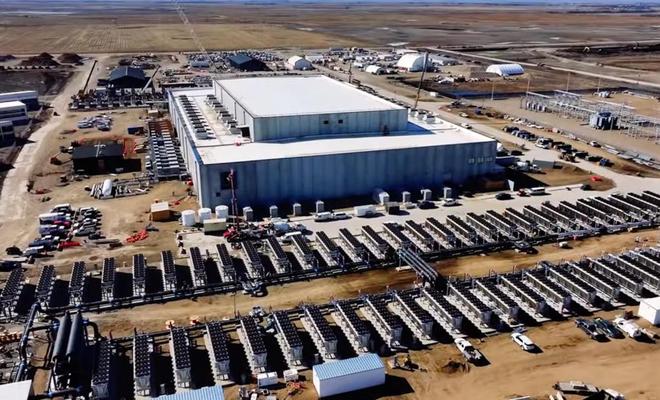
Core Insights - The article discusses the unprecedented scale of investment in AI infrastructure by technology companies, which has surpassed the cost of building the U.S. interstate highway system, indicating a high-stakes gamble on AI's potential profitability [1][3] - Current AI revenues are insufficient to cover the massive investments, and the unclear profit models raise concerns about the sustainability of this investment wave [1][4] - The situation is reminiscent of the late 1990s internet bubble, where excessive investment led to significant losses when expectations were not met [4][18] Investment Scale and Expectations - Over the past three years, major U.S. tech companies have invested more than $1 trillion in AI data centers, chips, and energy, with expectations of rapid technological advancement and economic transformation [3][4] - Companies like Microsoft and Meta are projecting substantial future expenditures, with Meta estimating up to $600 billion in U.S. spending by 2028 [3][4] - Analysts estimate that AI infrastructure investments will require consumers and businesses to purchase approximately $800 billion in AI products over the next two years to achieve reasonable returns [6][7] Revenue Challenges - The AI infrastructure investment wave is projected to need $2 trillion in annual AI revenue by 2030, which exceeds the combined revenue of major tech companies like Amazon, Apple, and Google for 2024 [7][8] - Current AI product revenues are estimated at around $45 billion, with the industry's profit models primarily based on subscription fees and usage charges for AI services [7][8] - Despite rapid consumer adoption of AI, most users are utilizing free versions, and businesses are hesitant to invest significantly in AI solutions [7][8] Debt and Financing - The financing landscape for AI infrastructure is complex, with significant debt levels across major tech companies, including Alphabet, Microsoft, Amazon, and Meta, which are expected to spend nearly $400 billion on capital expenditures next year [9][10] - Companies like CoreWeave have rapidly transformed from small startups to major players in the AI cloud computing space, driven by substantial debt and aggressive growth strategies [11][12] - CoreWeave's debt amounts to approximately $15 billion, with additional obligations of $56 billion for data center lease payments, raising concerns about sustainability if demand does not meet expectations [12][13] Historical Context and Risks - The article draws parallels between the current AI investment climate and historical technology bubbles, highlighting the risks of overinvestment and the potential for significant losses [16][18] - Historical examples, such as the 19th-century railway boom and the late 1990s fiber optic investment, illustrate the dangers of collective optimism leading to overcapacity and financial ruin [16][18] - Current AI executives acknowledge the high costs of developing new models and the rapid depreciation of AI chips, complicating the path to profitability [18] Local Economic Impact - In Ellendale, North Dakota, the construction of a massive AI data center is expected to significantly impact the local economy, with a projected increase in population and infrastructure development [19] - Local officials express concerns about the risks associated with the AI investment boom, acknowledging the potential for economic collapse if the AI hype does not materialize [19]




谁来买单“AI资本狂潮”?未来三年,硅谷出1.4万亿美元,华尔街筹1.2万亿美元
Hua Er Jie Jian Wen· 2025-09-24 06:07
Core Insights - The demand for computing power driven by the AI revolution is leading to a significant capital influx, with global spending on AI data centers and chips expected to reach $2.9 trillion by 2028, primarily funded by tech giants and debt financing [1] - A powerful alliance of global banks, private credit giants, and specialized lending institutions is forming to meet this unprecedented funding demand, exploring innovative financing structures such as AI chip collateral [1] - The capital race driven by AI is creating substantial opportunities for financial institutions capable of mobilizing funds quickly and managing risks effectively [1] Group 1: Traditional Banks' Role - JPMorgan Chase has taken an aggressive stance in AI data center financing, agreeing to bear the entire risk for a $9.4 billion loan to Crusoe for building large data centers for Oracle and OpenAI [2] - This transaction has propelled JPMorgan to the top of the IJGlobal rankings for telecom project debt underwriting, having also led $38 billion in loans for Oracle's data center projects [2] - Japanese banks, particularly SMBC and MUFG, are gaining traction in the data center financing market due to their cost advantages from Japan's low-interest-rate environment [3] Group 2: Private Credit's Dual Role - Blackstone is playing a dual role in the data center sector, both as an owner of major developers and as a significant lender, with notable transactions including a $7.5 billion debt financing for CoreWeave secured by NVIDIA chips [4] - This "chip collateral loan" model presents risks due to the shorter lifespan of chips compared to other data center assets, but it also offers high returns, with interest rates reaching 10.5% [4] - Blackstone also engages in traditional, lower-risk data center loans, provided that projects have agreements with investment-grade tenants [4] Group 3: Alternative Investors' Involvement - Alternative investors are increasingly entering the market, providing crucial capital for earlier-stage, higher-risk projects, with PIMCO recently authorized as the lead underwriter for a $26 billion debt financing for Meta's new data center [5] - Macquarie Bank is known for supporting early-stage projects, offering various financing options, including a $5 billion preferred equity investment in Applied Digital with a 12.75% annual dividend [5] - Blue Owl and Magnetar Capital are also noteworthy, with Blue Owl investing over $600 million in data center projects and Magnetar participating as a major investor in CoreWeave's innovative loan transactions [6]

