
Scale AI

Search documents
Meta再爆大瓜,气走杨立昆的Wang也受不了小扎了?
3 6 Ke· 2025-12-18 08:12
Core Viewpoint - Meta is undergoing significant restructuring in its AI division, led by CEO Mark Zuckerberg, but faces internal challenges and management issues that may hinder its ambitious AI goals, particularly the development of a new closed-source model codenamed "Avocado" set for release in Q1 2024 [1][12]. Group 1: Management and Internal Dynamics - Zuckerberg has heavily invested in AI talent, including acquiring a 49% stake in Scale AI for $14.3 billion and appointing its founder, Alexandr Wang, as Chief AI Officer, but internal dissatisfaction is growing [2][4]. - Wang has expressed frustration with Zuckerberg's micromanagement style, which is causing tension within the team [2][5]. - Key figures like Yann LeCun, Meta's Chief AI Scientist, are leaving due to internal conflicts and disagreements over the direction of AI development, particularly the shift towards closed-source models [5][7]. Group 2: AI Development and Financial Implications - Meta's AI division has undergone four reorganizations, culminating in the establishment of the "Super Intelligence Lab," which includes departments focused on research, infrastructure, product application, and the new TBD Lab, which is tasked with overseeing the development of the "Avocado" model [11]. - The "Avocado" model aims to achieve performance levels comparable to Gemini 2.5 at launch and Gemini 3 by summer 2024, but it is being built from scratch rather than as an iteration of the existing Llama model [11]. - Meta's capital expenditures for 2025 are projected to reach at least $70 billion, significantly higher than the previous year's $39 billion, with plans for AI spending potentially exceeding $100 billion, raising concerns among investors [12].



戴尔(DELL.US)斥资1.2亿美元收购Dataloop 加码AI数据基础设施布局
Zhi Tong Cai Jing· 2025-12-18 03:45
Dataloop成立于2017年,总部位于以色列赫兹利亚,该公司开发了一个用于管理、标注和处理非结构化 数据的平台,这些数据主要用于训练AI模型。该技术能够帮助各类机构构建高效的工作流程,以处理 复杂数据,并创建适应大规模模型时代需求的信息架构——这类模型通常需要海量经过整理、标注且易 于访问的数据集。 运营数据显示,2024年Dataloop以79名员工创造了350万美元营收,规模远小于Scale AI、Labelbox等竞 争对手,此外,该公司仅配备两名专职销售代表。分析认为,戴尔的收购动机主要在于技术与人才,而 非客户规模。 对戴尔而言,整合Dataloop的技术能力将直接增强其在AI领域提供的工具与服务组合,并为企业AI项目 的核心——数据管理——增添关键一环。 据报道,戴尔科技(DELL.US)将以1.2亿美元全现金收购以色列人工智能(AI)初创企业Dataloop。这笔交 易标志着这家美国计算巨头迈出了重要的战略一步。近年来,戴尔持续加大在AI领域的投资力度,致 力于为企业客户构建端到端的AI基础设施解决方案。 截至去年,Dataloop已与多行业客户展开合作,包括Vimeo、Rentokil、U ...

激光雷达公司宣布破产,股价暴跌60%
半导体行业观察· 2025-12-16 01:22
Core Viewpoint - Luminar Technologies has filed for Chapter 11 bankruptcy protection, planning to sell its assets, which has led to a 58% drop in its stock price [2][4]. Group 1: Bankruptcy Filing and Financial Situation - Luminar entered bankruptcy with the support of approximately 91.3% of first lien noteholders and 85.9% of second lien noteholders, citing "traditional debt obligations and industry adoption pace" as challenges to its sustainable operations [2]. - The company claims its assets are valued between $100 million and $500 million, while its liabilities range from $500 million to $1 billion, including $10 million owed to Scale AI and over $1 million to Applied Intuition [7]. Group 2: Asset Sale and Operational Continuity - As part of the restructuring, Luminar has agreed to sell its subsidiary Luminar Semiconductors Inc. for $110 million in cash to Quantum Computing Inc., which saw a 6.8% drop in its stock price following the announcement [2]. - Luminar plans to continue operations during the bankruptcy process, maintaining deliveries of its lidar hardware and software to customers [4]. Group 3: Leadership and Strategic Decisions - CEO Paul Ricci stated that the board determined a court-supervised sale process is the best path forward after a comprehensive review of various options [5]. - The company has hired Weil, Gotshal & Manges LLP as legal counsel, Jefferies LLC as investment banking advisor, and Portage Point Partners as restructuring advisor to assist during the bankruptcy [3]. Group 4: Challenges and Market Position - Luminar has faced significant challenges, including layoffs, executive departures, and a legal dispute with its largest customer, Volvo, which canceled a five-year contract [6][7]. - The company has undergone a 25% workforce reduction, marking its second round of layoffs this year, and has been involved in multiple legal disputes, including a lawsuit against Volvo [6].

财经观察:印度“AI蓝领”抢走美国白领饭碗?
Huan Qiu Shi Bao· 2025-12-11 22:41
Core Insights - The rapid development of artificial intelligence (AI) is reshaping employment landscapes in both the West and East, replacing some low-skill jobs while creating new opportunities, particularly in India [1] - In the U.S., anxiety among younger generations is prompting a shift towards blue-collar jobs to avoid being replaced by AI, contrasting with the rise of white-collar jobs in India's smaller cities [1] Group 1: AI Impact on Employment - AI data annotation roles are emerging as significant employment opportunities in India, with companies like Objectways adapting to new demands for personalized data [3][4] - The average salary for AI data annotators in India is significantly higher than local averages, with entry-level positions earning around $200 per month, and managerial roles reaching up to $1,000 [3] - The Indian AI data annotation industry is projected to grow substantially, potentially employing 1 million workers by 2030, with a market size expected to reach $7 billion [8] Group 2: U.S. Employment Challenges - In November, U.S. companies announced 71,000 layoffs, a 24% increase year-over-year, with AI contributing to 6,280 job losses [5] - A survey indicated that 59% of U.S. youth view AI as a significant threat to their employment prospects, with 23% considering it a major threat [6] - Many young Americans are opting for blue-collar jobs, such as plumbing and electrical work, which are perceived as less susceptible to automation compared to traditional white-collar roles [7] Group 3: Outsourcing Trends - The trend of outsourcing AI-related jobs to countries like India is expected to continue, driven by cost advantages and the need for skilled labor [8][10] - U.S. companies are increasingly expanding their teams in Asia, with a 32% growth in offshore employees from 2019 to 2024 [8] - The disparity in employment impacts between the U.S. and India is attributed to differences in labor costs, economic structures, and the nature of job roles being replaced by AI [10][12]
Meta 143亿美元“毒药投资”,半年废掉了一家AI独角兽
3 6 Ke· 2025-12-11 12:15
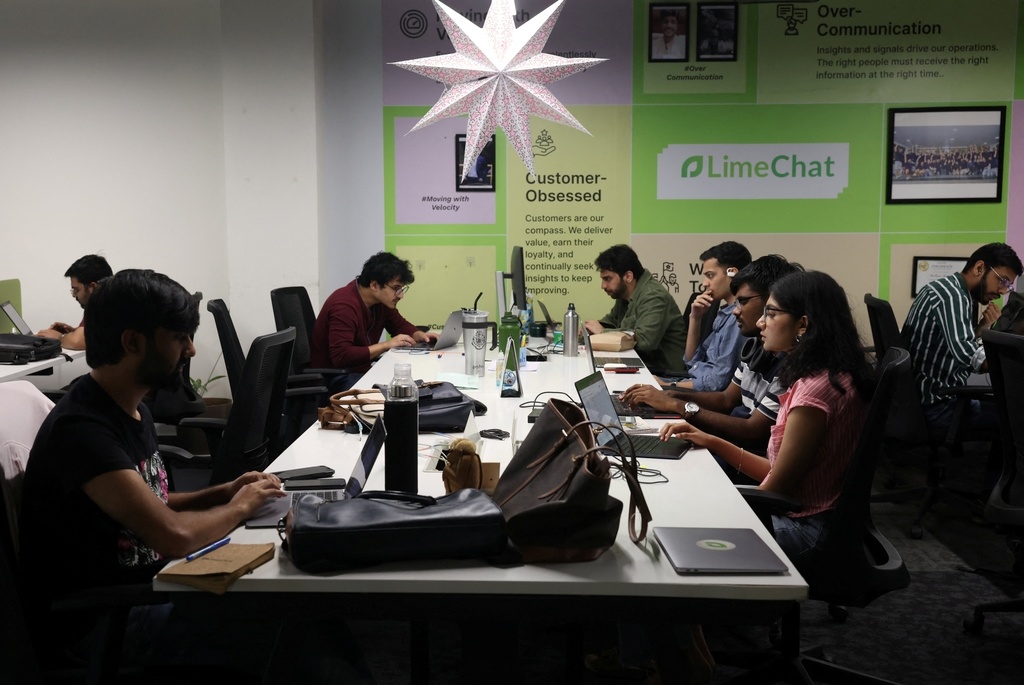
图片由AI工具生成 12月11日消息,AI领域曾风光无限的独角兽Scale AI,在2025年夏天接受科技巨头Meta高达143亿美元的重金投资、并失去其28岁的创始人汪 韬(Alexandr Wang)后,正经历一场前所未有的危机。 尽管公司坚称业务稳健,但根据透露的一些内部聊天记录显示,内部员工人心惶惶,竞争对手虎视眈眈,而其核心的零工群体正因薪酬削减和 工作量减少而大量流失。 并且,随着关键客户(如OpenAI和谷歌)暂停合作,Scale AI的估值在私有市场暴跌,未来是重振旗鼓,还是如部分投资者所言,沦为被 Meta"掏空的鱼"和又一个被巨头投资后"僵尸化"的初创公司,引人深思。 01. Meta入局后的震荡:从明星独角兽走向内部信任危机 2025年夏天,Meta通过巨额投资把Scale AI创始人汪韬(Alexandr Wang)直接挖走,这一举动像是一颗投入深水的巨石,迅速在整个公司内部 掀起剧烈涟漪。 这家原本被视为AI基础设施生态中最具成长性的公司,在交易落地后的短短几周内便被不确定性和焦虑情绪笼罩。 一名曾参与ChatGPT漏洞测试、为Scale AI外包工作的员工甚至向ChatGPT询问公 ...

扎克伯格“挥刀斩元老”,Meta倒向闭源
虎嗅APP· 2025-12-11 09:35
Core Insights - Meta is accelerating its adjustment of artificial intelligence strategy, delaying the release of its next-generation model "Avocado" to Q1 2026 and leaning towards a closed-source approach, marking a significant shift from its previously open-source strategy [2][3] - The delay of Avocado reflects deeper organizational changes, with a significant turnover in AI leadership and a shift from an academic-oriented research system to a more product-focused and closed-loop approach [5][6] - Meta's hardware roadmap is also being adjusted, with a shift in focus from the metaverse to AI, leading to a reduction in budget for metaverse projects and an increase in investment in AI-related hardware [8][9] - The overall strategic shift indicates a comprehensive transformation across technology, organization, and capital, as Meta rewrites its AI development path to focus on closed-source models and commercial outcomes [11] Organizational Changes - The leadership of AI at Meta has undergone significant changes, with the introduction of external high-end talent and a shift in focus towards product implementation and speed [5] - The new AI leadership emphasizes a closed-loop management style, contrasting sharply with the previous open research culture, leading to multiple rounds of restructuring and layoffs within AI-related teams [6] Hardware Strategy - Meta is conducting a comprehensive review of its hardware department, Reality Labs, downgrading or pausing several augmented reality projects and reallocating resources towards AI-compatible devices [8] - The company plans to accelerate the production of next-generation ASIC chips aimed at enhancing the efficiency of closed-source model inference, moving towards a more pragmatic mixed infrastructure model [8][9] Strategic Shift - The delay of Avocado is not merely a development timeline adjustment but a clear signal of Meta's strategic pivot in response to competitive pressures and internal restructuring [11] - This marks Meta's third major strategic shift in over a decade, driven not by external trends but by the necessity to adapt to a rapidly changing competitive landscape [11]

彭博:Meta转向!扎克伯格亲自挂帅,引入阿里Qwen训练,从开源走向盈利型闭源AI
美股IPO· 2025-12-11 00:34
Core Viewpoint - Meta is shifting from an open-source strategy to a closed-source commercial model with the development of its new AI model "Avocado," which is expected to be launched in spring next year [1][3]. Group 1: Strategic Shift - Meta is undergoing a strategic transformation led by Zuckerberg, focusing on the new AI project "Avocado" and utilizing Alibaba's QWEN model for optimization [3]. - The company is considering stricter usage controls for its AI models and exploring commercialization paths, marking a significant shift from its long-standing open-source strategy [3][4]. Group 2: Organizational Changes - The strategic shift is accompanied by significant organizational restructuring, including the formation of the TBD Lab team, which reports directly to Zuckerberg [5]. - Meta has acquired Scale AI for approximately $14.3 billion and appointed its founder, Alexandr Wang, as the Chief AI Officer, supporting the closed-source direction [5]. Group 3: Financial Considerations - Meta's high capital expenditures have raised concerns on Wall Street regarding its profitability outlook, with a commitment to invest $600 billion in infrastructure over the next three years, primarily for AI development [7]. - Investors remain skeptical about whether the substantial investments, which are expected to continue until 2026, will translate into significant profits [7]. Group 4: Competitive Landscape - Meta is intensifying efforts on the "Avocado" project to prove its path to "super intelligence" in both the highly regulated European and competitive U.S. markets [8]. - The company is racing to launch products ahead of competitors, as seen with the hurried release of the video generation tool "Vibes," which was quickly overshadowed by OpenAI's Sora 2 [7].

Meta divided by conflict between new AI brainiacs and longtime Zuck loyalists: report
New York Post· 2025-12-10 18:06
Core Insights - Meta is experiencing internal conflict between its new AI team, led by Alexandr Wang, and long-time executives over strategic priorities, particularly the focus on developing advanced AI versus enhancing existing social media products [1][2][3] Group 1: Internal Conflict - Alexandr Wang, founder of Scale AI, leads Meta's TBD Lab and has expressed disagreement with executives Chris Cox and Andrew Bosworth regarding the use of social media data for AI model training [2][3] - Wang believes the focus should be on competing with AI rivals like OpenAI and Google, rather than improving Meta's social media algorithms [3][4] - The tension is exacerbated by budget cuts in the virtual and augmented reality division, with $2 billion being redirected to support Wang's AI initiatives [4][10] Group 2: Strategic Focus - Meta's CFO Susan Li indicated that the company plans to use AI models to enhance its social media algorithms in the upcoming year, highlighting a potential clash in priorities with Wang's vision [10] - Despite the internal strife, Meta's leadership claims alignment on the goal of building superintelligence while also growing the core business [5][6] - The company has made significant investments in AI, including a $600 billion plan for AI data centers and a $15 billion acquisition of Wang's startup [12][13] Group 3: Talent and Resources - Meta has attracted top AI talent with lucrative compensation packages, but has also faced an exodus of key AI leaders and recent layoffs in its AI division [9][16] - The new AI team has begun to vest their shares, indicating a commitment to the company's long-term vision [15] - There is an ongoing debate within Meta about the allocation of computing resources, with some advocating for prioritizing social media algorithm improvements over funding the superintelligence lab [16]

不融资、不烧钱、不扩团队,华裔 CEO 创办的AI独角兽打入谷歌、Anthropic核心供应链,如今营收近百亿
3 6 Ke· 2025-12-10 09:12
Core Insights - Meta has invested $14.3 billion to acquire nearly half of Scale AI, a data labeling company, while Scale AI has achieved over $1 billion in annual revenue without external funding [1][4] - Surge AI, a competitor with only 60-70 employees, has also surpassed $1 billion in revenue within four years without any financing, highlighting a contrasting approach in the AI industry [4][11] Company Overview - Surge AI was founded by Edwin Chen, who has a background in mathematics and linguistics from MIT and has worked at major tech companies like Google and Meta [5][6] - The company focuses on high-quality data labeling and AI training infrastructure, addressing the critical issue of data quality that even large firms struggle with [5][6] Business Model and Strategy - Surge AI employs a rigorous selection process for its data annotators, creating a network called "Surge Force" that includes experts from top universities [6][7] - The company has developed advanced human-machine collaboration systems to ensure data quality, tracking thousands of behavioral signals from annotators [6][7] Clientele and Financial Performance - Surge AI has secured top-tier clients, including OpenAI, Google, and Meta, with Meta's generative AI department projected to spend over $150 million on Surge AI's services in 2024 [7] - The company achieved profitability in its first year, demonstrating a successful business model focused on quality over quantity [7] Industry Trends and Future Outlook - Edwin Chen believes that the future will see more companies achieving high revenue with fewer employees, driven by AI efficiency [11][12] - The industry is shifting towards smaller, more specialized teams that do not rely on external funding, allowing for greater focus on product quality and innovation [12][13] Research and Development - Surge AI has its own research team dedicated to improving data quality and developing better benchmarks, which is relatively rare for companies in this space [32][34] - The research team collaborates closely with clients to enhance their models and address gaps in performance [32][34] Unique Value Proposition - Surge AI aims to redefine data quality standards in AI training, emphasizing the subjective and complex nature of what constitutes "high-quality" data [15][16] - The company is focused on creating a unique learning environment for AI models, moving beyond traditional training methods to incorporate diverse learning approaches [29][30]

Llama已死?Meta(META.US)将在明年初推出新AI大模型Avocado
Zhi Tong Cai Jing· 2025-12-09 13:46
Core Viewpoint - Meta is planning to release a new large language model (LLM) named "Avocado" in Q1 2026 to compete with companies like Google and OpenAI [1] Group 1: Product Development - The new model "Avocado" is seen as the successor to Meta's Llama series, which has faced development challenges [1] - Avocado is expected to be a proprietary model, unlike the current open-source Llama models that allow public access and modifications [1] Group 2: Strategic Decisions - In June, there were discussions among Meta executives, including Mark Zuckerberg, about reducing investment in the Llama series and considering models developed by competitors such as OpenAI and Anthropic [1] - Meta restructured its AI department to optimize its organizational framework for faster AI product development in response to competition [1] Group 3: Financial Investments - This summer, Meta invested nearly $15 billion to acquire a stake in Scale AI and appointed its CEO Alexandr Wong as the Chief AI Officer [1]