Vibes

Search documents
内测输给Gemini,还套壳?!Meta千亿自研大模型遭延期
机器之心· 2026-03-14 06:33
Core Viewpoint - Meta's AI project, particularly the new foundational model Avocado, has faced delays due to performance issues, pushing its release to at least May [2][3]. Group 1: Model Performance and Competition - Avocado's performance in reasoning, code generation, and writing still lags behind competitors' latest models, indicating that while Meta has made significant progress, rivals are advancing even faster [4][5]. - The gap in foundational models affects ecosystem attractiveness, developer resources, and talent recruitment, as foundational models are crucial for AI platforms [6]. - Internal discussions at Meta considered temporarily licensing Google's Gemini model to support its AI products, highlighting the critical state of Meta's AI strategy [7]. Group 2: Investment and Future Plans - Meta's investment in AI is among the most aggressive in the internet sector, with projected AI-related spending of $72 billion in 2025 and up to $135 billion in 2026, alongside a long-term data center investment of around $600 billion [8][9]. - The goal is to establish a pathway to superintelligent AI, with Avocado being developed by the elite TBD Lab, which is also working on another model named Mango [10][11]. Group 3: Strategic Shifts and Industry Signals - Meta's AI strategy may shift from open-source to closed-source models, as indicated by internal discussions, due to high costs and competitive pressures [14][15]. - The delay of Avocado signals a broader industry trend where the competition has shifted from merely creating models to the speed of iteration and improvement [16][17]. - Meta is already planning the next generation of models, continuing the fruit-themed naming convention with Mango and Watermelon, which will be larger in scale [18].



Meta delays release of new AI, weighs licensing Google's Gemini after disappointing trial runs: report
New York Post· 2026-03-13 20:17
Core Insights - Meta is delaying the release of its new AI model, "Avocado," by approximately two months due to underperformance in internal tests compared to competitors like Google, OpenAI, and Anthropic [1][2][3] - The company is considering temporarily licensing Google's Gemini to enhance its AI products following the disappointing results [1][3] Development and Investment - Meta has invested significantly in AI, spending billions on hiring top talent and committing $600 billion to build data centers, with a projected expenditure of up to $135 billion in 2023, nearly double the $72 billion spent in 2022 [3] - The development of Avocado has been ongoing for months, with the model expected to launch around May instead of March due to its inability to meet performance benchmarks in reasoning, coding, and writing [3][10] Performance Comparison - Avocado has shown improved performance over Meta's previous AI model but still lags behind Google's Gemini 3.0, which was released in November [4] - Despite setbacks, Meta's leadership remains optimistic about the trajectory of their AI models, with expectations for significant advancements in the near future [4][7] Organizational Changes - Meta's AI division, led by Alexandr Wang, has faced some turnover, with researchers leaving before the release of Avocado [12] - The company is restructuring its AI teams, creating a new team under Andrew Bosworth to collaborate with Wang, indicating a strategic shift in its AI development approach [15][16] Competitive Landscape - Meta's AI efforts are closely monitored within the competitive landscape of AI development, where Google, OpenAI, and Anthropic are perceived as leaders [7] - The company has historically supported open-source models, which contrasts with the more restrictive approaches of its competitors [15]


Meta Inks AI Agreement With Chipmaker AMD
PYMNTS.com· 2026-02-24 15:16
Core Insights - Meta has signed a multi-year agreement with AMD to supply up to 6GW of Instinct GPUs to support its AI models, emphasizing the need for scalable compute power for AI workloads [2] - The partnership is part of Meta's initiative to massively scale its infrastructure for the "personal superintelligence" era, integrating hardware from various partners with its MTIA silicon program [2] - AMD's CEO highlighted the strategic nature of the partnership, which aims to deliver high-performance, energy-efficient infrastructure optimized for Meta's AI workloads [7] Partnership Details - The agreement includes a performance-based warrant allowing Meta to acquire 160 million shares of AMD [7] - This collaboration builds on an existing relationship and aligns both companies' roadmaps to accelerate one of the industry's largest AI deployments [7] Competitive Landscape - The agreement follows a recent multi-year AI infrastructure pact between Meta and Nvidia, aimed at supporting AI training and inference data centers [8] - Meta is also testing a standalone mobile app for Vibes, an AI-generated short-video feed, indicating a shift towards AI-generated content as a core engagement driver [10][11] - The move to separate Vibes into its own app reflects Meta's strategy to explore AI-generated content as a dedicated social experience rather than just a feature within larger products [10]


人工智能周报(26年第6周):Anthropic发布Claude Opus 4.6-20260213
Guoxin Securities· 2026-02-13 01:11
Investment Rating - The report assigns an "Outperform" rating for the industry, indicating expected performance above the market benchmark by more than 10% over the next 6 to 12 months [33]. Core Insights - Major tech companies are significantly increasing their investments in AI for 2026, focusing on talent acquisition, computing power infrastructure, and marketing expenditures. The competition for consumer-facing AI Agent products is expected to intensify during the Spring Festival period in China [2]. - The report emphasizes the transformative potential of AI in changing user interactions with software and the internet, highlighting the value creation from large models. It suggests focusing on companies with the most certainty in computing power and large models, including Alibaba, Baidu, and Tencent [2]. Summary by Sections Company Developments - SpaceX has fully acquired xAI, with a post-merger valuation of $1.25 trillion. The merger will allow xAI to operate as a subsidiary of SpaceX, integrating its Grok model with SpaceX's satellite data [17]. - Meta has launched a series of AI advertising tools, including AI Video Generation 2.0, which simplifies the creative production process for advertisers [20]. - Kunlun Technology has released the Skywork desktop version, a local multi-model AI office agent that prioritizes data security and ease of use [21]. - OpenAI has launched two core products, including an upgraded programming model and an enterprise-level AI platform, enhancing its commercial capabilities [22]. - Meta is testing a standalone AI video application called Vibes, focusing on AI-generated content [23]. - Four major tech giants (Google, Amazon, Meta, Microsoft) plan to invest a total of $610 billion in AI infrastructure, representing over 75% of global investment in this area [24]. Underlying Technologies - Step 3.5 Flash model by Jumpshare has been released, utilizing a sparse MoE architecture to address computing power challenges [25]. - Alibaba's Tongyi Qianwen team has open-sourced the Qwen3-Coder-Next programming model, achieving high performance with low computational costs [26]. - Anthropic has released Claude Opus 4.6, significantly expanding its context window to 1 million tokens, enhancing its capabilities for complex document analysis [26]. - The Chinese Academy of Sciences has introduced the "Feiyu-1.0" model, focusing on dual-direction coupling technology for environmental data analysis [27]. Industry Policies - The Ministry of Industry and Information Technology has issued a notice to enhance AI computing power infrastructure, aiming to establish a national interconnected computing power node system [28]. Investment Recommendations - The report suggests monitoring companies with strong positions in computing power and large models, such as Alibaba, Baidu, and Tencent, as they are expected to lead in the rapidly evolving AI landscape [29].


人工智能周报(26年第6周):Anthropic发布ClaudeOpus4.6-20260211
Guoxin Securities· 2026-02-11 07:35
Investment Rating - The report assigns a "Neutral" investment rating for the AI industry in 2026 [1]. Core Insights - Major companies are significantly increasing their investments in AI, focusing on talent acquisition, computing power infrastructure, and marketing expenditures. The competition for consumer-facing AI Agent products is expected to intensify during the Spring Festival period in China [2]. - The report suggests focusing on companies with the most certainty in computing power and large models, including Alibaba, Baidu, and Tencent [2]. Summary by Sections Company Dynamics - SpaceX has fully acquired xAI, with a post-merger valuation of $1.25 trillion. The merger will allow xAI to operate as a subsidiary of SpaceX, integrating its Grok model with Starlink satellite data [17]. - Meta has launched a series of AI advertising tools, including AI Video Generation 2.0, which simplifies the creative production process for advertisers [20]. - Kunlun Technology has released the Skywork desktop version, a local multi-model AI office agent that emphasizes data security and ease of use [21]. - OpenAI has launched two core products, including an upgraded programming model and an enterprise-level AI platform [22]. - Meta is testing an independent AI video application called Vibes, focusing on AI-generated content [23]. - Google, Amazon, Meta, and Microsoft have announced a combined investment of $610 billion in AI infrastructure for 2026 [24]. Underlying Technology - Step 3.5 Flash model by Step Star has been released, utilizing a sparse MoE architecture to address computing power challenges [25]. - Alibaba's Tongyi Qianwen team has open-sourced the Qwen3-Coder-Next programming model, achieving high performance with low computational costs [26]. - Anthropic has released Claude Opus 4.6, significantly expanding the context window to 1 million tokens [26]. - The Chinese Academy of Sciences has introduced the "Feiyu-1.0" model, focusing on coupled computing technology for environmental research [27]. Industry Policy - The Ministry of Industry and Information Technology has issued a notice to enhance AI computing power infrastructure through a national interconnected node system [28]. Investment Recommendations - The report emphasizes the importance of monitoring companies with strong positions in computing power and large models, particularly during the rapid deployment of AI Agent products [29].
人工智能周报(26年第6周):Anthropic发布Claude Opus 4.6-20260211
Guoxin Securities· 2026-02-11 07:10
Investment Rating - The report assigns a "Neutral" investment rating for the AI industry in 2026 [1] Core Insights - Major tech companies are significantly increasing their investments in AI, focusing on talent acquisition, computing power infrastructure, and marketing expenditures. The competition for consumer-facing AI Agent products is expected to intensify during the Spring Festival period in China [2] - The report suggests focusing on companies with the most certainty in computing power and large models, including Alibaba, Baidu, and Tencent [2] Summary by Sections Company Dynamics - SpaceX has fully acquired xAI, with a post-merger valuation of $1.25 trillion. The merger will allow xAI to operate as a subsidiary of SpaceX, integrating its Grok model with Starlink satellite data [17] - Meta has launched a series of AI advertising tools, including AI Video Generation 2.0, which simplifies the creative production process for advertisers [20] - Kunlun Technology has released the Skywork desktop version, a local multi-model AI office agent that prioritizes data security and ease of use [21] - OpenAI has launched two core products, including an upgraded programming model and an enterprise-level AI platform [22] - Meta is testing an independent AI video application called Vibes, focusing on AI-generated content [23] - Google, Amazon, Meta, and Microsoft have announced a combined investment of $610 billion in AI infrastructure for 2026 [24] Underlying Technology - Step 3.5 Flash model by JUMP Star has been released, utilizing a sparse MoE architecture to address computing power challenges [25] - Alibaba's Tongyi Qianwen team has open-sourced the Qwen3-Coder-Next programming model, achieving high performance with low computational costs [26] - Anthropic has released Claude Opus 4.6, significantly expanding the context window to 1 million tokens [26] - The Chinese Academy of Sciences has introduced the "Flying Fish-1.0" model, focusing on coupling computation technology [27] Industry Policy - The Ministry of Industry and Information Technology has issued a notice to improve AI computing power infrastructure through a national interconnected node system [28] Investment Recommendations - The report emphasizes the importance of monitoring companies with strong positions in computing power and large models, particularly during the rapid deployment of AI Agent products [29]
Can Captain Michael Saylor Right The Bitcoin Ship?
Seeking Alpha· 2026-02-06 12:30
Group 1 - Stellantis (STLA) has recorded a $26 billion charge and will not pay an annual dividend in 2026 due to overestimating the pace of the energy transition [3] - Bitcoin (BTC-USD) has seen a significant decline, losing more than half of its value from an all-time high of over $126,000 in October 2025, now trading close to $60,000 [5] - Strategy (MSTR) has reported a $17.5 billion net unrealized loss on its digital assets in Q4, with its stock dropping 17% during a session, indicating severe financial distress [5] Group 2 - The CEO of Strategy (MSTR), Phong Le, mentioned the possibility of selling Bitcoin to fund dividend payments if necessary, raising concerns about market perception and shareholder dilution [5] - Meta (META) is testing a new AI video-focused app called 'Vibes' as a separate platform, indicating a strategic shift towards AI-driven content [7] - Toyota (TM) has announced the resignation of its CEO after just three years, which may impact the company's strategic direction and market confidence [7]


新浪财经隔夜要闻大事汇总:2026年2月6日
Xin Lang Cai Jing· 2026-02-05 23:33
Market Summary - On February 6, US stock markets closed lower, with the Dow Jones dropping nearly 600 points and the S&P 500 erasing its gains for the year. Tech stocks led the decline, with significant drops in companies like Alphabet and Qualcomm. Additionally, January saw the highest number of planned layoffs since 2009, and job openings fell to the lowest level since 2020 [2][3] - In the top 20 stocks by trading volume, Amazon is expected to have capital expenditures of $200 billion this year, significantly exceeding market expectations. Other notable movements included Nvidia, Google, Tesla, and Microsoft, all experiencing declines due to various industry news and earnings reports [2][3] Macro Summary - The US and Iran are set to hold nuclear negotiations in Oman, with the White House indicating that military options remain on the table. The talks are seen as crucial, although there are significant differences in agendas between the two parties [7][8] - The US labor market shows signs of cooling, with job openings unexpectedly dropping to 6.542 million in December, below the expected 7.25 million. This decline reflects a cautious hiring environment, with layoffs increasing primarily in the transportation and warehousing sectors [13][14] Commodity Market - Oil prices fell due to eased tensions regarding US-Iran talks, with Brent crude and WTI both experiencing significant declines. This drop follows a previous rise, indicating market volatility influenced by geopolitical developments [4][30] - COMEX gold futures dropped by 3.08%, while silver futures saw a more significant decline of 16.64%. These movements reflect changes in market sentiment and supply-demand dynamics [5][30] Company-Specific Developments - Amazon's projected capital expenditures for 2026 are expected to reach $200 billion, far exceeding the market's forecast of $144.67 billion. This increase is attributed to strong demand for AI infrastructure, although the company faces capacity constraints [13] - SpaceX's Starlink is anticipated to expand into new markets, although CEO Elon Musk denied reports of developing a Starlink mobile phone. Starlink is a significant revenue source for SpaceX, contributing to a substantial portion of its overall earnings [14][15] - Anthropic released a new AI model for financial research, which has led to declines in financial service stocks. This model is part of a broader trend where AI companies are increasingly targeting enterprise clients [16]

对2026 年 AI 发展的 17 个预测
3 6 Ke· 2026-01-28 23:26
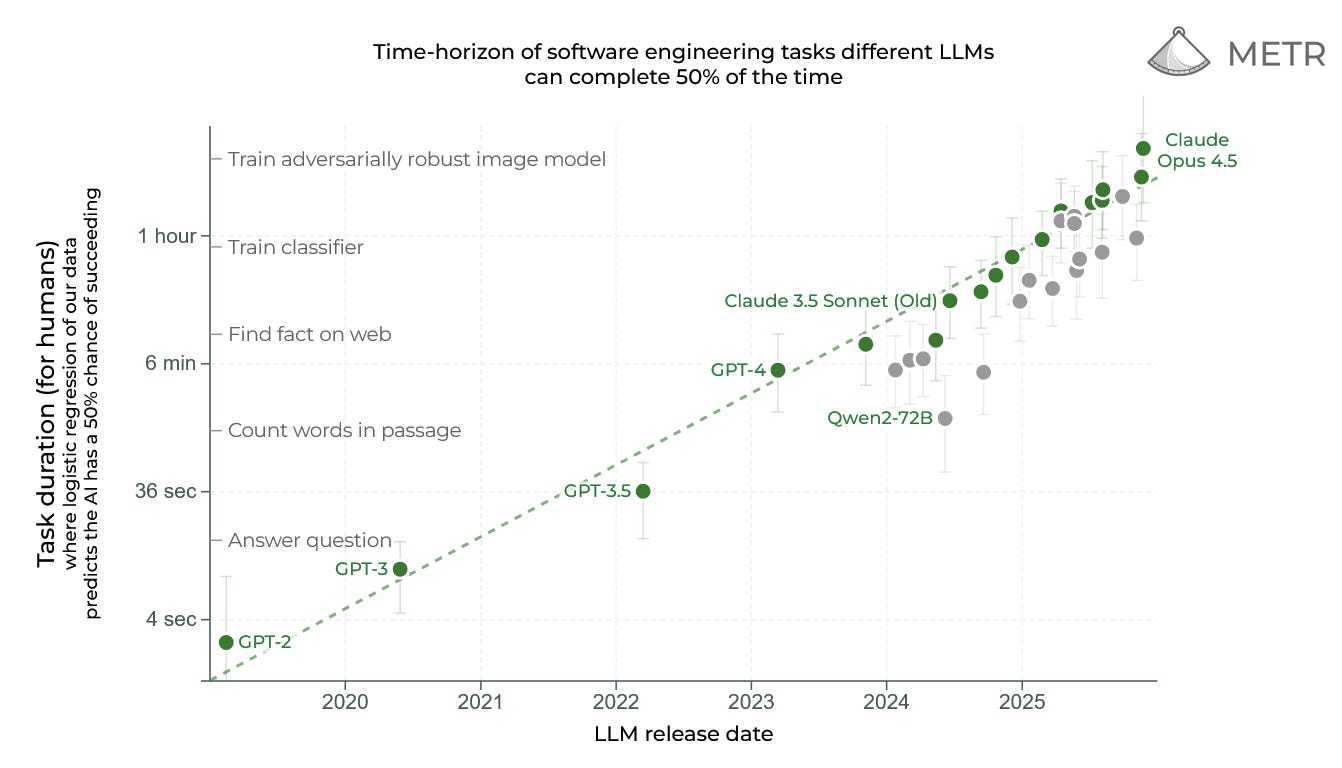
Core Insights - The article emphasizes that while the AI bubble will not burst in 2026, the hype surrounding it may diminish, marking a transition from experimental phases to practical business applications [1] Group 1: Capital Expenditure Predictions - Major tech companies' capital expenditures are expected to exceed $500 billion in 2026, up from $400 billion in 2025, driven by significant investments in AI [2][3] - The increase in capital spending is seen as a potential indicator of an AI bubble, but industry leaders argue that these investments are necessary to meet current customer demands [2] Group 2: Revenue Growth of AI Companies - OpenAI and Anthropic are projected to meet or exceed their revenue targets for 2026, with OpenAI aiming for $30 billion and Anthropic for $15 billion [4][11] Group 3: AI Model Capabilities - The context window for leading AI models is expected to stabilize around 1 million tokens, as larger windows become less cost-effective for most tasks [6][7] - AI models are anticipated to complete software engineering tasks that typically take 20 hours, achieving a 50% success rate [10][14] Group 4: Economic Growth Predictions - The U.S. GDP growth rate is predicted to remain below 3.5% in 2026, despite expectations of AI-driven economic improvements [8][9] Group 5: Legal and Regulatory Landscape - The legal landscape for AI companies is expected to evolve, with courts imposing operational restrictions to prevent copyright infringement, indicating a shift towards more stringent regulations [15] Group 6: Autonomous Vehicle Developments - A Chinese company's autonomous taxi fleet is projected to surpass Waymo's by 2026, driven by faster scaling and production capabilities [20][21] - The first fully autonomous consumer vehicle is expected to be launched by a company other than Tesla, with Tensor being a potential candidate [22][23] Group 7: AI Technology Trends - Text diffusion models are anticipated to gain mainstream attention, potentially offering advantages over traditional autoregressive models [26] - The number of media reports linking AI to suicide is expected to double, although actual suicide rates are projected to remain stable [29] Group 8: Open Weight Models - U.S. open weight models are expected to catch up with Chinese models by 2026, as Western companies show renewed interest in developing competitive open-source AI technologies [30][31]
Meta to test premium subscription plans for Instagram, Facebook and WhatsApp
CNBC· 2026-01-27 02:35
Group 1 - Meta's $2 billion acquisition of AI startup Manus is under review by Chinese officials for potential technology control violations [1] - Meta is planning to introduce new subscription models across its platforms, including Instagram, Facebook, and WhatsApp, aimed at enhancing user productivity and creativity [2][3] - The subscription plans will include access to expanded AI capabilities and features from the recently acquired Manus suite of AI agents [2] Group 2 - The new subscription model may help Meta recoup its significant investments in AI talent and acquisitions made in the previous year [3] - Features of the subscription plans may include full access to the AI-powered short-form video experience Vibes, which will still offer a free basic version [4] - The subscription service will be distinct from Meta Verified, which provides content creators and businesses with various benefits, and Meta intends to gather user feedback during the rollout [5]