
中国财险

Search documents
一颗荔枝的“保险之旅”
Jin Rong Shi Bao· 2025-08-08 08:01
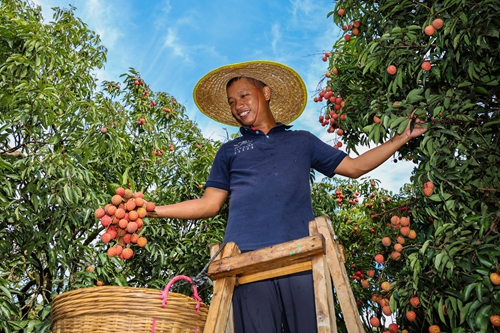
彼时,受限于保鲜技术与运输速度,运送荔枝堪称"要命"的差事。而今天,现代冷链物流网络将荔 枝运输耗时由5天至7天大幅压缩至30小时以内,同时确保果品品质稳定、损耗可控。 然而,在荔枝产业蓬勃发展的同时,荔农们依然面临诸多棘手挑战。资金短缺是首要难题。对于众 多荔农而言,扩大种植规模、提升产业水平,都需要资金支持。荔枝产业本身的资金需求特点,导致这 一难题并不易解决。另外,在种植过程中,虫祸天灾难以规避,严重影响荔枝的产量、品质以及市场供 应的稳定性,进而影响荔农的收益。在销售过程中,由于缺乏多元的销售途径和定价主动权,价格的细 微波动都会对荔农的收入产生直接且显著的影响,收益充满不确定性,产业发展稳定性也受到挑战。 针对这些痛点,多家保险机构提供了一系列解决方案。从枝头荔枝茁壮生长,到消费者大快朵颐, 保障这份夏日限定的"甜蜜"直达千里之外,甚至远渡重洋。 6月28日,在广州市从化区天人山水荔枝园,高伟强从一早就开始采摘荔枝,忙得大汗淋漓。新华 社记者 刘大伟 摄 近日,根据马伯庸同名小说改编的电视剧《长安的荔枝》正式收官。剧中,雷佳音饰演的李善德临 危受命,要将"一日色变、二日香变、三日味变"的荔枝从岭南运 ...

“报行合一”为非车险发展正本清源
Jin Rong Shi Bao· 2025-08-08 08:01
Core Viewpoint - The Financial Regulatory Bureau has issued a draft notice aimed at strengthening the regulation of non-auto insurance, addressing long-standing issues in the industry and promoting cost reduction and efficiency improvement [1][2]. Group 1: Regulatory Changes - The draft notice emphasizes the implementation of a "report and practice unified" system for non-auto insurance, requiring that the actual insurance terms and rates executed by insurance companies must align with the submitted regulatory materials [2][3]. - This regulatory approach aims to eliminate short-sighted practices such as price wars and improper fee collection methods, encouraging companies to focus on reasonable pricing, quality service, and sound operations [2][3]. Group 2: Premium Collection Risks - The issue of accounts receivable risk has been a significant challenge for non-auto insurance, with some companies managing premium collection too loosely, leading to high accounts receivable and potential financial instability [3]. - The draft mandates that insurance companies must issue policies and invoices only after collecting full or initial premiums, thereby improving cash flow and managing accounts receivable risks effectively [3]. Group 3: Cost Reduction and Efficiency - The push for cost reduction and efficiency is essential for the sustainable development of the property insurance industry, as the previous competitive model has led to rising comprehensive cost ratios and reduced profit margins [4]. - Implementing the "report and practice unified" system is expected to free up resources from unhealthy competition, allowing companies to enhance their pricing and underwriting capabilities, improve claims service levels, and strengthen market competitiveness [4]. Group 4: Impact on the Economy - Non-auto insurance has expanded its role across various sectors of the economy, providing crucial support for businesses in managing operational risks and stabilizing production [5]. - As the regulatory body continues to advance the "report and practice unified" system, non-auto insurance is anticipated to better fulfill its risk protection and resource allocation functions, serving as a solid foundation for the stable development of the real economy [5].
一份超越合同的承诺
Jin Rong Shi Bao· 2025-08-08 08:01
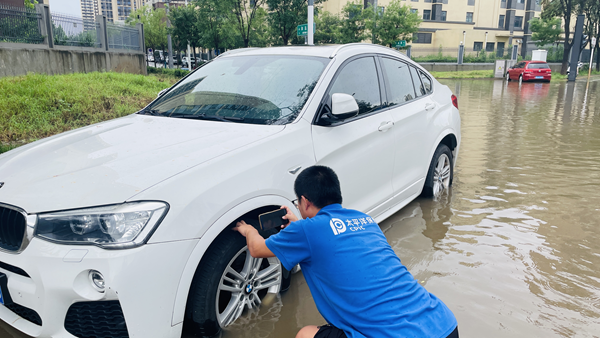
Core Insights - The company demonstrates a strong commitment to social responsibility by actively participating in disaster relief and safety awareness initiatives, showcasing its role beyond traditional insurance services [1][2][3][4] Group 1: Disaster Response and Community Support - In response to severe weather conditions in Jiangsu, the company provided immediate assistance to farmers by reinforcing crab ponds at risk of flooding, highlighting its proactive approach to disaster management [1] - Employees of the company assisted stranded tourists in Hebei by using their own resources for vehicle recovery, which led to public recognition and gratitude from the rescued individuals [2] Group 2: Safety Awareness and Education - The company has conducted extensive safety awareness campaigns, including distributing safety manuals in local dialects to educate communities on emergency preparedness, reaching over 420,000 individuals [3] - Collaborative efforts with local emergency management authorities in Guangdong resulted in the identification of 700 safety hazards in high-risk chemical enterprises, emphasizing the company's focus on preventing industrial accidents [3] Group 3: Risk Management Framework - The company has established a comprehensive risk reduction service system that includes precise risk identification, dynamic monitoring, disaster prevention, emergency response, and rapid claims processing, serving 230,900 enterprises and identifying over 524,100 risk issues in 2024 [4] - The value of insurance is portrayed as extending beyond financial coverage, emphasizing the company's role in providing tangible safety and support during crises [4]
人保财险已接报案近8000件 报损金额约2亿元
Jin Rong Shi Bao· 2025-08-08 08:01
Core Viewpoint - The company is actively engaged in disaster relief and claims processing in response to severe flooding and geological disasters in North China, following the directives of the Chinese leadership [1][2]. Group 1: Disaster Response and Claims Processing - The company has established four on-site working groups to guide disaster claims in affected areas such as Beijing, Hebei, and Inner Mongolia [1]. - The company has prepared 60 claims personnel for cross-province support, including 30 for auto insurance, 20 for non-auto insurance, and 10 for agricultural insurance [2]. - As of July 29, the company has received nearly 8,000 claims reports with a reported loss amount of approximately 200 million yuan [3]. Group 2: Principles and Strategies - The company adheres to the principle of "one national system" to coordinate disaster response efforts [2]. - The company emphasizes collaboration with government agencies and has joined national emergency response teams to leverage its expertise in disaster relief [2]. - The company prioritizes the needs of affected individuals, implementing a rapid compensation mechanism to address urgent needs [2]. Group 3: Progress and Achievements - In Beijing, the claims team has quickly completed compensation for a farmer's greenhouse loss despite communication disruptions [3]. - In Hebei, the claims team has efficiently integrated into local government-led relief efforts, completing the first batch of rapid compensation for auto and "one yuan livelihood" insurance [3]. - In Inner Mongolia, affected clients are beginning to receive compensation payments for auto and agricultural insurance [3].
保险业:织密防汛“安全网”
Jin Rong Shi Bao· 2025-08-08 08:01
Core Viewpoint - The insurance industry has rapidly activated emergency response mechanisms in response to the severe rainstorms in northern Beijing, focusing on disaster relief and ensuring the safety of people's lives and property [1][2][3][4]. Group 1: Emergency Response and Support - Insurance companies have established working groups to coordinate disaster relief efforts, ensuring adequate resources and support for affected areas [2][3]. - China Life Property & Casualty Insurance initiated a "pre-warning" mechanism to disseminate weather alerts and safety guidelines to high-risk areas [2][3]. - Ping An Insurance deployed nearly 300 claims personnel and provided essential supplies to approximately 1,000 affected villagers [3][4]. Group 2: Claims Processing and Efficiency - The insurance sector emphasizes rapid claims processing, adopting principles of "paying what should be paid, paying quickly, and reasonable pre-payment" [4][5]. - Taiping Property & Casualty Insurance opened a 24-hour claims hotline and simplified claims procedures to facilitate quick compensation [4][5]. - Multiple insurance companies established temporary claims points in affected areas to provide efficient and warm service to disaster victims [5][6]. Group 3: Risk Monitoring and Coordination - The insurance industry is actively monitoring risks and utilizing technology to oversee critical infrastructure and agricultural areas [6][7]. - Companies are coordinating with various regional branches to streamline claims processes and enhance service efficiency [7][11]. - Ongoing rescue operations are being conducted, with insurance firms committed to implementing tailored disaster response measures [7][11].




暴雨灾害凸显家财险重要性
Jin Rong Shi Bao· 2025-08-08 08:00
Core Viewpoint - The recent heavy rainfall in Beijing has led to significant property damage, prompting increased awareness among families regarding the importance of property insurance [1] Group 1: Insurance Response to Natural Disasters - The "Puhui Home Property Insurance" has demonstrated its effectiveness, with quick claims processing reported after the recent storm [2] - For instance, a resident in Miyun District received a compensation of 5,140 yuan on the same day her claim was filed due to roof damage from the rain [2] - The insurance company utilized a rapid processing mechanism for small claims, ensuring timely compensation for affected residents [2] Group 2: Growth of Home Property Insurance - There has been a growing public awareness of risk protection, leading to home property insurance becoming a necessity [3] - Over 50 cities have launched the "Puhui Home Property Insurance" project, covering 19 provinces nationwide [3] - The insurance is designed to cover major risks such as fire, flooding, gas leaks, and electric vehicle fires, with a focus on timely reporting and evidence retention by consumers [3] Group 3: Choosing the Right Insurance - Consumers are increasingly focused on home property safety and are faced with various insurance options [4] - Home property insurance is categorized into two types: city-customized inclusive insurance and commercial home property insurance, with the former being more affordable and widely accessible [4] - The selection process should begin with identifying core risk points in the household, considering factors such as the age of the property and specific regional risks [4] Group 4: Market Penetration and Future Outlook - Despite the growing variety of home property insurance products, the penetration rate in China remains low at only 0.8% of the total premium income in the property insurance market [5] - Industry experts suggest that innovation is needed in the home property insurance market to enhance product applicability and better meet diverse consumer needs [5]
保险业筑牢“安全堤坝”
Jin Rong Shi Bao· 2025-08-08 07:57
Group 1: Government and Regulatory Actions - The State Council emphasized the importance of flood prevention and disaster relief during the critical period of "July down, August up," focusing on ensuring the safety of people's lives and property [1] - The Ministry of Emergency Management highlighted the need for proactive measures in disaster prevention, particularly during heavy rainfall in remote areas [2] - Financial regulatory authorities provided guidance on disaster prevention and insurance claims, urging consumers to focus on personal safety and property protection [3] Group 2: Insurance Industry Response - The insurance industry has actively engaged in disaster prevention and response, implementing measures such as risk reduction services and emergency plans ahead of severe weather events [2][3] - China Pacific Insurance in Guangdong has established 15 special working groups and conducted 11 flood prevention drills, enhancing disaster response capabilities [3] - Insurance companies like China Life Property & Casualty and PICC have mobilized resources for 24-hour support in rescue and claims processes during severe weather events [2][4] Group 3: Claims and Support Services - Insurance companies have streamlined claims processes, with PICC completing a claim for a damaged greenhouse within 40 minutes, demonstrating efficiency in disaster response [4] - In Shandong, Dadi Insurance received over 100 claims within six hours of heavy rainfall, utilizing a risk heat map to identify affected areas [5] - Sunshine Property & Casualty in Guizhou provided continuous support to clients affected by severe flooding, showcasing the industry's commitment to customer service [5] Group 4: Agricultural Insurance Focus - The insurance sector is prioritizing agricultural disaster prevention, with companies conducting on-site assessments and utilizing technology for accurate loss evaluations [6][7] - The emphasis on agricultural insurance is critical due to increasing natural risks from climate change, with a focus on ensuring food security [6][7] - Companies are implementing pre-payment mechanisms to assist farmers in recovery efforts, ensuring a seamless connection between warning, assessment, and compensation [6]
中国人保董事长丁向群首次亮相业绩会:建设一流保险金融集团
Zhong Guo Jing Ji Wang· 2025-08-08 07:26
Core Viewpoint - China People's Insurance Group Co., Ltd. (China PICC) reported a steady growth in its operating performance for the past year, achieving a revenue of 709.4 billion yuan, a year-on-year increase of 6.4%, and a net profit of 42.9 billion yuan, up 88.2% [1] Group 1: Financial Performance - The return on equity (ROE) reached 16.7%, an increase of 7.1 percentage points year-on-year [1] - The company aims to build a world-class insurance financial group with a focus on high-quality development [2] Group 2: Strategic Development Direction - The company has outlined a strategy to enhance its role in insurance risk protection and financial intermediation, aiming to be a leader in safeguarding public welfare and supporting social governance [1][2] - The strategic focus includes four key areas: high-quality product supply, high-quality service upgrade, high-quality structural optimization, and high-quality profit generation [2][3][4] Group 3: Product and Service Innovation - China PICC plans to deepen insurance supply-side reforms, innovate products in line with economic trends, and enhance risk pricing capabilities for new energy vehicles [2] - The company aims to develop comprehensive insurance services that address health and elderly care needs, creating a product development mechanism that benefits all age groups [2] Group 4: Structural Optimization and Profit Generation - The company will focus on balancing its core business and optimizing its structure to adapt to economic transformations [3][4] - In the property insurance sector, China PICC will enhance its competitive advantage and ensure a leading comprehensive cost ratio [4] Group 5: Subsidiary Development - The company has defined the development positioning for its subsidiaries, including PICC Property, PICC Life, and PICC Health, aiming for balanced growth and strong market competitiveness [5][6] Group 6: Investment Strategy - China PICC will leverage its investment platform to enhance equity investment capabilities, focusing on early-stage, small, long-term, and hard technology investments [7] Group 7: Reform and Innovation - The company plans to implement six reforms and focus on four solid initiatives to drive innovation and improve management efficiency [8][9][10]

险资“买金”破冰 千亿级增量资金入市可期
Zhong Guo Zheng Quan Bao· 2025-08-08 07:26
Core Viewpoint - The approval of four insurance companies as members of the Shanghai Gold Exchange marks a significant step for insurance capital to enter the gold market, enhancing asset allocation and risk diversification while increasing market liquidity and activity [1][2]. Group 1: Insurance Companies' Participation - The four pilot insurance institutions have successfully executed various types of gold transactions, including competitive bidding, inquiry trading, pricing trading, and bulk trading [1][2]. - The National Financial Regulatory Administration announced a pilot program for insurance funds to invest in gold, allowing ten insurance companies to engage in gold investment for medium to long-term asset allocation [2][5]. Group 2: Asset Allocation and Risk Management - The entry of insurance capital into the gold market is expected to optimize asset allocation structures and diversify investment risks, as gold has a low correlation with traditional financial assets like stocks and bonds [4][5]. - Insurance companies are committed to long-term and stable investment strategies, recognizing gold's role as a valuable asset for preserving and increasing value over time [4][6]. Group 3: Market Impact and Future Outlook - The pilot program is projected to bring significant capital inflows into the gold market, with estimates suggesting an increase of up to 200 billion yuan in investment from the participating insurance companies [5]. - Insurance companies plan to adhere to regulatory investment limits, ensuring that their gold investments do not exceed 1% of their total assets, which is expected to lead to a substantial increase in market liquidity [5][7]. Group 4: Risk Management Strategies - Insurance companies are advised to enhance their risk assessment and management frameworks, particularly in light of current high gold prices, to effectively hedge against market fluctuations [7]. - A comprehensive risk control system is recommended, focusing on market, compliance, operational, and reputational risks, while maintaining close collaboration with banks and the Shanghai Gold Exchange [7][8].
新能源车投保难?这个平台能解决
Ren Min Ri Bao· 2025-08-08 07:26
Core Viewpoint - The rapid development of new energy vehicles (NEVs) in China has led to an increase in market share, but challenges such as insurance difficulties and high premiums persist. The introduction of the "Car Insurance Easy to Insure" platform aims to enhance insurance coverage and service levels for NEVs, facilitating easier access to insurance for consumers [1][2]. Group 1: Platform Overview - The "Car Insurance Easy to Insure" platform was launched on January 25, providing a solution for NEV owners facing insurance challenges. As of April 9, the platform has registered 562,000 users and insured 412,000 NEVs, offering coverage amounting to 397.6 billion yuan [1]. - The platform primarily serves customers who encounter difficulties in traditional channels, allowing them to choose insurance companies for compulsory and commercial vehicle insurance [2]. Group 2: Participating Insurance Companies - Initially, 10 major insurance companies, including PICC Property and Casualty, Ping An Insurance, and China Life Property and Casualty, joined the platform. A second batch of 22 companies, including Zijin Insurance and BYD Insurance, was added on February 28 [2]. Group 3: Consumer Experience and Challenges - Consumers have reported positive experiences with the platform, noting that it alleviates concerns about accessing insurance for niche vehicle models and reduces costs by avoiding bundled sales [2]. - However, some users faced issues such as prolonged order processing times and difficulties due to missing documentation. The platform has established a customer service hotline and intelligent support to assist users [3]. Group 4: Regulatory and Operational Framework - The platform operates under a market-oriented and legal framework, ensuring that insurance companies voluntarily participate in the high compensation risk-sharing mechanism. It prohibits practices that create barriers to insurance access [3]. - The China Insurance Industry Association emphasizes the importance of maintaining market order and consumer rights, implementing strict supervision to prevent issues like false advertising and bundled sales [3]. Group 5: Future Developments - The guidelines suggest optimizing the pricing flexibility within the high compensation risk-sharing mechanism for NEV commercial insurance, which could enhance the sustainability and adaptability of the insurance pricing system [4].

