
联影医疗

Search documents
国产发力!光子CT连续获批,外资垄断格局被打破
2 1 Shi Ji Jing Ji Bao Dao· 2025-08-26 08:31
Core Insights - The Chinese high-end medical equipment industry has reached a historic milestone, entering the global forefront in ultra-high-end medical equipment, particularly with the approval of the first photon-counting spectral CT by United Imaging Healthcare [1][2] - The approval of photon-counting CTs by both United Imaging and Neusoft Medical signifies a shift from "catching up" to "leading" in next-generation CT technology for China [2][7] Technological Advancements - Photon-counting CT is recognized as the "crown jewel" of medical devices, representing the "third technological revolution" in CT development [3] - Compared to traditional CT, photon-counting CT offers significant advantages, including higher spatial resolution imaging, direct multi-energy spectrum imaging, and reduced radiation doses, enhancing precision in diagnosis [4][5] - The technology utilizes semiconductor detectors for direct photoelectric conversion, allowing for precise identification of X-ray energy information, akin to moving from "black and white photos" to "color photos" in imaging [4] Market Dynamics - The global photon-counting CT market is projected to reach approximately $2 billion by 2025, with the simultaneous approval of domestic photon-counting CTs creating a "dual leader" market structure [2][6] - The global photon-counting CT market was valued at about $77 million in 2022 and is expected to surge to $1.1 billion by 2029, reflecting a compound annual growth rate of 46.1% [7] Clinical Applications and Collaborations - Clinical testing and research for the photon-counting CTs have commenced in top hospitals, indicating a strong potential for these devices in early disease detection and treatment [7][8] - Neusoft Medical is collaborating with leading hospitals to explore the application potential of its photon-counting CT in complex diseases, accelerating the clinical value transformation [8]

英伟达3499美元机器人“大脑”发售 宇树、优必选等已率先使用!关键财报前夕 华尔街急需新故事
Mei Ri Jing Ji Xin Wen· 2025-08-26 08:28
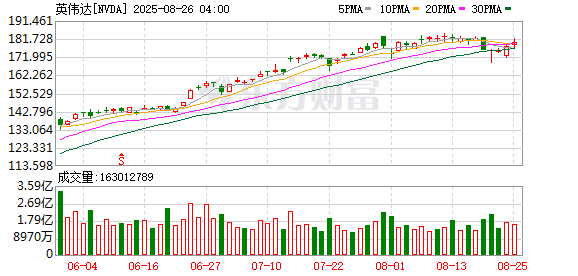
Core Insights - NVIDIA is extending its dominance in data centers to the physical world with the launch of the Jetson Thor robot computing platform, which features a significant performance leap of 7.5 times compared to its predecessor [2][3] - The release of Jetson Thor is seen as a critical move for NVIDIA to initiate its "second growth curve," with expectations of substantial growth in its automotive and robotics segments, projected to increase by 80% year-over-year [2][9] Product Launch - Jetson Thor, priced at $3,499, boasts an AI computing power of 2070 TFLOPS and is designed to run complex generative AI models locally on robots, enhancing their real-time perception and decision-making capabilities [2][3] - The platform introduces multi-instance GPU (MIG) technology, allowing for the safe operation of high-safety motion control tasks alongside non-critical AI applications, thereby improving reliability [3] Ecosystem Development - NVIDIA is building a comprehensive ecosystem around Jetson Thor, which includes a triad architecture: AI factories for training, digital twins for simulation, and the Jetson Thor for deployment in physical environments [4][5] - Major companies, including Boston Dynamics, Amazon Robotics, and OpenAI, are early adopters of Jetson Thor, signaling its importance in developing advanced robotics [5][6] Market Expectations - The upcoming Q2 earnings report is highly anticipated, with analysts predicting total revenue of approximately $45.8 billion, a year-over-year increase of about 52% [8][9] - The automotive and robotics sectors are expected to be the main highlights of the earnings report, with a projected acceleration in growth from 72% to 80% [9][10] Challenges Ahead - Despite the powerful capabilities of Jetson Thor, the broader robotics industry faces challenges in achieving human-like flexibility and functionality, which may delay widespread adoption [8] - The success of Jetson Thor as a growth engine depends on the scalability of robotics applications and the maturity of the physical environment [8][10]


英伟达通用机器人芯片来了:AI算力提升7.5倍,宇树、银河通用已搭载
3 6 Ke· 2025-08-26 07:29
Core Viewpoint - Nvidia has launched its new generation of robot-specific chip, Jetson Thor, which significantly enhances computing power compared to its predecessor, Jetson Orin, to support advanced humanoid robots and other forms of embodied intelligence [3][12]. Group 1: Product Features - Jetson Thor features a new Blackwell architecture GPU with AI computing capabilities reaching up to 2070 FP4 TFLOPS, which is 7.5 times more powerful than the previous generation [3][6]. - The power consumption of Jetson Thor is 130W, with an energy efficiency improvement of 3.5 times compared to the previous model [3]. - Memory capacity has doubled to 128GB, and memory bandwidth is 273GB/s [3][6]. - The chip is designed for generative AI models and supports real-time operations with minimal reliance on cloud computing [6][9]. Group 2: Software and Ecosystem - Jetson Thor supports all major generative AI frameworks and inference models, enabling developers to conduct local experiments and run inferences efficiently [7][9]. - The product includes a developer kit priced at $3,499 and a module priced at $2,999 for bulk orders [10]. - Various domestic companies, including Yushu Technology and Galaxy General Robotics, have announced plans to adopt Jetson Thor for their robotics applications [12]. Group 3: Market Position and Future Outlook - Nvidia is positioning itself in the trillion-dollar markets of robotics and autonomous driving, with a significant portion of its revenue (40%) coming from major tech companies like Meta, Microsoft, Google, and Amazon [15]. - The company emphasizes its role in providing computational infrastructure and software support rather than manufacturing robots or cars [15].

联影医疗自研的中国首款光子计数能谱CT获批上市
Zheng Quan Shi Bao Wang· 2025-08-26 07:09
Core Insights - The first photon-counting spectral CT, uCTUltima, developed by United Imaging Healthcare, has received approval from the National Medical Products Administration (NMPA) for commercialization in China, marking a significant breakthrough in medical technology [1][2] - United Imaging Healthcare is the first Chinese company to successfully commercialize photon-counting spectral CT globally, overcoming high technical barriers that previously limited this technology to two foreign companies [1][2] Group 1 - The photon-counting spectral CT technology offers advantages over traditional CT, including higher spatial resolution imaging, direct multi-energy spectrum imaging, and lower radiation dose imaging, significantly advancing precision diagnosis and treatment [1][2] - The company has collaborated with several institutions, including Zhongshan Hospital and Ruijin Hospital, to leverage their strengths in machine development, clinical application, and testing for the photon-counting spectral CT project [2] - Innovations in detector design have reduced pixel area to one-ninth of traditional CT, allowing for the visualization of finer pathological structures while maintaining image quality through advanced correction and reconstruction algorithms [2] Group 2 - The photon-counting spectral CT can reduce radiation doses by 60% to 70%, and in some organs, reductions can reach 80% to 90%, enhancing patient safety during CT scans [2] - The technology has already been implemented in clinical research at Fudan University Zhongshan Hospital and Shanghai Jiao Tong University School of Medicine Ruijin Hospital [3]
联影医疗荣获2024年上海市科技进步奖一等奖
Zheng Quan Ri Bao Wang· 2025-08-26 07:09
Core Insights - Shanghai United Imaging Healthcare Co., Ltd. won the first prize at the 2024 Shanghai Science and Technology Progress Award for its project on the independent research and industrialization of multimodal molecular imaging equipment, highlighting its technological advancements in the field [1] - The company aims to enhance product performance and accessibility of medical services, driven by clinical and research needs [1] Product Performance and Innovation - The project developed the world's first full-body PET/CT, which has nearly 40 times the sensitivity of traditional devices and can complete full-body imaging in seconds, providing new technical support for systemic diseases, drug development, and cancer micro-metastasis research [2] - The project established a vertical innovation system that supports continuous innovation of domestic molecular imaging products and enhances their influence in the global medical imaging industry [2] - The integrated PET/MR system is the first in China and the second in the world with time-of-flight (TOF) capabilities, enabling real-time data collection from both MR and PET modalities, crucial for early diagnosis of complex diseases [3] Technological Breakthroughs - The project overcame key technological challenges in large-size LYSO crystal growth, PET-specific chips, high-performance digital PET detectors, and integrated PET/CT and PET/MR systems, achieving breakthroughs in spatial and temporal resolution [4] - The molecular imaging team pioneered a modular multi-unit architecture to address engineering challenges, significantly enhancing clinical application levels [4][5] Clinical Applications and Research Contributions - The project has established imaging and diagnostic protocols based on over 40,000 tumor clinical images collected from ten major hospitals, promoting standardized clinical applications of full-body PET/CT [5] - Research based on the full-body PET/CT has provided new paradigms for multi-parameter imaging applications and demonstrated its potential in supporting targeted therapy drug research [5] - The company's molecular imaging products have led to over 380 published papers by experts, with many appearing in top journals in the field [5] Market Presence and Recognition - The project has received 13 national Class III medical device registrations and 12 certifications from the US and EU, with over 600 molecular imaging devices installed globally, covering nearly 30 countries [6] - The PET/CT product has maintained the number one market share in China's molecular imaging market for nine consecutive years, while the PET/MR product achieved a 60% market share in 2022 [6]
联影医疗:公司自主研发光子计数能谱CT获批上市
Zheng Quan Ri Bao Zhi Sheng· 2025-08-26 06:36
Group 1 - The core viewpoint is that Shanghai United Imaging Healthcare Co., Ltd. has received approval from the National Medical Products Administration (NMPA) for its photon-counting spectral CT, marking a significant breakthrough in China's medical technology sector and a major advancement in the "14th Five-Year Plan" key research and development project [1][2] - The photon-counting spectral CT has been installed in Fudan University Zhongshan Hospital and Shanghai Jiao Tong University School of Medicine Ruijin Hospital for clinical medical research [1] - Compared to traditional CT, the new technology features a reduction in detector pixel area to 1/9 of its original size, allowing for the visualization of finer pathological structures while maintaining image quality through innovative correction and reconstruction algorithms [1][2] Group 2 - The photon-counting spectral CT technology is recognized as a revolutionary direction for next-generation CT technology, with United Imaging leading the "14th Five-Year Plan" key research and development project in collaboration with various hospitals and institutions [2] - The company has made significant breakthroughs in core areas such as system design, algorithm innovation, and spectral applications, supported by its strong technical foundation and continuous investment in innovation [2] - The new CT technology significantly reduces radiation doses by 60% to 70%, and in some organs, it can lower the dose by 80% to 90%, enhancing patient safety during scans [1]
更适合“中国体质”的AI芯片、小米和宇树都冲了!英伟达Jetson Thor现已发售,2万块批发价但半年交货
AI前线· 2025-08-26 05:20
Core Viewpoint - Nvidia has launched its latest robot chip module, Jetson AGX Thor, priced at $3499, which significantly enhances performance compared to its predecessor, aimed at supporting developers in creating advanced robotic systems [2][6][12]. Product Details - The first batch of Jetson AGX Thor developer kits will ship next month, including the Jetson T5000 module, a reference board with multiple interfaces, an active cooling fan, and a power adapter [4]. - The Jetson Thor chip boasts a performance increase of 7.5 times over the previous generation, with a 3.5 times improvement in energy efficiency, 3.1 times better CPU performance, and double the memory capacity [6][8]. - The chip is designed to run generative AI models and visual models that interpret the surrounding environment, crucial for humanoid robots [6][8]. Market Position and Applications - Nvidia's Jetson Thor is being utilized by various robotics companies, including Agility Robotics, Amazon, and Boston Dynamics, enhancing their robots' capabilities [9][10]. - The chip is also applicable in various robotic fields, such as surgical assistance, delivery robots, and industrial robotic arms, providing real-time inference capabilities for complex AI models [10]. Business Growth Potential - Nvidia's robotics business currently contributes about 1% of total revenue but is experiencing rapid growth, with a 72% year-over-year increase in quarterly sales [12]. - The company views the robotics sector as a significant growth opportunity beyond its traditional AI business, with plans to invest heavily in this area [13].

英伟达专为机器人设计的计算平台上市
2 1 Shi Ji Jing Ji Bao Dao· 2025-08-26 05:01
Core Insights - NVIDIA has launched the Jetson AGX Thor developer kit and production-grade module designed for physical AI and robotics, providing computational support for various industries including manufacturing, logistics, transportation, healthcare, agriculture, and retail [2] Group 1: Product Launch - The Jetson AGX Thor is specifically tailored for developers to create robotic systems that can interact with and even alter the physical world [2] - The product enables multiple generative AI models to run simultaneously on edge devices [2] Group 2: Market Adoption - Over 2 million developers are currently utilizing NVIDIA's robotics technology stack [2] - Companies such as United Imaging Healthcare, Wanji Technology, UBTECH, Galaxy Universal, Yushu Technology, Zhongqing Robotics, and Zhiyuan Robotics are early adopters of Jetson Thor [2] Group 3: Leadership Statement - NVIDIA's founder and CEO Jensen Huang emphasized the importance of Jetson Thor in empowering developers to build advanced robotic systems [2]
2.5w!英伟达推出机器人“最强大脑”:AI算力飙升750%配128GB大内存,宇树已经用上了
具身智能之心· 2025-08-26 04:45
Core Viewpoint - NVIDIA has launched the Jetson Thor, a new robotic computing platform that significantly enhances AI computing power and efficiency, marking a leap towards the era of physical AI and general robotics [1][6][22]. Group 1: Product Features - Jetson Thor boasts an AI computing power of 2070 TFLOPS, which is 7.5 times higher than its predecessor, Jetson Orin, while achieving a 3.5 times improvement in energy efficiency [1][5]. - The platform includes 128GB of memory, an unprecedented configuration for edge computing devices [2]. - It supports multiple AI models simultaneously on edge devices, enhancing the capabilities of robots to interact with and even change the physical world [5][6]. Group 2: Technical Specifications - The GPU is based on the Blackwell architecture, featuring up to 2560 CUDA cores and 9 fifth-generation Tensor Cores, with support for Multi-Instance GPU (MIG) technology [16]. - The CPU consists of a 14-core Arm Neoverse V3AE, designed for real-time control and task management, with significant performance improvements over previous generations [16]. - Storage and bandwidth are upgraded to 128GB 256-bit LPDDR5X with a memory bandwidth of 273GB/s, supporting large Transformer inference and high-concurrency video encoding [16]. Group 3: Market Adoption - A significant number of Chinese companies, including Union Medical, Wanji Technology, and UBTECH, are among the first to adopt the Jetson Thor platform [19]. - Boston Dynamics is integrating Jetson Thor into its Atlas humanoid robot, enabling it to utilize computing power previously only available in servers [20]. - Agility Robotics plans to use Jetson Thor as the core computing unit for its sixth-generation Digit robot, aimed at logistics tasks in warehouses and manufacturing environments [21]. Group 4: Development and Simulation - NVIDIA emphasizes the importance of a three-computer system for achieving physical AI: a DGX system for training AI, an Omniverse platform for simulation, and the Jetson Thor as the robot's "brain" [22]. - Continuous training, simulation, and deployment cycles are essential for upgrading the robot's capabilities even after deployment [24].
联影医疗涨2.11%,成交额5.38亿元,主力资金净流出1514.14万元
Xin Lang Cai Jing· 2025-08-26 04:34
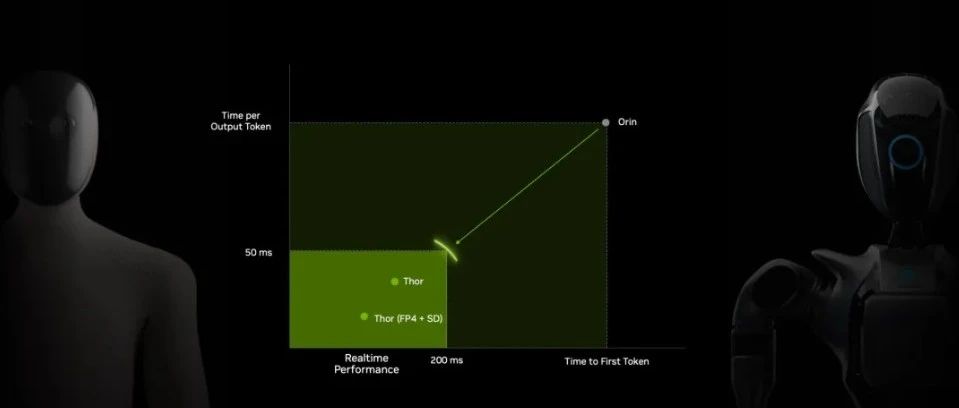
Core Viewpoint - The stock of United Imaging Healthcare has shown a positive trend with a year-to-date increase of 9.81%, despite a slight decline over the past 60 days, indicating potential resilience in the medical imaging equipment sector [1]. Group 1: Stock Performance - As of August 26, United Imaging Healthcare's stock price reached 138.71 CNY per share, with a market capitalization of 114.32 billion CNY [1]. - The stock has experienced a 2.11% increase during the trading session on August 26, with a trading volume of 5.38 billion CNY and a turnover rate of 0.48% [1]. - Year-to-date, the stock has increased by 9.81%, with a 7.07% rise over the last five trading days, a 1.01% increase over the last 20 days, and a 2.28% decline over the last 60 days [1]. Group 2: Financial Performance - For the first quarter of 2025, United Imaging Healthcare reported a revenue of 2.478 billion CNY, representing a year-on-year growth of 5.42%, and a net profit attributable to shareholders of 370 million CNY, reflecting a 1.87% increase year-on-year [2]. - The company has distributed a total of 534 million CNY in dividends since its A-share listing [3]. Group 3: Shareholder Structure - As of March 31, 2025, the number of shareholders for United Imaging Healthcare increased by 17.32% to 21,400, while the average number of circulating shares per person decreased by 14.77% to 27,678 shares [2]. - Major institutional shareholders include the Huaxia SSE Sci-Tech Innovation Board 50 ETF, which holds 23.33 million shares, and the E Fund SSE Sci-Tech Innovation Board 50 ETF, holding 16.59 million shares, both showing a decrease in holdings compared to the previous period [3].