京东方

Search documents
莱特光电(688150):Q3收入、利润增长趋势未变 8.6代线建设空间可期
Xin Lang Cai Jing· 2025-11-17 08:35
Core Viewpoint - The company reported strong financial performance for the first three quarters of 2025, with significant year-on-year growth in both revenue and net profit, despite a seasonal decline in the third quarter [1][2]. Financial Performance - For the first three quarters of 2025, the company achieved revenue of 423 million yuan, representing a year-on-year increase of 18.8%, and a net profit attributable to shareholders of 180 million yuan, up 38.6% year-on-year [1]. - In Q3 2025, the company recorded revenue of 131 million yuan, a year-on-year increase of 18.6%, but a quarter-on-quarter decline of 10.6%. The net profit for Q3 was 53.39 million yuan, reflecting a year-on-year increase of 43.3% and a quarter-on-quarter decrease of 18.6% [1]. - The revenue growth rates for the first three quarters of 2025 were 27.0%, 11.7%, and 18.6%, respectively, while the net profit growth rates were 39.9%, 33.9%, and 43.3% [1]. Cost Structure - In the first three quarters of 2025, the four major expenses accounted for 25.4% of revenue, with R&D expenses making up 11.7% of revenue. In Q3 2025, these expenses rose to 28.8% and 13.1%, respectively, due to the revenue decline [2]. - The gross margin for the first three quarters of 2025 was 74.17%, and the net profit margin was 42.52%, both showing improvements compared to the same period in 2024 [2]. - In Q3 2025, the gross margin was 73.0%, and the net profit margin was 40.68%, with year-on-year increases of 6.2 percentage points and 7.0 percentage points, respectively [2]. Industry Outlook - The acceleration of the 8.6 generation line construction in China is expected to boost the demand for OLED terminal materials, indicating a positive growth trend for the company [3]. - Major panel manufacturers are increasing investments in high-generation OLED production lines, with BOE's 8.6 generation AMOLED line expected to start production in December 2025 and reach mass production by the end of 2026 [3]. - The area of the substrate for the 8.6 generation line is 2.16 times larger than that of the 6 generation line, which will increase the demand for luminescent materials [3]. Profit Forecast - The company has adjusted its net profit forecasts for 2025-2027 to 252 million, 409 million, and 565 million yuan, respectively, maintaining a "buy" rating [3].

钙钛矿:技术突破与产业化加速并行,设备与材料环节迎来机遇
GOLDEN SUN SECURITIES· 2025-11-17 08:32
Investment Rating - The report maintains an "Increase" rating for the electric equipment industry [4] Core Insights - Continuous technological breakthroughs in perovskite solar cells have led to significant improvements in efficiency and stability, with laboratory results showing a lifespan increase to over three times that of traditional solutions and maintaining a high efficiency of 26.2% [1] - The industrialization process of perovskite technology is accelerating, with several companies achieving GW-level production capacity, marking 2025 as a pivotal year for mass production [2] - Clear policy support is evident, with the Ministry of Industry and Information Technology promoting advanced photovoltaic technologies, indicating a broad and promising industry outlook [3] Summary by Sections Technological Advancements - Perovskite solar cells have achieved notable efficiency improvements, with a record efficiency of over 30% for all-perovskite tandem cells and significant advancements in commercial applications [1] Industrialization Progress - The perovskite photovoltaic industry in China is entering a critical phase, with major companies launching GW-level production lines and achieving stable operational efficiencies [2] Policy Support and Market Potential - Government policies are favoring the development of perovskite technologies, with applications extending into space and emerging sectors like construction and automotive, indicating a robust market potential [3] Investment Recommendations - The report suggests focusing on equipment manufacturers and material suppliers that are poised to benefit from the growth of the perovskite industry, including companies like Jiejiawei, Maiwei, and Jin Jing Technology [3]
合肥国资再次出手新型显示产业 拟入主维信诺赋能OLED发展
Cai Jing Wang· 2025-11-17 08:05
Group 1 - Hefei Guozi is set to gain control of OLED panel manufacturer Visionox by subscribing to a private placement of 419 million shares at a price of 7.01 yuan per share, raising up to 2.937 billion yuan [1] - If the transaction is completed, Hefei Guozi will hold 31.89% of Visionox, enhancing the development of the OLED industry [1] - Hefei's strategic emerging industries are rapidly growing, with the output value of these industries expected to account for 55.8% of the city's industrial output in 2024, an increase of 24.8 percentage points since 2015 [1] Group 2 - The "chip-screen-vehicle integration" strategy is considered a key factor in Hefei's industrial growth, with significant investments in display technology, semiconductors, and electric vehicles [2] - Hefei has become a core city for China's display industry and a significant global display manufacturing base, ranking first in the high-quality development index for the display industry in 2024-2025 [2] - Visionox, a leader in OLED technology and a key player in the OLED international standards group, has established a strong partnership with Hefei's display industry [2] Group 3 - The 8.6-generation AMOLED production line is seen as crucial for future competition in the mid-size AMOLED market, with Visionox's line nearing completion, second only to Samsung and BOE in progress [3] - The control of Visionox by Hefei Guozi is expected to shift the local display industry from a "multi-point layout" to a "holistic collaboration" phase, enhancing the industrial cluster and supporting local economic development [3] - Visionox's AMOLED production lines are anticipated to benefit from improved resource collaboration following Hefei Guozi's acquisition [3]

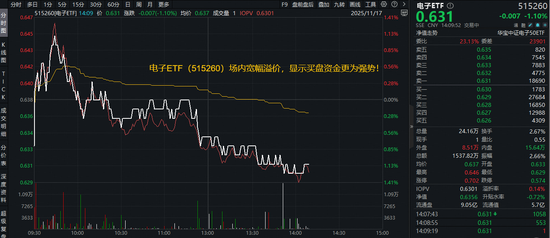
罕见!存储市场出现“配货制”,买DRAM模组须搭配主板!电子ETF(515260)场内宽幅溢价,买盘资金强势!
Xin Lang Ji Jin· 2025-11-17 06:25
Group 1 - The core viewpoint of the articles highlights a significant surge in storage product prices, particularly DRAM modules, driven by increased demand from AI and high-performance computing, leading to supply constraints [1] - The price increase for storage chips began in April 2023, rooted in production cuts due to weak consumer electronics demand last year, which set the stage for current supply tightness [1] - Analysts predict that storage prices will continue to rise over the next six months due to persistent AI-driven demand and a lack of significant capacity expansion [1][4] Group 2 - The electronic sector is experiencing a market correction, with the electronic ETF (515260) showing a 1.1% decline, yet strong buying interest is evident as some stocks are rising despite the overall market downturn [2] - Key stocks within the electronic ETF include companies like Jingjia Micro, Dongshan Precision, and Sanan Optoelectronics, which have shown resilience with gains exceeding 1% [2] - The electronic ETF and its associated funds are focused on semiconductor and consumer electronics industries, with a strong emphasis on AI chips, automotive electronics, and 5G technologies, indicating a robust growth potential in these sectors [4]

“中国屏”靠什么逆袭
Ren Min Ri Bao· 2025-11-17 04:18
Core Insights - The article highlights the transformation of China's display industry from a reliance on foreign technology to becoming a global leader, showcasing China's rapid technological advancement and self-reliance in high-level technology [1][4]. Group 1: Market Position and Growth - China's display panel global market share has reached 55%, and the display materials market share is at 43%, both ranking first globally, with the industry's output value accounting for nearly half of the global market [1]. - The display industry has evolved significantly over the past two decades, overcoming initial challenges and reducing foreign dependency, which previously saw display panels as the fourth largest import product [1][2]. Group 2: Policy and Strategic Support - The rise of "China Screen" is attributed to proactive policy frameworks and government-enterprise collaboration, starting with the 2009 "Electronic Information Industry Adjustment and Revitalization Plan" that aimed to overcome bottlenecks in the new display industry [2]. - Subsequent policies and plans, including the "12th Five-Year Plan for Electronic Information Manufacturing" and the "Action Plan for Innovative Development of New Display Industry (2014-2016)," have further propelled the industry forward [2]. Group 3: Innovation and Technology Development - A clear understanding of industry trends and a commitment to independent innovation have been crucial for the development of the display industry, with companies adopting a dual-track strategy to navigate technological shifts [3]. - During the "14th Five-Year Plan" period, R&D investment in the display industry is expected to grow annually by 18%, with patent applications accounting for 42% of the global total, indicating a strong focus on innovation [3][4]. Group 4: Supply Chain and Market Advantages - Significant advancements have been made in key materials and upstream manufacturing equipment, with domestic replacement rates for polarizers and photoresists exceeding 60%, and market shares for domestic deposition and exposure machines rising to 35% [4]. - The vast domestic market and diverse application scenarios, including smartphones, electric vehicles, and AI technologies, have created substantial growth opportunities, with projections estimating the new display industry's output value to approach 800 billion yuan by 2025 [4].
[热闻寻踪]钙钛矿电池商业化临门一脚 哪些公司将率先破门?
Quan Jing Wang· 2025-11-17 03:28
Core Insights - Recent breakthroughs in perovskite battery technology have garnered significant market attention, with notable advancements in efficiency and durability [1] - The perovskite battery has achieved an energy conversion efficiency of 27.2% and maintained over 82% performance after 1000 hours at 85 degrees Celsius, meeting key commercialization requirements [1] - Collaborative efforts have led to record efficiencies of 33.4% in flexible perovskite batteries, with practical components nearing 30% efficiency [1] Industry Developments - Companies are increasingly focusing on perovskite technology, with many engaging in R&D and production of related equipment [2][4][5] - The market for low-temperature conductive pastes is expected to grow as perovskite and tandem battery technologies advance [3] - The integration of perovskite technology with existing solar cell technologies is seen as a pathway to replace traditional silicon-based solutions [4] Company Strategies - Companies like 帝尔激光 have established technical reserves in the production processes for perovskite solar cells [2] - 苏州固锝 is a leading supplier of conductive pastes for solar cells, focusing on enhancing product performance and expanding into the perovskite market [3] - 捷佳伟创 has developed a pilot line for perovskite batteries and is actively participating in various projects, showcasing its capabilities in providing complete production solutions [4] Market Outlook - The perovskite battery sector is viewed as a promising new market, with companies like 京东方 emphasizing its potential despite current limitations compared to silicon [6] - Companies are optimistic about the future of perovskite technology, with ongoing R&D aimed at improving efficiency and lifespan [6][9] - The overall market for perovskite materials and technologies is expected to expand significantly, driven by advancements in production techniques and increasing demand for renewable energy solutions [1][8]
多家上市公司竞逐高世代OLED
Zheng Quan Ri Bao· 2025-11-16 16:49
Core Insights - The high-generation OLED capacity is a focal point for leading companies in the global semiconductor display industry [1][2] - China's investment in 8.6-generation OLED production lines is progressing, with significant developments reported from major players [1][2][3] Company Developments - BOE Technology Group Co., Ltd. announced the investment in an 8.6-generation AMOLED production line, targeting high-end touch OLED displays for laptops and tablets, with initial equipment installation completed ahead of schedule [1] - TCL Technology Group's subsidiary, TCL Huaxing Optoelectronics Technology Co., Ltd., has commenced construction on its 8.6-generation printed OLED production line, with a total investment of approximately 29.5 billion yuan [1][2] - Visionox Technology Co., Ltd. plans to invest 55 billion yuan in an 8.6-generation flexible AMOLED production line in Hefei, with a recent announcement to raise up to 2.937 billion yuan through A-share issuance [2] Market Trends - The t8 project by TCL Huaxing is expected to reach mass production within 24 months, focusing initially on mid-size applications such as monitors and laptops, with future expansion into TVs and smartphones [2] - As of the first half of this year, Chinese companies have captured nearly 50% of the global OLED market share, with projections indicating that this share will exceed 50% as new production lines come online [3]

中国科技硬件领域 - 人工智能科技硬件高速发展-Greater China Technology Hardware AI Tech Hardware in High Gear





2025-11-16 15:36
Summary of Greater China Technology Hardware Conference Call Industry Overview - The conference focused on the Greater China Technology Hardware sector, particularly in AI technology and hardware advancements [7][8]. Key Insights - **Opportunities in AI GPU and ASIC Servers**: There are significant opportunities in upgrading AI GPU and ASIC server designs, with major projects like GB300, Vera Rubin platform, and Kyber architecture showing promise [7][8]. - **AMD Helios Server Rack**: The AMD Helios server rack project is gaining traction, indicating a positive trend in server hardware demand [7]. - **Enhanced Computing Power**: AI ASIC servers are expected to enhance computing power and increase rack density, which is crucial for data centers [7]. - **Power Solution Upgrades**: Transitioning to 800V HVDC power architecture and the growing adoption of liquid cooling solutions are highlighted as key upgrades [7]. - **PCB/Substrate Capacity Expansion**: There is a wave of capacity expansion in PCB/substrate to support ongoing design upgrades, which is essential for meeting increased demand [7]. - **Data Network Improvements**: Upgrades in data and power interconnects are anticipated to improve data network transmission speed and capacity [7]. - **Consumer Electronics Demand**: The demand for consumer electronics is being impacted by rising memory costs, with Android smartphones being more vulnerable compared to iPhones [7]. - **Upcoming Foldable iPhone Models**: Anticipation for the release of foldable iPhone models in the second half of 2026 is noted as a potential market driver [7]. Stock Recommendations - **Key Stock Ideas**: - AI Server Hardware: Wistron, Hon Hai/FII, Wiwynn, Delta Electronics, AVC, BizLink, King Slide, Accton, Chenbro, Gold Circuits, Innolight, FIT, and Fositek [7]. - Edge AI: Xiaomi, Lenovo, Luxshare [7]. Valuation Comparison - A detailed valuation comparison of various companies within the Greater China Technology Hardware sector was provided, including metrics such as price, target price, EPS, P/E ratio, P/B ratio, and ROE [8]. - Notable companies included: - **Lite-On Tech**: Current price at 162.50, target price at 150.00, with a P/E ratio of 23.3 for 2025 [8]. - **Delta Electronics**: Current price at 922.00, target price at 1288.0, with a P/E ratio of 38.9 for 2025 [8]. - **Hon Hai**: Current price at 241.00, target price at 317.0, with a P/E ratio of 16.4 for 2025 [8]. - **Foxconn Tech**: Current price at 66.80, target price at 54.00, with a P/E ratio of 26.0 for 2025 [8]. Additional Considerations - The report emphasizes the importance of considering Morgan Stanley Research as one of several factors in investment decision-making, acknowledging potential conflicts of interest [4][5].
多家上市公司竞速 高世代OLED产能明年起集中释放
Zheng Quan Ri Bao· 2025-11-16 13:35
Core Insights - The high-generation OLED capacity is a focal point for leading companies in the global semiconductor display industry, with China's production expected to significantly increase starting next year [1][4] - Major Chinese companies are accelerating their investments in high-generation OLED production lines, which will enhance their market share in the high-end segment [1][4] Group 1: Company Developments - BOE Technology Group announced the investment in an 8.6-generation AMOLED production line, targeting high-end touch OLED displays for laptops and tablets, with mass production expected in the second half of next year [1] - TCL Technology's subsidiary, TCL Huaxing, has commenced construction of its 8.6-generation printed OLED production line with a total investment of approximately 29.5 billion yuan, aiming for mass production by the end of 2027 [2] - Visionox Technology announced plans to invest 55 billion yuan in an 8.6-generation flexible AMOLED production line in Hefei, with a recent move to raise up to 2.937 billion yuan through stock issuance [2] Group 2: Market Trends - Samsung Display is converting a large LCD production line into an 8.6-generation OLED panel production line, with mass production expected to start in Q3 2026 [3] - The total investment in 8.6-generation OLED production lines by major manufacturers, including Samsung, BOE, Visionox, and TCL Huaxing, is nearing 170 billion yuan, indicating a strong commitment to this technology [4] - The global OLED market is projected to expand rapidly as production costs decrease and applications extend from small to medium and large sizes, with Chinese companies expected to surpass a 50% global market share in OLED production [4]
近1700亿元投入OLED高世代产线:技术竞争开启,明年起集中释放产能
第一财经· 2025-11-16 06:21
Core Viewpoint - The recent capital increase and control change at Visionox have highlighted the pressures faced by the panel industry, which is characterized by heavy investment, long cycles, and high costs. Companies are seeking to balance revenue generation with substantial investments in production lines [3][4]. Investment and Financial Performance - Significant investments in high-generation OLED production lines have become a focal point, with major domestic manufacturers like Visionox, TCL Huaxing, and BOE collectively investing over 1.4 trillion yuan (approximately 200 billion USD) in 8.6-generation OLED production lines [3][4]. - Visionox and BOE reported revenues of approximately 7.9 billion yuan (about 1.1 billion USD) and 198.4 billion yuan (around 28.1 billion USD) respectively, with net profits of -2.5 billion yuan and 5.3 billion yuan [4]. Competitive Landscape - The ability of these new production lines to translate into revenue and competitiveness is a critical concern. The industry is expected to see a surge in production capacity from 2024 to 2028, leading to intensified competition [5][6]. - Different technical routes for OLED production are competing, including evaporation, LGD's white OLED, Samsung's QD-OLED, and printed OLED technologies. Each has its own characteristics and applications [6][7]. Technological Advancements - Companies are focusing on improving production line metrics to prepare for the upcoming OLED capacity increase. For instance, TCL Huaxing's printed OLED technology has made significant progress in commercial viability, with yield rates improving from single digits to 70% over the past year [6][7]. - Visionox has developed the ViP technology to overcome traditional AMOLED production challenges, although it faces issues related to yield and material development [7]. Market Outlook - The OLED market is experiencing fierce competition, with some manufacturers yet to achieve profitability. Market demand is also evolving, leading to a stagnation in AMOLED revenue growth this year, with a slight recovery expected next year [8]. - Omdia forecasts a 5% revenue growth for AMOLED in the coming year, despite anticipated price and specification competition intensifying as more 8.6-generation OLED production lines come online [8].