Samsung

Search documents
Google's Pixel 10 Is All Mama Mia, Apple's Siri Still MIA
Benzinga· 2025-08-22 13:02
Core Viewpoint - The AI phone competition has intensified, with Google currently outperforming Apple in the AI capabilities of their smartphones, particularly with the launch of the Pixel 10 and Pixel 10 Pro [1][4]. Group 1: Google's Pixel 10 Features - The Pixel 10 and Pixel 10 Pro are equipped with practical AI features that enhance user experience, such as real-time translation in a cloned voice, a Camera Coach for posing and photo editing, and Magic Cue, a personal assistant that retrieves relevant information from various sources [1][2]. - The software in the Pixel 10 anticipates user needs, providing timely information like flight reservations when calling airlines or recalling past conversations about locations [2][3]. Group 2: Comparison with Apple - Apple has yet to deliver on its promises regarding Siri's enhancements, leaving users waiting for significant improvements [2][4]. - Despite Google's advancements, the Pixel still holds a small share of the smartphone market, and iPhone users are unlikely to switch due to brand loyalty [4]. - Google aims to elevate the AI standard in smartphones, positioning itself as a leader while highlighting Apple's delays in delivering similar capabilities [4].




L'Air Liquide (AIQU.F) M&A Announcement Transcript
2025-08-22 13:02
Summary of the Conference Call on Air Liquide's Acquisition of DIG IAS Company and Industry - **Company**: Air Liquide - **Acquisition Target**: DIG IAS, a leading industrial gas company in South Korea - **Industry**: Industrial gases, with a focus on manufacturing sectors such as electronics, chemicals, and healthcare Core Points and Arguments 1. **Strategic Growth Acquisition**: Air Liquide announced the acquisition of DIG IAS to strengthen its position in growth markets, particularly in South Korea, which is the fourth largest industrial gas market globally and expected to double by 2035 [2][4][11] 2. **Complementarity**: The acquisition will double Air Liquide's size in Korea, enhancing its local density by adding 60 plants and over 220 kilometers of pipeline, which will service key customers across 10 major industry basins [5][12] 3. **Earnings Accretion**: The acquisition is expected to be earnings accretive within one year, with a return on capital employed (ROCE) remaining above 10% [5][25] 4. **Investment Backlog**: DIG has secured €240 million in investments through long-term contracts, with 19 projects in its diversified backlog, projected to generate over €50 million in additional EBITDA by 2030 [6][21] 5. **Market Position**: South Korea's manufacturing sector contributes over 25% to its GDP, with significant presence in industries such as refining, chemicals, and steel, making it an attractive market for industrial gases [8][10] 6. **Electronics Sector**: DIG holds a strong position in the electronics market, which accounts for 60% of the Korean industrial gas market, particularly in carrier gases for semiconductors and flat panel displays [13][9] 7. **Healthcare Supply**: DIG supplies medical gases to hospitals across Korea, complementing Air Liquide's existing healthcare operations [14][16] 8. **Regulatory Considerations**: The acquisition is subject to Korean regulatory clearance, but the companies do not anticipate significant competition issues due to the complementarity of their operations [42][46] Additional Important Content 1. **Historical Context**: Air Liquide previously exited the South Korean market in 2014 due to limited impact as a minority partner in a joint venture. The current acquisition is seen as a strategic return to a transformed and more promising market [78][86] 2. **Financial Structure**: The acquisition will be financed through a structured bridge loan, with plans for refinancing through bond issues to maintain an A category credit rating [24][25] 3. **Long-term Vision**: The acquisition aligns with Air Liquide's growth-oriented strategy, focusing on both organic growth and strategic acquisitions to enhance its market position [43][60] 4. **Risk Management**: Concerns regarding trade wars and their impact on the Korean market were addressed, with confidence in the quality of DIG's customer base mitigating potential risks [55][58] 5. **Project Diversity**: The 19 projects in DIG's backlog are diverse, not solely focused on electronics, indicating a balanced approach to growth across various sectors [73][74] This summary encapsulates the key points discussed during the conference call regarding Air Liquide's strategic acquisition of DIG IAS, highlighting the rationale, expected benefits, and market context.
Inside Texas Instruments' $60 billion U.S. megaproject, where Apple will make iPhone chips
CNBC· 2025-08-22 12:00
Core Viewpoint - Texas Instruments (TI) is making a significant investment of $60 billion in a manufacturing megaproject to produce foundational microchips in the U.S., with Apple also committing to increase its U.S. spending to $600 billion over the next four years, indicating a strong push for domestic semiconductor production [1][2]. Company Overview - TI is building seven new factories in the U.S., including four in Sherman, Texas, which will increase its production capacity fivefold [3][7]. - The company specializes in analog and embedded chips, which are essential components in various electronic devices, from smartphones to industrial applications [4][9]. - TI's chips are produced on legacy nodes of 45 to 130 nanometers, which are more cost-effective compared to the advanced chips made by competitors [10]. Market Dynamics - TI's market share in the analog segment has declined from 19.8% in 2020 to 14.7% in 2024, raising concerns about demand stability amid tariff uncertainties [6]. - The company is positioned as a potential "tariff winner," as its U.S. foundry could allow it to offer competitive pricing against Taiwan-made chips [6]. Investment and Economic Impact - The $60 billion project is expected to create 60,000 jobs in the U.S., with a significant portion of capital spending occurring domestically [23]. - TI received $1.6 billion in CHIPS Act funding and a 35% investment tax credit, alongside state-level incentives from Texas [18]. Infrastructure and Resources - The new fabs in Sherman will utilize approximately 1,700 gallons of water per minute, with plans to recycle at least 50% of that water [21]. - TI's manufacturing will run entirely on renewable energy, enhancing energy efficiency in chip production [21]. Talent Acquisition - TI is addressing the talent gap in semiconductor manufacturing by partnering with universities and community colleges to attract skilled engineers [23]. - The company anticipates that the influx of younger people to the area will facilitate talent acquisition compared to previous years [23].


L'Air Liquide (AIQU.F) Earnings Call Presentation
2025-08-22 12:00
A Strategic Acquisition in South Korea François Jackow, Chief Executive Officer Jérôme Pelletan, Chief Financial Officer Ronnie Chalmers, Group VP, Head of Asia-Pacific Paris, August 22, 2025 1 A Strategic Acquisition in South Korea - August 22, 2025 A Timely Strategic Growth Acquisition Highly complementary Profitable growth Positioned on growth markets 2 THIS DOCUMENT IS PUBLIC A Strategic Acquisition in South Korea - August 22, 2025 A Timely Strategic Growth Acquisition Positioned on growth markets Korea ...
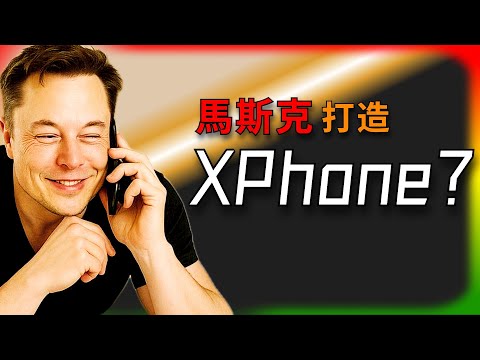
【Tesla每日快訊】 手機的未來:沒有APP,只有AI?馬斯克要打造「X Phone」?🔥Cybertruck五星安全評級(2025/8/22-2)
大鱼聊电动· 2025-08-22 10:34
大家好我是大魚 今天的資訊 包括下面幾個消息 1. 馬斯克要打造 「X Phone」? 2. 特斯拉生產經營 方面的消息 關注這些領域的朋友 不要錯過 今天重要的內容 OK let‘s go 第一部分 馬斯克要打造 「X Phone」? 馬斯克認為 你我手上的 iPhone 安卓手機 可能在不久的將來 會變成一塊 過時的磚頭 他最近在 X 上 的一段對話 可以說是直接 給現在的手機 判了死刑 事情是這樣的 有個網友 發了個帖子 他說 xAI 的 長期計畫 是讓終端裝置 成為一個邊緣節點 通過運行 AI 來即時生成 圖像和聲音 所以未來不再需要 什麼傳統的 操作系統或 App 所有東西都是 AI 直接渲染 給你看 馬斯克親自 下場回覆說 這是一個 顯而易見的預測 頻寬的限制 讓所有事情 都在雲端處理 變得不切實際 所以終端裝置 將會是 AI 推理的 邊緣節點 這話聽起來 有點繞嘴 我把它翻譯成白話文 就是現在你的手機 不管是 iOS 還是安卓 就像一個工具箱 裡面裝滿了各種 App 你想看天氣 就打開天氣 App 想聊天 就打開微信 但馬斯克 看到的未來是 你的手機本身 將會成為 一個超級大腦 你根本不需要 打 ...

Nvidia's Huang says TSMC among all-time greats: Buying its stock is ‘very smart'
CNBC· 2025-08-22 04:33
Core Insights - Nvidia CEO Jensen Huang praised Taiwan Semiconductor Manufacturing Co. (TSMC) during his visit to Taiwan, suggesting that investing in TSMC would be a wise decision [1][2] - Huang's visit aimed to express gratitude to TSMC for their collaboration on Nvidia's next-generation AI chip platform, Rubin [2] - The U.S. administration is exploring equity stakes in tech companies, particularly those receiving funding under the CHIPS Act, which includes TSMC [1][3] Company Developments - TSMC is developing six new products for Nvidia, including a new central processing unit (CPU) and a general processing unit (GPU) focused on advanced AI computations [3] - The CHIPS Act, enacted in 2022, aims to bolster U.S. semiconductor manufacturing, with TSMC set to receive $6.6 billion to establish three advanced chip fabrication plants in Arizona [4]


X @Bloomberg
Bloomberg· 2025-08-22 00:24
Production Adjustment - Nvidia has instructed component suppliers, including Samsung and Amkor, to halt production related to the H20 AI chip [1] Source - The Information reported the production halt, citing unidentified sources [1]
Google Centers AI in New Pixel Devices
Bloomberg Technology· 2025-08-21 20:11
Product & Technology - Google's Gemini is being integrated into devices to showcase its power to consumers [1] - The camera is expected to be a standout feature, focusing on editing capabilities rather than just taking the best shot [3][4] - Gemini integration aims to surpass Apple's Siri in spoken word capabilities [5] Market Strategy & Competition - Google aims to demonstrate the Android ecosystem's integration, including Samsung, to a mass market audience [7][8][12] - Pixel is positioned as the Android world's answer to Apple, with a foldable phone competing with Samsung [9] - Google's marketing strategy involves launching products before Apple's September iPhone release and targeting the holiday season with the foldable phone [10][11] Consumer Behavior & Ecosystem - Consumers are not solely focused on iPhones, indicating a shift in daily choices [6] - The Android ecosystem is leveraging Gemini, with Samsung and Motorola integrating it, moving away from Bixby [8] - Google is broadening its target market beyond tech buyers to include mass market consumers [12]

ASTS vs. QCOM: Which Connectivity Stock Has Better Growth Potential?
ZACKS· 2025-08-21 15:11
Core Insights - AST SpaceMobile and Qualcomm are key players in the mobile connectivity sector, with AST SpaceMobile focusing on a global cellular broadband network in space and Qualcomm providing high-performance chip designs for various applications [1][2] AST SpaceMobile - AST SpaceMobile has launched its first five commercial satellites, known as Bluebird, which feature the largest commercial communications arrays at 693 square feet, providing non-continuous service across the U.S. with over 5,600 cells in the low-band spectrum [4] - The company plans to deploy 45 to 60 additional satellites by Q1 2026 and holds a patent portfolio of over 3,650 patents related to direct-to-cell satellite technology [4] - Partnerships with major carriers like AT&T and Verizon aim to enhance cellular coverage and eliminate dead zones in the U.S. [5] - AST SpaceMobile anticipates a staggering 1261% sales growth for 2025, although it faces challenges from macroeconomic conditions and competition from companies like SpaceX's Starlink [8][6] Qualcomm - Qualcomm is positioned for long-term revenue growth, driven by strong 5G adoption and a diversified revenue stream, with projected sales growth of 12.3% and EPS growth of 15.9% for 2025 [9][12] - The company has expanded its Snapdragon portfolio with new gaming chipsets and is focusing on AI integration across its product lines [9][10] - Qualcomm's operations in the automotive sector are also growing, with advancements in connected vehicles and digital cockpit solutions [10] - Despite facing competition from Intel in the AI PC market and challenges in the premium smartphone segment, Qualcomm's EPS estimates have been trending upward [11][12] Comparative Analysis - AST SpaceMobile has outperformed Qualcomm in price performance over the past year, gaining 32% compared to Qualcomm's decline of 8% [14] - From a valuation perspective, Qualcomm's shares trade at a price/sales ratio of 3.75, significantly lower than AST SpaceMobile's 67.77, indicating a more attractive valuation for Qualcomm [15] - Long-term earnings growth expectations are 26.1% for AST SpaceMobile versus 7.1% for Qualcomm, suggesting that AST SpaceMobile may be a better investment option despite its less favorable valuation metrics [20]