
TSMC

Search documents
台积电(TSM):2025Q4 业绩点评及法说会纪要:25Q4利润创历史新高,大幅提高资本开支预算加速产能扩张
Huachuang Securities· 2026-01-16 13:35
Investment Rating - The report assigns a strong buy rating for TSMC, expecting it to outperform the benchmark index by over 20% in the next six months [50]. Core Insights - TSMC's Q4 2025 revenue reached NT$1,046.09 billion (US$33.73 billion), a year-over-year increase of 25.5% and a quarter-over-quarter increase of 1.9%, exceeding the upper guidance range [8][10]. - The gross margin for Q4 2025 improved to 62.3%, up from 59.5% in the previous quarter, driven by cost improvements and higher capacity utilization [2][8]. - The company plans to significantly increase capital expenditures, with a projected budget of US$52 billion to US$56 billion for 2026, focusing on advanced technology and long-term capacity expansion [4][22]. Summary by Sections 1. TSMC Q4 2025 Operational Performance - Revenue: Q4 2025 revenue was NT$1,046.09 billion (US$33.73 billion), up 25.5% YoY and 1.9% QoQ, supported by strong demand for leading technology [8][10]. - Gross Margin: Achieved a gross margin of 62.3%, higher than the guidance range, due to cost improvements and favorable exchange rates [8][10]. - Net Profit: The net profit attributable to shareholders was NT$505.74 billion, reflecting a 35.0% YoY increase [8][10]. 2. Revenue Breakdown - By Platform: In Q4 2025, mobile accounted for 32% of revenue, HPC 55%, IoT 5%, automotive 5%, and digital consumer electronics 1% [14]. - By Process Technology: Revenue from 3nm process technology constituted 28%, while 5nm accounted for 35% [18]. 3. TSMC Q1 2026 Guidance - Revenue Guidance: TSMC expects Q1 2026 revenue to be between US$34.6 billion and US$35.8 billion, representing a YoY growth of approximately 38% [5][22]. - Gross Margin Guidance: Expected gross margin for Q1 2026 is between 63% and 65% [5][22]. 4. Capital Expenditure - Q4 2025 capital expenditure was approximately US$11.51 billion, with a total capital expenditure for 2025 increasing to US$40.9 billion from US$29.8 billion in 2024 [4][12]. - The capital budget for 2026 is projected to be between US$52 billion and US$56 billion, with a significant portion allocated to advanced technology [4][22]. 5. Global Manufacturing Layout - TSMC is accelerating capacity expansion in Arizona, with plans for multiple fabs to meet strong AI demand [11][15]. - The company is also expanding its manufacturing capabilities in Japan and Europe, supported by local government initiatives [15].

Billionaire Stanley Druckenmiller of Duquesne Dumped His Fund's Stake in Nvidia and Has Latched Onto a New Favorite Trillion-Dollar AI Stock
The Motley Fool· 2026-01-16 11:06
Core Insights - The rise of artificial intelligence (AI) is seen as a transformative technological leap, comparable to the internet revolution [2][3] - Billionaire investor Stanley Druckenmiller has divested his entire stake in Nvidia, a leading AI hardware company, and shifted his focus to Taiwan Semiconductor Manufacturing Company (TSMC) [4][12] Company Insights - Nvidia has a dominant position in the AI hardware market, with its GPUs accounting for over 90% of those deployed in enterprise data centers [5] - Despite its competitive advantages, Druckenmiller sold his Nvidia stake, possibly due to profit-taking and concerns about overhyped AI expectations [7][9] - TSMC has been a consistent investment for Druckenmiller, with purchases made in four of the last five quarters, driven by the demand for AI GPUs [12][13] - TSMC's growth is not solely dependent on AI, as it also manufactures CPUs and chips for various applications, providing a diversified revenue stream [15] Market Insights - Analysts estimate that AI could contribute $15.7 trillion to the global economy by 2030, indicating a significant market opportunity [3] - TSMC's stock has seen substantial growth, with a market cap exceeding $1 trillion, supported by the increasing demand for AI-related chips [12][13] - The forward price-to-earnings ratio for TSMC is currently at 25, reflecting a valuation that, while not as attractive as before, still presents a value proposition [16]


CNBC Daily Open: AI trade reignited by TSMC earnings blowout
CNBC· 2026-01-16 07:30
Group 1: Taiwan Semiconductor Manufacturing Company (TSMC) - TSMC has made a strategic move by investing $250 billion in chip production in the U.S., which includes a reduction in U.S. tariffs on Taiwanese imports from 20% to 15% [1] - The company has already purchased land in Arizona and is considering further investments in the U.S. beyond current plans, indicating a strong commitment to expanding its operations [2] - TSMC reported strong earnings and is raising its expected capital expenditure for 2026, reflecting high demand for artificial intelligence technologies [3] Group 2: Semiconductor and Technology Sector - The positive earnings report from TSMC has contributed to a rally in semiconductor and AI-related stocks, with companies like Nvidia, Advanced Micro Devices, and Applied Materials seeing stock price increases [3] - European chip-making equipment producers, such as ASML and ASM International, also experienced stock price gains, indicating a broader positive sentiment in the semiconductor industry [3] Group 3: Market Dynamics - The technology sector in Europe is reaching record highs, driven by a rally in technology shares not seen since 2000, alongside positive economic data from Germany [4] - Overall market sentiment has been buoyed by geopolitical developments, including a potential easing of tensions in the Middle East, which has positively impacted oil prices [4]
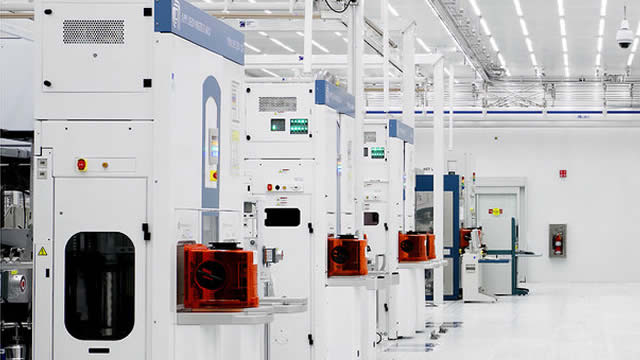
Taiwan contract chipmaker TSMC's US investments
Reuters· 2026-01-16 06:12
Core Insights - The U.S. and Taiwan have established a trade deal that will see Taiwanese companies invest $250 billion in the U.S. to enhance production in key sectors such as semiconductors, energy, and artificial intelligence [1] Industry Summary - The investment of $250 billion is aimed at significantly boosting the semiconductor industry in the U.S., which is critical for technology and manufacturing sectors [1] - The deal also emphasizes the importance of energy production, indicating a strategic move towards energy independence and sustainability [1] - Artificial intelligence is highlighted as a key area of investment, reflecting the growing significance of AI technologies in various industries [1]
台积电(TSM):AI需求真实不虚,晶圆供应仍是瓶颈
HTSC· 2026-01-16 06:10
Investment Rating - The report maintains a "Buy" rating for the company with a target price raised to $440 from $370 [7]. Core Insights - The management expressed strong confidence in AI demand, stating it is "real" and that silicon supply remains a bottleneck [1][29]. - The company has raised its long-term revenue growth target from a CAGR of 15%-20% to 25% [1]. - Capital expenditures (CapEx) for 2026 are projected to surge to $52-56 billion, significantly higher than the previous year's $41 billion, indicating a robust response to structural AI demand growth [3][14]. - The company expects revenue growth of nearly 30% year-over-year in 2026, with a long-term revenue CAGR for AI server processors adjusted to mid-to-high 50% for 2024-2029 [1][2]. Summary by Relevant Sections Investment Rating - The investment rating is maintained as "Buy" with a target price of $440 [7]. AI Demand - AI server processor revenue growth guidance has been raised to a CAGR of mid-to-high 50% for 2024-2029, reflecting strong growth confidence [2]. - Customer feedback indicates positive ROI from investments in AI infrastructure, with demand remaining strong due to insatiable computational needs [2][29]. Capital Expenditures and Expansion - The company forecasts 2026 CapEx at $52-56 billion, with 70-80% allocated to advanced processes, particularly 2nm and A16 technologies [3][14]. - Global expansion includes the ramp-up of facilities in Arizona, Japan, and Germany, with significant capacity increases planned [3][30]. Profitability - The gross margin for Q4 2025 reached 62.3%, exceeding guidance, driven by high capacity utilization and cost improvements [4][28]. - The company anticipates further gross margin improvement to 64% in Q1 2026, despite potential short-term dilution from new technologies [4][28]. Earnings Forecast and Valuation - Revenue forecasts for 2026-2027 have been increased by 9.8% and 19.7%, respectively, with net profit estimates raised by 22.8% and 29.2% [5][25]. - The company is expected to achieve a net profit of $2.412 billion in 2026, with a projected PE ratio of 30x based on 2026 EPS of 93 New Taiwan Dollars [5][25].
Buy Taiwan Semi Stock After AI Fuels Strong Q4 Results & Guidance?
ZACKS· 2026-01-16 03:31
Core Viewpoint - Taiwan Semiconductor (TSM) stock reached an all-time high of $345 per share following record Q4 results and optimistic guidance regarding AI demand [1] Group 1: Q4 Results - Taiwan Semiconductor reported record Q4 sales of $33.71 billion, a 25% increase from $26.88 billion in the same quarter last year, surpassing estimates of $33.26 billion by 1% [2] - The Q4 earnings per share (EPS) peaked at $3.14, exceeding expectations of $2.82 by 11% and showing a 35% increase year-over-year [2] Group 2: Guidance and Outlook - For Q1, Taiwan Semiconductor projects revenue between $34.6 billion and $35.8 billion, above Wall Street's expectations of $33.27 billion, indicating a 24% growth [3] - The company did not provide full-year revenue guidance but indicated strong demand for AI and high-performance computing chips as the primary driver of this outlook [3] Group 3: Capital Expenditure - Taiwan Semiconductor issued a capital expenditure (CapEx) forecast of $52 billion to $56 billion, representing an increase of over 27% from the previous year's CapEx of $40.9 billion [4] Group 4: Management Insights - CEO Che-Chia Wei highlighted the substantial and genuine demand for AI, acknowledging concerns about the level of investment in AI while maintaining a positive outlook on continued demand for AI chips [5] Group 5: Return on Invested Capital - Taiwan Semiconductor boasts a return on invested capital (ROIC) of 27.6%, significantly above the 20% benchmark, indicating strong long-term shareholder value [6] Group 6: Valuation Metrics - The company has a price-to-forward sales ratio of 14X, compared to the S&P 500's 5X, which is typical for stocks benefiting from AI-driven growth [8] - Taiwan Semiconductor's forward price-to-earnings (P/E) multiple stands at 26X, close to the benchmark's 23X [8] Group 7: Market Position - Currently, Taiwan Semiconductor stock holds a Zacks Rank 3 (Hold), with potential for a buy rating and further price increases anticipated due to likely EPS revisions following strong Q4 results and a positive AI outlook [10]

TSMC is set to expand its $165 billion U.S. investment — here's what we know
CNBC· 2026-01-16 03:25
Core Viewpoint - Taiwan Semiconductor Manufacturing Co. (TSMC) is set to accelerate its expansion in Arizona, driven by strong earnings and a new U.S.-Taiwan trade agreement, with a commitment of $100 billion for U.S. manufacturing [1] Group 1: Financial Commitments and Investments - TSMC has already committed $165 billion in the U.S. to support domestic chip manufacturing, with plans for further increases in spending to meet the demand for artificial intelligence chips [2] - The company forecasts a capital expenditure increase of over 30% at the midpoint for the upcoming year compared to 2025 [4] Group 2: Strategic Expansion Plans - TSMC is expanding its capacity in both Taiwan and the U.S. to capitalize on the AI mega trend, with plans to build a "gigafab cluster" in Arizona [3] - The company has recently acquired additional land in Arizona to facilitate its expansion efforts [3]

CNBC Daily Open: TSMC earnings draw investors' eyes back to AI
CNBC· 2026-01-16 01:27
Group 1 - Taiwan's $250 billion investment in chip production in the U.S. is part of a broader trade deal with Washington, which includes lowering tariffs on Taiwanese imports from 20% to 15% and eliminating them on other products like generic pharmaceuticals and aircraft components [2] - Taiwan Semiconductor Manufacturing Co. (TSMC) has acquired land in Arizona and plans to expand operations there as part of the investment deal [3] - TSMC reported a 35% increase in fourth-quarter profit year-over-year, marking eight consecutive quarters of profit growth, and is raising its expected capital expenditure for 2026 due to high demand for artificial intelligence [4] Group 2 - The positive earnings reports from TSMC and other financial institutions like Goldman Sachs and Morgan Stanley contributed to a rise in stock markets, particularly in semiconductor and AI-related stocks such as Nvidia, Advanced Micro Devices, and Applied Materials [5] - European chip-making equipment producers, including ASML and ASM International, also saw stock price increases in response to the optimistic market sentiment [5]

Taiwan Semiconductor's record quarter renewed investors' faith in AI stocks, Jim Cramer says
CNBC· 2026-01-15 23:29
Core Viewpoint - Taiwan Semiconductor's strong quarterly performance has renewed confidence in artificial intelligence stocks, particularly Nvidia, indicating robust demand and potential profitability in the AI sector [1][2]. Group 1: Company Performance - Taiwan Semiconductor reported a 35% profit increase, achieving eight consecutive quarters of year-over-year profit growth [1]. - The company has set a new record in earnings, surpassing market estimates, which reflects strong demand for its products used in advanced AI technology [1][2]. Group 2: Market Reaction - Following Taiwan Semiconductor's earnings report, chip stocks led the market higher, with major indexes closing in the green [2]. - Taiwan Semiconductor reached a new 52-week high, closing up 4.44%, while Nvidia saw an increase of 2.13% [2]. Group 3: Broader Market Trends - Gains were also observed in banks and consumer-oriented stocks, including restaurants and retailers, indicating a positive market sentiment [3]. - The housing sector, previously affected by downgrades, showed a rise, contributing to overall market optimism [3]. - Small cap stocks experienced significant movement, with the Russell 2000 index breaking out [3]. Group 4: Investor Sentiment - The turnaround in Nvidia, which had been underperforming, suggests that concerns about a market bubble may be easing, at least temporarily [4].


Wall St rebounds as TSMC ignites chip rally; banks jump after results
Reuters· 2026-01-15 21:00
Core Viewpoint - Wall Street's main indexes experienced a rebound, driven by a surge in semiconductor stocks following TSMC's impressive earnings report [1] Group 1: Company Performance - TSMC reported blockbuster results, which significantly influenced market sentiment and contributed to the rise in chip stocks [1] - Investors analyzed earnings reports from major financial institutions, including Morgan Stanley and Goldman Sachs, to gauge market conditions and future trends [1] Group 2: Market Reaction - The positive performance of semiconductor stocks led to a broader recovery in Wall Street's main indexes, indicating strong investor interest in the tech sector [1]
