Samsung

Search documents
Intel Under Pressure to Increase US Production
Bloomberg Technology· 2025-08-15 19:08
Questioning it, asking How does the US government help Intel fix its leading edge node when it's not a money issue. They have no customers and there is a good reason for that. Jordan Extrapolate on that.Yeah. I mean, Intel, in my opinion, has two main issues. One is on the technology side where their leading edge foundry business has struggled to execute at these more advanced nodes and they've lost a lot of potential business and share to TSM, who's executed flawlessly.And the second big issues, you know, ...


Green Dot's 30% Rally: Turnaround Takes Off on Explosive Earnings
MarketBeat· 2025-08-15 17:52
Core Viewpoint - Green Dot Corporation has experienced a significant stock surge, indicating a potential turnaround in its business narrative following strong second-quarter financial results that exceeded Wall Street expectations [1][2][3]. Financial Performance - Green Dot reported non-GAAP earnings per share (EPS) of 40 cents, surpassing the analyst consensus estimate of 17 cents, marking a substantial bottom-line outperformance [3]. - Non-GAAP revenues increased by 24% year-over-year to $501.2 million, with Gross Dollar Volume reaching $38.5 billion [3]. Business Segments - The growth was primarily driven by the Business to Business (B2B) services segment, which saw revenues rise by 38%, highlighting the effectiveness of Green Dot's Banking as a Service (BaaS) platform [4]. - Recent partnerships, including collaborations with Samsung and Credit Sesame, demonstrate the success of the B2B strategy and the ability to secure significant contracts [5]. Management Outlook - Management raised its full-year 2025 guidance for key profitability metrics, indicating confidence in the sustainability of the recent momentum [6]. - The company plans to diversify its partner pipeline, expecting to launch seven new partners in 2025, a significant increase from previous years [8]. Strategic Investments - A GAAP Net Loss of $47 million was attributed to a one-time, non-cash equity charge related to its partnership with Walmart, viewed as a strategic investment for long-term stability [9]. - Green Dot aims to optimize profitability by deploying cash holdings into higher-yielding assets, targeting returns between 5% and 7% [10]. Market Sentiment - Following the earnings release, Northland Securities set a price target of $16.00 for Green Dot's stock, suggesting further upside potential [11]. - The stock maintains a Moderate Buy consensus rating among analysts, reflecting a generally positive outlook despite some caution [11][12]. Valuation Metrics - Green Dot's stock price remains below its accounting book value of $16.11 per share, indicating potential undervaluation [12][13]. - A price-to-book ratio of less than one may attract value-focused investors, suggesting the market could be undervaluing the company's assets [13]. Conclusion - The combination of impressive growth, a robust pipeline of new partners, and a focus on profitability has created a compelling turnaround narrative for Green Dot, capturing the attention of Wall Street [14].


全球科技_交换机TAM介绍;2025 - 2026 年数据中心交换机受益于高速传输,预计同比增长 42%-Global Tech_ Switch TAM introduced; Data center switches to grow 42 YoY in 2025E_26E on high-speed transmission
2025-08-15 02:26
Summary of Global Switch Market Conference Call Industry Overview - The conference call discusses the global switch market, focusing on data center switches and campus switches, with an emphasis on the impact of generative AI on demand and specifications [1][2][10]. Key Points Market Growth Projections - The global switch market is expected to reach **US$54 billion** in 2025 and **US$66 billion** in 2026, with data center switches projected to grow **42% YoY** to **US$38 billion** in 2025 and **32% YoY** to **US$50 billion** in 2026 [2][10]. - Data center switch ports shipment is anticipated to increase to **93 million** units in 2025 and **144 million** units in 2026, reflecting a **50%** and **55% YoY** growth respectively [2][10]. Demand for High-Speed Transmission - The demand for switches is shifting towards high-speed transmission due to the adoption of generative AI, with **800G switch value** expected to grow **159%** in 2025 and **92%** in 2026 [1]. - Customized switch solutions are increasingly sought after to meet specific client needs across various AI application scenarios [1]. Campus Switches Stability - Campus switch ports volume is expected to remain stable, with a slight decline of **-1%** in 2025 and flat growth in 2026, primarily serving educational and small to medium business clients [11]. - The mix of switch types is projected to upgrade, with **25G** and **100G** switches increasing from **0.6%** and **0.2%** in 2024 to **0.7%** and **0.3%** in 2026 [11]. Revenue and Pricing Insights - Data center switch revenues are projected to grow significantly, with the average selling price (ASP) per port expected to rise from **US$186** in 2023 to **US$240** in 2026 [10]. - The overall revenue from switch ports is expected to increase from **US$39.7 billion** in 2023 to **US$66.4 billion** in 2026 [10]. Competitive Landscape - Key players mentioned include Ruijie, Huaqin, Hon Hai/FII, Arista, Dell, and Broadcom, indicating a competitive environment with various brands and technologies [3]. Additional Insights - The attach ratio of switch ports per GPU is projected to increase, indicating a growing need for high-performance computing solutions in data centers [16]. - The conference highlights the importance of adapting to technological advancements and client demands in the switch market, particularly in the context of AI and high-speed networking [1][10]. Conclusion - The global switch market is poised for significant growth driven by advancements in AI and high-speed transmission requirements, with data center switches leading the charge. The stability in campus switches suggests a mature market segment, while the competitive landscape remains dynamic with several key players vying for market share.
SemiAnalysis-华为 AI CloudMatrix 384:中国对标英伟达 GB200 NVL72 的答案
2025-08-15 01:24
Summary of Huawei's CloudMatrix 8 Conference Call Company and Industry - **Company**: Huawei - **Industry**: Semiconductor and AI Computing Key Points and Arguments Product Overview - Huawei introduced the **CloudMatrix 8**, a powerful domestic solution in China built using the **Ascend 10C** chip, competing directly with Nvidia's **GB200 NVL72** [3][4] - The CloudMatrix 8 architecture is noted for its engineering advantages at the system level, not just at the chip level, with innovations across accelerator, networking, optics, and software layers [4] Performance Metrics - The CloudMatrix 8 can deliver **300 PFLOPS** of dense BF16 compute, nearly double that of the **GB200 NVL72** [10] - Key specifications comparison: - **BF16 dense PFLOPS**: CloudMatrix 300 vs. GB200 180 - **HBM capacity**: CloudMatrix 49.2 TB vs. GB200 13.8 TB - **HBM bandwidth**: CloudMatrix 1.229 TB/s vs. GB200 576 TB/s - **All-in System Power**: CloudMatrix 559,378 W vs. GB200 145,000 W [10][53] Power Consumption and Efficiency - The CloudMatrix 8 consumes significantly more power, drawing approximately **500 kW**, which is over **3.9 times** that of the GB200 NVL72 [51] - Despite higher power consumption, Huawei's system is designed to leverage China's abundant energy resources, allowing for scaling without power constraints [13][54] Supply Chain and Production Challenges - Huawei's Ascend chips are primarily produced by TSMC, with significant reliance on foreign production for components like HBM and wafers [16][19] - The company has reportedly circumvented sanctions to acquire necessary components, including **$500 million** worth of 7nm wafers [17] - Domestic production capabilities are improving, with SMC ramping up capacity, but foreign reliance remains a critical issue [24][27] Strategic Implications - The advancements in Huawei's technology are seen as a response to U.S. export controls, highlighting the importance of AI competitiveness as a national security concern [9] - The CloudMatrix 8's design reflects a strategic focus on scaling up capabilities, leveraging domestic strengths in networking and infrastructure software [11][15] Market Positioning - Huawei's CloudMatrix 8 is positioned as a competitive alternative to Nvidia's offerings, with a focus on system-level performance rather than just chip performance [5][6] - The architecture's design allows for significant scaling, which is crucial for meeting the demands of AI workloads [28][30] Conclusion - Huawei's CloudMatrix 8 represents a significant advancement in China's AI computing capabilities, with a focus on system-level innovations and leveraging domestic resources, despite challenges in supply chain and power efficiency [54]

Intel stock climbs 7% on report Trump administration is considering stake
CNBC· 2025-08-14 19:51
Group 1 - Intel's stock rose by 7% following reports of discussions between the Trump administration and the company regarding a potential government stake [1] - Intel is the only U.S. company capable of manufacturing the fastest chips domestically, while competitors like TSMC and Samsung also have U.S. facilities [2] - The potential government stake is intended to help fund Intel's factories currently under construction in Ohio [2] Group 2 - The discussions come after Intel CEO Lip-Bu Tan's visit to the White House, which followed President Trump's call for Tan's resignation due to alleged ties to China [3] - Intel has stated that Tan is committed to advancing U.S. national and economic security interests [3] - An Intel spokesperson declined to comment on the ongoing discussions, emphasizing a focus on shared priorities with the Trump administration [4] Group 3 - Tan took over Intel earlier this year amid challenges in gaining market share in AI chips and significant investments in the foundry business [4] - Intel's foundry business has not yet secured a major customer, which is critical for confidence in new factory investments [5] - In July, Intel announced the cancellation of manufacturing plans in Germany and Poland, and a slowdown in development in Ohio, with a focus on scrutinizing spending [5] Group 4 - The U.S. government has increasingly positioned itself in major industry deals, including taking a 15% stake in certain Nvidia and AMD chip sales to China and a $400 million equity stake in MP Materials [6]
Arm Holdings Shares Up 15% in 2025: Is it Time to Buy, Hold, or Sell?
ZACKS· 2025-08-14 18:11
Core Insights - Arm Holdings plc (ARM) shares have increased by 15% year to date, lagging behind the semiconductor industry's 22% growth during the same period [1][7]. Group 1: Company Performance - ARM's strength lies in its energy-efficient chip architecture, which is crucial for its leadership in mobile computing, powering devices from major companies like Apple, Qualcomm, and Samsung [4][5]. - The company is becoming a key player in AI and IoT, with its architecture being increasingly utilized by Apple, Qualcomm, and Samsung for AI-driven innovations [6][7]. - Recent analyst sentiment has turned cautious, with three downward revisions to ARM's third-quarter fiscal 2026 earnings estimates and a 3% drop in the Zacks Consensus Estimate for earnings [13][16]. Group 2: Market Challenges - ARM faces significant risks in China, its second-largest market, due to the rising adoption of RISC-V, an open-source chip architecture favored by Chinese firms, which could weaken ARM's market position [9][10]. - The company's potential move into producing its own CPUs could strain relationships with key customers, as it may become a direct competitor, risking existing licensing revenues [11][12]. - ARM's stock is currently considered expensive, trading at around 74.12X forward 12-month earnings per share, significantly higher than the industry average of 40X [17]. Group 3: Conclusion - Despite ARM's leadership in power-efficient chip architecture and growing relevance in AI and IoT, multiple headwinds, including competition from RISC-V and potential fallout with clients, suggest limited upside for investors [18].

Prediction: This Artificial Intelligence (AI) Semiconductor Stock Will Soar in September (Hint: It's Not Nvidia)
The Motley Fool· 2025-08-14 07:30
Core Insights - The tech industry's hyperscalers are significantly increasing their investments in AI infrastructure, with a collective spending expectation of over $330 billion in 2025 [2][3] Industry Overview - Major tech companies like Alphabet, Meta Platforms, Microsoft, and Amazon are leading the charge in AI infrastructure spending, focusing on data center buildouts, networking equipment, and chips [2][3] - The demand for GPUs is driving growth in the semiconductor landscape, benefiting not only GPU designers but also other critical services [3] Company Focus: Micron Technology - Micron Technology is positioned to benefit from the rising AI infrastructure spending due to its high-bandwidth memory (HBM) solutions, which are essential for optimal GPU performance [5][9] - Micron's products also support a wide range of applications beyond data centers, including IoT devices, cloud infrastructure, and autonomous systems [6] Market Opportunity - The total addressable market for HBM is estimated at $4 billion in 2023, with a projected compound annual growth rate of 42%, potentially reaching $130 billion by the early 2030s [7] - The HBM market is highly concentrated, with only a few companies like Micron, Samsung, and SK Hynix producing at scale, which enhances Micron's strategic market value [8] Competitive Landscape - As hyperscalers expand their AI capabilities, they are likely to diversify their supply chains, which could provide Micron with opportunities to gain market share [9] Valuation Insights - Micron's forward P/E ratio has compressed due to uncertainty in financial guidance, which may deter some investors [12] - The valuation gap between Micron and its peers suggests that the market may not fully recognize the importance of Micron's products in AI infrastructure [13] - With upcoming earnings and a current valuation discount compared to peers, Micron presents a compelling investment opportunity [14]

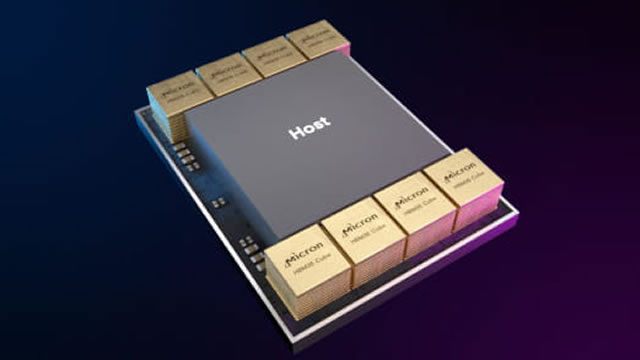
半导体- 内存月度报告:梳理第二季度情况-SEMICONDUCTORS _ Memory Monthly_ Taking Stock of CQ2
2025-08-14 02:44
Summary of Key Points from the Semiconductor Sector Research Report Industry Overview - The report focuses on the **semiconductor industry**, specifically the **memory market**, including **DRAM** and **NAND** segments, as well as **HDD** (hard disk drive) updates. Core Insights and Arguments 1. **Pricing Trends**: - Accelerated customer orders from China's subsidy program and end-of-life announcements for legacy DRAM have positively impacted memory prices in CQ2. DRAM prices are expected to increase by **6% Q/Q** in CQ3, while NAND prices may rise by **2% Q/Q** [2][3]. - Limited demand visibility for CQ4 poses a risk to price recovery despite the anticipated increases in CQ3 [3]. 2. **SanDisk Earnings Outlook**: - SanDisk is expected to report revenues of **$1.96 billion** and EPS of **$0.08** for CQ2, surpassing previous guidance. For CQ3, expectations are set at **$2.03 billion** and EPS of **$0.84** [4]. 3. **Competition in HBM Pricing**: - Samsung's increased momentum in HBM3E shipments may lead to moderated pricing for HBM, which could negatively affect competitors like SK Hynix and Micron [5]. 4. **HDD Market Growth**: - The HDD market is projected to grow by **13%** in sales and **21% CAGR** in EB shipments from CY24 to CY28, indicating a robust outlook for HDD vendors [6]. 5. **Valuation Metrics**: - Key valuation metrics for various companies in the semiconductor space are provided, with AMD, Micron, and Western Digital highlighted for their respective ratings and price targets [7]. Additional Important Insights 1. **Demand Dynamics**: - The demand for server DRAM is driven by aggressive orders from cloud service providers, with a notable increase in prices due to supply constraints [13]. - Mobile DRAM contracts have surged by **26% Q/Q**, driven by tight supply and impending EOL for LPDDR4x [14]. 2. **NAND Market Trends**: - The mobile NAND segment is facing challenges due to weak smartphone demand, with prices expected to remain flat in CQ3 [19]. - Enterprise SSD prices are projected to increase by **4% Q/Q**, supported by strong demand from North American cloud service providers [18]. 3. **Stock Read-Throughs**: - Micron is rated as Underperform with a target price of **$100**, reflecting cautious views on traditional DRAM and NAND demand in the second half of the year [24]. - SanDisk maintains a Neutral rating with a target price of **$49**, emphasizing the importance of disciplined capital investments in the NAND industry [25]. - Western Digital is rated Outperform with a target price of **$92**, supported by structural changes in the HDD industry and a strong product roadmap [26]. 4. **Future Outlook**: - The report indicates that while there are positive trends in pricing and demand for certain segments, overall visibility into future demand remains uncertain, particularly for non-AI applications [24][25]. This summary encapsulates the key points from the semiconductor sector research report, highlighting the dynamics of memory pricing, company earnings expectations, competitive pressures, and market growth projections.
Qualcomm (QCOM) Conference Transcript
2025-08-13 20:12
Qualcomm Conference Summary Industry Overview - **Industry**: Automotive and IoT (Internet of Things) - **Company**: Qualcomm (QCOM) Key Points on Automotive Segment 1. **Revenue Targets**: Qualcomm aims for approximately $4 billion in revenue for fiscal 2026, with expectations to exceed this target. A target of $8 billion is set for fiscal 2029, indicating a compound annual growth rate (CAGR) of around 20% from current levels [2][3][4] 2. **Design Wins**: Over 80% of the projected revenue for the next four years is secured through existing design wins, providing predictability in revenue streams [3][4] 3. **Market Participation**: Qualcomm focuses on segments like cloud connectivity, digital cockpit, and autonomous driving, which are expected to grow at 15% even in a flat automotive market [4] 4. **Content Per Vehicle**: The content opportunity per vehicle is significant, with some vehicles featuring over $2,000 to $3,000 in Qualcomm content, particularly in digital cockpit and ADAS (Advanced Driver Assistance Systems) [8][10] 5. **ADAS Development**: Qualcomm is seeing increased demand for ADAS features, with a trend of OEMs wanting to implement top-tier features across multiple vehicle tiers [10][12] 6. **Strategic Partnerships**: The collaboration with BMW on a jointly developed ADAS stack is crucial, allowing Qualcomm to verify its technology at scale and potentially sell it to other OEMs [14][18] 7. **Robotaxi Market**: Qualcomm views the robotaxi market as a driver for increased demand for autonomous driving features, although it may not significantly alter the overall automotive market in the short term [19][20] Competitive Positioning 1. **Differentiation from Competitors**: Qualcomm does not compete directly with NVIDIA and Mobileye in connectivity and cockpit technologies, focusing instead on ADAS. The Ride Flex SoC allows for scalability across different vehicle tiers, enhancing Qualcomm's competitive edge [23][24][25] 2. **Investment in Technology**: Qualcomm's significant investment across various automotive technologies positions it favorably against competitors [25] IoT Segment Insights 1. **Product Diversification**: Qualcomm's IoT segment includes XR glasses, personal devices, industrial AI, and networking, with a strong emphasis on personal devices as gateways for AI experiences [38][41] 2. **Industrial AI Growth**: The transition from microcontrollers to microprocessors in industrial AI presents a significant opportunity for Qualcomm, particularly in edge AI applications [44][46] 3. **PC Market Strategy**: Qualcomm aims to establish itself as a performance leader in the PC market, focusing on high-end devices while planning to address lower price points in the future [47][52] Data Center Opportunities 1. **CPU and NPU Focus**: Qualcomm is leveraging its custom CPU technology for data center applications, with a focus on AI inference rather than training, which is seen as a strength [54][58][75] 2. **Incremental Investment**: The strategy involves using existing technology to address specific problems in the data center market, with expectations for revenue growth starting in fiscal 2028 [60][67] Handset Market Dynamics 1. **Android Market Growth**: Qualcomm is experiencing growth in the Android market due to increased content in premium devices and a shift towards higher-priced models [78][79] 2. **Long-term Agreements**: Long-term agreements with OEMs like Xiaomi and Samsung are becoming standard practice, providing stability in share positions [81][82] Financial Outlook 1. **Sustainable Margins**: Qualcomm expects to maintain strong operating margins despite potential revenue declines from Apple, with growth opportunities in IoT and automotive segments [87][88] 2. **OpEx Considerations**: The acquisition of AlphaWave will introduce some incremental operating expenses, but Qualcomm's strategy focuses on reallocating investments to diversify and grow in new areas [89]

3 Artificial Intelligence (AI) Stocks That Are Quietly Beating the Market
The Motley Fool· 2025-08-13 09:00
Unlike many AI stocks, these companies overcame the stock sell-off in the first few months of the year. Although many artificial intelligence (AI) stocks have performed well since "Liberation Day" on April 2, the rough start to the year has weighed on many of them. So severe was the drop in some stocks that many continue to lag the performance of the S&P 500 in 2025 despite dramatic recoveries. Fortunately, a few have managed to outperform the index. Moreover, some even remain solid buys. Investors looking ...