Diamondback Energy

Search documents
Viper Energy, Inc., a Subsidiary of Diamondback Energy, Inc., to Acquire Sitio Royalties Corp. in All-Equity Transaction; Increases Base Dividend
Globenewswire· 2025-06-03 10:30
Core Viewpoint - Viper Energy, Inc. has announced a definitive agreement to acquire Sitio Royalties Corp. in an all-equity transaction valued at approximately $4.1 billion, which includes Sitio's net debt of about $1.1 billion as of March 31, 2025 [1] Transaction Details - The acquisition will involve the exchange of 0.4855 shares of Class A common stock of a new holding company for each share of Sitio Class A common stock, and 0.4855 units of Viper's operating subsidiary for each unit of Sitio's operating subsidiary, implying a value of $19.41 per Sitio share based on Viper's stock price on June 2, 2025 [1] - The transaction has received unanimous approval from the Boards of Directors of both companies and has the consent of Diamondback Energy, Viper's majority stockholder [1] - Approximately 48% of Sitio's voting power has agreed to support the transaction [1] - The deal is subject to customary regulatory approvals and is expected to close in Q3 2025 [1] Financial Highlights - Viper has approved a 10% increase in its base dividend to $1.32 per share annually, which represents approximately 45% of cash available for distribution at $50 WTI [2][6] - The acquisition is expected to be approximately 8-10% accretive to cash available for distribution per Class A share immediately upon closing [6] - The pro forma Viper's base dividend breakeven is expected to decrease by approximately $2 per barrel to below $20 WTI [6] - Estimated annual synergies from the merger are projected to exceed $50 million, primarily from administrative and capital cost savings [6] Strategic Rationale - The merger is expected to create a leader in the minerals industry with enhanced size, scale, liquidity, and access to investment-grade capital [7] - The combined company will have approximately 34,300 net royalty acres in the Permian Basin and an additional ~9,000 net royalty acres in other major basins [6][7] - The merger will position the combined entity to compete effectively for capital with mid and large-cap North American exploration and production companies, benefiting from higher margins and lower operating costs [7] Production and Operational Highlights - The average production for Q1 2025 was reported at 18.9 mbo/d (42.1 mboe/d), with Permian production at 14.5 mbo/d (31.9 mboe/d) [6] - The pro forma Viper is expected to have an average production of 64-68 mbo/d (122-130 mboe/d) by Q4 2025, with a mid-single-digit percentage increase expected for the full year 2026 [6]




标普500指数初步收涨约0.3%,能源、科技、电信、原材料等板块至多涨超0.9%。纳斯达克100指数初步收涨0.5%,Zscaler涨6.2%,美光科技、Meta、AMD、微芯科技、核电概念股CEG、博通、AppLovin、迈威尔科技、Diamondback Energy涨3.8%-2.1%,谷歌A则跌1.4%,Grail跌2%,Adobe跌2.8%,CDW跌3.1%。Salesforce、3M、宝洁跌超1%,领跌道指成分股,英伟达则涨1.5%表现第四,IBM和波音至少涨1.7%,耐克涨2.2%。美国科技股
news flash· 2025-06-02 20:03
Group 1 - The S&P 500 index initially rose by approximately 0.3%, with sectors such as energy, technology, telecommunications, and materials seeing gains of up to 0.9% [1] - The Nasdaq 100 index initially increased by 0.5%, with Zscaler rising by 6.2%, and other companies like Micron Technology, Meta, AMD, and Diamondback Energy experiencing gains between 3.8% and 2.1% [1] - Notable declines included Google A, which fell by 1.4%, and Adobe, which dropped by 2.8%, while Salesforce, 3M, and Procter & Gamble each fell over 1%, leading the decline in Dow components [1] Group 2 - The index of the seven major U.S. tech stocks increased by 0.5%, while the "Trump Tariff Losers Index" decreased by 1% [2]

Top Wall Street analysts prefer these dividend stocks for consistent returns
CNBC· 2025-06-01 11:28
Core Viewpoint - Major U.S. companies' earnings and tariff uncertainties are affecting investor sentiment, leading to a focus on attractive dividend stocks for consistent returns [1][2] Group 1: Home Depot (HD) - Home Depot reported mixed Q1 FY2025 results but reaffirmed its full-year guidance, maintaining prices despite tariffs [3][4] - The company declared a dividend of $2.30 per share for Q1 2025, resulting in an annualized dividend of $9.20 per share and a yield of 2.5% [3] - Analyst Greg Melich from Evercore reiterated a buy rating with a price target of $400, highlighting stabilizing traffic and improved online sales growth [4][5] - Melich believes Home Depot could become a significant breakout stock once the macro environment improves, similar to Costco and Walmart [6] Group 2: Diamondback Energy (FANG) - Diamondback Energy delivered better-than-expected Q1 results but reduced its full-year activity to maximize free cash flow due to commodity price volatility [8] - The company returned $864 million to shareholders in Q1 2025 through stock repurchases and a base dividend of $1.00 per share, resulting in a yield of nearly 3.9% [9] - Analyst Scott Hanold from RBC Capital reaffirmed a buy rating with a price target of $180, noting a 10% reduction in the capital budget but only a 1% cut in production outlook [10][11] - Hanold expects Diamondback to exceed its 50% minimum shareholder return target and plans to use remaining free cash flow to pay down a $1.5 billion term loan [12][13] Group 3: ConocoPhillips (COP) - ConocoPhillips reported market-beating Q1 2025 earnings but reduced its full-year capital and adjusted operating cost guidance while maintaining production outlook [14] - The company distributed $2.5 billion to shareholders in Q1 2025, including $1.5 billion in share repurchases and $1.0 billion in ordinary dividends, resulting in a yield of about 3.7% [15] - Analyst Neil Mehta from Goldman Sachs reiterated a buy rating with a price target of $119, highlighting uncertainty in oil prices but optimism about long-term gas prices [16][18] - Mehta expects COP's breakeven to decrease, projecting it to head towards the low $30s as LNG spending decreases and production from the Willow project begins in 2029 [17]


目标击垮美国页岩油?OPEC+本周预计大幅增产,意将油价压低至60美元以下
Hua Er Jie Jian Wen· 2025-05-26 07:14
Group 1 - OPEC+ is initiating an aggressive production increase strategy aimed at undermining the U.S. shale oil industry's survival threshold of $60 per barrel [1][4] - HSBC forecasts that OPEC+ will announce a production increase of 411,000 barrels per day for July, following similar increases in May and June [2][3] - The strategy is designed to push international oil prices below $60 per barrel, directly threatening the profitability of U.S. shale oil companies, which require at least $61 per barrel for new drilling to be profitable [1][4] Group 2 - The increase in U.S. shale oil market share from 14% to 20% over the past decade has prompted OPEC+ to reclaim lost market share, with OPEC's share declining from 50% to 25% [3] - OPEC+ leaders, particularly Saudi Arabia and Russia, are focused on regaining market share taken by U.S. shale oil producers [4][5] - The current environment is more challenging for U.S. producers due to rising inflation affecting drilling costs and the depletion of high-quality oil fields [6][7] Group 3 - U.S. shale oil companies are facing a potential crisis, with rising costs and declining production, leading to warnings of a possible wave of bankruptcies [7] - Major U.S. oil companies are reducing spending and idling drilling rigs, with some predicting a significant drop in production if oil prices fall to $50 per barrel [7] - HSBC's report indicates that Brent crude oil prices are facing downward risks, with predictions of a supply surplus in the fourth quarter of 2025 [8][9]
石油高管敲警钟:美国页岩油繁荣时代将终结
Sou Hu Cai Jing· 2025-05-26 06:40
Group 1 - The U.S. oil industry is facing a downturn as producers adjust strategies due to tariffs and falling oil prices, signaling the end of a decade-long shale oil boom [1][2][3] - OPEC+ unexpectedly decided to increase oil production, exacerbating the low state of the U.S. oil industry and raising concerns about a new price war, leading analysts to lower production forecasts [2][3] - U.S. oil production is projected to decline by 1.1% next year to 13.3 million barrels per day, marking the first annual drop in a decade, excluding the pandemic-related decline in 2020 [2][3] Group 2 - The shale oil boom previously enhanced U.S. economic growth, GDP, and job markets, while also reducing dependence on OPEC members [3][4] - The current outlook for U.S. oil companies is grim, with potential further declines in production if oil prices continue to fall [5][7] - Major oil companies are beginning to lay off employees, with Chevron and BP announcing a total of 15,000 job cuts globally, although employment in the U.S. oil sector remains relatively stable this year [8] Group 3 - Some large producers are cutting capital expenditure budgets, with the top twenty shale oil producers reducing their 2025 budgets by approximately $1.8 billion, a 3% decrease [8] - Companies are being forced to tighten spending and focus on maintaining free cash flow to appease investors, with dividends becoming a priority [10]

“关税+低油价”双重挤压,石油巨头警告:美国页岩油繁荣要结束了
Hua Er Jie Jian Wen· 2025-05-26 01:52
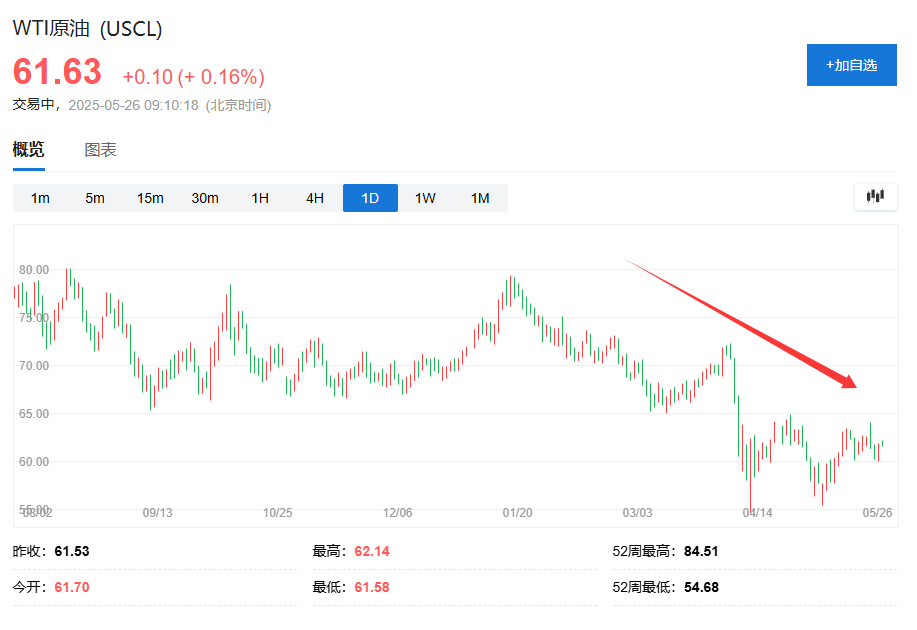
Group 1 - The U.S. oil industry is facing significant challenges due to rising costs from tariffs and declining oil prices, leading to spending cuts and idle drilling rigs, signaling the end of a decade-long shale oil boom [1][4] - Devon Energy's CEO expressed a state of high alert in the current difficult environment, indicating that anything is possible [2] - OPEC+'s unexpected decision to increase production has intensified concerns about a price war, prompting analysts to lower production forecasts, with a predicted 1.1% decline in U.S. oil production next year [3] Group 2 - U.S. oil prices have dropped to $61.53 per barrel, approximately 23% lower than this year's peak, while shale producers require $65 per barrel to break even [4] - SM Energy's CEO emphasized the need to "hang in there," while Pioneer Natural Resources' former head warned that production could drop by up to 300,000 barrels per day if prices fall to $50 per barrel [7] - Tariffs imposed by the Trump administration have increased the prices of steel and aluminum, critical inputs for the oil industry, with packaging pipe costs rising by 10% in the last quarter [8]
3 Oil Stocks You Should Be Watching
Schaeffers Investment Research· 2025-05-21 18:51
Group 1: Oil Market Overview - Oil prices have been volatile, influenced by geopolitical tensions and bearish crude data from the U.S. West Texas Intermediate (WTI) crude is down 0.7% at $61.62, contributing to a 14.3% year-to-date deficit [1] - The market is reacting to reports of Israel preparing to strike Iran, which has added to the volatility [1] Group 2: Company Performance - EQT Corp (NYSE:EQT) reached an 11-year high of $57.37, currently down 0.3% at $55.96, with a year-over-year increase of 35.7% and a year-to-date increase of 21.5% [2] - TotalEnergies SE (NYSE:TTE) is down 0.3% at $59.21, facing resistance at the $60 level and its 160-day moving average, but is still up 8.7% year-to-date [3] - Diamondback Energy Inc (NASDAQ:FANG) hit a two-year low of $114.00, currently down 0.8% at $137.22, and has decreased 16.2% year-to-date [4]


OPEC+增产背后:沙特俄罗斯联手狙击美国页岩油!
Jin Shi Shu Ju· 2025-05-21 15:12
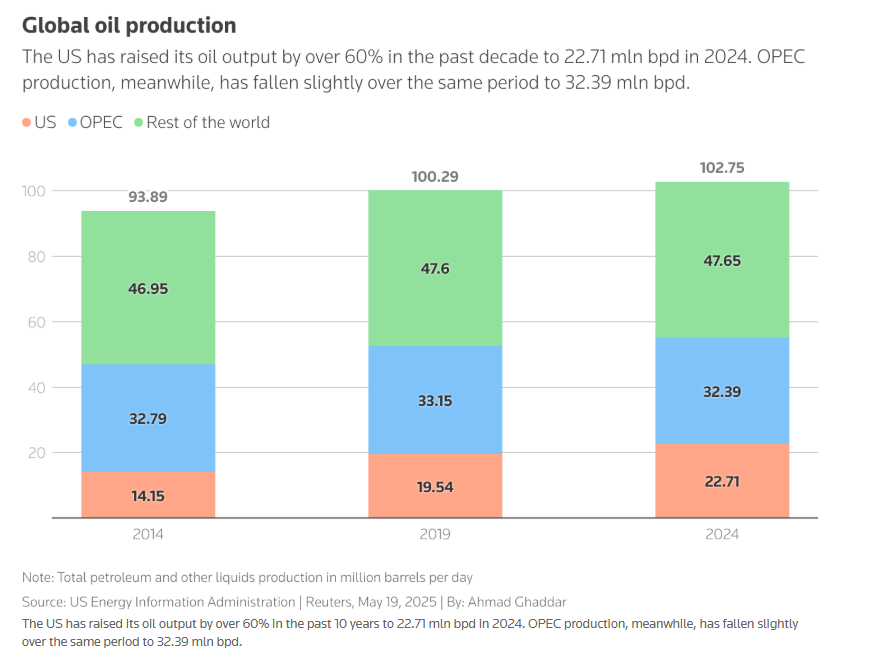
Core Insights - OPEC+ is aiming to regain market share from U.S. shale oil producers by potentially lowering oil prices to $55-60 per barrel, which could create uncertainty for other producers [4][9][10] - The U.S. has seen a 60% increase in oil production over the past decade, while OPEC's production has declined, leading to a shift in market dynamics [4][6] - The cost of production for U.S. shale oil producers has risen, with many needing oil prices above $65 per barrel to be profitable, compared to significantly lower costs for Saudi Arabia and Russia [5][12] OPEC+ Strategy - OPEC+ has shifted from production cuts to increasing output, with a focus on reclaiming lost market share [9][10] - Saudi Arabia and Russia are collaborating to implement strategies that could pressure other OPEC+ members and U.S. shale producers [9][10] - The organization has not officially declared a price target but is prepared to maintain oil prices around $60 per barrel to balance their budgets [13] Market Dynamics - The Brent crude oil price has fluctuated between $70-80 per barrel, recently dropping to around $58 due to OPEC+ actions and global economic concerns [10] - U.S. shale oil production is facing challenges as prime drilling areas are depleting, leading to increased production costs and potential declines in output [5][10] - The number of active oil rigs in the U.S. has decreased, indicating a potential downturn in production capacity [10][11] Financial Implications - The price war initiated by OPEC+ could lead to widespread financial strain on oil companies, resulting in reduced capital expenditures, layoffs, and dividend cuts [11] - Countries reliant on oil revenues, such as Russia and Saudi Arabia, face budgetary pressures if oil prices remain low, with estimates suggesting Russia needs prices above $77 per barrel and Saudi Arabia above $90 to balance their budgets [12][13]
OPEC+增产的“双重目标”:惩罚超产,更意在打击美国页岩油!
Hua Er Jie Jian Wen· 2025-05-21 12:34
Group 1 - OPEC+ aims to increase production not only to punish overproducing allies but also to compete for market share with U.S. shale oil producers, indicating a clear strategy to drive oil prices below $60 [1] - OPEC's market share has decreased from 40% a decade ago to below 25% this year, while the U.S. share has risen from 14% to 20% [1] - U.S. shale oil producers are in a more vulnerable position now compared to a decade ago, with rising costs and production concerns due to the depletion of prime drilling areas [2] Group 2 - U.S. shale oil producers now require an oil price of $65 per barrel to achieve profitable drilling, while Saudi Arabia's production cost is only $3-5 per barrel [2] - Companies like Diamondback Energy have lowered their 2025 production forecasts due to global economic uncertainty and increased OPEC+ supply [2] - The price war initiated by OPEC+ could harm all participants, leading to reduced capital expenditures, layoffs, and dividend cuts for oil companies [3] Group 3 - Countries reliant on oil revenues face fiscal pressures, with Russia needing oil prices above $77 per barrel to balance its budget, and Saudi Arabia requiring over $90 per barrel [3] - Despite the fiscal challenges, Saudi officials believe they can endure a price level of $60 per barrel, even if it means borrowing more to balance the budget [3] - The competition for market share may just be beginning as Brent crude oil prices have fallen from the $70-80 per barrel range last year to nearly $58 per barrel this year [3]
Near a 52-Week Low, Here's Why This 4.8%-Yielding Dividend Stock Is a Top Buy for Passive Income
The Motley Fool· 2025-05-17 11:45
Core Viewpoint - Chevron is positioned as an excellent dividend stock for passive income investors, despite a recent decline in stock price and low oil prices [1][3][13] Financial Performance - Chevron's stock has fallen approximately 16% from its 52-week high, which occurred less than two months ago [1] - Brent crude oil prices are at multi-year lows, impacting Chevron's margins and leading to lower revenue and earnings growth [3] - The company has become more efficient, with expected incremental free cash flow (FCF) of $9 billion by 2026 at a Brent price of $60 per barrel [5] Operational Efficiency - Chevron has the lowest upstream breakeven in its peer group, around the low $30-per-barrel Brent range, outperforming competitors like ExxonMobil and Shell [6] - The company anticipates a 50% increase in Gulf Coast production by 2026, driven by the expansion of its deepwater Anchor project [7] Shareholder Returns - Chevron has consistently executed stock buybacks, with $11.26 billion in 2022, $14.94 billion in 2023, and $15.23 billion planned for 2024 [8] - The company plans to spend $2.5 billion to $3 billion on buybacks in the second quarter of 2024, while maintaining a strong cash return to shareholders [9] - Chevron's quarterly dividend expenditure is around $3 billion, with a 38-year history of increasing dividends, resulting in a yield of 4.8% [10][11] Financial Health - The company's debt ratio stands at 14.4%, which is below its target range of 20% to 25%, indicating a strong balance sheet [12] Investment Outlook - Chevron is viewed as a reliable dividend stock with a strong track record, capable of generating high FCF and supporting future buybacks and dividend increases [13][14]