OPPO

Search documents
国内首款eSIM手机即将发售 多家公司早有布局相关业务
Zheng Quan Shi Bao· 2025-10-20 17:10
Core Insights - Apple CEO Tim Cook announced the launch of the iPhone Air in China on October 22, which is the first smartphone in the country to use eSIM technology, eliminating the physical SIM card slot [1] - The launch follows the approval of eSIM services by major Chinese telecom operators, marking the official entry of eSIM technology into the mobile phone market in China [1][2] - The global eSIM market is projected to grow significantly, with an estimated 1 billion eSIM smartphone connections by the end of 2025 and 6.9 billion by 2030, representing 76% of total smartphone connections [2] Industry Developments - The eSIM ecosystem involves a complex supply chain including chip design, platform management, operator services, device integration, and end-user applications, with expectations for collaborative development and maturation of the industry [3] - Several companies in the A-share market have been actively developing eSIM capabilities, including Unisoc, which has launched multiple eSIM products compliant with GSMA standards [4] - Eastcompeace has successfully developed an embedded operating system and eSIM IoT management platform that received GSMA security certification [5] - Megmeet has established mature eSIM solutions with large-scale production on 4G/5G chip platforms [6] - Chutianlong's eSIM products have been approved by China Unicom, and Wanma Technology has been a long-term provider of eSIM solutions across various standards [7] Market Performance - eSIM concept stocks have seen an average increase of 42.42% year-to-date, significantly outperforming the Shanghai Composite Index, with six stocks rising over 50% [8] - Some eSIM concept stocks have experienced significant pullbacks from their year-to-date highs, with declines exceeding 30% for several companies [9] - A total of 14 eSIM concept stocks have received "positive" ratings from brokerage firms, with eight stocks rated by more than ten institutions, including ZTE, Guanghetong, China Telecom, China Mobile, and Megmeet [9]



eSIM还在半路上
Bei Jing Shang Bao· 2025-10-20 15:35
Core Viewpoint - The three major Chinese telecom operators have collectively announced the approval for commercial eSIM services, with Apple and OPPO launching eSIM-enabled devices, indicating a significant shift towards a "no-card revolution" in the industry [1][4][6]. Group 1: Industry Developments - China Mobile, China Unicom, and China Telecom have received official approval to launch eSIM services, marking a new phase in mobile technology [1]. - Apple will release the eSIM-enabled iPhone Air on October 22, while OPPO plans to introduce the Find X9 Pro with eSIM support [1][4]. - The rollout of eSIM technology is expected to face challenges in terms of operational rules and practical implementation, as indicated by varying responses from service staff regarding eSIM activation procedures [1][3]. Group 2: Market Response - Initial responses from telecom staff regarding eSIM services have been inconsistent, highlighting a lack of clarity and training on new procedures [3][4]. - Currently, the availability of eSIM devices is limited, with only a few models, primarily from Apple, being ready for market [5][6]. - OPPO's eSIM model is still undergoing approval processes, and other major brands like Huawei and Xiaomi have not yet launched eSIM-enabled smartphones [5][6]. Group 3: Future Trends - The global eSIM smartphone connection is projected to reach 1 billion by the end of 2025 and 6.9 billion by 2030, indicating a strong growth trajectory for eSIM technology [7]. - The advantages of eSIM, such as space-saving in devices and enhanced user flexibility, are clear, but the transition from traditional SIM cards will require significant adjustments in service models and regulations [6][7].



eSIM来了,但还在来的路上
Bei Jing Shang Bao· 2025-10-20 14:50
Core Viewpoint - The launch of eSIM technology by major Chinese telecom operators marks a significant shift in mobile connectivity, but practical implementation faces challenges in terms of service and operational rules [1][2][7]. Group 1: eSIM Launch and Initial Reactions - Major telecom operators in China, including China Mobile, China Unicom, and China Telecom, received approval for eSIM services and announced their launch on October 13 [1]. - Apple is set to release the iPhone Air with eSIM technology on October 22, while OPPO plans to introduce its Find X9 Pro model with eSIM support [1][3]. - Initial inquiries at telecom service centers reveal a lack of clarity and readiness regarding eSIM services, indicating that staff are still familiarizing themselves with the new technology [2][3]. Group 2: Challenges in Implementation - The current eSIM offerings are limited, with only a few models available for consumers, primarily the iPhone Air, while OPPO's eSIM model is expected to launch later [3][6]. - Operational challenges include the requirement for users to visit physical stores for eSIM activation, which complicates the user experience and slows down adoption [8]. - Experts suggest that telecom operators need to revise existing service models and regulations to facilitate smoother transitions to eSIM technology, including rules for number portability and cross-region service [8][9]. Group 3: Future Outlook - The potential for eSIM technology to revolutionize the mobile industry is evident, with predictions indicating that by the end of 2025, there will be 1 billion eSIM-enabled smartphones globally, increasing to 6.9 billion by 2030 [8]. - The advantages of eSIM, such as saving physical space in devices and enabling multiple numbers on a single chip, highlight its importance in the future of mobile technology [8][9].
一条绿线,引发OPPO的中年危机
Feng Huang Wang Cai Jing· 2025-10-20 14:01
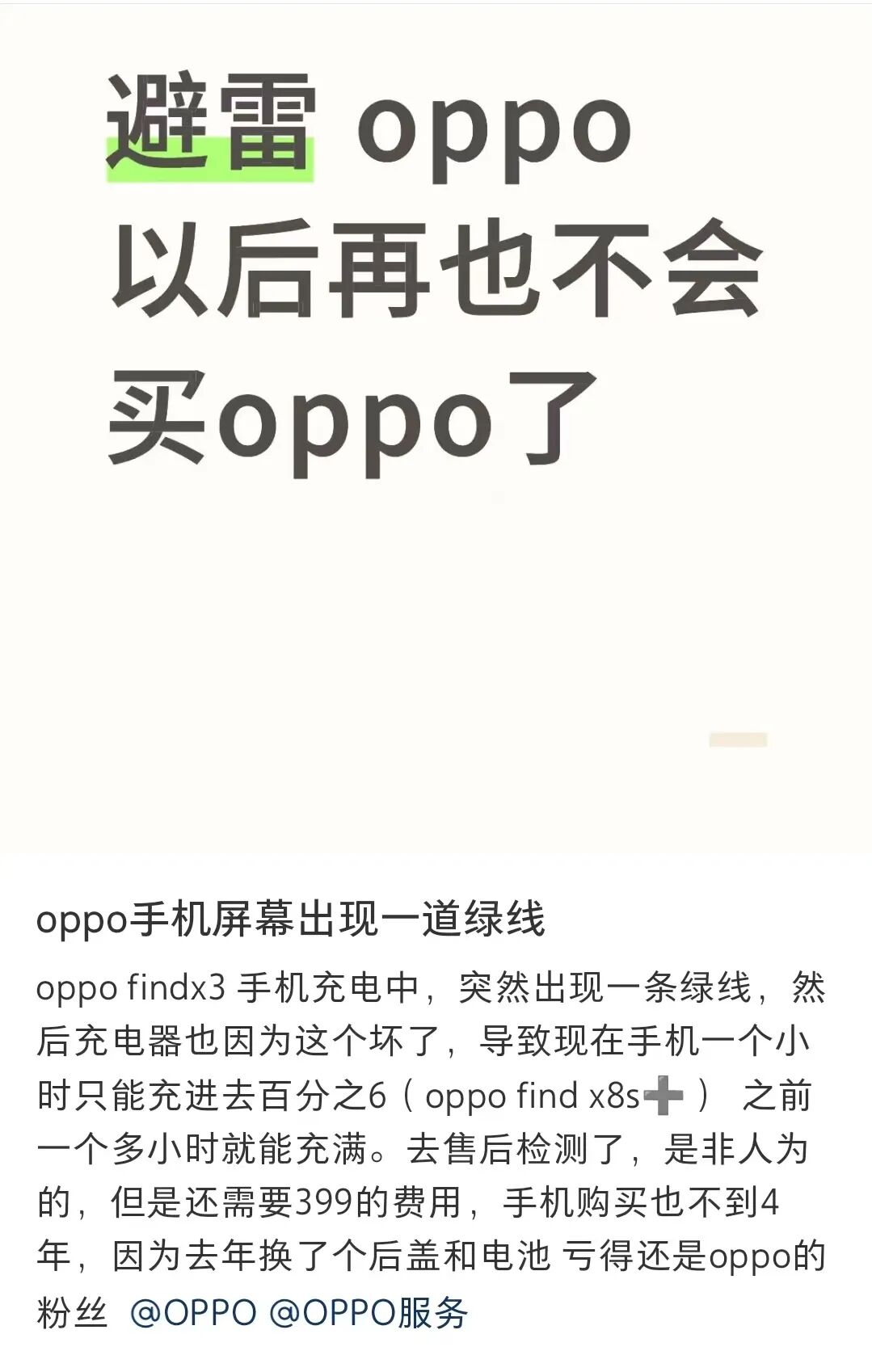
Core Insights - 2025 is a significant year for OPPO as it marks the company's 30th anniversary and its ongoing transformation towards a high-end brand, amidst discussions of its declining market position [1][2] - OPPO has faced a sudden trust crisis due to reports of a "green line" issue on screens, which coincides with the critical launch period of its Find X9 series, intended to drive its high-end ambitions [2][22] Product Issues - Users have reported a persistent "green line" appearing on screens of OPPO and OnePlus devices, particularly after approximately four years of use, affecting various models including the Find X and Reno series [3][6][9] - OPPO has offered free screen replacements for devices activated within four years, but many users face challenges in claiming this service due to missing purchase receipts and other requirements [12][15][19] - The trust in OPPO's product durability is being questioned, as the company has historically marketed itself as a reliable brand [22] Market Performance - OPPO's domestic market share has declined, with Q3 2025 figures showing a drop to 14.5%, ranking fifth behind competitors like vivo, Apple, Huawei, and Xiaomi [23][24] - In the global market, OPPO's share has also weakened, falling out of the top five smartphone manufacturers by Q3 2025, indicating a significant decline in its competitive position [25][27] Competitive Landscape - OPPO's struggles in the high-end market are evident, as it lags behind competitors like Apple and Huawei, which have successfully launched popular high-end models [27] - The company faces internal competition within its product lines, particularly between the Reno and OnePlus series, which overlap in pricing and features [28] - A lack of core technological innovation has been identified as a primary reason for OPPO's decline, with previous advantages in fast charging technology and self-developed chips failing to maintain a competitive edge [28]
一条绿线,引发OPPO的中年危机
凤凰网财经· 2025-10-20 13:51
Core Insights - 2025 is a significant year for OPPO as it marks the company's 30th anniversary and a critical phase in its transformation towards a high-end brand [2][6] - OPPO has faced a decline in market ranking, now trailing behind competitors like Huawei, Xiaomi, and vivo [3][34] - A sudden product trust crisis has emerged due to widespread reports of a "green line" issue on screens, impacting consumer confidence [4][34] Group 1: Product Trust Crisis - Users have reported a persistent "green line" appearing on screens of OPPO and OnePlus devices, particularly after approximately four years of use [7][10] - The issue has affected various models, including the high-end Find X series and the mid-range Reno series, leading to a growing number of complaints [6][10] - OPPO's customer service has been criticized for inconsistent policies regarding screen replacements, with many users facing difficulties in obtaining free repairs due to missing purchase receipts [17][20][26] Group 2: Market Performance - In Q3 2025, OPPO's domestic shipment volume was 9.9 million units, with a market share of 14.5%, reflecting a decline from previous quarters [34][35] - OPPO's global market presence has weakened, dropping out of the top five smartphone manufacturers by Q3 2025, indicating a significant loss in competitive standing [36][38] - The company's high-end market performance remains insufficient, with flagship models like the Find X series failing to achieve significant sales compared to competitors [38][39] Group 3: Challenges and Future Outlook - OPPO's struggles are attributed to a lack of core technological innovation, which has hindered its ability to compete effectively in a saturated market [39] - The company faces internal competition between its Reno and OnePlus product lines, leading to market inefficiencies [38][39] - To overcome its current challenges, OPPO must focus on technological advancements, quality control, and improving customer service to rebuild trust with consumers [39]

手机动辄2亿像素,照片会撑爆内存吗?
36氪· 2025-10-20 13:35
Core Viewpoint - The article discusses the impact of ultra-high pixel cameras, specifically 200 million pixels, on user experience and the smartphone industry, highlighting recent flagship releases from brands like vivo, Honor, and OPPO [5][6]. Group 1: Product Launches and Features - vivo launched the X300 Pro featuring an "85mm Zeiss 200MP APO Super Telephoto" lens, claiming full HD coverage from 24mm to 135mm [8]. - Honor's Magic8 Pro, released shortly after, includes a "200MP Super Night Telephoto" lens with 3.7x optical zoom and up to 100x digital zoom [9]. - OPPO introduced the Find X9 Pro, marketed as a "travel photography tool," with a "true 200MP telephoto lens" developed in collaboration with Hasselblad, boasting a 140% increase in light intake [9][10]. Group 2: Technical Implications of High Pixels - The transition to 200MP sensors allows for greater detail and dynamic range in photography, with the ability to achieve better image quality through ISZ zoom technology [11]. - High pixel counts significantly increase photo file sizes, with 200MP images averaging between 20MB to 60MB, raising concerns about storage capacity for users [13][15]. - Despite the increased file sizes, smartphone manufacturers are enhancing storage options, with configurations starting from 256GB and going up to 2TB [15]. Group 3: Performance and User Experience - The latest flagship chips have improved processing power, allowing users to experience minimal delays in shutter response and photo saving times, even at 200MP [16]. - The industry has shifted from focusing solely on pixel count to a more holistic approach, integrating AI capabilities to enhance image quality and user experience [19][21]. - Future smartphone designs may prioritize a balance between imaging capabilities and other features, moving away from the previous "all-rounder" concept [21].

总挤牙膏的iPhone,这次终于开了个好头
36氪· 2025-10-20 13:35
以下文章来源于金错刀 ,作者祥燎 金错刀 . 科技商业观察家。爆品战略提出者。 eSIM的出现,给了手机厂商新的希望。 文 | 祥燎 来源| 金错刀(ID:ijincuodao) 封面来源 | Apple官网 挤牙膏和砍一刀,堪称苹果近些年的两大技能。 挤牙膏的意思众所周知,而砍一刀也不难理解。从电池不可拆卸,到取消 3.5毫米耳机孔,再到取消标配充电器,苹果打着一体化、环保等名义挥起精准刀 法,不仅自己因此获利,还"带坏"了许多同行。 比起过去, 苹果今年砍掉 SIM卡这一刀,总算是有点要开个好头的样子了。 10月17日, " 史上 最薄 iPhone"iPhone Air 开启预购, 官网 五分钟售罄,多个线下店也均显示 "无货"。之所以疯抢,有个重要原因是:它是 国内首款支持 eSIM的智能手机 。 为了推广 eSIM,库克首次 在中国直播带货 , 好好吹捧了一番 iPhone Air;各大官媒集体下场宣传;国内手机厂商也一如既往地紧跟苹果脚步,最近刚发 布新机的OPPO就成为了最早支持eSIM的国产手机品牌。 eSIM ,全称为Embedded-SIM ( 嵌入式 SIM卡 ) 。 和常见的 SIM卡 ...

报告称6月份荣耀换机留存率不足两成 品牌热度与NPS表现面临挑战
Xi Niu Cai Jing· 2025-10-20 12:37
近日,OPPO首席产品官刘作虎在其微博表示透露了一份QuestMobile数据公布的典型智能终端机品牌去向榜单。 值得注意的是,在这份数据中,在反映用户忠诚度的同品牌换机比例这一指标上,荣耀的同品牌用户留存比例表现不佳,仅为18.8%,低于部分安卓同行水 平。 其实用户留存率与品牌整体的市场热度存在关联。根据世研指数发布的2025年8月3C数码品牌热度榜,荣耀在众多品牌中的排名未进入前三,其综合热度值 为1.51,落后于苹果和小米等品牌。 另外荣耀在净推荐值(NPS)方面的表现也出现波动。IDC发布的2025年上半年中国智能终端消费市场NPS研究显示,荣耀消费平板的用户净推荐值出现小 幅下滑。分析认为,忠实用户群体对于品牌舆情、产品更新节奏以及活动的变化更为敏感,品牌内部的调整同样会在短期影响用户的推荐意愿。 据IDC公布的数据,荣耀的市场份额从2024年第一季度17.1%的行业领跑水平,进入2025年第一季度,直接跌出国内手机市场前五榜单。Counterpoint Research的报告进一步显示,2025年第二季度荣耀出货量同比下滑19%,市场份额较此前再缩水2.7个百分点,降至12.8%。在高端市场,差 ...

手机eSIM商用启动,推动物联网eSIM加速实施
3 6 Ke· 2025-10-20 10:40
除手机外,蜂窝物联网也是eSIM应用的另一个主战场,而且是发展更为迅速的一个领域。目前,eSIM已广泛应用于 智能穿戴、智能表计、车联网、工业互联网等领域,为物联网各类场景网络接入提供便捷手段。从用户视角看,物联 网eSIM需求更强烈,对场景的支持更加明显。本次在对手机eSIM启动全面商用,支持eSIM整个产业链加速完善,客 观上也推动物联网eSIM进一步发展。 物联网eSIM对用户的价值明显 近期,针对eSIM的宣传较多,对于eSIM基本概念已有大量普及。eSIM作为蜂窝通信设备用户身份识别模块新的形 态,相对于实体Sim卡有多重显著优势,一个看得见的优势是支持取消卡槽,为各类终端节省出一定空间,为设备的 小型化设计、散热等带来实实在在的好处;另外,传统Sim卡依赖金属触点,在频繁震动、高温高湿、盐雾等恶劣场 景下,容易造成Sim卡接触不良或氧化,从而导致通信中断,而eSIM作为嵌入式的模组,在这方面可靠性大大提升。 除了这些显而易见的好处外,eSIM还有诸多隐形优势,节约供应链物流成本较为典型,因为无需实体Sim卡,可以大 大简化卡片的制作、包装、物流、库存等环节,节约相关厂商成本。用户也可以获得"无感" ...
中国光学传感器龙头冲刺港股,聚芯微为何能让OPPO、华为、小米、字节“同框”?
Zhi Tong Cai Jing· 2025-10-20 08:51
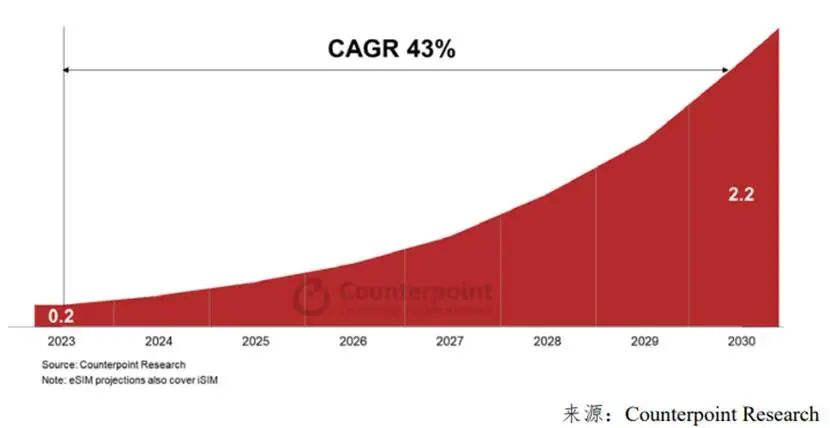
Core Viewpoint - Wuhan Juxin Microelectronics Co., Ltd. (Juxin Micro) has submitted its listing application to the Hong Kong Stock Exchange, aiming to capitalize on its rapid growth in the optical sensor market, where it ranks third globally and first in mainland China [1][2]. Financial Performance - Juxin Micro's revenue is projected to grow from approximately 127 million RMB in 2022 to 667 million RMB in 2024, showcasing strong growth momentum [1][2][13]. - The company is expected to achieve a net profit of approximately 9.73 million RMB in 2024, marking a turnaround from losses in previous years [1][2][15]. - For the first half of 2025, Juxin Micro anticipates a revenue of 400 million RMB, reflecting a year-on-year growth of 53.85% [2][15]. Product Lines and Market Position - Juxin Micro's product lines include smart perception, machine vision, and imaging technology, with smart perception accounting for 86% of revenue in 2024 [5][11]. - The company has achieved significant market share, with 11.2% in the optical sensor sector, 8.3% in smart audio amplifiers, and 4.1% in vibration sensing [5][7]. - Juxin Micro's optical sensing products are expected to see explosive growth, with revenues projected to reach approximately 300 million RMB in 2024 [13]. Shareholder Structure and Financing - Notable shareholders include OPPO, Huawei, Xiaomi, and ByteDance, indicating strong ties with leading consumer electronics brands [2][10]. - Juxin Micro has completed ten rounds of financing since its establishment, with a post-financing valuation of 5.31 billion RMB as of June 2025 [8][10]. Market Trends and Growth Drivers - The global smart perception chip market is in a growth phase, with a projected compound annual growth rate (CAGR) of 7.3% from 2024 to 2029 [17][20]. - The demand for optical sensors and smart audio products is expected to grow significantly, driven by the proliferation of smart devices and consumer demand for enhanced perception capabilities [17][20]. Competitive Landscape - Juxin Micro operates in a highly competitive environment, with significant market shares held by foreign companies in various product lines, highlighting the potential for domestic market share growth through localization [20][21]. - The company’s reliance on a limited number of major customers and suppliers poses a risk, as revenue from the top five customers accounted for 99.7% in 2022, though this has decreased over time [21][22].