
招商银行

Search documents
黄金大涨带火银行保险柜租赁,多家银行“一箱难求”,甚至有银行仅特供给百万大客户
Zhong Guo Ji Jin Bao· 2026-01-13 12:19
Core Viewpoint - The surge in gold prices has significantly increased the demand for bank safe deposit box rentals, leading to a shortage of available boxes in many banks, particularly for larger sizes, which are now often reserved for high-net-worth clients [1][7][10]. Group 1: Market Demand - The rising gold prices have prompted many individuals to invest in gold bars and coins, resulting in a heightened demand for safe deposit boxes to store these assets [2][8]. - In Shanghai, several banks, including Industrial and Commercial Bank of China, China Merchants Bank, and Shanghai Pudong Development Bank, have reported a scarcity of safe deposit boxes, with some banks imposing financial asset thresholds for clients to access these services [2][4]. Group 2: Rental Conditions - China Merchants Bank has limited its safe deposit box rentals to clients with financial assets exceeding 500,000 yuan, while Shanghai Pudong Development Bank requires clients to have over 1 million yuan [4][5]. - The rental fees for safe deposit boxes vary, with small boxes costing around 280 to 500 yuan annually, while larger boxes can range from 1,000 to 3,000 yuan [6][8]. Group 3: Supply Constraints - The supply of safe deposit boxes is constrained by physical space limitations and increased compliance costs faced by banks, making it difficult to expand availability in the short term [9][10]. - The demand for larger safe deposit boxes, which are often used for storing valuable items like antiques and artworks, is particularly high, leading to longer waiting times for clients [9][10]. Group 4: Client Demographics - The client base for safe deposit box rentals is increasingly composed of high-net-worth individuals, with a notable shift in investment focus from real estate to gold [9][10]. - According to Knight Frank's 2025 Wealth Report, China has a significant number of high-net-worth individuals, contributing to the growing demand for secure asset storage solutions [9].

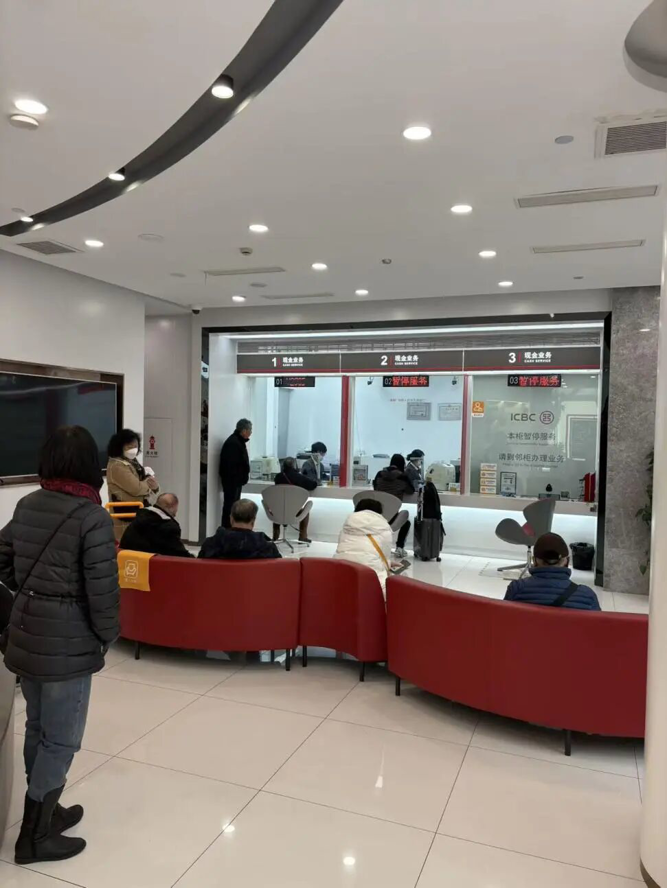
2026首份银行增持公告来了!顶流银行ETF(512800)上探1%,机构:历次春节前银行胜率最高,值得重视
Xin Lang Cai Jing· 2026-01-13 11:44
Core Viewpoint - The banking sector shows resilience with significant stock price increases, driven by executive buybacks and insurance capital inflows, indicating strong confidence in the sector's fundamentals and long-term value [3][12]. Group 1: Market Performance - On January 13, the market experienced a pullback, but the banking sector remained active, with notable gains: Ningbo Bank up over 4%, Hangzhou Bank up over 3%, and several others including CITIC Bank and Chongqing Rural Commercial Bank up over 2% [1][9]. - The top-tier banking ETF (512800) saw an intraday price increase of over 1%, closing up 0.37% and surpassing the 5-day moving average [1][10]. Group 2: Executive Buybacks - The first executive buyback announcement of 2026 was made by Chongqing Rural Commercial Bank, where some directors and executives purchased 192,000 shares from the secondary market, with a maximum investment of 1.23 million yuan [3][12]. - Nanjing Bank reported that its major shareholder, Zijin Group, increased its stake by 123,472,060 shares, representing 1.00% of the total share capital, continuing from previous increases since September 2025 [3][12]. Group 3: Insurance Capital Inflows - Insurance capital has been actively purchasing bank stocks, with Ping An Life announcing it reached a 20% stake in China Merchants Bank H-shares, triggering a mandatory bid [3][12]. - In 2025, insurance capital made 41 stake increases, the highest in nearly a decade, with bank stocks accounting for about 40% of these actions, highlighting their dominance in this area [3][12]. Group 4: Seasonal Trends - Historically, the banking sector has performed well before the Spring Festival, with the Shenwan Banking Index showing over 80% win rate in the past decade, except for 2020 [4][16]. - The average absolute return of the Shenwan Banking Index before the Spring Festival is 4.4%, with an average excess return of 4.9% compared to the Shanghai Composite Index, making it the highest among 31 industry indices [4][16]. Group 5: Future Outlook - Factors expected to drive the banking sector's performance leading up to the Spring Festival in 2026 include continued growth policies, ongoing insurance asset scarcity, and increased market volatility [7][16]. - The banking ETF (512800) is noted for its efficiency in tracking the banking sector, with a current scale of 11.95 billion yuan and an average daily trading volume exceeding 800 million yuan since 2025, making it the largest and most liquid banking ETF in A-shares [7][16].





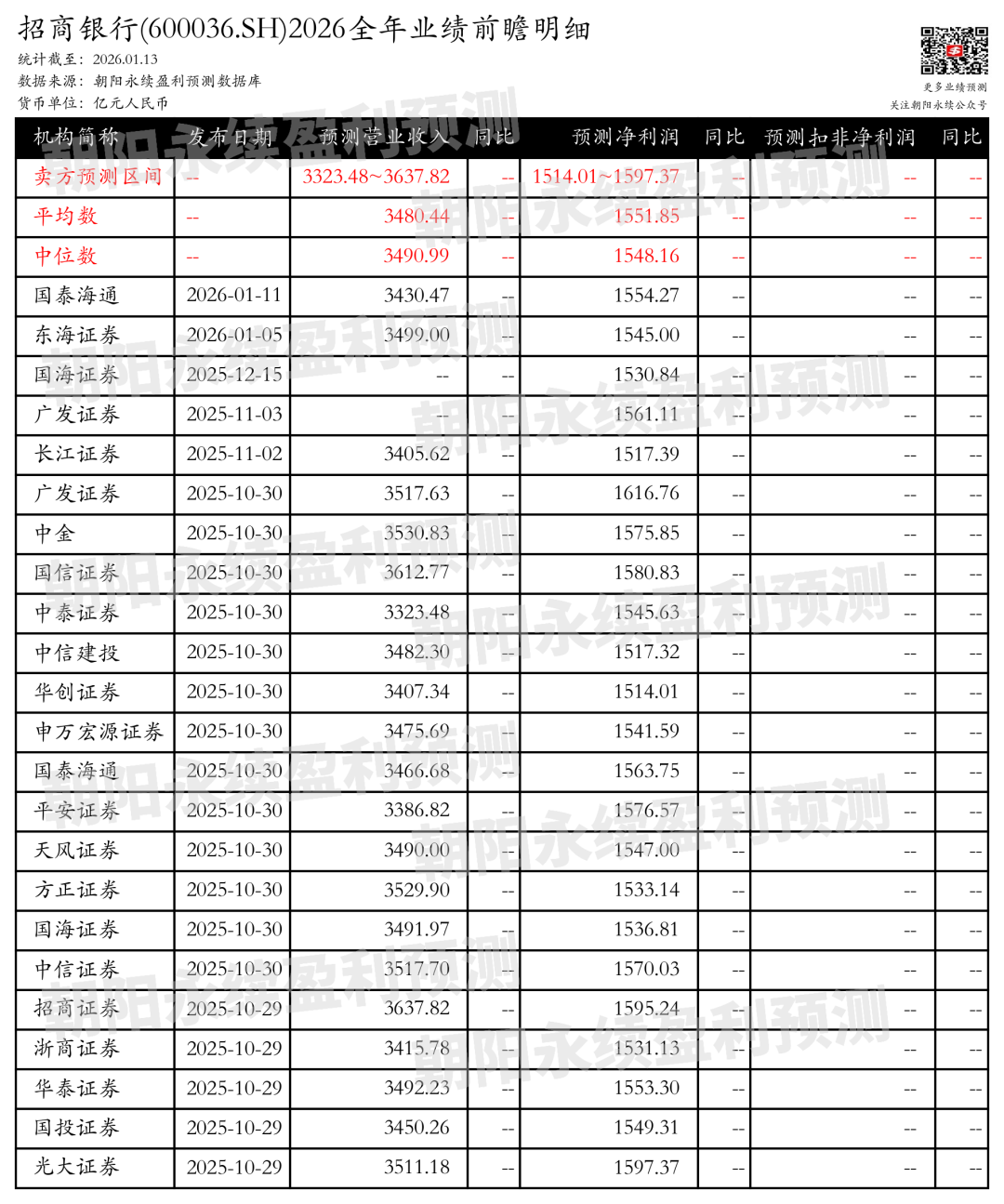
招商银行:稳健经营,业绩增长,预测全年营业收入3323.48~3637.82亿元
Xin Lang Cai Jing· 2026-01-13 11:33
Core Viewpoint - The expected annual performance of China Merchants Bank is projected to show steady growth in revenue and net profit, with revenue forecasted between 332.35 billion to 363.78 billion yuan and net profit between 151.40 billion to 159.74 billion yuan by January 13, 2026 [1][5]. Revenue and Profit Forecast - The revenue forecast range is 3323.48 to 3637.82 million yuan, with an average estimate of 3480.44 million yuan and a median of 3490.99 million yuan [2][6]. - The net profit forecast range is 1514.01 to 1597.37 million yuan, with an average estimate of 1551.85 million yuan and a median of 1548.16 million yuan [2][6]. Business Performance Insights - China Merchants Bank maintains a leading advantage in the industry during a downturn, with stable key operating indicators, high ROE, and dividend yield [3][7]. - The bank's growth rate is moderating, with a prudent expansion of the balance sheet and optimization of retail, corporate, and financial investment ratios [3][7]. - The absolute advantage in net interest margin is solid, with expectations that the downward pressure will ease in 2026 [3][7]. Asset Quality Management - The bank has adequately exposed risks in corporate real estate, and the slope of rising retail risks is expected to slow down [3][8]. - The core revenue capacity and provision coverage ratio provide ample space for write-offs and disposals [3][8]. Intermediate Business Development - After experiencing a bottoming out, the wealth management business is expected to return to being a core revenue driver, with non-interest business elasticity significantly exceeding that of peers [3][9]. Shareholder Returns - The bank's dividend payout ratio remains among the top tier in the industry, with strong internal capital generation capabilities and competitive dividend yields [3][10].

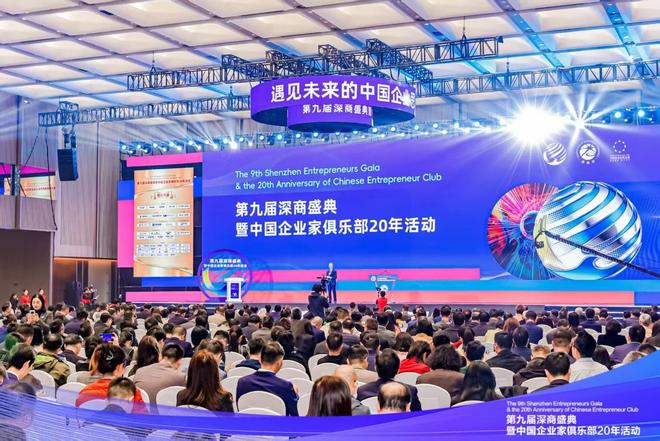
李东生、马蔚华发声!一批大咖齐聚深圳共探高质量发展路径
Nan Fang Du Shi Bao· 2026-01-13 09:49
Group 1 - Shenzhen's "14th Five-Year Plan" proposes the establishment of five "centers" to guide the next phase of economic and social development [1] - The 9th Shenzhen Business Convention emphasizes the theme of "Encountering the Future of Chinese Enterprise Thought," focusing on key issues such as industrial innovation, technological breakthroughs, ecological construction, and social responsibility [1][3] - Entrepreneurs shared insights on how technology empowers industrial upgrades, reflecting on the achievements of the China Entrepreneur Club over the past 20 years and analyzing industry trends for the "14th Five-Year" period [3] Group 2 - AI is identified as a key driver of future economic growth, transitioning from concept to deep industrialization amid increasing global technological competition [3][5] - The founder of iFlytek, Liu Qingfeng, highlights the rapid arrival of the era of general artificial intelligence, which is fundamentally reshaping industrial forms [5] - By 2025, over 40% of the 203 new unicorn companies will be closely related to AI, with a projected 1000-fold increase in China's per capita token model consumption by the end of 2025 [5] Group 3 - The wealth management market in China is expected to grow significantly, with household assets projected to reach 440 trillion by 2030, indicating a structural change in financial markets [6] - The medical services market is anticipated to reach 30 trillion by 2030, with personal out-of-pocket medical expenses accounting for approximately 27% of total medical costs in 2024 [6] - The future of insurance is seen as a crucial payment method for healthcare, presenting significant growth opportunities for insurance companies [6] Group 4 - Financial services should focus on supporting the real economy, with financial technology driving upgrades in industrial chain finance [7] - The CEO of BGI emphasizes the importance of core technology in the life and health industry, advocating for the integration of cutting-edge technologies into everyday life [7] Group 5 - The ESG (Environmental, Social, and Governance) concept is becoming a vital guideline for high-quality corporate development, with a focus on sustainable practices [9] - Shenzhen entrepreneurs are recognized for their commitment to ESG principles, which align with the spirit of innovation and responsibility inherent in the Shenzhen business community [9][10] - The Shenzhen business community aims to balance economic benefits with social responsibility, fostering sustainable development through various initiatives [10]

招商银行今日大宗交易平价成交19万股,成交额781.47万元
Xin Lang Cai Jing· 2026-01-13 09:42
1月13日,招商银行大宗交易成交19万股,成交额781.47万元,占当日总成交额的0.16%,成交价41.13 元,较市场收盘价41.13元持平。 | 交易日期 | 证券简称 | 证券代码 | 成交价(元) 成交金额[万元) 成交量(*) 买入营业部 | | 卖出营业部 | 是否为专场 | | --- | --- | --- | --- | --- | --- | --- | | 026-01-13 | 招商银行 | 600036 41.13 | 781.47 19 | 合肥管家材料 | 公費居家居居 | ка | ...

“聪明钱”持仓披露 这十大行业持股市值超千亿
天天基金网· 2026-01-13 09:18
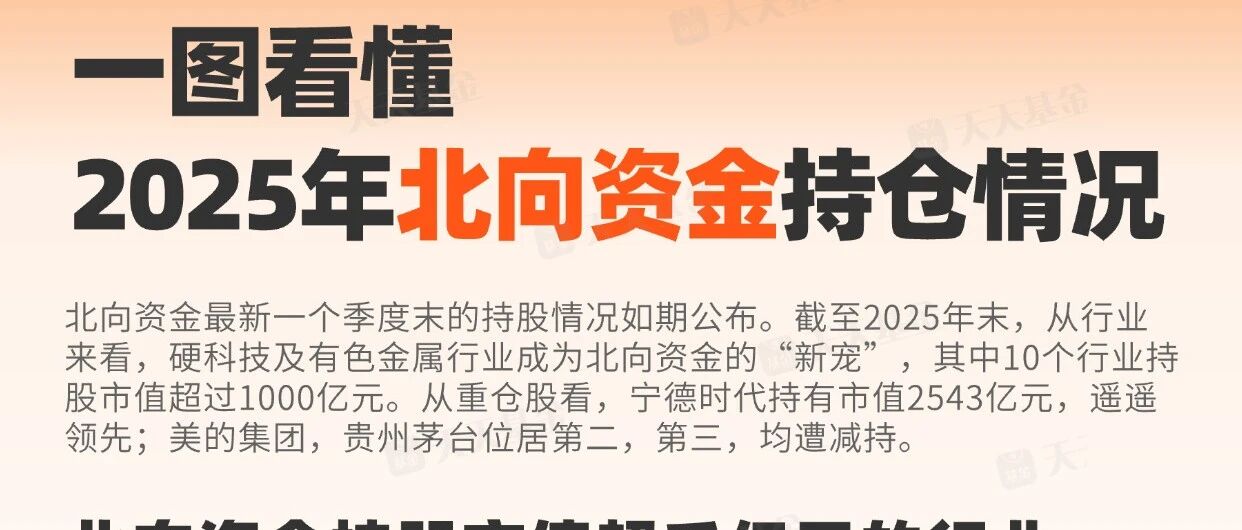
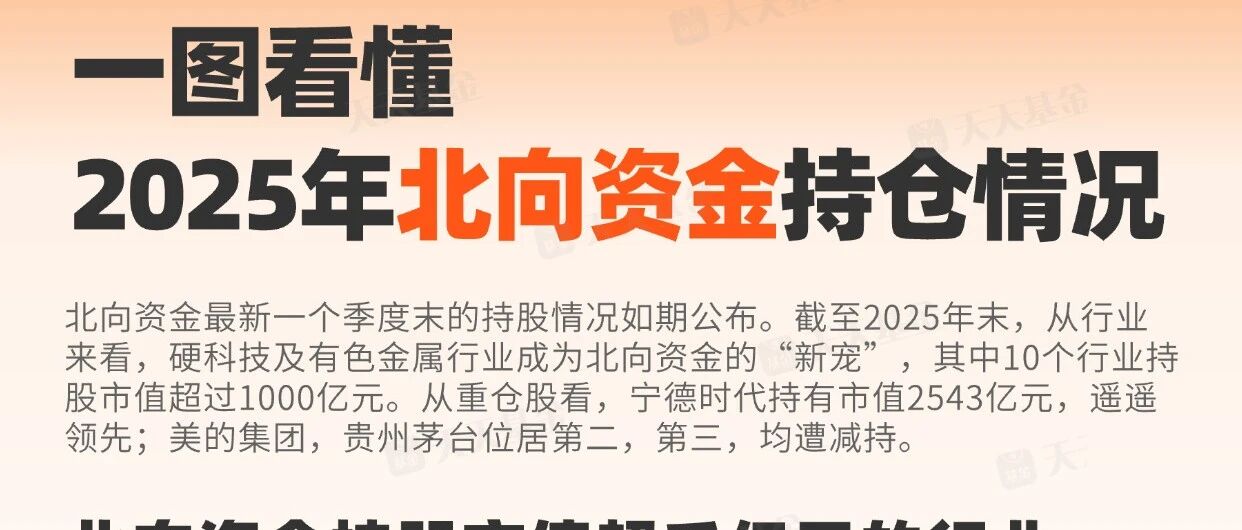
Core Viewpoint - As of the end of 2025, the northbound capital has shifted its focus towards hard technology and non-ferrous metals industries, with ten industries having a market value of over 100 billion yuan in holdings [1][7]. Industry Summary - The market value of holdings in the power equipment industry reached 449.5 billion yuan, while the electronics industry had 387 billion yuan, and the non-ferrous metals industry saw a significant increase to 185.6 billion yuan, marking a growth of over 170% compared to the end of 2024 [3][7]. - The banking sector's holdings increased by 56.45% to 217.6 billion yuan, while the machinery equipment sector saw a rise to 98.6 billion yuan [3][4]. - The food and beverage sector experienced a decline of 35.52%, with holdings dropping to 138.8 billion yuan [4]. Top Holdings Summary - The top holding, Ningde Times, had a market value of 254.3 billion yuan, representing a 76.57% increase in holdings [5][8]. - Midea Group and Kweichow Moutai ranked second and third, with holdings of 77 billion yuan and 75.8 billion yuan, respectively, both experiencing reductions of 7.99% and 35.82% [5][8]. - Other notable top holdings included China Merchants Bank at 51.4 billion yuan, Zijin Mining at 47.1 billion yuan, and Northern Huachuang at 45.7 billion yuan, with the latter seeing a remarkable increase of 267.34% [5][8].



股份制银行板块1月13日涨0.26%,中信银行领涨,主力资金净流出1.96亿元
Zheng Xing Xing Ye Ri Bao· 2026-01-13 09:06
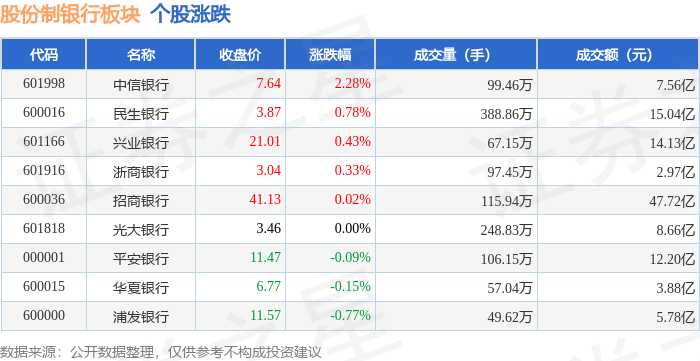
证券之星消息,1月13日股份制银行板块较上一交易日上涨0.26%,中信银行领涨。当日上证指数报收于 4138.76,下跌0.64%。深证成指报收于14169.4,下跌1.37%。股份制银行板块个股涨跌见下表: | 代码 | 名称 | 主力净流入(元) | 主力净占比 游资净流入(元) | | 游资净占比 散户净流入 (元) | | 散户净占比 | | --- | --- | --- | --- | --- | --- | --- | --- | | 000001 | 平安银行 | 1.39 Z ﮯ | 11.43% | -2919.19万 | -2.39% | -1.10 Z | -9.03% | | 600016 民生银行 | | 1.12 Z | 7.43% | -4353.64万 | -2.89% | -6822.42万 | -4.54% | | 601166 兴业银行 | | 9577.58万 | 6.78% | -8953.85万 | -6.33% | -623.73万 | -0.44% | | 601998 中信银行 | | 3989.14万 | 5.28% | -3851.13万 | -5.10 ...
4.65亿元主力资金今日抢筹银行板块
Zheng Quan Shi Bao Wang· 2026-01-13 08:59
Market Overview - The Shanghai Composite Index fell by 0.64% on January 13, with six industries experiencing gains, led by the oil and petrochemical sector at 1.62% and the pharmaceutical and biotechnology sector at 1.21% [1] - The banking sector rose by 0.65% [1] - The defense and military industry and electronics sector saw the largest declines, at 5.50% and 3.30% respectively [1] Capital Flow - The net outflow of capital from the two markets was 162.743 billion yuan, with only four industries seeing net inflows [1] - The pharmaceutical and biotechnology sector had the highest net inflow of 4.348 billion yuan, followed by the oil and petrochemical sector with a net inflow of 586 million yuan [1] - The electronics sector experienced the largest net outflow, totaling 37.010 billion yuan, followed by the computer industry with a net outflow of 23.107 billion yuan [1] Banking Sector Performance - The banking sector had a net inflow of 465 million yuan, with 32 out of 42 stocks rising [2] - Agricultural Bank led the net inflow with 203 million yuan, followed by Industrial and Commercial Bank with 177 million yuan and Ping An Bank with 135 million yuan [2] - Major stocks with significant net outflows included China Merchants Bank, Nanjing Bank, and Bank of China, with outflows of 598 million yuan, 43.3815 million yuan, and 36.6624 million yuan respectively [2] Individual Bank Performance - Agricultural Bank increased by 1.20% with a turnover rate of 0.15% and a main capital flow of 202.928 million yuan [3] - Industrial and Commercial Bank rose by 0.90% with a turnover rate of 0.14% and a main capital flow of 176.699 million yuan [3] - Ping An Bank saw a slight decrease of 0.09% with a main capital flow of 134.859 million yuan [3] - Other notable performers included Ningbo Bank with a 4.24% increase and a main capital flow of 102.158 million yuan [3] Additional Banking Data - Jiangsu Bank increased by 0.95% with a main capital flow of 115.957 million yuan [4] - Xiamen Bank experienced a decrease of 0.69% with a negative capital flow of -146.21 thousand yuan [4] - China Merchants Bank had a minimal increase of 0.02% but a significant negative capital flow of -59.814 million yuan [4]





“聪明钱”持仓披露 这十大行业持股市值超千亿
天天基金网· 2026-01-13 08:47
Core Viewpoint - As of the end of 2025, the northbound capital has shifted its focus towards hard technology and non-ferrous metals industries, with ten industries having a market value of over 100 billion yuan [1][7]. Industry Summary - The top three industries by market value held by northbound capital at the end of 2025 are: - Power Equipment: 449.5 billion yuan, a 60.04% increase from 2024 [3][7]. - Electronics: 387 billion yuan, an 85.02% increase from 2024 [3][7]. - Non-ferrous Metals: 185.6 billion yuan, a 173.04% increase from 2024 [3][7]. - Other industries with significant holdings include: - Banking: 217.6 billion yuan, a 56.45% increase [3]. - Machinery: 98.6 billion yuan, a decrease of 3.49% [3]. - Pharmaceuticals: 148.2 billion yuan, a decrease of 35.52% [4]. Major Holdings - The top ten stocks held by northbound capital at the end of 2025 include: - Ningde Times: 254.3 billion yuan, a 76.57% increase [5][8]. - Midea Group: 77 billion yuan, a decrease of 7.99% [5][8]. - Kweichow Moutai: 75.8 billion yuan, a decrease of 35.82% [5][8]. - China Merchants Bank: 51.4 billion yuan, a 2.92% increase [5][8]. - Zijin Mining: 47.1 billion yuan, a 120.18% increase [5][8]. - Notable changes in the top ten include: - Northern Huachuang, Zhongji Xuchuang, and Lixun Precision entering the list, while Longjiang Power, Mindray Medical, and BYD dropped out [8].


智通AH统计|1月13日
智通财经网· 2026-01-13 08:18
Core Insights - The article highlights the top and bottom AH premium rates for various stocks, indicating significant discrepancies between H-shares and A-shares [1][2]. Group 1: Top AH Premium Rates - Northeast Electric (00042) leads with a premium rate of 800.00%, followed by Zhejiang Shibao (01057) at 448.68% and Nanjing Panda Electronics (00553) at 279.68% [1]. - The top three stocks with the highest deviation values are Goldwind Technology (02208) at 130.60%, Zhejiang Shibao (01057) at 101.85%, and Nanjing Panda Electronics (00553) at 66.83% [1][2]. Group 2: Bottom AH Premium Rates - The stocks with the lowest AH premium rates include Ningde Times (03750) at -12.21%, China Merchants Bank (03968) at -2.14%, and Hengrui Medicine (01276) at -1.80% [1]. - The bottom three stocks with the highest negative deviation values are Northeast Electric (00042) at -72.14%, Chenming Paper (01812) at -36.62%, and Nanhua Futures (02691) at -22.53% [1][3]. Group 3: Additional Insights on Premium and Deviation - The article provides a detailed table of the top ten and bottom ten AH stocks based on premium rates and deviation values, showcasing the significant differences in market valuation between H-shares and A-shares [1][2][3].