Databricks

Search documents
Databricks raises $4B at $134B valuation as its AI business heats up
Yahoo Finance· 2025-12-16 14:39
Core Insights - Databricks has successfully raised over $4 billion in a Series L funding round, achieving a valuation of $134 billion, which is a 34% increase from its previous valuation of $100 billion just three months ago [1] - The company is focusing on developing products that cater to the AI revolution, including a database for AI agents, an AI agent platform, and applications for building and deploying data and AI solutions [2] Funding and Valuation - This funding round marks Databricks' third major venture fundraising effort within a year, reflecting strong investor confidence in the company's ability to leverage data for AI applications [4] - The company was valued at $60 billion around the same time last year, indicating significant growth in investor belief regarding its potential [4] Revenue Growth - Databricks reported a run-rate revenue exceeding $4.8 billion, which represents a 55% increase from the previous year, with over $1 billion of that revenue coming from AI products [4] Product Development - The company is heavily investing in its AI agent database, Lakebase, which is based on the open-source Postgres database, and aims to support corporate developers in their projects [3] - Databricks' AI agent platform, Agent Bricks, is designed to assist businesses in building and deploying AI agents that utilize their data [3] Strategic Partnerships - Databricks has secured significant deals worth hundreds of millions with AI labs such as Anthropic and OpenAI to integrate their models into its enterprise products [3] Job Creation and Expansion - The new funding will be utilized to create thousands of new jobs across Asia, Europe, and Latin America, as well as to recruit more AI researchers [6] Investor Participation - The funding round was led by notable firms including Insight Partners, Fidelity, and J.P. Morgan Asset Management, with participation from several other prominent investors [7]
美股盘前丨美股指期货小幅走高 美国11月失业率为4.6%
Xin Lang Cai Jing· 2025-12-16 14:04
Company News - Databricks has raised over $4 billion in funding at a valuation of $134 billion [1] - POSCO will invest $582 million to jointly build a steel plant in the U.S. with Hyundai Motor Group [1] - XPeng has obtained a Level 3 autonomous driving road test license, leading to a nearly 1% pre-market increase in XPeng's stock [1]
Databricks builds war chest with $134 billion valuation in latest funding round
Yahoo Finance· 2025-12-16 13:35
Core Insights - Databricks has raised over $4 billion at a valuation of $134 billion, highlighting investor confidence in the potential of artificial intelligence [1] - The company reported a revenue run rate exceeding $4.8 billion in Q3, reflecting a growth of over 55% year-over-year [2] - Revenue from AI products and data warehousing each surpassed a $1 billion run rate, while maintaining positive free cash flow over the last 12 months [3] Funding and Investment - The Series L funding round was led by Insight Partners, Fidelity Management & Research Company, and J.P. Morgan Asset Management, with participation from notable investors like Andreessen Horowitz, BlackRock, and Blackstone [1][4] - Databricks plans to utilize the funds to accelerate AI-driven application development, support future acquisitions, expand AI research, and provide liquidity for employees [4] Customer Base and Market Position - The company serves over 20,000 customers globally, including major corporations such as Shell, AT&T, Toyota, Adobe, S&P Global, Warner Bros Discovery, and NBA [5]
X @Bloomberg
Bloomberg· 2025-12-16 13:30
Databricks is raising over $4 billion in a new funding round that would value the private software firm at $134 billion, the Wall Street Journal reported, citing an interview with the company’s chief executive https://t.co/F9xcxdFv9d ...
AI进化速递丨豆包AI手机重新恢复销售
Di Yi Cai Jing· 2025-12-16 13:18
Group 1 - Alibaba released a cinematic-level video model called Wanxiang 2.6 [1] - ByteDance officially launched the Seedance 1.5 pro audio-video creation model [1] - Nvidia introduced the Nemotron 3 series of open-source models [1] Group 2 - Databricks, a US big data and AI company, raised over $4 billion with a valuation of $134 billion [1][2]



从业务系统到数据智能:数据分析系统的完整演进
3 6 Ke· 2025-12-16 08:07
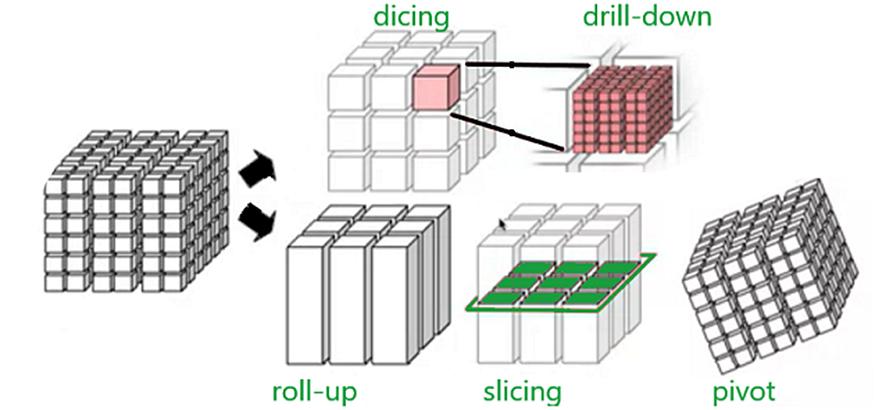
Core Insights - The article discusses the evolution of data systems from traditional OLTP to modern AI-driven analytics platforms, highlighting the importance of understanding this transformation for better architectural decisions. Group 1: OLTP and OLAP Systems - OLTP systems are designed for daily operations, focusing on fast and accurate transaction processing, while OLAP systems are tailored for analysis and reporting, emphasizing the interpretation of historical data [2][5] - The fundamental difference between OLTP and OLAP lies in their optimization goals: OLTP aims for quick writes and specific record reads, whereas OLAP focuses on reading vast amounts of data and performing complex calculations [2][5] Group 2: Rise of OLAP and Data Cubes - In the 1990s, the need for faster data analysis led to the introduction of dedicated OLAP systems and the concept of data cubes, which pre-aggregate data across multiple dimensions for quicker query responses [3][4] - Data cubes allow for rapid retrieval of complex queries that previously took hours, now achievable in seconds [3] Group 3: Data Warehouse Boom - The late 1990s saw the emergence of data warehouses, designed as centralized repositories optimized for analysis, utilizing ETL pipelines to integrate data from various sources [7][8] - Star schema and snowflake schema became dominant models for organizing data within these warehouses, optimizing read performance at the cost of storage efficiency [8][9] Group 4: Big Data and Hadoop Era - The late 2000s introduced the Hadoop ecosystem, which addressed the challenges of handling unstructured and semi-structured data, enabling the storage of massive datasets at lower costs [13][14] - Hadoop's architecture allowed for distributed storage and processing, but it faced limitations in query performance and operational complexity [15] Group 5: Cloud Data Warehousing - The 2010s marked the rise of cloud-native data warehouses like Snowflake and Google BigQuery, which separated compute and storage, allowing for scalable and cost-effective analytics [17][19] - These systems introduced features like on-demand resource allocation and zero management, significantly enhancing performance and accessibility [21][23] Group 6: Open Table Formats and Lakehouse Architecture - Open table formats like Apache Iceberg and Delta Lake brought ACID transactions and schema evolution to data lakes, enabling a hybrid architecture known as Lakehouse that combines the flexibility of data lakes with the performance of data warehouses [27][32] - This architecture allows for seamless integration of various data workloads, supporting both BI and machine learning applications [32] Group 7: AI-Driven Analytics - The current trend is towards AI-native analytics platforms that integrate machine learning and natural language interfaces, simplifying complex data interactions for users [35][38] - These platforms aim to democratize data analysis, allowing non-technical users to perform sophisticated queries and derive insights without needing extensive SQL knowledge [38] Group 8: Future Outlook - The future of data systems is expected to focus on self-optimizing capabilities, real-time intelligence, and natural language interfaces, enhancing user experience and decision-making processes [43][44] - Companies that prioritize openness, intelligence, and user empowerment in their data strategies are likely to succeed in the evolving landscape [45]

IPO market will still be highly selective after SpaceX IPO, says Plexo Capital's Lo Toney
Youtube· 2025-12-15 21:22
Core Insights - The discussion centers around the significant valuation of a private company, projected to reach $800 billion, indicating a strong interest in top-tier private firms like Stripe and OpenAI [1][2] - The conversation highlights the selective nature of investment opportunities in the current market, suggesting that while the floodgates may open slightly, investors will remain discerning [2] Company Insights - Anthropic, an AI company, is noted for its efficient business model and is projected to reach cash flow break-even first, which is a positive indicator for investors [4] - The company has focused on making AI models more efficient and implementing constitutional AI, which positions it well in the enterprise market, leading to strong revenue growth [5] - Google is seen as a strong competitor in the AI space, with significant revenues of $350 billion and free cash flow of $85 to $90 billion, allowing for substantial capital expenditures [7] - Google plans to finance its capital expenditures partly through $25 billion in debt, while maintaining dividends and stock buybacks, indicating a robust financial strategy [8] Industry Dynamics - The competitive landscape is evolving, with Google potentially regaining a strong position in AI, while OpenAI is also seen as a formidable player [6][11] - The discussion emphasizes the importance of business models and balance sheets in delivering on AI promises, with both Google and OpenAI having unique strengths [11] - OpenAI is encouraged to focus on monetizing its user base through advertising rather than directly competing with Google's established model, which is resource-intensive [12][13]


Elon Musk's SpaceX Could Be Preparing for a Huge IPO. Here's What to Know.
Investopedia· 2025-12-15 19:35
Core Insights - Wall Street is anticipated to experience a significant year for IPOs in 2026, with SpaceX potentially leading the charge [1][10] Company Overview - SpaceX is reportedly considering an IPO that could raise $30 billion and value the company at approximately $1.5 trillion, making it one of the largest companies in the S&P 500 [2][3] - If successful, SpaceX's IPO would surpass Saudi Aramco's $29 billion debut in 2019, marking the largest IPO in history [3] Financial Projections - SpaceX is currently valued at $800 billion, which is double its valuation from the summer of 2023 [3] - Market watchers estimate a 14% chance that SpaceX's market capitalization will exceed $2 trillion on its first day of trading [5] Leadership and Stakeholder Impact - Elon Musk, the founder and CEO of SpaceX, holds about 42% of the company, which constitutes more than a quarter of his $470 billion fortune [6] - A successful IPO could position Musk to become the world's first trillionaire sooner than anticipated [6] Industry Context - The IPO market is recovering after a downturn caused by high interest rates, with activity beginning to normalize in 2025 [4][11] - Other major companies, including OpenAI and Anthropic, are also exploring public offerings, indicating a broader trend in the tech and AI sectors [9][10]

a16z's David George on the Most Controversial Bet at a16z & Do Margins and Revenue Matter in AI?
20VC with Harry Stebbings· 2025-12-15 14:58
David George is a General Partner at Andreessen Horowitz, where he leads the firm's Growth investing team. His team has backed many of the defining companies of this era, including Databricks, Figma, Stripe, SpaceX, Anduril, and OpenAI, and is now investing behind a new generation of AI startups like Cursor, Harvey, and Abridge. ----------------------------------------------- Timestamps: 00:00 Intro 01:24 Why Everyone is Wrong: Mega Funds Does Not Reduce Returns 07:13 The Biggest Advantage of Staying Privat ...

Palantir CIO Jim Siders leaves to become head of Thrive Capital's new IT services business
CNBC· 2025-12-15 13:30
Core Insights - Thrive Capital has appointed Jim Siders, a former Palantir executive, as CEO of its new IT services business, Shield Technology Partners [1][2] - Shield Technology Partners aims to invest in and grow IT services companies by leveraging advanced AI technology [3][4] Company Overview - Thrive Capital, founded by Josh Kushner, launched Thrive Holdings in April to manage companies that can benefit from technological advancements [3] - Shield Technology Partners was established in June with initial funding exceeding $100 million from Thrive Holdings and ZBS Partners [3] Leadership Background - Jim Siders has over 12 years of experience at Palantir, where he served as chief information officer, managing global IT operations and infrastructure [2] - Siders began his career at Palantir as an IT helpdesk engineer, showcasing a strong technical background [2] Business Model and Strategy - Shield Technology Partners focuses on acquiring stakes in small and mid-sized IT services companies and aims to enhance their growth through access to cutting-edge AI technology [3][4] - The company currently collaborates with seven businesses and anticipates generating over $100 million in revenue this year [4]