
Samsung Electronics

Search documents
全球存储技术:海力士四季度营业利润或超预期,DRAM 现货价再涨,MLCCFC-BGA 存上行空间Global Memory Tech-Weekly theme Hynix’s 4Q OP likely upbeat, DRAM spot up again, MLCCFC-BGA upside
2026-01-26 02:49
Summary of Key Points from Conference Call Records Company and Industry Overview - **Company**: SK Hynix - **Industry**: DRAM and semiconductor components Core Insights and Arguments 1. **Optimistic Earnings Outlook for SK Hynix**: - The operating profit (OP) forecast for 4Q25 has been raised to W17.9 trillion, which is 10% higher than consensus estimates of W16.5 trillion. For 1Q26, the OP is expected to reach W22.5 trillion, exceeding the consensus of W20.4 trillion [1][1][1] - The new estimates for DRAM average selling prices (ASP) for 4Q25 and 1Q26 have been adjusted to +23% QoQ and +21% respectively, indicating a stronger market than previously anticipated [1][1][1] 2. **DRAM Price Trends**: - DRAM spot prices have shown significant increases: 16Gb DDR5 (+5% WoW), 8Gb DDR4 (+6%), and 4Gb DDR3 (+10%), reflecting a year-to-date increase of 20-30%+ and over 100% QoQ [2][2][2] - The spot price for 16Gb DDR5 has reached a record high of $37, while 16Gb DDR4 is at $78, marking the highest levels in the past 25 years [22][22][22] 3. **Market Dynamics**: - The DRAM market is experiencing a supply shortage, which is expected to sustain high prices without immediate corrections [2][2][2] - Contract prices for DRAM are forecasted to increase by 30-40% MoM in January, indicating strong demand from major tech companies [2][2][2] 4. **Samsung Electro-Mechanics (SEMCO) Guidance**: - SEMCO has provided a bullish outlook for the tech supply chain, driven by increased demand for multi-layer ceramic capacitors (MLCC) and semiconductor substrates, particularly for AI servers and automotive applications [3][3][3] - The management highlighted growth opportunities in glass substrates and robotics, with minimal impact from DRAM supply shortages on high-end production [3][3][3] 5. **Future Projections**: - The overall forecast for SK Hynix's operating profit for 2026 is slightly lower at W96 trillion compared to the previous estimate of W103 trillion, attributed to conservative assumptions for ASP in the second half of 2026 [1][1][1] - The expected free cash flow generation remains robust, projected to exceed W100 trillion annually despite increased capital expenditures [15][15][15] Additional Important Insights - **Capex and Production**: - An increase in capital expenditures is anticipated, which will include non-wafer fabrication equipment-related spending [1][1][1] - The company is expected to lead in mass production of HBM4 and ramp-ups in 1c node DRAM ahead of competitors [1][1][1] - **Earnings Revisions**: - The new EPS estimate for 2026 is 12% higher than previous estimates, reflecting the upward revision in DRAM ASP [1][1][1] - The operating margin for DRAM is expected to remain strong at over 60% in 2026-27, while NAND is projected to recover meaningfully in 2026 [9][9][9] This summary encapsulates the key points from the conference call records, highlighting the optimistic outlook for SK Hynix and the broader DRAM market dynamics.
DRAM 情绪指标:2026 年 1 月-DRAM 合约价格短期上行空间强劲-GS DRAM Sentiment Indicator_ Jan. 2026_ strong near-term upside in DRAM contract pricing
2026-01-26 02:49
Our DRAM sentiment indicator for January 2026 is pointing in a moderately positive direction (same as December). Notable highlights include: 1) both DDR5 and DDR4 spot pricing are showing strong rally, providing high probability for a strong increase in contract pricing in the near-term, 2) Nanya Tech's December revenue increased by 445% yoy, showing 5 consecutive months of triple-digit% yoy growth with acceleration in growth rate, 3) server ODM yoy revenue growth continues to be solid on the back of rack-l ...
Samsung to start production of HBM4 chips next month for Nvidia supply, source says
Reuters· 2026-01-25 23:53
Core Viewpoint - Samsung Electronics is set to begin production of its next-generation high-bandwidth memory (HBM) chips, known as HBM4, next month, with plans to supply these chips to Nvidia [1] Group 1: Company Developments - Samsung Electronics will initiate the production of HBM4 chips, which are designed to enhance data processing capabilities [1] - The collaboration with Nvidia indicates a strategic partnership aimed at advancing technology in high-performance computing [1] Group 2: Industry Implications - The introduction of HBM4 chips is expected to impact the semiconductor industry by pushing the boundaries of memory performance [1] - This move aligns with the growing demand for advanced memory solutions in sectors such as artificial intelligence and gaming [1]



Want to Add Emerging Markets To Your Portfolio? EEM Offers a Tech Focus While SCHE Is More Affordable
The Motley Fool· 2026-01-25 22:30
Core Insights - The Schwab Emerging Markets Equity ETF (SCHE) offers lower costs and higher yields compared to the iShares MSCI Emerging Markets ETF (EEM), which has a longer history and greater tech exposure [1][4][10] Cost and Size Comparison - SCHE has an expense ratio of 0.07%, significantly lower than EEM's 0.72%, which could lead to compounded savings over time [3][4] - As of January 22, 2026, SCHE's one-year return is 28.4%, while EEM's is 37.9% [3] - SCHE has a dividend yield of 2.9%, higher than EEM's 2.2% [3][9] - SCHE has assets under management (AUM) of $12.0 billion, compared to EEM's $25.1 billion [3] Performance and Risk Comparison - Over the past five years, SCHE's maximum drawdown is -35.70%, while EEM's is -39.82% [5] - The growth of $1,000 invested over five years is $1,036 for SCHE and $1,044 for EEM [5] Holdings and Diversification - EEM tracks large- and mid-cap companies with a 30% tilt towards technology, while SCHE has a 22% tech exposure and holds over 2,100 stocks, making it more diversified by company count [6][7] - EEM's top holdings include Taiwan Semiconductor Manufacturing, Tencent Holdings, and Samsung Electronics, which make up 21.5% of its assets [6] - SCHE's top holdings also feature Taiwan Semiconductor, Tencent, and Alibaba Group, comprising nearly 22% of its assets [7] Investment Implications - Both SCHE and EEM provide passive investment opportunities in emerging markets, holding over 1,000 stocks each [8] - The significant difference in expense ratios suggests that SCHE may be a more cost-effective option for investors seeking exposure to emerging markets [10]




Want to Invest Globally? IEFA Offers Broader Diversification Than EEM.
The Motley Fool· 2026-01-25 19:15
Core Insights - The iShares MSCI Emerging Markets ETF (EEM) has shown recent outperformance with a focus on emerging markets, while the iShares Core MSCI EAFE ETF (IEFA) offers lower costs, higher yield, and broader developed-market diversification [1][2] Cost and Size Comparison - IEFA has an expense ratio of 0.07%, significantly lower than EEM's 0.72% - IEFA's one-year return is 31.8%, while EEM's is 33.3% - IEFA offers a dividend yield of 3.5%, compared to EEM's 2.1% - IEFA has assets under management (AUM) of $170.4 billion, while EEM has $25.1 billion [3][4] Performance and Risk Comparison - Over five years, IEFA's maximum drawdown is -30.41%, while EEM's is -39.82% - A $1,000 investment in IEFA would grow to $1,307 over five years, compared to $1,044 for EEM [5] Portfolio Composition - EEM holds 1,214 stocks, with significant allocations in Technology (30%), Financial Services (21%), and Consumer Discretionary (12%) - Top holdings in EEM include Taiwan Semiconductor Manufacturing (12.6%), Tencent Holdings (4.5%), and Samsung Electronics (4.5%) [6] - IEFA contains 2,591 developed-market stocks, with major sector weightings in Financial Services (23%), Industrials (20%), and Healthcare (11%) - Leading positions in IEFA include ASML Holding (2.1%), Roche Holding (1.3%), and HSBC (1.2%), indicating a more diversified approach [7] Investment Implications - IEFA serves as a low-cost index fund for global stock market exposure, with over 2,500 stocks and minimal concentration risk - EEM focuses on higher-risk emerging markets with greater growth potential but also higher fees and concentration risk [10][11]

Every Stock in This Index Group Is Up Double-Digits in 2026
The Motley Fool· 2026-01-25 12:30
Core Viewpoint - The semiconductor equipment sector is experiencing significant growth, with stocks in the S&P 500 Semiconductor Equipment & Materials index rising sharply due to increased capital expenditures from chipmakers [2][9]. Group 1: Semiconductor Equipment Performance - The S&P 500 Semiconductor Equipment & Materials index has seen every stock rise by double digits, with four out of five stocks increasing more than 25% since January 1, 2026 [2]. - Key companies in this index include Applied Materials (up 26.6%), Lam Research (up 33.4%), KLA (up 25.1%), Teradyne (up 19.8%), and Qnity Electronics (up 25.8%) [2][3]. Group 2: Market Dynamics - Unlike chipmakers like Nvidia and AMD, these equipment manufacturers do not produce AI chips but provide the systems necessary for chip production, positioning them as essential players in the AI supply chain [3]. - Major semiconductor manufacturers such as Nvidia, Intel, and Samsung are customers of Applied Materials, indicating a strong demand for their products [4]. Group 3: Industry Growth Projections - The semiconductor industry is projected to grow from a valuation of $630 billion to $680 billion in 2024, potentially reaching $1.1 trillion by 2030, primarily driven by AI and data center expansion [5]. - A report by McKinsey suggests that the industry's value could be underestimated, predicting a range of $1.5 trillion to $1.8 trillion by 2030 [6]. Group 4: Capital Expenditure Trends - Chipmakers are significantly increasing their capital expenditures, with Taiwan Semiconductor Manufacturing Company (TSMC) planning to spend between $52 billion and $56 billion on equipment in 2026, up from $41 billion in 2025 [7]. - TSMC's announcement has positively impacted the stock prices of major semiconductor equipment companies, with Applied Materials rising 8%, Lam Research 7%, KLA 6%, and Teradyne 3% following the news [9]. - Nvidia's capital expenditures are also expected to rise from $3.2 billion last year to approximately $6.2 billion this year and $7.6 billion in 2027, indicating a broader trend of increased investment in semiconductor manufacturing [9].


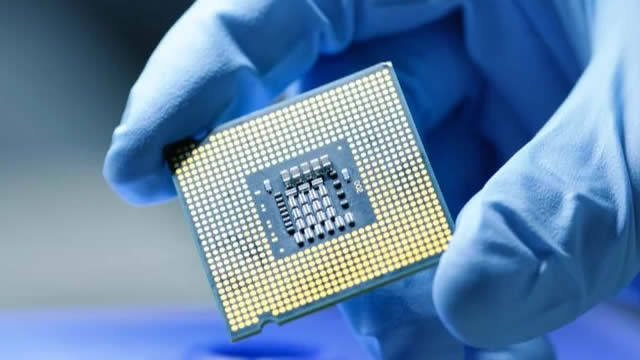
These Global ETFs Offer International Exposure but One Spans Further
Yahoo Finance· 2026-01-24 23:30
Core Insights - The SPDR Portfolio Developed World ex-US ETF (SPDW) and Vanguard Total International Stock ETF (VXUS) provide broad international exposure, with SPDW focusing on developed markets and VXUS including both developed and emerging markets [2] Cost & Size Comparison - VXUS has an expense ratio of 0.05% and AUM of $573.72 billion, while SPDW has a lower expense ratio of 0.03% and AUM of $35.07 billion [3] - The 1-year return for VXUS is 31.69% compared to SPDW's 32.6%, and the dividend yield for VXUS is 3.02% versus SPDW's 3.14% [3][4] Performance & Risk Metrics - Over five years, VXUS has a max drawdown of -29.43% and a growth of $1,000 to $1,256, while SPDW has a max drawdown of -30.20% and a growth of $1,000 to $1,321 [5] Holdings Overview - SPDW holds 2,413 stocks with a sector tilt towards financials, industrials, and consumer cyclical, featuring top holdings like ASML Holding N.V., Samsung Electronics, and Roche Holding AG [6] - VXUS is broader with 8,673 holdings, including top positions such as Taiwan Semiconductor Manufacturing Company Ltd., Tencent Holdings Ltd., and ASML Holding N.V. [7] Investor Considerations - International stocks in these ETFs may exhibit different price movements compared to U.S. stocks, influenced by the economic and political conditions of the respective countries [8] - SPDW's top holdings are primarily European, while VXUS has a significant presence in Asian companies, indicating different regional exposures [10]
VEA vs. ACWX: Cheap International Exposure or Full Global Access?
Yahoo Finance· 2026-01-24 14:09
Core Insights - The Vanguard FTSE Developed Markets ETF (VEA) offers lower costs and a broader selection of developed-market stocks compared to the iShares MSCI ACWI ex US ETF (ACWX), which has a different sector mix [2][10] Cost & Size Comparison - VEA has an expense ratio of 0.03%, significantly lower than ACWX's 0.32% - As of January 9, 2026, VEA's one-year return is 35.8%, while ACWX's is 34.2% - VEA provides a dividend yield of 3.1%, compared to ACWX's 2.7% - VEA has a total asset under management (AUM) of $268.9 billion, while ACWX has $7.87 billion [3][4] Performance & Risk Analysis - Over the past five years, VEA's maximum drawdown is -29.70%, slightly better than ACWX's -30.06% - An investment of $1,000 in VEA would have grown to $1,331, while the same investment in ACWX would have grown to $1,267 [5] Portfolio Composition - ACWX tracks large- and mid-cap stocks from developed and emerging markets outside the US, with approximately 1,751 holdings; major sectors include Financial Services (25%), Technology (15%), and Industrials (15%) [6] - VEA focuses on developed markets in Europe, the Pacific, and Canada, holding over 3,800 stocks; its leading sectors are Financial Services (24%), Industrials (19%), and Technology (12%) [7][8] Investment Implications - International stocks outperformed U.S. markets in 2025, making both VEA and ACWX attractive options for investors seeking exposure to non-U.S. equities, despite their differing cost structures [10]
1 Reason Why Now Is a Great Time to Buy Micron Technology
The Motley Fool· 2026-01-24 03:31
Group 1 - Micron Technology has experienced a significant share price increase of 39% as of January 22, 2026, driven by strong financial results, including record revenue of $13.6 billion, a 57% year-over-year increase in Q1 of fiscal year 2026 [1][4][5] - The demand for high-bandwidth memory (HBM) is surging due to the growth of artificial intelligence (AI) technology, positioning Micron as one of the top three HBM providers alongside SK Hynix and Samsung Electronics [4][5] - Micron has established partnerships with leading AI companies, including Nvidia, Advanced Micro Devices, and Intel, enhancing its role as a crucial AI memory supplier [4][5] Group 2 - Due to high demand from AI companies, Micron has decided to discontinue its Crucial consumer business, with product shipments set to end next month, indicating a strategic shift towards serving the AI market [5] - Micron's stock is currently trading at 12 times forward earnings, which is considered a reasonable valuation, especially given its recent performance and strong order backlog [7] - The company's market capitalization stands at $447 billion, with a gross margin of 45.53% and a dividend yield of 0.12%, reflecting its financial health and growth potential [6][7]

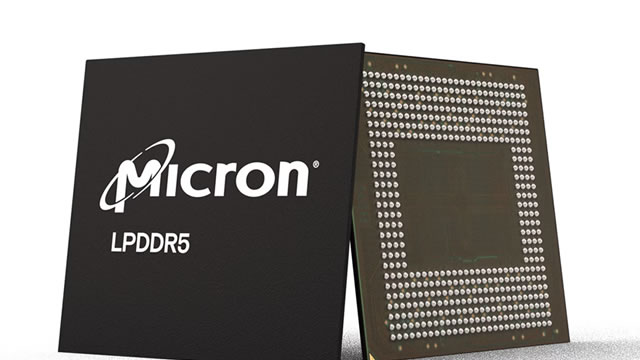
Futures Pointing To Initial Pullback On Wall Street
RTTNews· 2026-01-23 13:55
Market Overview - Major U.S. index futures indicate a modestly lower open on Friday, following a sharp rise in the previous two sessions, as traders may look to cash in on gains [1] - The Dow Jones Industrial Average rose by 306.78 points (0.6%) to 49,384.01, the Nasdaq increased by 211.20 points (0.9%) to 23,436.02, and the S&P 500 climbed by 37.73 points (0.6%) to 6,913.35 [5] Company-Specific News - Intel (INTC) shares are under pressure, plunging nearly 13% in pre-market trading after reporting better-than-expected fourth-quarter earnings but providing disappointing guidance for the current quarter [3][4] - The semiconductor giant's stock decline is expected to weigh on Wall Street [3] Economic Indicators - Initial jobless claims in the U.S. rose to 200,000, an increase of 1,000 from the previous week's revised level of 199,000, which was below economists' expectations of 205,000 [8] - Consumer prices in the U.S. increased in line with economist estimates for November [9] Commodity and Currency Markets - Crude oil futures surged by $1.17 to $60.53 per barrel after a previous drop [11] - Gold futures climbed by $19.50 to $4,932.90 per ounce, following a significant increase in the previous session [11] Asian Market Performance - Asian stocks ended mostly higher, with China's Shanghai Composite Index rising by 0.3% to 4,136.16, supported by Xiaomi's stock buyback announcement [12][13] - Japan's Nikkei 225 Index edged up by 0.3% to 53,846.87, while the broader Topix Index settled 0.4% higher at 3,629.70 [15] European Market Performance - European stocks traded slightly lower, with the pan-European Stoxx 600 Index down by 0.2% after a 1% surge on Thursday [19] - French lender BNP Paribas plans to eliminate about 1,200 jobs by the end of 2027, contributing to its stock decline [20]

