OPPO

Search documents
苹果带火eSIM,iPhone17 Air中国预售在即,安卓阵营2026年或全面跟进
Feng Huang Wang· 2025-10-15 08:04
Core Insights - The launch of the iPhone 17 Air in China marks a significant shift towards eSIM technology, as it eliminates the physical SIM card slot, which is seen as a key factor for its market entry [1][3][5] Group 1: eSIM Technology Adoption - The transition to eSIM is expected to move from niche applications to mainstream mobile devices, driven by Apple's decision to remove the SIM card slot [1][3] - eSIM technology has been primarily used in wearables and tablets, but the iPhone 17 Air's launch signifies its entry into the high-end smartphone market in China [3][8] - The Chinese telecom operators have begun commercializing eSIM services, with significant user interest already noted [5][6] Group 2: Technical and Design Changes - The iPhone 17 Air features a thickness of only 5.6mm, achieved by optimizing the internal design and removing the SIM tray, allowing for a larger battery and improved antenna layout [2][3] - Analysts suggest that the removal of the SIM card slot enhances the device's waterproofing and overall structural integrity [2][3] - The shift to eSIM requires a reconfiguration of the supply chain, impacting various components and necessitating new testing processes [4][8] Group 3: Market Implications - The move to eSIM is expected to influence Android manufacturers to accelerate their adaptation of similar technologies, with predictions of increased eSIM penetration in the Android market by 2026 [8][9] - The competitive landscape among telecom operators is shifting from pricing to activation efficiency and system stability, as they prepare for the influx of eSIM users [7][8] - The iPhone 17 Air serves as a benchmark for other manufacturers, prompting them to reassess their designs and supply chain collaborations [8][9]

双十一手机高端局:国产旗舰集体“上分”,谁能叫板苹果王座
Hua Xia Shi Bao· 2025-10-15 06:07
Core Insights - In Q4, a peak consumption season, smartphone manufacturers are launching their most expensive models, with a focus on high-end market competition against Apple [1][4] - Domestic brands like vivo, OPPO, and Honor are intensifying their efforts in the high-end segment, showcasing flagship models with advanced features [2][4] Group 1: Product Launches - Vivo's X300 series features the MediaTek Dimensity 9500 chip, BOE LTPO flexible display, and OriginOS 6, with two models: X300 and X300 Pro [2] - The starting prices for the X300 series are 4399 yuan and 5299 yuan, which are lower than the previous generation's launch prices [2][3] - The X300 series emphasizes imaging capabilities, with a 200MP Zeiss imaging system, aiming to differentiate from Apple [2] Group 2: Market Dynamics - The high-end smartphone market is a key focus for manufacturers due to its rapid growth and resilience, with global competition intensifying [4][6] - In China, smartphone sales declined by 2% year-on-year, with vivo holding a 19% market share, while Apple captured 12% [4][5] - The high-end market is dominated by Apple, which holds a 62% share, while Samsung has 20%, indicating a significant competitive landscape [5] Group 3: Competitive Strategies - Domestic brands are adopting aggressive pricing strategies to increase market share during peak sales seasons [3][6] - The competition in the 2000 to 5000 yuan price range is fierce, with Chinese manufacturers increasing investments in high-end features and AI applications [6] - Apple has responded to domestic competition by lowering prices for its iPhone 16 series, indicating a shift in strategy to remain competitive [5]
OPPO公布“新计算、新感知、新生态”战略,AI手机竞争步入深水区!科创人工智能ETF华夏(589010) 午后活跃
Mei Ri Jing Ji Xin Wen· 2025-10-15 06:06
Group 1 - The core viewpoint of the news highlights the performance of the Sci-Tech Innovation Artificial Intelligence ETF (589010), which is showing a slight upward trend, outperforming the broader market indices [1] - As of 13:37, the ETF's latest price is 1.438 yuan, reflecting a 0.42% increase from the previous close, while the Shanghai Composite Index and the AI Index rose by 0.61% and 0.87% respectively, indicating a strong overall performance in the AI sector [1] - The trading volume of the ETF reached approximately 600 million yuan, with over 42.4 million shares traded, suggesting active market participation [1] Group 2 - In the past five days, the net inflow into the ETF has shown a gradual decline, with a net inflow of 126 million yuan yesterday, indicating a phase of cautious market sentiment [1] - On October 15, OPPO announced its new AI strategy during the ColorOS 16 launch, focusing on three technological foundations: On-Device Compute, PersonaX memory coexistence engine, and Agent Matrix ecosystem, aimed at creating a personalized AI operating system [1] - CITIC Securities suggests that as AI applications mature and explore more commercial forms, there will be a clearer pricing of AI's long-term value, recommending attention to Q4 developments in AI-related products [2]
OPPO发布ColorOS 16:三大引擎重构流畅体验,AI记忆能力成核心竞争力
Feng Huang Wang· 2025-10-15 05:19
Core Insights - OPPO officially launched the new operating system ColorOS 16 and announced its AI strategic layout during the ColorOS 16 launch event in Shenzhen [1] - The new system will first be available on devices including OPPO Find X9 series, OnePlus 15, OnePlus Ace 6, and OPPO Pad 5 [1] System Performance - ColorOS 16 features three core technology engines: the Aurora Engine for seamless architecture, the Tidal Engine for a 37% improvement in system reloading smoothness and a 13% reduction in power consumption, and the Starry Compiler for flagship-level performance on mid-range devices [1] AI Features - The upgraded "One-Click Flash Memory" function can intelligently recognize complex images and long video content, enhancing daily usage efficiency [2] - The Xiao Bu assistant now includes multi-modal perception capabilities and the new "AI Real Scene Dialogue" feature utilizes voiceprint recognition for real-time information retrieval [2] Design Aspects - ColorOS 16 incorporates the "Light Field Design" concept, integrating real light and shadow effects into the interface, and supports dynamic depth effects for wallpapers [2] Ecosystem Connectivity - The system enhances cross-platform experiences by fully integrating with the Apple Watch ecosystem, allowing features like fluid cloud and memo usage on Apple devices [2] Developer Support - OPPO introduced the "Privacy Security Smart Protection System" to optimize permission management and reduce development costs, along with the "One-Click Going Global" service to help developers reach 108 countries [3]
最新排名:华为第三、小米第四!
国芯网· 2025-10-15 04:49
Core Insights - The Chinese smartphone market showed a total shipment of 68.4 million units in Q3 2025, reflecting a year-on-year decline of 0.6%, indicating overall market stagnation [1]. Group 1: Market Performance - Vivo leads the market with a shipment of 11.8 million units, capturing 17.3% market share, despite a year-on-year decline of 7.8% [2][3]. - Apple follows closely with 10.8 million units shipped, achieving a market share of 15.8%, with a slight year-on-year increase of 0.6% [2][3]. - Huawei ranks third with 10.4 million units and a market share of 15.2%, showing a reduced decline of 1.0% year-on-year [2][3]. - Xiaomi's shipment stands at 10.0 million units, holding a 14.7% market share, with a year-on-year decrease of 1.7% [2][3]. - OPPO shipped 9.9 million units, securing a market share of 14.5%, with a minor year-on-year increase of 0.4% [2][3]. - Honor, with a shipment of 9.8 million units, holds a market share of 14.4%, experiencing a year-on-year decline of 2.1% [2][3]. - The "Others" category saw a significant increase in shipments to 5.6 million units, representing 8.2% market share, with a notable year-on-year growth of 21.5% [2][3]. Group 2: Industry Events - The 2025 Bay Area Semiconductor Industry Ecosystem Expo is scheduled from October 15 to October 17, 2025, at the Shenzhen Convention Center, featuring over 600 participating companies and an exhibition area of 60,000 m² [4].


eSIM手机,来了!
中国能源报· 2025-10-15 04:33
Core Viewpoint - The recent approval for eSIM mobile services by China's three major telecom operators marks a significant step towards the commercialization of eSIM technology in the mobile sector, following its prior applications in IoT and smart wearable devices [4][7]. Group 1: eSIM Technology Overview - eSIM technology replaces physical SIM cards with a virtual electronic card, allowing users to activate mobile services without inserting a physical card [2]. - The absence of a physical card slot enables thinner devices and provides more internal space for expansion [2]. Group 2: Commercial Launch and Support - China Unicom, China Mobile, and China Telecom have officially received approval to conduct eSIM mobile service trials [7]. - China Unicom has adapted 75 terminal devices, including smartphones and smartwatches, serving millions of users [8]. - China Mobile plans to offer a comprehensive range of eSIM products, extending beyond smartphones to include smartwatches, tablets, and in-car devices [9]. - China Telecom has confirmed the official launch of eSIM mobile services across 31 provinces and regions in China [10]. Group 3: Service Activation - During the trial period, eSIM services will not be available for online activation; users must visit physical stores to activate their services [5][11]. Group 4: Supported Devices - Supported eSIM devices include models from Apple, Huawei, and OPPO, which will be available for sale soon [14].




苹果华为OPPO将推出eSIM手机 没有SIM卡 手机要变薄了
Xin Lang Cai Jing· 2025-10-15 04:19
Core Viewpoint - The recent approval for eSIM technology marks a significant advancement in mobile communication, transitioning from physical SIM cards to virtual electronic SIM cards, enhancing device design and functionality [1] Group 1: eSIM Technology Overview - eSIM technology replaces physical SIM cards with electronic data files, allowing users to activate mobile services without inserting a physical card [1] - The absence of a physical card slot enables thinner devices and provides more internal space for expansion [1] Group 2: Commercial Launch and Support - China Unicom, China Mobile, and China Telecom received approval on October 13 to conduct commercial trials for eSIM mobile services [1] - During the trial phase, online activation will not be available; users must visit physical stores to activate their eSIM services [1] Group 3: Supported Devices - Current eSIM-compatible devices include models from Apple, Huawei, and OPPO, which will be available for sale soon [1]
无卡时代来了!eSIM手机业务全网上线,原套餐不变
猿大侠· 2025-10-15 04:11
Core Viewpoint - The approval of eSIM mobile services by the Ministry of Industry and Information Technology (MIIT) marks the official entry of China into the "cardless era" of communication, with major telecom operators launching commercial trials for eSIM technology [1][4]. Group 1: Regulatory Approval and Implementation - The MIIT's approval follows a previous suspension of eSIM services in 2023 due to security risks, indicating a renewed focus on eSIM technology after addressing issues like real-name authentication vulnerabilities and cross-border card misuse [4]. - Users can currently book eSIM services through official operator apps and must visit physical stores for activation, as online services are not yet available [4]. Group 2: User Requirements and Limitations - Users must present valid identification when applying for a new eSIM number, and each phone can bind a maximum of two domestic operators' eSIMs, adhering to the "one ID, five numbers" rule [9]. - The eSIM packages offered are consistent with those of physical SIM cards, and there are no fees for switching to eSIM [6]. Group 3: Market Impact and Product Launches - The launch of the iPhone Air, which exclusively supports eSIM, is a significant catalyst for the acceleration of eSIM commercial processes among operators [9]. - Apple CEO Tim Cook announced that the iPhone Air will be available for pre-order on October 17 and officially on sale from October 22, 2025 [10][11]. - The iPhone Air will not be sold as a contract phone in China, allowing users to choose their network provider freely [13][15]. - Other brands, including Huawei and OPPO, are expected to release eSIM-compatible devices soon, indicating a growing market for eSIM technology [15][17].
OPPO新AI操作系统,走出屏幕“指哪答哪”,嘈杂环境只听你声音
量子位· 2025-10-15 04:00
Core Viewpoint - OPPO has launched the new generation of AIOS, ColorOS 16, featuring upgraded functionalities such as "One-Click Flash Memory" and "One-Click Question Screen" to enhance user experience and interaction with AI technology [1][50]. Group 1: One-Click Flash Memory - The "One-Click Flash Memory" function allows users to save key information with a single button press, which has been significantly upgraded in ColorOS 16 [9][8]. - Users can now save multiple images at once, extracting key information and text without the need to browse through them [12]. - The AI can automatically generate summaries from long videos, identifying key timestamps for easier reference [14]. - This feature also enables users to remember takeout codes and payment details, automatically recognizing and storing them for future access [20][23]. - The system can create personalized consumption reports by recognizing spending types and amounts [23]. - It incorporates a "memory symbiosis" feature, which can recommend restaurants based on users' health reports, avoiding unsuitable food options [26]. - Users can also capture paper receipts using the camera for record-keeping [27]. Group 2: One-Click Question Screen - The "One-Click Question Screen" feature has been updated to support voice recognition, allowing users to interact with AI even in noisy environments [34][36]. - Users can simply point at objects in the real world for the AI to provide information, enhancing the interaction experience [38]. - This feature has been expanded to include collaboration with popular review platforms, enhancing the exploration experience [41]. Group 3: New AI Technology Architecture - OPPO introduced a new AI technology architecture that includes new computing, new perception, and new ecosystem layers [43]. - The new computing aspect focuses on intelligent edge computing, enabling high-performance inference capabilities [44]. - The new perception layer features a memory symbiosis engine that allows for continuous awareness of the physical world and lifelong memory capabilities [46]. - The new ecosystem aims to facilitate cross-application AI capabilities and enhance interaction between devices and users [48]. - This architecture marks the transition of ColorOS into a new AIOS era, set to debut with the upcoming Find X9 series and OnePlus devices [50][52].
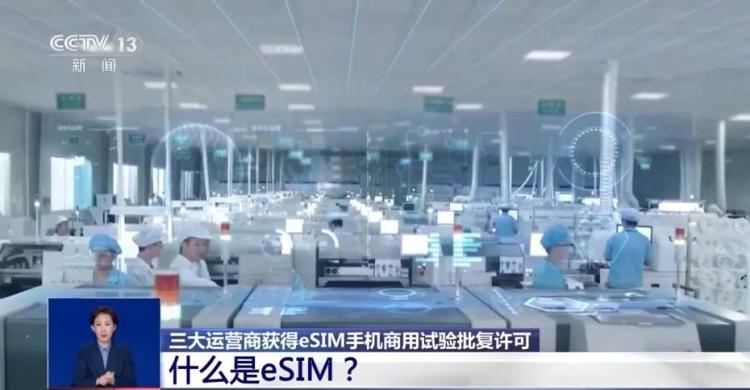
以后手机不用插卡了?三大运营商获eSIM手机商用试验批复许可
Qi Lu Wan Bao· 2025-10-15 03:09
Core Insights - eSIM technology has gained significant attention recently, with major Chinese telecom operators receiving approval for commercial trials of eSIM mobile services [1][9]. Group 1: eSIM Technology Overview - eSIM, or embedded SIM, is a virtual SIM card embedded directly into device chips, eliminating the need for physical SIM cards [2]. - eSIM functions similarly to traditional SIM cards, allowing devices to connect to networks for calls, texts, and data [2]. Group 2: Advantages of eSIM - eSIM is significantly smaller than traditional SIM cards, occupying only 10% of the space, which allows for better design and waterproofing of devices [5]. - The integration of eSIM can reduce hardware costs, especially for wearable devices, making them more compact and efficient [5]. - Users can easily switch numbers online without visiting physical stores, streamlining the process of changing carriers or plans [5]. Group 3: Current Status and Support - China Unicom, China Mobile, and China Telecom have all received approval to begin eSIM mobile service trials, with millions of users already served [9]. - Currently, users must visit physical stores to activate eSIM services, as online processing is not yet available [6][7]. - Supported devices include eSIM phones from brands like Apple, Huawei, and OPPO, which will be available for sale soon [11].