鱼跃医疗

Search documents
水银体温计禁产在即 线上店开始断货 多家上市公司回应
Ge Long Hui A P P· 2025-12-12 03:57
Core Viewpoint - The Chinese government will ban the production of mercury thermometers and sphygmomanometers starting January 1, 2026, marking the end of mercury-based medical devices in the market [1] Company Impact - Yuyue Medical stated that the volume of mercury thermometer and sphygmomanometer products in its business is very small, as the company primarily focuses on electronic products [1] - Jiuan Medical indicated that it is not a traditional thermometer manufacturer, and the impact on the company can be considered negligible [1] Market Response - There is a reported shortage of mercury thermometers on e-commerce platforms, with available products mainly being glass and electronic thermometers [1]


阳光融汇资本:以初心致匠心,一家险资私募基金管理人的投资之道
投中网· 2025-12-12 03:00
Core Viewpoint - The article emphasizes the significant investment opportunities in the Chinese healthcare industry driven by strong policy support and market demand, highlighting a structural transformation from scale expansion to value cultivation [3][26]. Investment Opportunities - The healthcare industry presents two core investment opportunities: "industrial restructuring" and "research and technological innovation," which align with the demand for new and old kinetic energy conversion under existing competition [3][27]. - The investment strategy focuses on early and growth-stage innovative projects, particularly in the fields of innovative drugs and medical technology [8][26]. Company Overview - Sunshine Ronghui Capital, established in January 2015, is one of the first private equity fund managers in the insurance sector, focusing on the healthcare and technology sectors [7][19]. - The company has a management scale exceeding 30 billion yuan and has achieved nearly 20 IPOs, including notable companies like Mindray Medical and Tongyuan Kang Pharmaceutical [4][19]. Investment Strategy - The investment approach is characterized by a comprehensive understanding of the healthcare industry, prioritizing clinical value and health economics, ensuring that investments meet unmet clinical needs while remaining affordable for patients [12][14]. - The company employs a dual approach of extensive research and deep industry engagement, creating a multi-dimensional analysis framework that integrates technology, clinical, and policy market evaluations [15][28]. Ecosystem Development - Sunshine Ronghui Capital has built a comprehensive healthcare ecosystem consisting of three main circles: LPs, enterprises, and the industry, facilitating diverse funding sources and enhancing investment returns [19][20]. - The firm collaborates with local governments to empower regional industries, driving upgrades and supporting key technological breakthroughs [19][20]. Long-term Vision - The company aims to leverage its capital strength to promote the transformation and innovation of the Chinese healthcare industry, aligning with national strategies for high-quality population development [25][28]. - By focusing on sustainable core competitiveness and responding to policy calls, Sunshine Ronghui Capital seeks to ensure that quality healthcare resources benefit a broader population [28].


水银体温计退场带动家用健康监测品类升级,京东健康:电子体温计成交同比翻倍
Jin Rong Jie Zi Xun· 2025-12-11 10:27
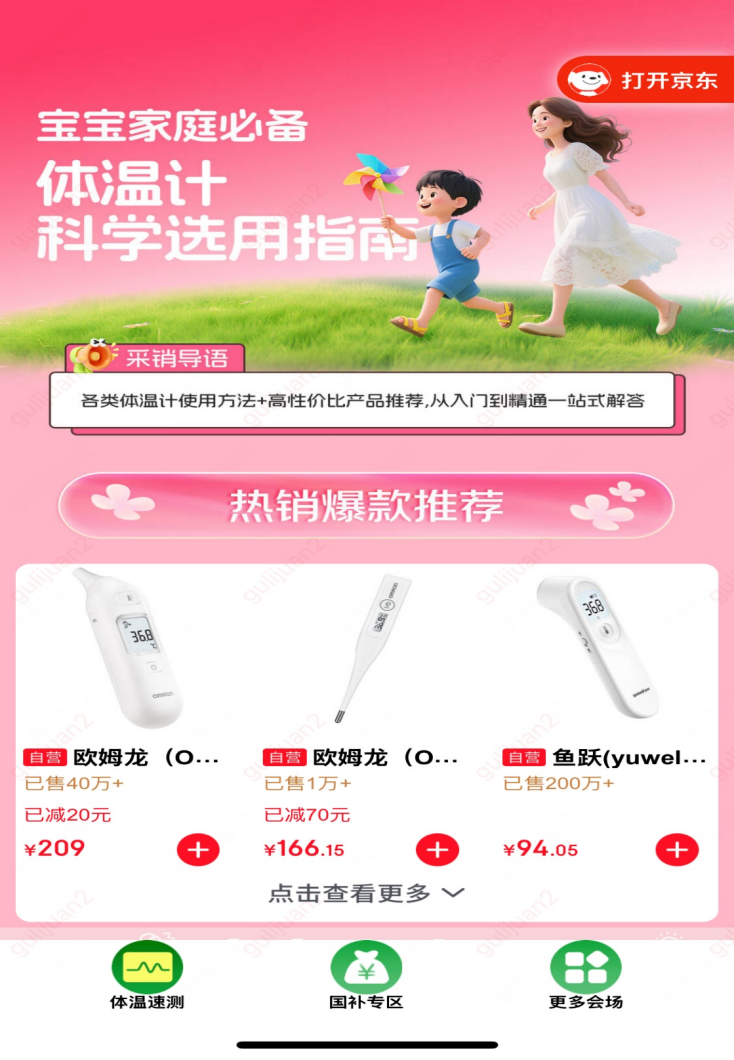
Core Insights - The National Medical Products Administration announced a ban on the production of mercury thermometers and sphygmomanometers starting January 1, 2026, leading to a significant increase in demand for alternative health monitoring devices [1][4] - The market has seen a surge in electronic thermometer sales, with a year-on-year increase of over 100%, and electronic blood pressure monitors growing by 50% [1] - The transition away from mercury devices has been planned since China joined the Minamata Convention on Mercury in 2017, allowing for a gradual phase-out and providing consumers with ample time to adapt [1] Market Trends - The search volume for thermometers on JD Health has surged, indicating a shift towards safer and smarter home monitoring solutions [1] - Among the alternatives to mercury thermometers, non-mercury glass thermometers, ear thermometers, and forehead thermometers have emerged as the three main categories [1] - Non-mercury glass thermometers cater to traditional users who prioritize safety and cost-effectiveness, while multifunctional ear thermometers are favored by families with infants for their quick measurement capabilities [1] Product Launches and Services - Omron's new ear thermometer was launched on JD Health, featuring a no-ear-cap design, 1-second measurement, and high fever alerts, quickly gaining market attention [2] - JD Health offers various services for electronic thermometers, including same-day delivery and a 180-day exchange policy for PLUS members, addressing consumer needs during flu season [2] Industry Outlook - The policy-driven upgrade in health monitoring devices reflects an increase in public health awareness and indicates a trend towards professional and intelligent home health monitoring solutions [4] - JD Health is positioned as a key player in observing health consumption trends and aims to enhance the ecosystem of home health management through data insights and service innovations [4]

含汞体温计血压计明年起停产,多家上市公司回应影响有限
Guan Cha Zhe Wang· 2025-12-10 15:06
Core Points - The Chinese government will ban the production of mercury thermometers and blood pressure monitors starting January 1, 2026, in compliance with the Minamata Convention on Mercury [1][3] - The ban is driven by the toxic nature of mercury and its environmental hazards, with a standard mercury thermometer containing about 1 to 2 grams of mercury, which can significantly exceed safe concentration levels if broken [1][3] - Following the announcement, there has been a surge in demand for mercury thermometers on e-commerce platforms, leading to stock shortages due to their low price compared to electronic alternatives [1][8] Policy Background - The ban is part of China's commitment to the Minamata Convention, which took effect in China on August 16, 2017, and was further detailed by the National Medical Products Administration in October 2020 [3] - The environmental and health risks associated with mercury, including irreversible damage to the nervous system and kidneys, particularly in vulnerable populations like children and pregnant women, are key considerations for the ban [3] Market Reaction - E-commerce platforms like JD.com and Taobao have reported limited stock and shortages of mercury thermometers following the announcement of the ban [3] - The price of mercury thermometers is generally under 10 yuan, while electronic thermometers range from tens to hundreds of yuan, creating a significant price difference that drives consumer behavior [8] Company Responses - Companies such as Yuyue Medical (002223), Jiuan Medical (002432), and Kefu Medical (301087) have indicated that the impact of the ban on their businesses will be limited, as the share of mercury products in their portfolios is small [9][10] - Yuyue Medical, once a leader in the mercury blood pressure monitor market with an 85% market share, has transitioned to electronic products and reported a revenue of 7.972 billion yuan in 2023 [9] - Jiuan Medical stated that it is not a traditional thermometer manufacturer and has minimal exposure to mercury products, suggesting that the exit of mercury products may create opportunities in the electronic thermometer market [10] Industry Outlook - The global blood pressure monitor market is projected to grow from 2.15 billion USD in 2025 to 3.97 billion USD by 2032, with a compound annual growth rate of 9.2% [10] - The market for electronic thermometers and infrared measuring devices is expected to expand as consumer preferences shift away from mercury products [10][12] - Major players in the electronic blood pressure monitor market include Omron and Yuyue, with domestic brands like Jiuan and Kefu gaining market share through e-commerce strategies [12]

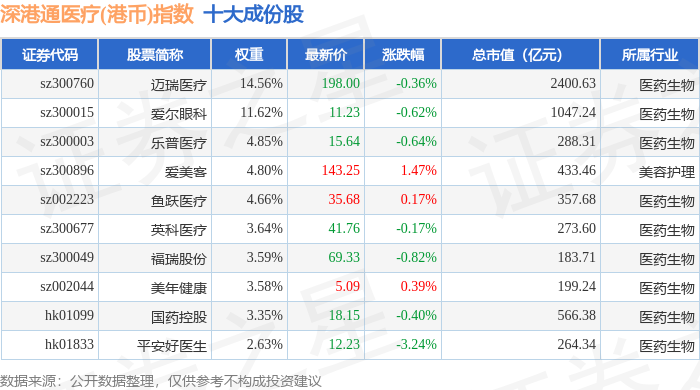
12月10日深港通医疗(港币)(983036)指数跌0.28%,成份股先健科技(01302)领跌
Sou Hu Cai Jing· 2025-12-10 11:19
Core Points - The Shenzhen-Hong Kong Stock Connect Medical Index (983036) closed at 4327.65 points, down 0.28%, with a trading volume of HKD 7.682 billion and a turnover rate of 0.9% [1] - Among the index constituents, 21 stocks rose while 36 stocks fell, with Kewei Medical leading the gainers at a 4.14% increase and Xianjian Technology leading the decliners at a 9.14% decrease [1] Index Constituents Summary - The top ten constituents of the Shenzhen-Hong Kong Stock Connect Medical Index include: - Mindray Medical (sz300760) with a weight of 14.56%, latest price at HKD 198.00, and a market cap of HKD 240.063 billion, down 0.36% [1] - Yier Eye Hospital (sz300015) with a weight of 11.62%, latest price at HKD 11.23, and a market cap of HKD 104.724 billion, down 0.62% [1] - Lejin Medical (sz300003) with a weight of 4.85%, latest price at HKD 15.64, and a market cap of HKD 28.831 billion, down 0.64% [1] - Aimeike (sz300896) with a weight of 4.80%, latest price at HKD 143.25, and a market cap of HKD 43.346 billion, up 1.47% [1] - Yuyue Medical (sz002223) with a weight of 4.66%, latest price at HKD 35.68, and a market cap of HKD 35.768 billion, up 0.17% [1] - Yingke Medical (sz300677) with a weight of 3.64%, latest price at HKD 41.76, and a market cap of HKD 27.360 billion, down 0.17% [1] - Furuijia (sz300049) with a weight of 3.59%, latest price at HKD 69.33, and a market cap of HKD 18.371 billion, down 0.82% [1] - Meinian Health (sz002044) with a weight of 3.58%, latest price at HKD 5.09, and a market cap of HKD 19.924 billion, up 0.39% [1] - Sinopharm Holdings (hk01099) with a weight of 3.35%, latest price at HKD 18.15, and a market cap of HKD 56.638 billion, down 0.40% [1] - Ping An Good Doctor (hk01833) with a weight of 2.63%, latest price at HKD 12.23, and a market cap of HKD 26.434 billion, down 3.24% [1] Capital Flow Analysis - The index constituents experienced a net outflow of HKD 382 million from institutional investors, while retail investors saw a net inflow of HKD 329 million [1] - Notable individual stock capital flows include: - Meinian Health (sz002044) with a net inflow of HKD 23.6308 million from institutional investors [2] - Aimeike (sz300896) with a net inflow of HKD 5.8353 million from institutional investors [2] - Yier Eye Hospital (sz300015) with a net outflow of HKD 20.7620 million from retail investors [2]



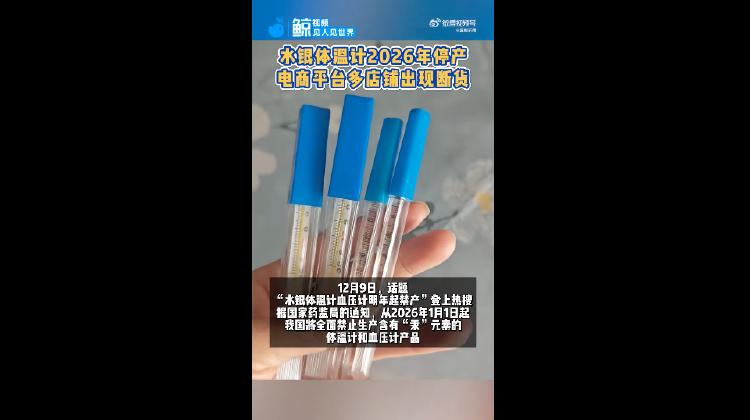
水银体温计禁产在即,线上店开始断货,客服称“购买的顾客增多”
Mei Ri Jing Ji Xin Wen· 2025-12-10 00:19
Core Viewpoint - The Chinese government will ban the production of mercury thermometers and sphygmomanometers starting January 1, 2026, marking the end of mercury-based medical devices in the market [1]. Company Impact - Companies such as Yuyue Medical (002223.SZ), Jiuan Medical (002432.SZ), and Kefu Medical (301078.SZ) are currently selling mercury thermometers and sphygmomanometers, but their impact from the ban is expected to be minimal as they primarily focus on electronic products [1]. - Yuyue Medical stated that the volume of mercury-based products in their business is very small, with a major focus on electronic devices [1]. - Jiuan Medical indicated that they are not traditional manufacturers of thermometers and that their main revenue source comes from reagent kits, particularly in the U.S. market [1]. Market Trends - There has been a noticeable increase in demand for mercury thermometers on e-commerce platforms, leading to stock shortages, while electronic and glass thermometers remain available [2]. - In physical pharmacies, staff reported that mercury thermometers are selling out quickly, with many customers still preferring them despite the availability of electronic alternatives [4]. - The price of electronic thermometers and infrared thermometers is significantly higher, often exceeding 100 yuan, compared to the low price of mercury thermometers, which can be as low as 6.1 yuan [4]. Industry Response - Some medical enterprises have already stopped using mercury thermometers in anticipation of the ban and are transitioning to compliant products [5]. - Pharmacies have not yet received official notifications regarding the prohibition of selling mercury thermometers, indicating a potential lag in industry compliance [5].
水银体温计禁产在即,线上店开始断货,客服称“购买顾客增多”
Mei Ri Jing Ji Xin Wen· 2025-12-09 22:29
Core Viewpoint - The Chinese government will ban the production of mercury-containing thermometers and blood pressure monitors starting January 1, 2026, marking the end of mercury thermometers in the market [1]. Company Impact - Companies such as Yuyue Medical (002223.SZ) and Jiuan Medical (002432.SZ) have indicated that the impact of this ban on their business will be minimal, as they primarily focus on electronic products and have a very small volume of mercury thermometer and blood pressure monitor sales [1]. - Jiuan Medical stated that it is not a traditional thermometer manufacturer and that its main revenue source comes from reagent kits, particularly in the U.S. market [1]. Market Observations - There has been a noticeable increase in demand for mercury thermometers on e-commerce platforms, leading to stock shortages, while electronic and glass thermometers are more readily available [2]. - In physical pharmacies, staff reported that mercury thermometers are selling out quickly, with many customers still preferring them despite the availability of electronic alternatives [4][6]. Transition to Alternatives - Pharmacies are increasingly stocking electronic and infrared thermometers, which are priced significantly higher than mercury thermometers, indicating a shift in consumer preference [4][6]. - Medical companies are preparing to transition away from mercury products in compliance with government regulations, although some have not yet received formal notifications regarding the sales ban [6].
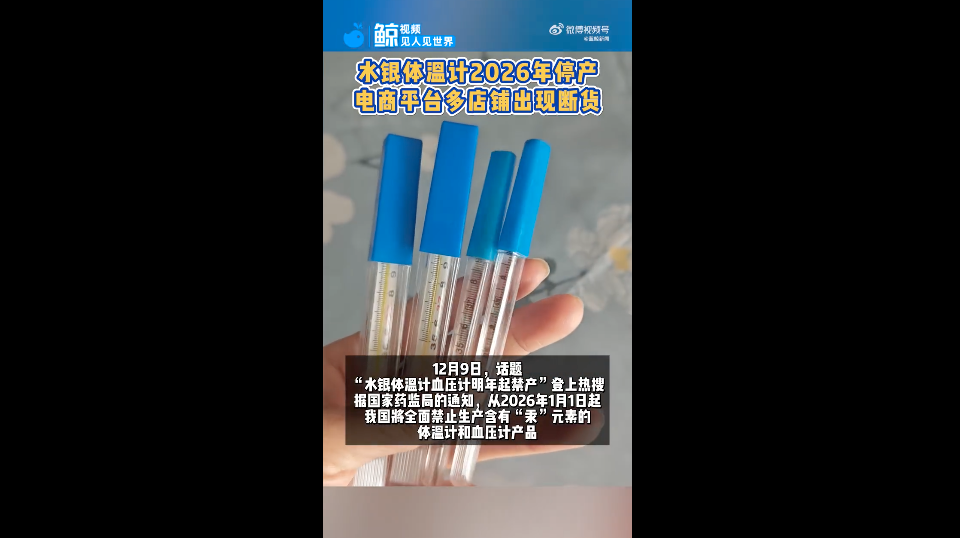
水银体温计禁产在即 线上店开始断货 客服称“购买的顾客增多”!生产企业:肯定遵守规定 要全面转型
Mei Ri Jing Ji Xin Wen· 2025-12-09 16:54
Core Viewpoint - The Chinese government will ban the production of mercury-containing thermometers and blood pressure monitors starting January 1, 2026, marking the end of mercury thermometers in the market [1]. Company Impact - Companies such as Yuyue Medical (002223.SZ) and Jiuan Medical (002432.SZ) have indicated that the impact of this ban on their business will be minimal, as they primarily focus on electronic products and have a very small volume of mercury thermometer and blood pressure monitor sales [1][5]. - Jiuan Medical stated that their main revenue source comes from reagent kits, particularly in the U.S. market, and they are not traditional manufacturers of thermometers [1]. Market Observations - There has been a noticeable increase in demand for mercury thermometers on e-commerce platforms, leading to stock shortages, while electronic and glass thermometers are more readily available [2]. - In physical pharmacies, staff reported that they have sold out of mercury thermometers due to increased demand, especially during the flu season, but they still offer electronic and infrared thermometers at significantly higher prices [4]. Industry Transition - Some medical companies have already begun transitioning away from mercury thermometers in anticipation of the ban, although they have not received formal notifications regarding the prohibition of sales [5]. - The market is expected to shift towards electronic and infrared thermometers, which are perceived as more convenient, especially for families with young children [4].

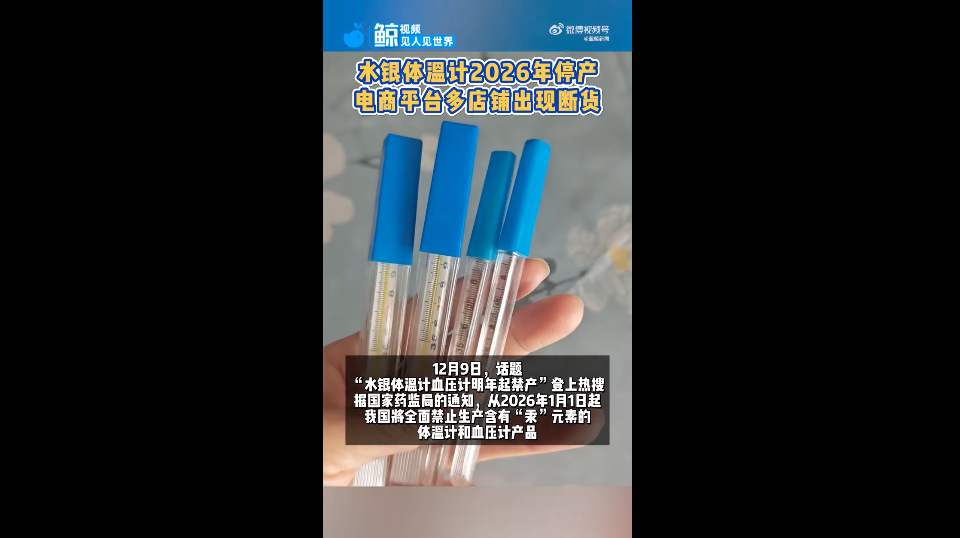
水银体温计禁产在即,线上店开始断货,客服称“购买的顾客增多”!生产企业:肯定遵守规定,要全面转型
Mei Ri Jing Ji Xin Wen· 2025-12-09 16:27
Group 1 - The Chinese government will ban the production of mercury-containing thermometers and blood pressure monitors starting January 1, 2026, marking the end of mercury thermometers in the market [1] - Companies such as Yuyue Medical, Jiuan Medical, and Kefu Medical are currently selling mercury thermometers and blood pressure monitors, but their impact on business is minimal as they primarily focus on electronic products [1][4] - Jiuan Medical stated that it is not a traditional thermometer manufacturer and that its main revenue comes from reagent kits, with minimal reliance on mercury products [1] Group 2 - There has been a noticeable increase in demand for mercury thermometers on e-commerce platforms, leading to stock shortages, while electronic and glass thermometers are more readily available [2] - In physical pharmacies, staff reported that mercury thermometers are sold out due to increased demand, particularly during the flu season, and that electronic alternatives are available at significantly higher prices [4][6] - Some pharmacies have not yet received official notifications regarding the ban on selling mercury thermometers, indicating a potential lag in compliance with the new regulations [6]
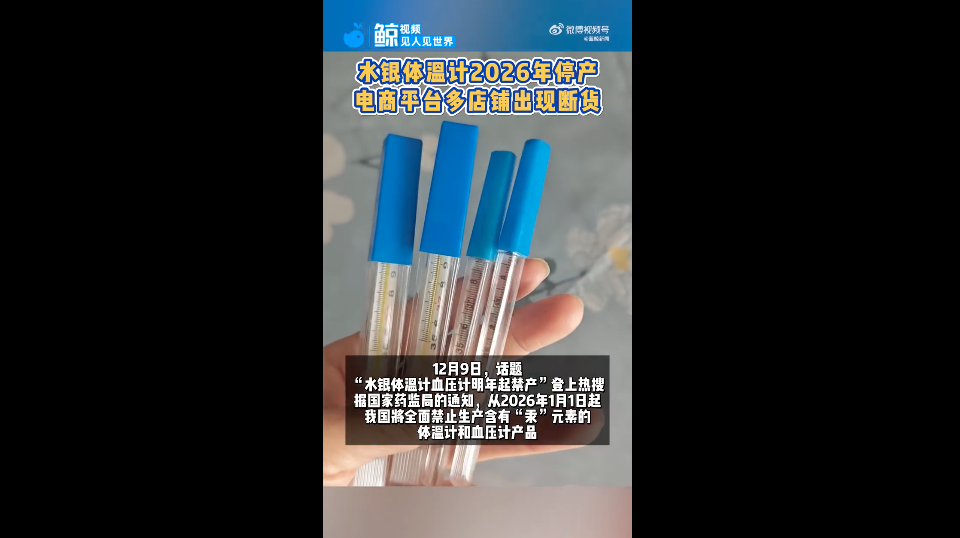
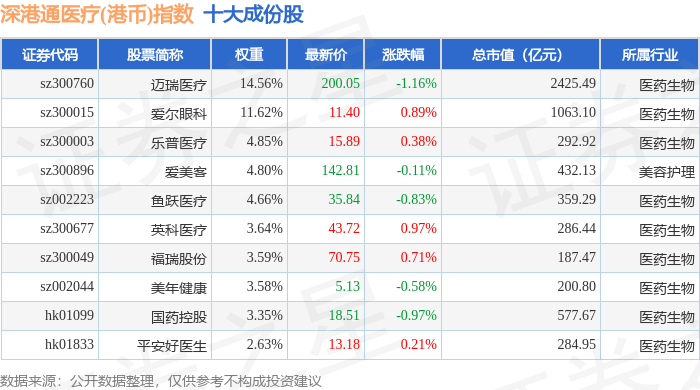
12月8日深港通医疗(港币)(983036)指数跌0.24%,成份股锦欣生殖(01951)领跌
Sou Hu Cai Jing· 2025-12-08 11:22
Core Insights - The Shenzhen-Hong Kong Stock Connect Medical Index (983036) closed at 4406.89 points, down 0.24%, with a trading volume of HKD 7.939 billion and a turnover rate of 0.88% [1] - Among the index constituents, 23 stocks rose while 34 stocks fell, with Yiyang Sunshine leading the gainers at 3.98% and Jinxin Fertility leading the decliners at 3.89% [1] Index Constituents Summary - The top ten constituents of the Shenzhen-Hong Kong Stock Connect Medical Index are as follows: - Mindray Medical (sz300760) holds a weight of 14.56%, latest price at HKD 200.05, down 1.16%, with a market cap of HKD 242.549 billion [1] - Aier Eye Hospital (sz300015) has a weight of 11.62%, latest price at HKD 11.40, up 0.89%, with a market cap of HKD 106.31 billion [1] - Lepu Medical (sz300003) has a weight of 4.85%, latest price at HKD 15.89, up 0.38%, with a market cap of HKD 29.292 billion [1] - Aimeike (sz300896) has a weight of 4.80%, latest price at HKD 142.81, down 0.11%, with a market cap of HKD 43.213 billion [1] - Yuyue Medical (sz002223) has a weight of 4.66%, latest price at HKD 35.84, down 0.83%, with a market cap of HKD 35.929 billion [1] - Yingke Medical (sz300677) has a weight of 3.64%, latest price at HKD 43.72, up 0.97%, with a market cap of HKD 28.644 billion [1] - Furuide (sz300049) has a weight of 3.59%, latest price at HKD 70.75, up 0.71%, with a market cap of HKD 18.747 billion [1] - Meinian Onehealth (sz002044) has a weight of 3.58%, latest price at HKD 5.13, down 0.58%, with a market cap of HKD 20.08 billion [1] - Sinopharm (hk01099) has a weight of 3.35%, latest price at HKD 18.51, down 0.97%, with a market cap of HKD 57.767 billion [1] - Ping An Good Doctor (hk01833) has a weight of 2.63%, latest price at HKD 13.18, up 0.21%, with a market cap of HKD 28.495 billion [1] Capital Flow Analysis - The index constituents experienced a net outflow of main funds totaling HKD 230 million, while retail investors saw a net inflow of HKD 268 million [1] - Detailed capital flow for specific stocks shows: - Furuide (sz300049) had a main fund net inflow of HKD 8.7323 million, with retail outflows of HKD 3.3726 million [2] - Aier Eye Hospital (sz300015) had a main fund net inflow of HKD 6.6536 million, with retail outflows of HKD 1.8752 million [2] - Lepu Medical (sz300003) had a main fund net inflow of HKD 3.7716 million, with retail outflows of HKD 0.7273 million [2]