
含汞血压计

Search documents
2026年,这些新规将改变你我的生活!
Sou Hu Cai Jing· 2026-01-03 07:51
Group 1: Tax Regulations - The new Value-Added Tax (VAT) Law and its implementation regulations will take effect on January 1, 2026, clarifying taxpayer obligations and taxable transactions [2] - Personal housing sales tax policy has been optimized, with a 3% tax rate for properties sold within two years and exemption for properties sold after two years [4] Group 2: Healthcare and Pharmaceuticals - The new National Basic Medical Insurance and Commercial Health Insurance Drug Catalogs will be implemented, adding 114 new drugs, including 36 cancer medications and 12 chronic disease medications [6][18] - The new drug catalog in Hebei province will manage traditional Chinese medicine and set personal payment ratios for various drug categories [18] Group 3: Environmental Regulations - A new regulation will allow the trading of pollution rights for certain air and water pollutants within specified regions, effective January 1, 2026 [21] Group 4: Education and Childcare - New regulations for kindergarten fees will implement a clear fee list, prohibiting any unlisted charges [14] - The new policy for higher vocational education entrance exams in Hebei will ensure equal treatment for students eligible for preferential policies [19] Group 5: Technology and Security - The revised Cybersecurity Law will enhance AI regulation and protect virtual property rights, with new legal provisions for data and virtual property disputes [17]


水银体温计,为何禁产
Ren Min Ri Bao· 2025-12-17 22:11
Core Viewpoint - China will completely ban the production of mercury thermometers and blood pressure monitors starting January 1, 2026, marking the end of mercury thermometers in the market due to their toxicity and environmental hazards [1]. Industry Summary - The ban is driven by concerns over the strong toxicity and non-degradability of mercury, which poses greater risks to human health and the ecological environment compared to traditional temperature measurement tools [1]. - Currently popular alternatives in the market include electronic thermometers, ear thermometers, and forehead thermometers, which offer various advantages over mercury thermometers [1]. Consumer Insights - Mercury thermometers present several inconveniences for consumers, such as small font size for readings, difficulty in reading, and safety hazards due to breakage [1]. - Industry experts indicate that electronic thermometers, when used correctly, provide high accuracy and meet daily needs, while being safer than mercury thermometers. These products feature clear digital displays, simple operation, and high safety, making them suitable for different user groups [1].
你家药箱里,一个存在了300多年的“剧毒物品”即将消失……
3 6 Ke· 2025-12-11 00:06
Core Viewpoint - The production of mercury thermometers and blood pressure monitors will be completely banned starting January 1 next year, as announced by the National Medical Products Administration, marking a significant shift towards safer measurement devices [1][5]. Group 1: Historical Context - Mercury thermometers have been in use for over 300 years, regarded as the "gold standard" for temperature measurement due to their accuracy and reliability [2][4]. - The principle behind mercury thermometers is based on the thermal expansion of liquids, with mercury providing a stable and wide temperature range compared to alternatives like alcohol [4]. Group 2: Reasons for the Ban - The primary reason for the ban is the toxicity of mercury, which poses health risks to the nervous, digestive, and immune systems, as well as potential harm to fetal and child development [5]. - The ban is also a commitment to the Minamata Convention, aimed at controlling global mercury pollution, as mercury can persist in the environment and convert to highly toxic methylmercury [5][7]. Group 3: Alternatives to Mercury Thermometers - Contact electronic thermometers are a viable alternative, with an accuracy range of ±0.1℃ to ±0.2℃ within the clinical measurement range of 35℃ to 41℃, meeting clinical diagnostic needs [8]. - Non-mercury thermometers made from gallium-indium-tin alloy are also available, maintaining the same operational principles as traditional thermometers but using safer materials [8]. Group 4: Environmental and Safety Considerations - While mercury thermometers are not the primary source of mercury pollution, their discontinuation will contribute to pollution control efforts [7]. - Proper disposal methods for broken mercury thermometers include using a plastic bottle for collection and ensuring safe handling to minimize exposure to mercury vapor [10].
每日资讯晨报-20251210
Jinyuan Securities· 2025-12-10 05:03
Core Insights - The report highlights mixed performance in major global stock indices, with the Dow Jones Industrial Average declining by 0.38% and the S&P 500 down by 0.09%, while the Nasdaq saw a slight increase of 0.13% [5][11] - The report indicates a potential 7% growth in global trade by 2025, driven by South-South trade and economic activities in East Asia and Africa, amounting to an increase of approximately $2.2 trillion [10] - The report notes that the U.S. private sector added an average of 4,750 jobs per week, ending a four-week streak of job losses, with job openings in October reaching 7.67 million, significantly above expectations [10] International Market Overview - European markets showed mixed results, with the DAX index rising by 0.45% while the CAC40 and FTSE 100 indices fell by 0.69% and 0.03% respectively, influenced by industrial data and fiscal concerns [5][11] - In the U.S. market, major indices experienced slight declines, with the Dow down 0.38% and the Nasdaq up 0.13%, as investors awaited the Federal Reserve's interest rate decision [5][11] - The Asia-Pacific market saw the Hang Seng Index drop by 1.29%, while the Nikkei 225 increased by 0.14%, reflecting varied investor sentiment across sectors [5][11] Company News - Medline, a major player in the medical supplies sector, is planning a significant IPO, potentially raising up to $5.37 billion, which could be the largest IPO of 2025 [16] - SpaceX is preparing for its IPO in mid-2026, contingent on market conditions [16] - In the A-share market, notable announcements include a developer conference by Moore Threads and a licensing agreement between Fosun Pharma's subsidiary and Pfizer for a new diabetes treatment [16]


水银体温计禁产在即,线上店开始断货,客服称“购买的顾客增多”
Mei Ri Jing Ji Xin Wen· 2025-12-10 00:19
Core Viewpoint - The Chinese government will ban the production of mercury thermometers and sphygmomanometers starting January 1, 2026, marking the end of mercury-based medical devices in the market [1]. Company Impact - Companies such as Yuyue Medical (002223.SZ), Jiuan Medical (002432.SZ), and Kefu Medical (301078.SZ) are currently selling mercury thermometers and sphygmomanometers, but their impact from the ban is expected to be minimal as they primarily focus on electronic products [1]. - Yuyue Medical stated that the volume of mercury-based products in their business is very small, with a major focus on electronic devices [1]. - Jiuan Medical indicated that they are not traditional manufacturers of thermometers and that their main revenue source comes from reagent kits, particularly in the U.S. market [1]. Market Trends - There has been a noticeable increase in demand for mercury thermometers on e-commerce platforms, leading to stock shortages, while electronic and glass thermometers remain available [2]. - In physical pharmacies, staff reported that mercury thermometers are selling out quickly, with many customers still preferring them despite the availability of electronic alternatives [4]. - The price of electronic thermometers and infrared thermometers is significantly higher, often exceeding 100 yuan, compared to the low price of mercury thermometers, which can be as low as 6.1 yuan [4]. Industry Response - Some medical enterprises have already stopped using mercury thermometers in anticipation of the ban and are transitioning to compliant products [5]. - Pharmacies have not yet received official notifications regarding the prohibition of selling mercury thermometers, indicating a potential lag in industry compliance [5].


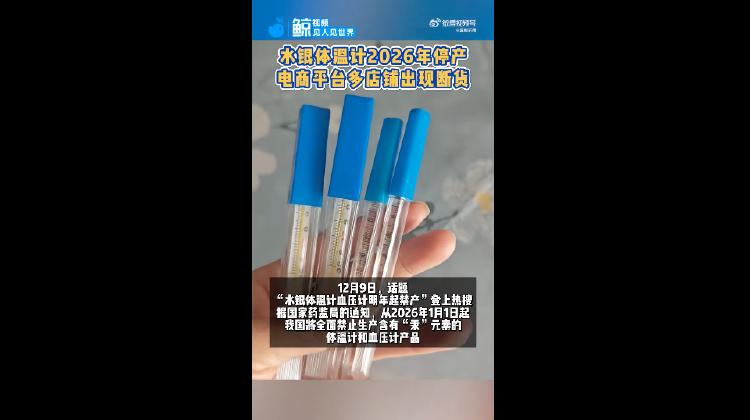
水银体温计将“退出历史舞台” 禁产背后有何缘故
Xin Hua She· 2025-12-09 22:57
Core Viewpoint - China will completely ban the production of mercury thermometers and blood pressure monitors starting January 1, 2026, marking the end of mercury thermometers in the market [1][2]. Group 1: Regulatory Framework - The ban is in accordance with the Minamata Convention on Mercury, which took effect in China on August 16, 2017, and mandates the prohibition of mercury-containing thermometers and blood pressure monitors by 2026 [1]. - The National Medical Products Administration (NMPA) issued a notification in October 2020 to implement the ban, stating that existing medical device registration certificates for mercury thermometers and blood pressure monitors will remain valid until December 31, 2025 [1]. Group 2: Health and Environmental Concerns - Experts highlight the toxicity and non-degradability of mercury, which poses significant health risks and environmental hazards, outweighing the convenience of traditional thermometers [2]. - A standard mercury thermometer contains about 1 to 2 grams of mercury, which can rapidly vaporize and exceed safe concentration levels in indoor environments if broken, leading to potential neurological and renal damage, especially in sensitive populations like children and pregnant women [2]. - Mercury accumulates in the environment and can be converted into more toxic methylmercury, which bioaccumulates in the food chain, posing long-term threats to ecosystems and human health [2]. Group 3: Alternatives and Consumer Preferences - Current popular alternatives to mercury thermometers include electronic thermometers, ear thermometers, and forehead thermometers, which are considered safer and more user-friendly [2]. - Electronic thermometers are noted for their high accuracy when used correctly and are increasingly favored by consumers due to their clear digital display and ease of use [2]. - Electronic blood pressure monitors are also gaining popularity for their simplicity and portability, making them suitable for a wide range of users [2].
水银体温计禁产在即 线上店开始断货 客服称“购买的顾客增多”!生产企业:肯定遵守规定 要全面转型
Mei Ri Jing Ji Xin Wen· 2025-12-09 16:54
Core Viewpoint - The Chinese government will ban the production of mercury-containing thermometers and blood pressure monitors starting January 1, 2026, marking the end of mercury thermometers in the market [1]. Company Impact - Companies such as Yuyue Medical (002223.SZ) and Jiuan Medical (002432.SZ) have indicated that the impact of this ban on their business will be minimal, as they primarily focus on electronic products and have a very small volume of mercury thermometer and blood pressure monitor sales [1][5]. - Jiuan Medical stated that their main revenue source comes from reagent kits, particularly in the U.S. market, and they are not traditional manufacturers of thermometers [1]. Market Observations - There has been a noticeable increase in demand for mercury thermometers on e-commerce platforms, leading to stock shortages, while electronic and glass thermometers are more readily available [2]. - In physical pharmacies, staff reported that they have sold out of mercury thermometers due to increased demand, especially during the flu season, but they still offer electronic and infrared thermometers at significantly higher prices [4]. Industry Transition - Some medical companies have already begun transitioning away from mercury thermometers in anticipation of the ban, although they have not received formal notifications regarding the prohibition of sales [5]. - The market is expected to shift towards electronic and infrared thermometers, which are perceived as more convenient, especially for families with young children [4].

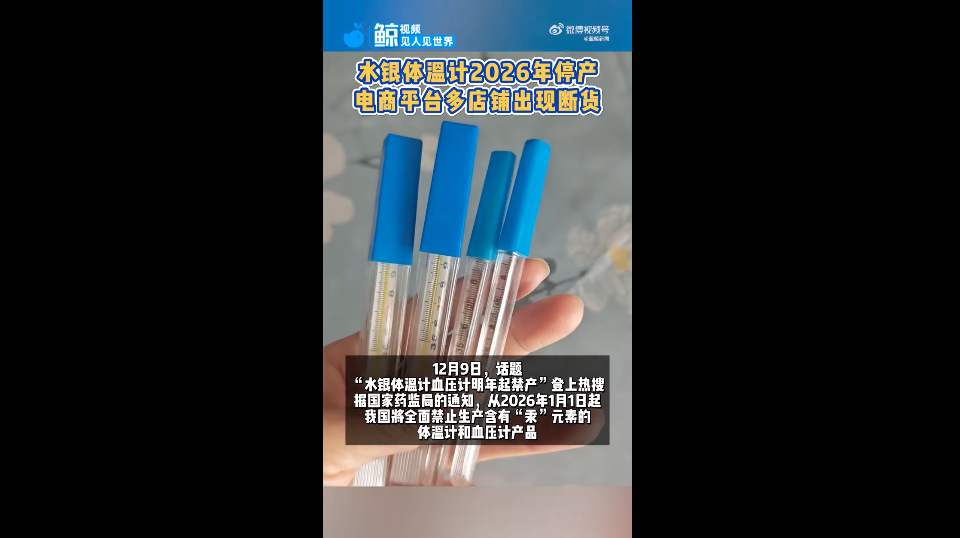
水银体温计禁产在即,线上店开始断货,客服称“购买的顾客增多”!生产企业:肯定遵守规定,要全面转型
Mei Ri Jing Ji Xin Wen· 2025-12-09 16:27
Group 1 - The Chinese government will ban the production of mercury-containing thermometers and blood pressure monitors starting January 1, 2026, marking the end of mercury thermometers in the market [1] - Companies such as Yuyue Medical, Jiuan Medical, and Kefu Medical are currently selling mercury thermometers and blood pressure monitors, but their impact on business is minimal as they primarily focus on electronic products [1][4] - Jiuan Medical stated that it is not a traditional thermometer manufacturer and that its main revenue comes from reagent kits, with minimal reliance on mercury products [1] Group 2 - There has been a noticeable increase in demand for mercury thermometers on e-commerce platforms, leading to stock shortages, while electronic and glass thermometers are more readily available [2] - In physical pharmacies, staff reported that mercury thermometers are sold out due to increased demand, particularly during the flu season, and that electronic alternatives are available at significantly higher prices [4][6] - Some pharmacies have not yet received official notifications regarding the ban on selling mercury thermometers, indicating a potential lag in compliance with the new regulations [6]
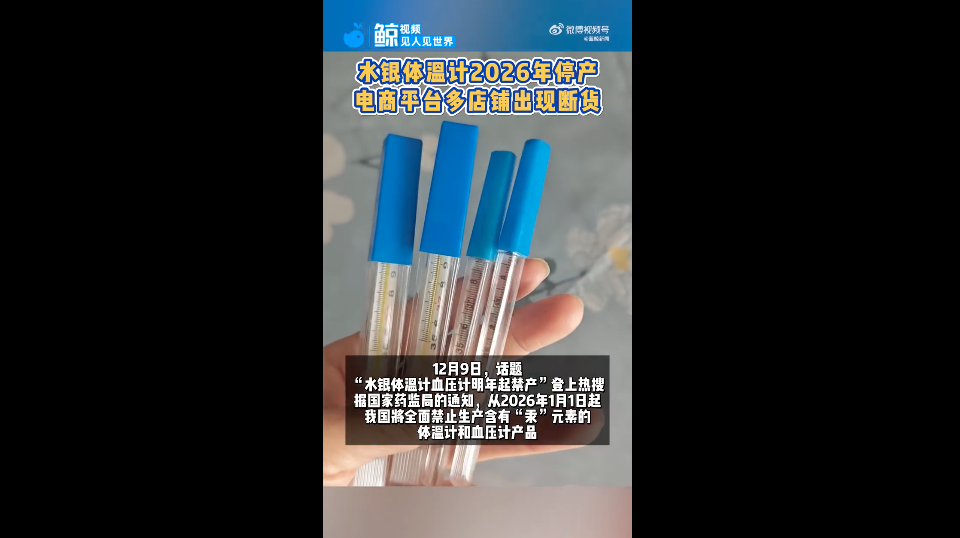
热搜第一!水银体温计血压计明年起禁产
Xin Lang Cai Jing· 2025-12-09 13:41
Core Viewpoint - The production of mercury thermometers and blood pressure monitors will be banned in China starting January 1, 2026, in compliance with the Minamata Convention on Mercury and related regulations [1][2][9]. Regulatory Changes - The National Medical Products Administration (NMPA) has announced that from January 1, 2026, the production of mercury-containing thermometers and blood pressure monitors will be completely prohibited [2][9]. - Existing medical device registration certificates for mercury thermometers and blood pressure monitors will remain valid until their expiration, but renewal applications must be submitted before December 31, 2025 [2][8]. Market Impact - Despite the upcoming ban, mercury thermometers are still available in pharmacies, with prices ranging from 10 to 11 yuan [3][11]. - Sales of mercury thermometers have decreased, and pharmacies are considering replacing them with other temperature measurement tools, such as infrared thermometers [3][11]. Industry Trends - Medical professionals indicate that the withdrawal of mercury thermometers from the market is a natural progression due to safety concerns and the convenience of electronic thermometers [4][12]. - Electronic thermometers and infrared thermometers are becoming more prevalent, with advantages in speed and accuracy compared to mercury thermometers [4][12].

明年起,它将全面禁产!几乎家家都有
Zhong Guo Jing Ying Bao· 2025-12-09 12:55
Core Viewpoint - The National Medical Products Administration (NMPA) has announced a complete ban on the production of mercury-containing thermometers and sphygmomanometers starting January 1, 2026, in compliance with the Minamata Convention on Mercury [1][2]. Regulatory Summary - Existing medical device registration certificates for mercury-containing thermometers and sphygmomanometers will remain valid until their expiration, but renewal applications must not exceed December 31, 2025 [1]. - Products that have been accepted for medical device registration will continue to undergo evaluation and approval, with certificates issued valid until December 31, 2025 [1]. - The production of mercury-containing thermometers and sphygmomanometers will be entirely prohibited from January 1, 2026 [1]. Health and Safety Concerns - Mercury thermometers are considered hazardous due to their toxicity and potential health risks, including neurological damage and environmental contamination if broken [5]. - The use of mercury thermometers is inconvenient, as they require shaking to reset before use, and they are fragile, posing a risk of breakage [4][5]. - The small display of mercury thermometers can be difficult for elderly individuals to read [6]. Alternatives to Mercury Devices - Current market alternatives for measuring temperature and blood pressure include electronic thermometers and infrared thermometers, which are more user-friendly and suitable for everyday use [8].
