
红外体温计

Search documents
水银体温计今日起停产,替代产品怎么选?
Xin Hua Wang· 2026-01-01 04:49
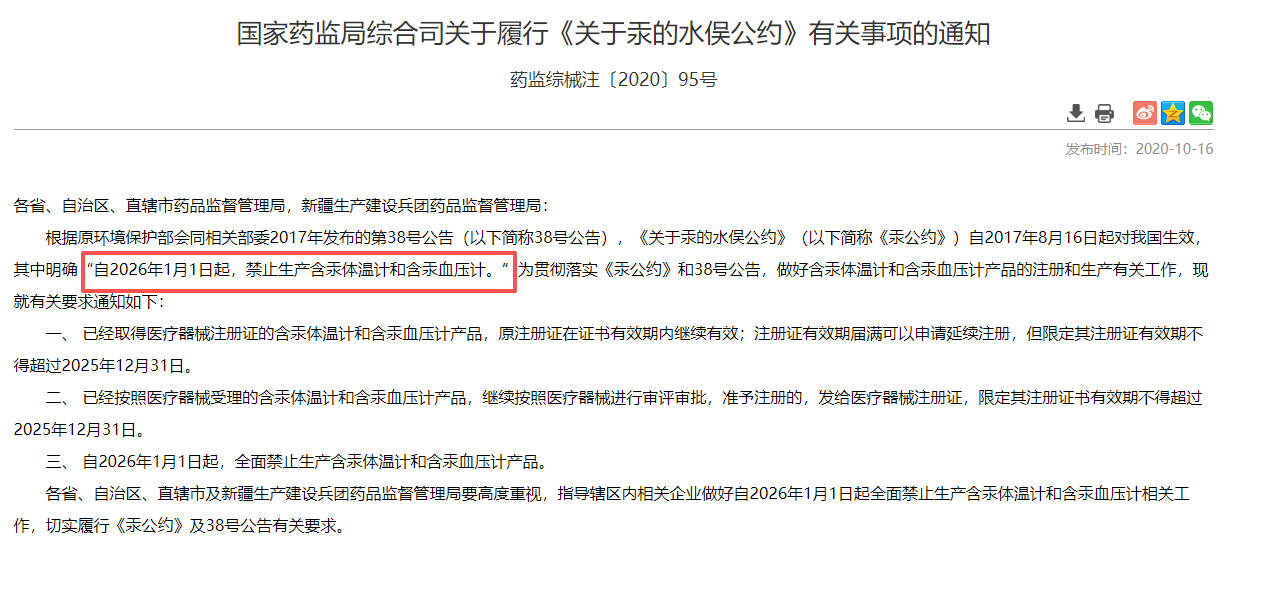
Core Viewpoint - The National Medical Products Administration of China will ban the production of mercury thermometers and sphygmomanometers starting January 1, 2026, leading to the phase-out of mercury thermometers and raising public concerns about the accuracy of electronic alternatives [2]. Group 1: Accuracy and Public Perception - Many consumers express skepticism about the accuracy of electronic thermometers compared to mercury ones, fearing misdiagnosis due to inaccurate readings [3]. - Qualified electronic thermometers have no significant difference in accuracy compared to mercury thermometers, with a permissible error range of ±0.1-±0.2℃, meeting clinical diagnostic requirements [3]. - Proper usage is crucial for accurate readings; for instance, ear thermometers must be correctly positioned, and electronic thermometers should be allowed to stabilize before measurement [5]. Group 2: Market Dynamics and Pricing - The market offers a wide range of thermometer types, with prices varying significantly from tens to hundreds of yuan; mercury thermometers typically cost between 8-15 yuan, while electronic thermometers range from 15-40 yuan for entry-level models and over 100 yuan for high-end products [6]. - The price difference is influenced by material costs and brand value; non-mercury thermometers made from gallium-indium-tin alloys are generally more expensive than mercury ones [13]. - As production capacity increases, the price of non-mercury thermometers is expected to drop below 10 yuan [13]. Group 3: Transition and Disposal of Mercury Thermometers - The industry has been transitioning to non-mercury thermometers for several years, with existing mercury thermometer stocks still legally sellable until their expiration [14]. - Hospitals are phasing out mercury thermometers, with a complete ban expected in pediatric and maternal institutions by 2025-2027 [16]. - Safe disposal of broken mercury thermometers is critical, and residents are advised to seek professional services for proper handling [16].

水银体温计今日起停产 替代产品怎么选?
Xin Hua Wang· 2026-01-01 01:57
Core Viewpoint - The National Medical Products Administration (NMPA) has announced a ban on the production of mercury thermometers and sphygmomanometers starting January 1, 2026, marking the end of mercury thermometers in the market. The accuracy of alternative electronic and infrared thermometers is a major concern for the public [3][20]. Group 1: Regulations and Transition - The new regulation will phase out mercury thermometers, with existing compliant products allowed to be sold until their expiration dates [20]. - Hospitals are expected to stop purchasing mercury thermometers, with a complete phase-out planned between 2025 and 2027, particularly in pediatric and maternal-child health institutions [20]. Group 2: Accuracy and Consumer Concerns - Many consumers express skepticism about the accuracy of electronic thermometers compared to mercury ones, fearing misdiagnosis due to perceived inaccuracies [4]. - Medical professionals assert that qualified electronic thermometers have no significant difference in accuracy compared to mercury thermometers, with an acceptable error range of ±0.1-±0.2°C [4][3]. Group 3: Market Dynamics and Pricing - The market for thermometers is diverse, with prices ranging from 8-15 yuan for mercury thermometers to over 300 yuan for high-end infrared models [8][15]. - The cost difference in thermometers is influenced by materials used, brand value, and technological features, with non-mercury thermometers expected to drop below 10 yuan as production scales up [15]. Group 4: Disposal and Environmental Concerns - There is a lack of comprehensive recycling channels for mercury thermometers for ordinary residents, and proper disposal is crucial to prevent environmental hazards [21]. - Some pharmacies are willing to participate in the collection of expired mercury thermometers, but emphasize the need for support and infrastructure to ensure safe disposal [21].
12.12犀牛财经晚报:银行理财规模逼近34万亿元 再创新高
Xi Niu Cai Jing· 2025-12-12 10:41
Monetary Policy - As of the end of November, the broad money supply (M2) in China reached 336.99 trillion yuan, reflecting a year-on-year growth of 8% [1] - The narrow money supply (M1) stood at 112.89 trillion yuan, with a year-on-year increase of 4.9% [1] - The currency in circulation (M0) amounted to 13.74 trillion yuan, showing a year-on-year growth of 10.6% [1] - A net cash injection of 917.5 billion yuan occurred in the first eleven months of the year [1] Banking and Financial Services - The total scale of bank wealth management products has reached a historic high of approximately 33.8 trillion yuan, nearing 34 trillion yuan [2] - In the first eleven months, 14 wealth management companies collectively grew by about 3.43 trillion yuan, with "fixed income plus" products contributing an additional 1.32 trillion yuan [2] - The market saw a significant increase of 1.67 trillion yuan in the fourth quarter alone, accounting for nearly half of the annual growth [2] Regulatory Developments - The China Securities Investment Fund Industry Association has drafted a consultation document to standardize fund sales behavior, aiming to prevent misleading practices and protect investor rights [2] - The document outlines clear requirements for fund promotion, sales information disclosure, and performance assessment [2] Corporate Actions - Taihao Technology plans to use 13.67 billion yuan from its capital reserves to cover significant losses, a move that reflects a broader trend among A-share companies to address accumulated losses amid new regulatory changes [4] - Over 30 listed companies have announced similar plans to utilize capital reserves to offset losses, with total amounts exceeding 30 billion yuan [4] Market Trends - The top ten wafer foundries reported a quarter-on-quarter revenue increase of 8.1% in Q3 2025, driven by demand for AI and consumer electronics [4] - The global wafer foundry industry is expected to face challenges in 2026 due to international market conditions and conservative demand forecasts [4] Industry Developments - A new company, Beijing Guanghe Qiancheng Technology, has been established by leading silicon material firms, marking a significant step towards reducing overcapacity in the photovoltaic industry [5] - Future silicon material production capacity is planned to be capped at 1.5 million tons [5] Legal and Compliance Issues - The China Securities Regulatory Commission has penalized three individuals for manipulating the stock of Shandong Jincheng Pharmaceutical Group, resulting in fines and market bans [3] - Huayi Brothers' founder has received a consumption restriction order due to an advertising contract dispute, with the company facing a financial penalty of over 11.4 million yuan [8] IPO and Market Activity - Youyan Composite Materials has received approval for its IPO on the Sci-Tech Innovation Board [9] - Shouyao Holdings is planning to issue H-shares and list on the Hong Kong Stock Exchange [10] Corporate Changes - The chairman of Jinling Hotel has resigned due to work changes, leaving the company without any executive positions held by him [11] - *ST Chang Pharmaceutical's subsidiary has recently ceased operations due to financial difficulties and competitive pressures in the photovoltaic sector [12] Project Announcements - Jiangsu Guoxin's subsidiary has successfully completed the trial operation of a new 1000MW coal-fired power generation unit [13] - *ST Zhisheng has won a 1.04 billion yuan contract for a smart city governance project, significantly impacting its projected annual revenue [17]
明年即将停产的水银体温计近期销量上升,是否有囤货必要?
Qi Lu Wan Bao· 2025-12-12 08:52
Core Viewpoint - The upcoming ban on the production of mercury thermometers in China, effective January 1, 2026, is driving a surge in demand as consumers rush to purchase remaining stock before the prohibition takes effect [1][2]. Group 1: Regulatory Changes - China will fully prohibit the production of mercury thermometers and blood pressure monitors to comply with the Minamata Convention on Mercury, aimed at reducing mercury pollution and its health risks [1]. - The ban is part of a gradual phase-out of mercury-containing products, which has been in place for years, and is intended to promote the transition to mercury-free medical measurement tools [1]. Group 2: Market Response - There has been a notable increase in sales of mercury thermometers, with reports of consumers buying them in bulk due to the impending ban [1][2]. - Alternatives to mercury thermometers are available, including electronic thermometers with comparable accuracy (±0.1-0.2°C) and infrared thermometers that provide rapid readings, suitable for families [2]. Group 3: Public Sentiment and Safety - Many consumers express nostalgia and concern over the discontinuation of mercury thermometers, with some feeling more secure using them [3]. - Medical professionals advise that electronic or mercury-free glass thermometers are sufficient for home use, and there is no need for panic buying [3]. - Existing mercury thermometers can still be used safely, but precautions must be taken if they break, including proper cleanup and disposal [3].
多家药企回应水银体温计禁产
Xin Lang Cai Jing· 2025-12-12 08:04
Core Viewpoint - The ban on the production of mercury thermometers and sphygmomanometers starting next year has sparked significant discussion on social media, with various medical device companies responding to the news and indicating minimal impact on their operations [1] Company Responses - Yuyue Medical stated that it will strictly comply with national laws and regulations, and the ban will not significantly affect its business as it has been focusing on developing electronic blood pressure monitors and thermometers [1] - Cofo Medical mentioned that its primary products are infrared thermometers, indicating no reliance on mercury thermometers [1] - Jiann Medical confirmed that it has never produced mercury thermometers, focusing instead on electronic models [1] - Yingqu Technology noted that its thermometer business is relatively small and primarily consists of electronic types [1] - Aojiahua stated that it does not produce mercury thermometers, highlighting its offering of infrared thermometers [1]


水银体温计明年起全面禁产!南京已有药店售空
Yang Zi Wan Bao Wang· 2025-12-10 14:24
Core Viewpoint - The production of mercury thermometers and sphygmomanometers will be banned starting January 1, 2026, due to health concerns related to mercury exposure, sparking public debate on the accuracy and safety of alternative devices [1][2]. Group 1: Regulatory Changes - The National Medical Products Administration has announced a ban on the production of mercury thermometers and sphygmomanometers effective from January 1, 2026 [1]. - The ban is part of the commitment to the Minamata Convention on Mercury, addressing significant public health concerns associated with mercury [2]. Group 2: Public Reaction - The topic of banning mercury thermometers has gained significant attention on social media, with mixed opinions on the accuracy of mercury thermometers compared to infrared and electronic alternatives [1]. - Some consumers express concerns about the inconvenience of using mercury thermometers, while others believe they provide more accurate readings [2]. Group 3: Health Risks - Mercury is a neurotoxin that can cause damage to the nervous, digestive, and immune systems, as well as long-term harm to the heart [2]. - A standard mercury thermometer contains about 1-2 grams of mercury, which can quickly vaporize and exceed safe concentration levels in enclosed spaces if broken [3]. Group 4: Safe Handling and Disposal - In the event of a mercury thermometer breakage, immediate evacuation and ventilation of the area are crucial, along with protective measures for individuals handling the cleanup [3]. - Proper disposal of mercury waste involves sealing it in a labeled container and taking it to a hazardous waste collection point, avoiding disposal in regular trash or down the drain [3].
水银体温计禁产在即,线上店开始断货,客服称“购买顾客增多”
Mei Ri Jing Ji Xin Wen· 2025-12-09 22:29
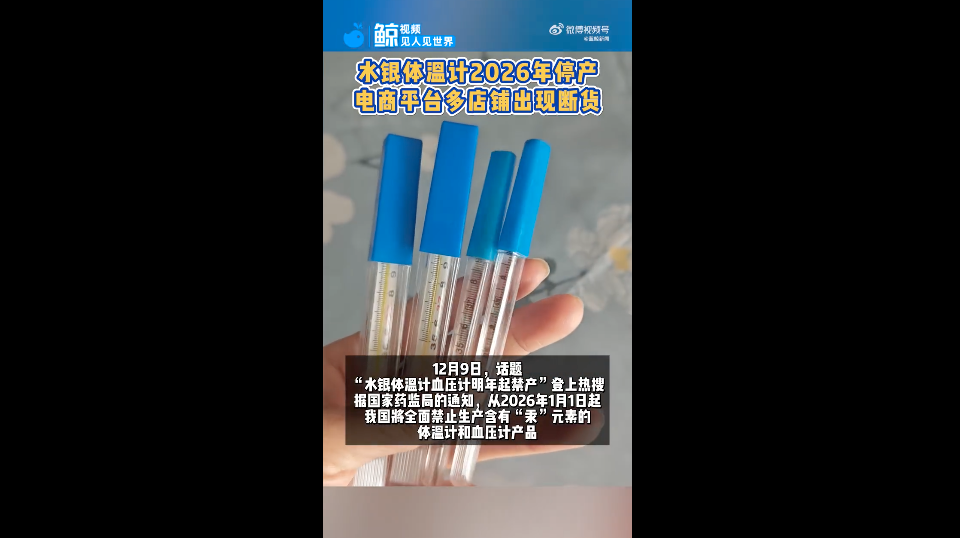
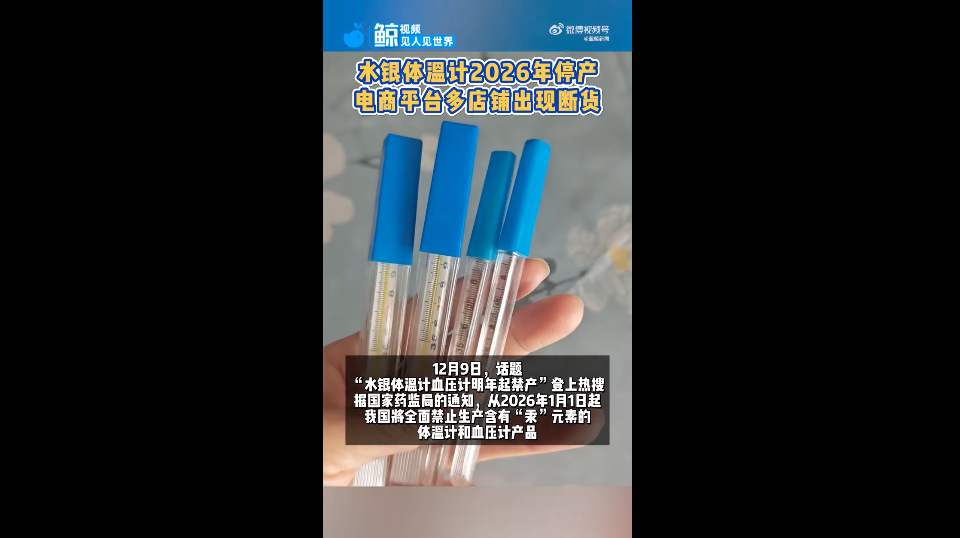
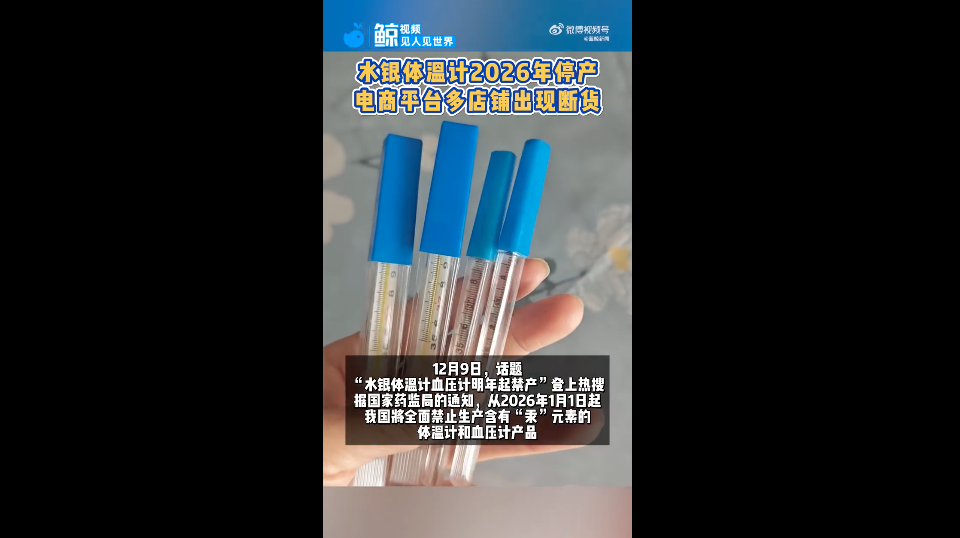
Core Viewpoint - The Chinese government will ban the production of mercury-containing thermometers and blood pressure monitors starting January 1, 2026, marking the end of mercury thermometers in the market [1]. Company Impact - Companies such as Yuyue Medical (002223.SZ) and Jiuan Medical (002432.SZ) have indicated that the impact of this ban on their business will be minimal, as they primarily focus on electronic products and have a very small volume of mercury thermometer and blood pressure monitor sales [1]. - Jiuan Medical stated that it is not a traditional thermometer manufacturer and that its main revenue source comes from reagent kits, particularly in the U.S. market [1]. Market Observations - There has been a noticeable increase in demand for mercury thermometers on e-commerce platforms, leading to stock shortages, while electronic and glass thermometers are more readily available [2]. - In physical pharmacies, staff reported that mercury thermometers are selling out quickly, with many customers still preferring them despite the availability of electronic alternatives [4][6]. Transition to Alternatives - Pharmacies are increasingly stocking electronic and infrared thermometers, which are priced significantly higher than mercury thermometers, indicating a shift in consumer preference [4][6]. - Medical companies are preparing to transition away from mercury products in compliance with government regulations, although some have not yet received formal notifications regarding the sales ban [6].
水银体温计禁产在即 线上店开始断货 客服称“购买的顾客增多”!生产企业:肯定遵守规定 要全面转型
Mei Ri Jing Ji Xin Wen· 2025-12-09 16:54
Core Viewpoint - The Chinese government will ban the production of mercury-containing thermometers and blood pressure monitors starting January 1, 2026, marking the end of mercury thermometers in the market [1]. Company Impact - Companies such as Yuyue Medical (002223.SZ) and Jiuan Medical (002432.SZ) have indicated that the impact of this ban on their business will be minimal, as they primarily focus on electronic products and have a very small volume of mercury thermometer and blood pressure monitor sales [1][5]. - Jiuan Medical stated that their main revenue source comes from reagent kits, particularly in the U.S. market, and they are not traditional manufacturers of thermometers [1]. Market Observations - There has been a noticeable increase in demand for mercury thermometers on e-commerce platforms, leading to stock shortages, while electronic and glass thermometers are more readily available [2]. - In physical pharmacies, staff reported that they have sold out of mercury thermometers due to increased demand, especially during the flu season, but they still offer electronic and infrared thermometers at significantly higher prices [4]. Industry Transition - Some medical companies have already begun transitioning away from mercury thermometers in anticipation of the ban, although they have not received formal notifications regarding the prohibition of sales [5]. - The market is expected to shift towards electronic and infrared thermometers, which are perceived as more convenient, especially for families with young children [4].

水银体温计禁产在即,线上店开始断货,客服称“购买的顾客增多”!生产企业:肯定遵守规定,要全面转型
Mei Ri Jing Ji Xin Wen· 2025-12-09 16:27
Group 1 - The Chinese government will ban the production of mercury-containing thermometers and blood pressure monitors starting January 1, 2026, marking the end of mercury thermometers in the market [1] - Companies such as Yuyue Medical, Jiuan Medical, and Kefu Medical are currently selling mercury thermometers and blood pressure monitors, but their impact on business is minimal as they primarily focus on electronic products [1][4] - Jiuan Medical stated that it is not a traditional thermometer manufacturer and that its main revenue comes from reagent kits, with minimal reliance on mercury products [1] Group 2 - There has been a noticeable increase in demand for mercury thermometers on e-commerce platforms, leading to stock shortages, while electronic and glass thermometers are more readily available [2] - In physical pharmacies, staff reported that mercury thermometers are sold out due to increased demand, particularly during the flu season, and that electronic alternatives are available at significantly higher prices [4][6] - Some pharmacies have not yet received official notifications regarding the ban on selling mercury thermometers, indicating a potential lag in compliance with the new regulations [6]
鱼跃医疗(002223):业绩回归稳健增长 看好未来海外市场提速
Xin Lang Cai Jing· 2025-09-01 00:47
Core Viewpoint - The company reported a solid performance in the first half of 2025, with revenue and net profit growth, driven by new product launches and expansion in overseas markets [1][2]. Group 1: Financial Performance - In the first half of 2025, the company achieved revenue of 4.659 billion yuan, representing a year-on-year increase of 8.2% [1] - The net profit attributable to shareholders was 1.203 billion yuan, up 7.4% year-on-year, while the non-recurring net profit decreased by 5.2% to 914 million yuan [1] - In Q2 2025, revenue reached 2.223 billion yuan, a growth of 7.1%, and net profit attributable to shareholders increased by 25.4% to 578 million yuan [1] Group 2: Product Line Performance - Revenue from respiratory therapy solutions was 1.674 billion yuan, growing by 1.93%, with home respiratory machine products seeing over 40% growth [1] - Blood glucose management and POCT solutions generated 674 million yuan, a 20% increase, with new products enhancing market position [1] - The home health testing solutions revenue was 1.014 billion yuan, up 15.22%, while clinical instruments and rehabilitation solutions revenue reached 1.134 billion yuan, growing by 3.32% [1] Group 3: International Market Growth - The company's overseas revenue was 607 million yuan, reflecting a significant year-on-year growth of 26.63%, with overseas sales accounting for 13.03% of total revenue [2] - Future plans include enhancing regional sales networks and developing products tailored to local market needs to build a strong international brand [2] Group 4: Technological Advancements - The company is integrating AI, big data, and IoT into its operations and product development, launching the Yuyue AIAgent app for health data management [2] - Continuous monitoring products are a focus, with ongoing R&D in AI wearable medical devices for blood glucose, blood pressure, and blood oxygen metrics [2] Group 5: Future Outlook - The company is expected to achieve net profits of 2.04 billion yuan, 2.36 billion yuan, and 2.73 billion yuan for 2025, 2026, and 2027, respectively, with corresponding PE ratios of 18, 16, and 14 times [3]