
Citadel

Search documents
Inside the string of recruiting executive departures at Ken Griffin's $69 billion Citadel
Business Insider· 2025-11-04 11:11
Core Insights - The hedge fund industry, valued at $5 trillion, is experiencing a talent war, with top recruiters becoming highly sought after and commanding multimillion-dollar compensation packages [1][16] Company-Specific Developments - Citadel, a major player in the hedge fund space with $69 billion in assets, has seen significant turnover in its business development (BD) ranks over the past year, including the recent resignation of Ansh Kalra, head of BD in the Global Quantitative Services division, who is moving to Balyasny Asset Management [2][3][4] - Citadel has made strategic hires to bolster its BD team, including Laura Sterner as head of BD for the Global Equities unit and Justas Povilenas as head of BD in Europe for the Global Fixed Income division [4][5] - The firm has experienced a series of senior departures, including Mark Hansen and Alex Topkins, indicating a trend of churn within its BD ranks [7][12] Industry Trends - The competition for top talent in the hedge fund industry has led to increased compensation for business development professionals, with some now receiving seven-figure pay packages [16][17] - The pressure and demands of the BD role at Citadel are significant, with executives evaluated based on the performance of candidates they introduce [13][15] - The turnover in talent is partly attributed to the arrival of new executives, such as chief people officer Sjoerd Gehring, although it remains unclear if his presence directly influenced the recent departures [14][15]


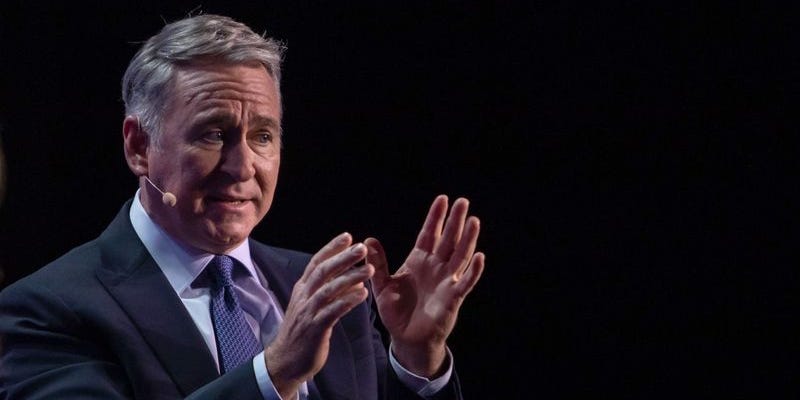
高盛、大摩CEO齐发预警:美股估值太高了,可能出现至少10%回调!
华尔街见闻· 2025-11-04 11:02
Core Viewpoint - Wall Street executives warn that despite strong corporate earnings, current valuation levels are concerning, with a potential market correction of over 10% expected in the next 12 to 24 months [1][2]. Valuation Concerns - Morgan Stanley CEO Ted Pick and Goldman Sachs CEO David Solomon express worries about the current valuation levels of U.S. stocks, predicting a possible 10% to 20% correction in the near future [2]. - Solomon notes that while technology stock valuations are fully priced, this does not apply to the entire market [5]. - Capital Group's Mike Gitlin highlights that most investors view market valuations as reasonable to full, with few considering stocks to be cheap [7]. - Pick mentions the risks of policy errors and geopolitical uncertainties in the U.S. market [6]. Market Correction as a Healthy Adjustment - Wall Street executives agree that market corrections should be seen as a normal and healthy development rather than a crisis signal [8]. - Solomon emphasizes that 10% to 15% corrections are common even in positive market cycles and do not alter fundamental capital allocation judgments [9][10]. - Pick encourages investors to welcome the possibility of cyclical corrections, describing them as healthy developments [11][12]. Positive Outlook for Asian Markets - Despite concerns over U.S. stock valuations, both Goldman Sachs and Morgan Stanley maintain an optimistic outlook for Asian markets [3][15]. - Goldman Sachs expects continued interest in China from global capital allocators due to recent positive developments, highlighting China as a major global economy [16]. - Morgan Stanley expresses bullish sentiments towards China, Japan, and India, identifying unique growth narratives in these markets [17]. Pick specifically points out investment opportunities in China's AI, electric vehicles, and biotechnology sectors, as well as Japan's corporate governance reforms and India's infrastructure development [17].


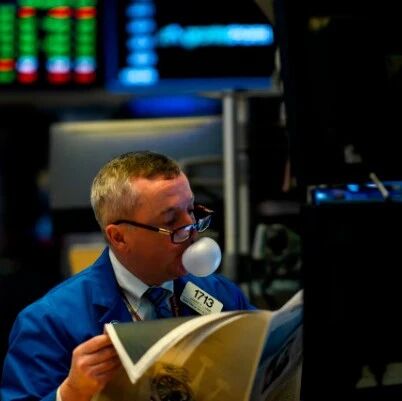
高盛、大摩CEO齐发预警:美股估值太高了,可能出现至少10%回调!
Hua Er Jie Jian Wen· 2025-11-04 08:12
Core Viewpoint - Wall Street executives warn that despite strong corporate earnings, current valuation levels are concerning, with potential for a market correction of over 10% in the next 12 to 24 months [1] Valuation Concerns - Goldman Sachs CEO David Solomon noted that "tech stock valuations are fully priced," but this does not apply to the entire market [2] - Morgan Stanley CEO Ted Pick mentioned that while the market has progressed significantly, there are risks related to "policy errors" and geopolitical uncertainties in the U.S. [2] - Capital Group's Mike Gitlin stated that most investors view market valuations as between reasonable and full, with few considering stocks to be cheap [2] Market Correction as a Healthy Adjustment - Wall Street executives agree that market corrections should be seen as normal and healthy developments rather than crisis signals [3] - Solomon emphasized that 10% to 15% corrections often occur even in positive market cycles and do not alter fundamental capital allocation judgments [3][4] - Pick stated that investors should welcome the possibility of cyclical corrections, describing them as healthy developments rather than signs of crisis [5] Positive Outlook for Asian Markets - Despite concerns over U.S. stock valuations, both Goldman Sachs and Morgan Stanley maintain an optimistic outlook for Asian markets [6] - Goldman Sachs expects continued interest in China from global capital allocators due to recent positive developments, including trade progress [6] - Morgan Stanley holds a bullish view on markets in China, Japan, and India, highlighting unique growth narratives in these regions [7] - Pick specifically pointed out investment opportunities in China's AI, electric vehicles, and biotechnology sectors, as well as Japan's corporate governance reforms and India's infrastructure development [7]
Armstrong Economics
Armstrong Economics· 2025-11-04 05:02
Spread the loveFinanciers are deserting Wall Street in search of asylum from socialist policies. Miami is a hot spot for Wall Street refugees, but another notable area has garnered attention that those in the industry are terming “Y’all Street.”Dallas, Texas, has a rapidly expanding ecosystem of financial institutions, private equity firms, fintech companies, hedge funds, and major banks. Areas like Uptown, Downtown, and Victory Park have seen a massive migration of financial service professionals from New ...


Hedge funds are on track for a banner year — but 2 charts show one group of money managers is the industry darling
Yahoo Finance· 2025-10-30 17:20
Core Insights - Hedge funds are on track for their best annual performance since 2020, with an average gain of 16.6% through three quarters and over $40 billion in net inflows from investors [1][7]. Performance Overview - The industry achieved a 5.2% weighted average gain in Q3, with 80% of funds posting positive returns despite macroeconomic and geopolitical challenges [2][4]. - Multistrategy funds led the performance with an average gain of 19.3%, followed by equities funds at 17.1% and global macro funds at 15.8% [3][7]. Strategy-Specific Insights - Global macro funds were the top performers in Q3, achieving a 6.5% gain, while equities and multistrategy funds gained 5.6% and 4.8%, respectively [4]. - Commodities and event-driven strategies faced challenges but still managed to record gains in Q3 [5]. Inflows and Investment Trends - Multistrategy funds attracted the majority of the industry's investment inflows, accounting for $30 billion of the $41.3 billion in net inflows in 2025, with $18 billion added in Q3 alone [6][8]. - The popularity of multistrategy funds has led to a significant increase in assets under management, surpassing $425 billion, more than double their size in 2020 [8]. Investor Sentiment - Continuous inflows in Q3 indicate that investors are capitalizing on consistent performance, driven by the appeal of diversification and returns [9].
美国高低频量化管理人开始呈现融合趋势 ——海外量化季度观察2025Q3
申万宏源金工· 2025-10-30 08:02
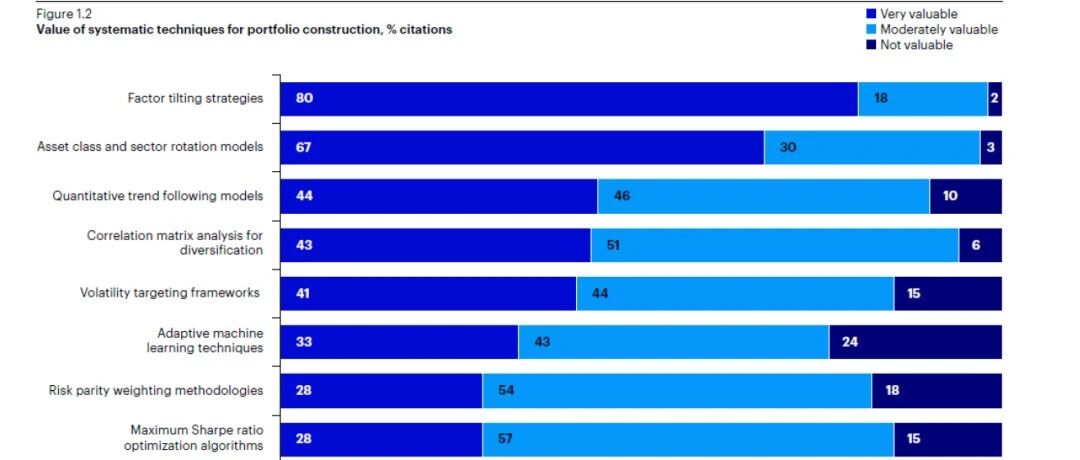
Group 1: Overseas Quantitative Dynamics - The trend of integration between high-frequency trading and quantitative alpha management is emerging in the U.S. private equity market, particularly after a market pullback in 2025 due to a rebound in "junk stocks" [1][2] - High-frequency trading has evolved significantly over the past 20 years, with firms like Citadel and Jane Street facing intense competition, leading them to adopt short-cycle alpha prediction strategies to mitigate pure speed competition [1][2] - Traditional quantitative alpha strategies, which began in the 1980s, have longer holding periods and larger average exposure compared to high-frequency trading, which is now increasingly overlapping with traditional strategies [2][3] Group 2: Market Performance - In the first half of 2025, large quantitative managers like Citadel underperformed smaller managers such as Balyasny and ExodusPoint, with Citadel achieving only 2.5% returns compared to over 7% for smaller firms, primarily due to increased strategy drawdowns from frequent tariff changes [4] - Citadel and Point72's performance improved due to their focus on fundamental, concentrated portfolios, which outperformed their flagship strategies this year [4] Group 3: Regulatory Issues - Jane Street faced regulatory scrutiny in India, with accusations of manipulating market prices on options expiration dates, leading to a suspension of trading privileges and potential penalties [5] Group 4: Overseas Quantitative Perspectives - Machine learning is gaining traction in macro investment, with firms like BlackRock exploring its application to enhance traditional models and extract investment signals from complex macro data [7][10] - AQR's research highlights biases in subjective versus objective stock return predictions, noting that subjective forecasts tend to be overly optimistic, especially following bull markets [15][16] - Invesco's global quantitative survey indicates a rising trend in the use of quantitative methods across multi-asset portfolio management, with a notable increase in the flexibility of factor adjustments [19][22][23] Group 5: Performance Tracking of Quantitative Products - Factor rotation products, such as those from BlackRock and Invesco, have shown varying performance, with BlackRock's products outperforming benchmarks in recent months [28][30] - Machine learning-based stock selection strategies have demonstrated better performance compared to traditional methods, with products like QRFT outperforming AIEQ [43] - The Bridgewater All Weather ETF has shown resilience, recovering quickly from market pullbacks and achieving over 15% cumulative returns since its inception [44][46]


Solana News: Solana Flexes Huge Institutional Wins, SOL Hits $200+
Yahoo Finance· 2025-10-28 15:39
Market Overview - Confidence is returning to the market as the Crypto Fear and Greed Index has improved from "Fear" to "Neutral" following the October crash [1] Bitcoin and Altcoin Performance - Bitcoin has increased by 6% over the week, reaching $114,000, driven by expectations of a Fed rate cut and a potential U.S.-China trade deal [2] - The overall market capitalization of the sector has risen by 8% to $254 billion, with trading volume increasing by 17% to $21 billion [2] Solana Developments - Solana's institutional appeal is growing, with Bitwise launching the first Solana staking ETF, BSOL, on the New York Stock Exchange [3] - Grayscale is set to launch its Solana Trust ETF, despite the ongoing U.S. government shutdown [3] - Fidelity has begun offering Solana trading across all its platforms, enhancing access for retail and institutional investors [3] - Solana's price has risen by 10% this week, surpassing the $200 mark ahead of significant ETF launches [4] Solana's Total Value Locked (TVL) - Solana's total value locked has increased by 6% to $11.8 billion, with BNB Chain following at $8.7 billion [5] Decentralized Finance (DeFi) Trends - Solana leads in daily revenue among competing L1 and L2 chains [6] - Decentralized exchange (DEX) volume has decreased by 21% this week, indicating a shift away from these platforms [7] Notable News in Solana Ecosystem - Solana DEX Jupiter has launched a beta predictions market in collaboration with Kalshi, with a full rollout expected in Q4 2025 [9] - Citadel has made a multimillion-dollar investment in DeFi Development Corp., which is accumulating Solana assets, signaling increased institutional interest [10]
People: BNY taps Nasdaq CRO for enterprise risk role, Hoornweg steers StanChart CIB solo, and more
Risk.net· 2025-10-28 04:30
Group 1: Leadership Changes - BNY has appointed Catherine Addona-Peña as the new head of enterprise risk, previously serving as chief risk officer at Nasdaq [1] - Nasdaq is currently without a full-time CRO as Addona-Peña's responsibilities are being managed by other team members while a replacement is sought [2] - JP Morgan has promoted Conor Hillery and Matthieu Wiltz to co-CEOs for Europe, the Middle East, and Africa, succeeding Filippo Gori [5][6] Group 2: New Appointments - Kranthi Gade has been named head of global macro and US cross-asset strategic indexes structuring at JP Morgan [8] - Adrian Loh has joined JP Morgan Private Bank as market head of investments and advice for Southeast Asia [10] - Fahim Rahman has been appointed head of derivatives risk solutions for EMEA at Mizuho [15] Group 3: Organizational Changes - Standard Chartered has appointed Roberto Hoornweg as CEO of corporate and investment banking, taking over from Sunil Kaushal [11][12] - Citi has appointed Sophie Landry as head of markets for Germany and Austria, and Jason Woods as head of futures execution for Europe, the Middle East, and Africa [16][18] - RBC Capital Markets has appointed Callum Maitland to head structured inflation and cross-currency basis trading [20] Group 4: Regulatory and Governance Updates - The Federal Deposit Insurance Corporation has named Ryan Billingsley as director in the division of risk management supervision [27] - The Alternative Investment Management Association has appointed Jon May as the new chair of its governing body, succeeding Karl Wachter [28]


Hedge Fund Assets Reach Record $5 Trillion With Most Inflows Since 2007
Yahoo Finance· 2025-10-27 10:30
Core Insights - The hedge fund industry has reached a record total global assets under management of $5 trillion as of September 30, marking the highest level since Q3 2007, with an increase of $238.4 billion during the quarter, including $33.7 billion in new allocations, the most significant since 2007 [1][2]. Hedge Fund Performance - Equity hedge fund managers achieved a 7.2% return on investments and increased their assets by $96.7 billion in Q3, with net inflows of $18 billion, bringing total assets under management to $1.5 trillion [5]. - Macro hedge funds saw their assets grow by $33.5 billion in Q3, with net client inflows of $1.7 billion, resulting in total macro capital of $759 billion [5]. Market Sentiment and Strategy - The current market sentiment is characterized by a "risk-on" attitude, with hedge fund managers adapting to evolving risks while preparing for potential reversals across various asset classes, including equities, commodities, currencies, and cryptocurrencies [2]. - Institutional investors are expected to increase allocations to hedge funds that can balance a risk-on approach, particularly in light of trends such as the AI boom, while also planning for defensive strategies amid trade turmoil [2]. AI and Human Element in Finance - Despite the benefits of artificial intelligence in enhancing productivity, Citadel CEO Ken Griffin expressed skepticism about AI fully taking over jobs in the financial sector, noting that it currently falls short in uncovering alpha [3].
X @Bloomberg
Bloomberg· 2025-10-24 11:42
Market Share & Revenue - Jane Street、Citadel 等新兴公司目前占据全球交易收入的五分之一 (20%)[1] - 行业市场份额预计将在本十年末达到 30%[1]