
建信基金

Search documents
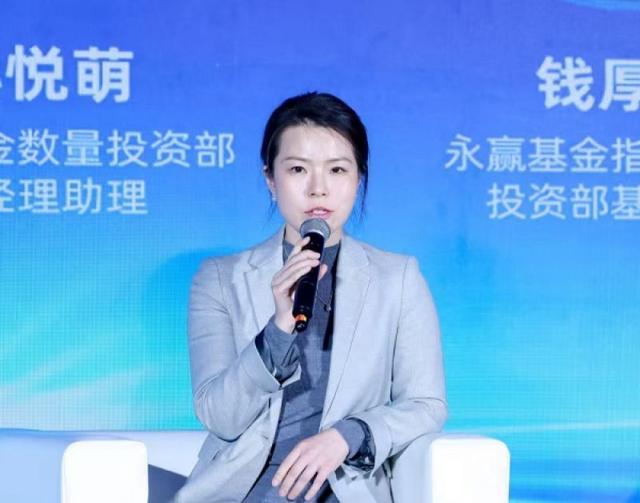
对话建信基金孙悦萌:在量化理性与人性温度之间,搭建一座稳健的桥梁
Hua Xia Shi Bao· 2025-12-22 04:57
Core Viewpoint - The interview with Sun Yuemeng highlights her approach to investment management, emphasizing the importance of aligning investment solutions with clients' real-life scenarios rather than relying solely on quantitative models [2][3]. Group 1: Investment Philosophy - Sun Yuemeng's background in mathematics and financial engineering allows her to deconstruct complex systems, but she recognizes the need for a broader perspective in investment beyond academic models [3]. - She has developed a "three-layer adjustment" framework that incorporates tactical adjustments based on quantitative signals while maintaining flexibility in investment style [3][4]. - The ultimate goal of her investment strategies is to enhance clients' real wealth experiences, focusing on stability and reassurance in their investment journeys [4][5]. Group 2: Client-Centric Approach - Sun Yuemeng views her role as a "solution provider" rather than merely a "product seller," emphasizing the importance of accompanying clients through market volatility [5][6]. - She believes that the core challenge for investors is not a lack of knowledge but the need to adapt psychologically to market fluctuations, advocating for a mindset that sees manageable volatility as a pathway to long-term returns [5][6]. - Her investment strategy includes a dual-track framework that balances strategic odds with macro factors to assess tactical probabilities, aiming to minimize unnecessary losses during uncertain market conditions [5][6]. Group 3: Gender Perspective in Investment - As a female fund manager, Sun Yuemeng perceives her gender traits as a characteristic that influences her decision-making style, favoring a balanced approach rather than extreme style shifts [6]. - She seeks to connect with investors who appreciate a steady investment style and are focused on long-term holding experiences, fostering a mutual growth journey [6]. - Sun Yuemeng emphasizes the need for investors to transition from a mindset of guaranteed returns to an understanding of the necessity of tolerating controlled volatility for achieving reasonable long-term returns [6].

现货黄金再创历史新高,建信上海金ETF(518860)近10日净流入超1900万元,多重因素驱动,机构长期仍看多黄金
Sou Hu Cai Jing· 2025-12-22 03:51
Group 1 - The core viewpoint of the articles highlights the significant rise in gold prices, with spot gold reaching a new historical high of $4,392.07 per ounce on December 22, surpassing the previous high from October 20 [1] - The 建信 Shanghai Gold ETF (518860) has attracted a total of 19.1252 million yuan in the last 10 trading days, indicating strong investor interest in gold [1] - 中邮证券 predicts that gold will be the standout performer in 2025, driven by a shift from U.S. Treasury bonds, with gold prices expected to remain above $4,000 per ounce [1] Group 2 - 东吴证券 attributes the strong rise in gold prices this year to multiple factors, including ongoing gold purchases by global central banks since 2022, regional political risks, and the revaluation of financial markets concerning the Federal Reserve's interest rate cuts and debt issues [1] - 广发证券 identifies three long-term reasons for a bullish outlook on gold: the macro narrative of a potential debt crisis reshaping global order, a decline in real interest rates providing marginal support for gold prices, and continued inflows from ETFs and central bank purchases [2] - The recent fluctuations in precious metal prices suggest that investors should be cautious and manage their positions wisely [2]
银行系基金二十年进化论:解码资管机构规模崛起与内在蝶变
Jing Ji Guan Cha Wang· 2025-12-22 02:40
Core Insights - The establishment of bank-affiliated fund companies in China in 2005 marked a significant transformation in the asset management industry, leading to a reshaping of the market landscape and influencing the evolution of the industry over the past two decades [1][2]. Group 1: Initial Developments - In 2005, the Chinese fund industry was at a critical turning point, recovering from a bear market that had led to difficulties in fund issuance, with many funds failing to raise over 1 billion yuan [2]. - The release of the "Pilot Management Measures for Commercial Banks to Establish Fund Management Companies" opened the door for banks to enter the fund management sector [2]. Group 2: Market Reactions - There were two contrasting viewpoints regarding the entry of bank-affiliated funds: the "threat theory," which expressed concerns over the monopolistic sales channel advantages of banks, and the "development theory," which viewed their entry as a means to expand the overall market and diversify the industry [3]. Group 3: Early Success - The first bank-affiliated fund companies, including ICBC Credit Suisse, Bank of Communications Schroder, and CCB Fund, were established in mid-2005 [4]. - ICBC Credit Suisse's first fund, the ICBC Core Value Mixed Fund, launched with a scale of 4.345 billion yuan and 144,700 subscribers, showcasing the advantages of bank channels [5]. Group 4: Growth Phase - From 2006 to 2007, the A-share market experienced a bull market, leading to rapid growth in the fund industry, with bank-affiliated funds achieving significant scale increases [6]. - In 2006, ICBC Credit Suisse ranked 10th among 53 companies with a management scale of 29.6 billion yuan, while Bank of Communications Schroder reached 23.1 billion yuan, ranking 14th [7]. Group 5: Differentiated Strategies - The first bank-affiliated fund companies began to adopt different development paths, with ICBC Credit Suisse focusing on comprehensive development, including launching its first QDII fund and index fund [8][9]. - Bank of Communications Schroder emphasized building active equity capabilities, while CCB Fund took a more conservative approach in its research and investment framework [9][10]. Group 6: Challenges and Adaptation - The introduction of third-party fund sales licenses in 2012 and the rise of internet channels posed challenges to the traditional sales advantages of banks [9]. - ICBC Credit Suisse demonstrated adaptability by engaging in new industry models and enhancing its product offerings and digital capabilities [10]. Group 7: Recent Developments - By 2020, bank-affiliated fund companies faced unprecedented competition, prompting a second entrepreneurial phase, with ICBC Credit Suisse focusing on a multi-strategy research and investment system [11]. - CCB Fund and other bank-affiliated funds have also made significant strides in their investment strategies, particularly in emerging industries and pension fund management [12][13]. Group 8: Future Outlook - As the industry enters a new competitive environment, bank-affiliated funds are expected to enhance their core competencies in research, risk control, customer service, and technological innovation [14]. - The success of bank-affiliated funds will depend on their ability to build independent capabilities beyond shareholder resources while supporting national strategies and meeting wealth management needs [15][16].
基金早班车丨股基十年最强回归C位,公募新发1468只创四年新高
Jin Rong Jie· 2025-12-22 01:04
Group 1: Market Overview - The bond fund market is retreating, while equity funds are expanding at an unprecedented rate not seen in nearly a decade, with 1,468 new public funds established in 2025, marking a peak in four years, and total fundraising remaining stable compared to the past two years, indicating a shift to a new phase dominated by equities and innovative segmentation [1] - On December 19, the Shanghai Composite Index rose by 0.36% to 3,890.45 points, the Shenzhen Component Index increased by 0.66% to 13,140.21 points, and the ChiNext Index gained 0.49% to 3,122.24 points, with a total trading volume of 17,259.15 billion yuan across both markets [1] Group 2: Fund News - On December 19, two new funds were launched, primarily mixed funds, while 28 funds distributed dividends, mostly bond funds, with the highest dividend payout from the Huatai Zijin Jiangsu Expressway Closed-End Infrastructure Securities Investment Fund at 1.3895 yuan per 10 shares [2] - As of December 12, the stock private equity position index reached 83.59%, increasing by 0.61 percentage points, with over 70% of products holding more than 80% positions, indicating strong bullish sentiment; the total scale of private equity products reached a historical high of 22.09 trillion yuan [2] - By the end of 2025, public funds are expected to distribute nearly 230 billion yuan, with leading companies distributing over 10 billion yuan; bond funds contributed 73% of the total dividend amount, although this represents a 10 percentage point decrease from the previous year, while equity funds have become the "dark horse" in dividend distribution due to market recovery and policy support [2] Group 3: Investment Trends - The hard technology theme has been a consistent focus throughout the year, with public funds concentrating their incremental investments in emerging industries; as of December 21, 39 public funds participated in 85 stock placements, with a total allocation of 34.088 billion yuan, a year-on-year increase of 13.85%, and an overall floating profit of 10.742 billion yuan, representing a floating profit ratio of 31.51% [3]

百余只货基收益率破“1”,基金公司集体限购保收益
Zheng Quan Shi Bao· 2025-12-21 23:52
Core Viewpoint - The yield of money market funds is rapidly declining, with over 100 funds now yielding below 1%, leading to management fee adjustments and purchase limits to protect returns [1][2][5]. Group 1: Yield Decline - As of December 19, 123 money market funds have a seven-day annualized yield below 1%, with some funds like Tianfeng Jin Guanjia and Guangfa Cash Treasure A dropping below 0.5% [2]. - The largest money market fund, Tianhong Yu'ebao, has seen its yield fall to 1.02%, previously dipping to 1.001% on December 4, indicating a critical threshold [2]. - Other leading funds such as Jianxin Jiaxinbao A and Huaxia Caifubao A have yields of 1.15% and 1.06%, respectively [2]. Group 2: Management Fee Adjustments - Over 30 money market funds have been forced to lower management fees due to contractual obligations as their yields fell below twice the rate of demand deposits [4][5]. - For instance, Guangda Baodexin Fund adjusted the management fee from 0.90% to 0.25% when the yield fell below the stipulated threshold [4]. - Similarly, the Zhaoshang Asset Management fund also reduced its management fee to 0.30% under similar conditions [4]. Group 3: Purchase Limits - Several fund companies have announced purchase limits or even suspended subscriptions to protect existing investors [6][7]. - For example, the Shangyin Hui Profit E fund set a limit of 100,000 yuan for single-day purchases starting December 22 [6]. - The Tianzhi Tiande Li money market fund suspended subscriptions from December 18, while still allowing transactions through direct sales channels [6]. Group 4: Market Conditions - Analysts attribute the decline in yields to multiple factors, including a decrease in the risk-free interest rate and an oversupply of liquidity leading to an "asset shortage" [3]. - Some funds have managed to maintain yields around 2% by employing more aggressive duration and leverage strategies [3]. - Despite the downward trend in yields, the total share of money market funds increased to 15.05 trillion units by the end of October, reflecting a growth of over 3.8 million units since September [5].
百余只货基收益率破“1” 基金公司集体限购保收益
Xin Lang Cai Jing· 2025-12-21 18:36
Core Viewpoint - The yield of money market funds is rapidly declining, with over 123 funds now yielding below 1%, prompting management fee reductions and purchase limits to protect returns [1][4][7]. Group 1: Current Yield Trends - As of December 19, 123 money market funds have a seven-day annualized yield below 1%, with some funds like Tianfeng Jin Guanjia and Guangfa Cash Treasure A even dropping below 0.5% [1] - The largest money market fund, Tianhong Yu'ebao, has seen its yield fall to 1.02%, previously dipping to 1.001% on December 4 [1] - Other leading funds such as Jianxin Jiaxinbao A and Huaxia Caifubao A have yields of 1.15% and 1.06%, respectively [1][2] Group 2: Reasons for Yield Decline - The decline in yields is attributed to a decrease in the risk-free interest rate and an "asset shortage" due to ample market liquidity, leading funds to lower leverage and shorten duration to manage risks [2][3] - Some funds still maintain yields around 2%, such as Bank of China Ru Yi Bao A at 1.99% [2] Group 3: Management Fee Adjustments - Over 30 money market funds have been forced to lower management fees due to contractual obligations as their yields fell below twice the rate of demand deposits [4] - For instance, Guangda Baodexin Fund adjusted its management fee from 0.90% to 0.25% when its yield fell below the threshold [4] Group 4: Fund Size and Purchase Limits - Despite declining yields, the total share of money market funds increased to 15.05 trillion shares by the end of October, up by over 3.8 million shares since September [5] - Many fund companies have announced purchase limits or even suspended subscriptions to protect existing investors, with some funds limiting daily investments to 100,000 yuan [7][8]

百余只货基收益率“破1”!基金公司集体限购保收益......
券商中国· 2025-12-21 14:27
Core Viewpoint - The yield of money market funds is rapidly declining, with over 100 funds now yielding below 1%, indicating a broader trend of decreasing returns in the market [1][2][3]. Group 1: Current Market Situation - As of December 19, 123 money market funds have seen their seven-day annualized yields drop below 1%, with some products like Tianfeng Jin Guanjia and Guangfa Cash Treasure A falling below 0.5% [3]. - The largest money market fund, Tianhong Yu'ebao, has a seven-day annualized yield of 1.02%, having briefly dipped to 1.001% on December 4 [3]. - Other leading funds such as Jianxin Jiaxinbao A and Huaxia Caifubao A have yields of 1.15% and 1.06%, respectively [3]. Group 2: Reasons for Yield Decline - The decline in money market fund yields is attributed to a decrease in the risk-free interest rate, which has led to lower returns on bank deposits and bond repurchase agreements [4]. - Market liquidity has increased, resulting in an asset shortage, compelling funds to reduce leverage and shorten duration to manage risk, further impacting yield performance [4]. - Despite the overall decline, some funds like Bank of China Ruyi Bao A maintain yields around 2%, employing more aggressive duration and leverage strategies [4]. Group 3: Management Fee Adjustments - Due to falling yields, several funds have been forced to lower management fees as per their contractual obligations. For instance, Guangda Baodexin Fund adjusted its management fee to 0.25% when the yield fell below a certain threshold [5][6]. - In December alone, over 30 funds have adjusted their management fees due to yields dropping below twice the rate of demand deposits [6]. Group 4: Fund Subscription Restrictions - Many fund companies have announced subscription limits or even suspended new subscriptions to protect existing investors and ensure stable fund operations [7]. - For example, funds like Shenyin Wanguo and Tianzhi Tiande Li have implemented limits on large subscriptions, while others have completely halted new subscriptions [7]. - The recent subscription restrictions are partly in response to regulatory requirements aimed at improving liquidity management and preventing practices that dilute existing investors' interests [8].

青春赛场 舍我其谁 第三届大学生基金知识竞赛即将播出
Zhong Guo Zheng Quan Bao· 2025-12-19 00:00
Core Insights - The third edition of the University Student Fund Knowledge Competition will commence on December 20, aiming to enhance financial literacy among university students and cultivate rational investors for the capital market [1][2] Group 1: Event Overview - The competition is guided by the China Securities Investment Fund Industry Association and organized by China Securities Journal, as part of the "One Company, One Province, One University" investor education initiative [1] - The event features 12 teams formed by 12 universities and 12 fund companies, promoting collaboration between academia and the financial industry [2] Group 2: Competition Format - The competition will adopt a "knowledge + fun + competition" approach to disseminate fund knowledge and promote value and long-term investment concepts [2] - The tournament structure includes group matches, revival matches, quarter-finals, and finals, with various question formats such as mandatory answering, quick answering, and challenge answering [2] - The competition will be broadcasted on major media platforms starting December 20 [2]
青春赛场 舍我其谁 第三届大学生基金知识 竞赛即将播出
Zhong Guo Zheng Quan Bao· 2025-12-18 22:01
Core Insights - The third edition of the University Student Fund Knowledge Competition will commence on December 20, aiming to enhance financial literacy among university students and cultivate rational investors for the capital market [1][2] Group 1: Event Overview - The competition is guided by the China Securities Investment Fund Industry Association and organized by China Securities Journal, as part of the "One Company, One Province, One University" investor education initiative [1] - The event features 12 teams formed by 12 universities and 12 fund companies, promoting collaboration between academia and the financial industry [2] Group 2: Competition Format - The competition will adopt a "knowledge + fun + competition" approach to disseminate fund knowledge and promote value and long-term investment concepts [2] - The tournament structure includes group matches, revival matches, quarter-finals, and finals, with various question formats such as mandatory answering, quick answering, and challenge questions [2] - The competition will be broadcasted on major media platforms starting December 20 [2]
第三届大学生基金知识竞赛即将播出
Zhong Guo Zheng Quan Bao· 2025-12-18 20:23
Core Viewpoint - The third edition of the University Student Fund Knowledge Competition aims to enhance financial literacy among college students, fostering a new generation of rational investors and supporting the development of the capital market [1][2]. Group 1: Event Overview - The competition will commence on December 20 and will be broadcasted across major media platforms [1]. - It is guided by the China Securities Investment Fund Industry Association and organized by China Securities Journal, as part of the "One Company, One Province, One University" investor education initiative [1]. Group 2: Participation and Structure - Twelve universities have teamed up with twelve fund companies to form twelve joint teams for the competition [2]. - The participating teams include prestigious institutions such as Tsinghua University, Fudan University, and Shanghai Jiao Tong University, paired with notable fund companies [2]. Group 3: Competition Format - The competition will utilize a format that combines knowledge, fun, and competition to promote learning about fund investment [2]. - The event will consist of several stages: group matches, revival matches, quarter-finals, and finals, featuring various question formats such as mandatory, buzzer, and challenge questions [2].