翔宇医疗

Search documents
大涨40%后股价转跌 翔宇医疗提示脑机接口相关产品尚未规模化销售
Zheng Quan Shi Bao Wang· 2026-01-07 05:45
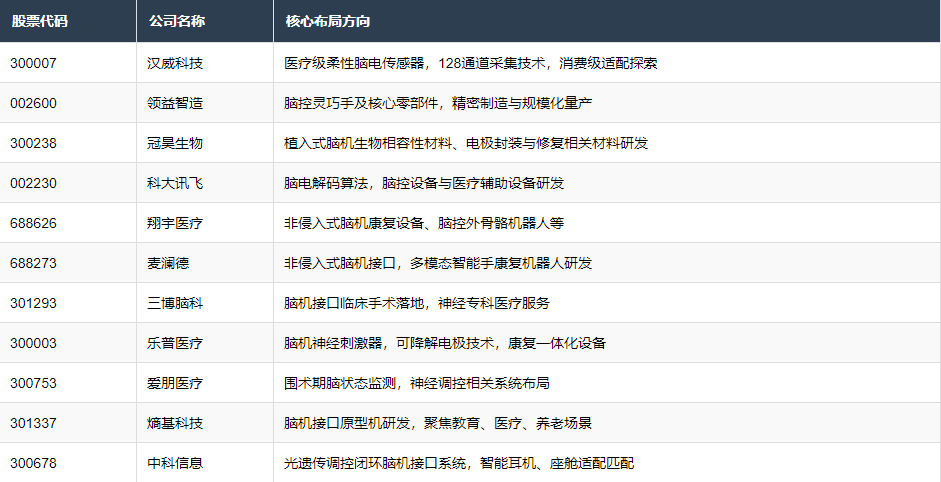
Core Viewpoint - The recent surge in stock price of Xiangyu Medical (688626) is attributed to the market's enthusiasm for brain-computer interface (BCI) concepts, with a notable 40% increase over two trading days, although the stock experienced a decline after peaking at 95 CNY per share [1]. Group 1: Company Overview - Xiangyu Medical has over 20 years of experience in the rehabilitation medical device industry, focusing on a comprehensive range of rehabilitation solutions, including 10 categories and over 1,000 products [1]. - The company has submitted registration applications for several BCI products, covering various therapeutic modes and applications, including cognitive training and sleep monitoring [1]. Group 2: Market Expansion and Product Development - The BCI project has been introduced to over 500 medical institutions, with plans to expand to over 700 by the Chinese New Year and over 1,000 top-tier hospitals by next year [2]. - The company aims to develop a comprehensive product matrix for BCI, with numerous new products expected to launch by 2026, enhancing its market presence [2]. Group 3: Financial Performance - For the first three quarters of 2025, the company reported a revenue of 537 million CNY, a 6% year-on-year increase, while net profit decreased by 40.09% to approximately 43.98 million CNY [4]. - Over 60% of the company's R&D investment is directed towards BCI-related projects, with successful registrations for EEG devices [4]. Group 4: Market Position and Future Outlook - The company has established a strong position in the BCI field with a multi-faceted approach in technology, products, and market channels, which is expected to accelerate product commercialization as regulatory and market conditions mature [2][3]. - The company has confirmed that there are no significant undisclosed events affecting stock price fluctuations, ensuring transparency in its operations [5].

A股超50亿元涌入,脑机接口概念狂掀涨停潮
21世纪经济报道· 2026-01-07 05:40
Core Viewpoint - The article highlights the rapid growth and investment potential in the brain-computer interface (BCI) sector, driven by technological advancements and significant market interest, particularly following announcements from Neuralink regarding large-scale production and automation of BCI devices [1][4][14]. Market Performance - The A-share BCI concept sector experienced a surge, with over 5 billion yuan flowing into the market, and the BCI index showing a cumulative increase of over 14% in the first three trading days of the year [1][8][11]. - Notable stocks in the BCI sector include Meihao Medical, which saw a 19.81% increase, and Innovation Medical, which rose by 9.99% [2]. Industry Overview - BCI technology connects the brain with external devices for information exchange, categorized into three types: invasive, semi-invasive, and non-invasive, each with varying levels of signal quality and risk [4]. - The healthcare sector is identified as the primary application area for BCI technology, accounting for 56% of its applications, with projections estimating the global BCI medical application market to reach $40 billion by 2030 and $145 billion by 2040 [4][6]. Policy and Development - The Chinese government has included BCI in its "14th Five-Year Plan," with goals for core technology breakthroughs by 2027 and positioning the industry among the world's leaders by 2030 [5][6]. - In 2025, several companies, including Boryeong and Ladder Medical, completed significant implantation trials, marking China's entry into clinical trials for invasive BCI after the U.S. [6]. Company Developments - Companies like Beiyikang and Aipeng Medical are actively involved in BCI, with Aipeng focusing on non-invasive technologies and partnerships for rehabilitation systems [10][12]. - Other firms, such as Xiangyu Medical and Xinwei Medical, are developing various BCI products and are expected to see rapid revenue growth in the coming years [10][12]. Investment Landscape - The BCI sector has attracted significant investment, with nearly 100 financing events in the past five years totaling over 10 billion yuan, and a notable 30% year-on-year increase in financing activities in 2025 [14]. - Analysts suggest that the BCI industry is on the verge of commercial growth, supported by policy and technological advancements, while also cautioning about the challenges of clinical validation and high costs [14][15].


脑机接口板块午后跳水,诚益通等股跌超10%
Xin Lang Cai Jing· 2026-01-07 05:29
Group 1 - The brain-computer interface sector experienced a significant decline in the afternoon, with companies such as Chengyitong, Aipeng Medical, and Entropy Technology dropping over 10% [1] - Other companies in the sector, including Xiangyu Medical, Mylan, and Weisi Medical, also faced notable declines [1]

高毅、淡水泉、景林、葛卫东旗下私募大动作!盯上商业航天、脑机接口概念股?
私募排排网· 2026-01-07 03:47
Core Viewpoint - The article emphasizes the significance of private equity fund research activities as a predictive signal for future market trends, especially as the private equity industry in China is projected to exceed 22 trillion yuan by 2025, reflecting macroeconomic recovery and structural transformation [2]. Group 1: Private Equity Research Activities - In 2025, a total of 4,527 private equity institutions conducted research on 4,611 A-share listed companies, with the top five companies being Crystal Optoelectronics, Zhongkong Technology, Huichuan Technology, Huaqin Technology, and Nine Company-WD [2]. - The article highlights the active research frequency of leading private equity firms such as Gao Yi, Dan Shui Quan, and Jing Lin, particularly in December, as they prepare for future investments [2]. Group 2: Performance of Companies Under Research - The top 20 A-share companies by the number of private equity research visits include Crystal Optoelectronics with 340 visits and a 2025 price increase of 14.65%, and Huichuan Technology with 314 visits and a 29.41% increase [6]. - The average stock price increase for companies researched in December 2025 was 12.67%, with notable performers like Xiangyu Medical and Boying Special Welding achieving increases of 86.39% and 42.97%, respectively [11]. Group 3: Notable Private Equity Firms - Gao Yi Asset conducted 515 research visits covering 305 listed companies in 2025, maintaining a high level of research activity [9]. - Dan Shui Quan completed 430 research visits covering 306 companies, with an average stock price increase of 13.90% since December 2025, highlighting significant gains for companies like Guanglian Aviation and Yongding Co., which saw increases of 105.10% and 59.44% [15][16]. - Jing Lin Asset conducted 222 research visits covering 162 companies, with an average stock price increase of 11.83% since December 2025, led by companies like Pulit and Zhongfu Shenying, which increased by 52.96% and 30.18% respectively [17].

2连板翔宇医疗:目前主要聚焦非侵入式脑机接口技术 截至2025年末尚未实现规模化销售
Di Yi Cai Jing· 2026-01-07 03:13
(本文来自第一财经) 翔宇医疗发布异动公告称,近期资本市场对人脑工程、脑机接口等概念关注度较高,相关板块股价涨幅 较大。公司目前主要聚焦非侵入式脑机接口技术,覆盖作业疗法、运动疗法、认知言语、吞咽等康复全 场景布局,与当前国际上的侵入式脑机接口技术路线存在差异。公司在脑机接口方面的投入,目前在技 术、产品、渠道市场等方面形成一定的布局,但招投标和销售等具有滞后性,截至2025年末,相关产品 尚未实现规模化销售,营收占比较小。 ...
脑机接口产业更新及重点标的推荐
2026-01-07 03:05
Q&A 脑机接口产业目前的市场行情如何?有哪些关键因素推动了这一领域的发展? 最近脑机接口市场行情非常火爆,主要是由于国内出台了利好政策,以及马斯 克在社交媒体上表示 Neuralink 将在 2026 年大规模生产脑机接口设备。这些 因素共同引爆了整个板块的情绪。脑机接口产业的发展关键在于快速商业化落 地,尤其是在非侵入式领域,企业需要具备强大的销售渠道能力、品牌力以及 与原有医疗业务的协同效应,以促进商业化落地速度和后续发展。 脑机接口产业更新及重点标的推荐 20260106 摘要 脑机接口产业正快速发展,商业化落地是关键,尤其在非侵入式领域, 企业需具备强大的销售渠道、品牌力及与原有医疗业务的协同效应,以 加速商业化进程。预计到 2025 年全球市场规模将达 30 亿美元,医疗 端应用将在 2030 年超过 400 亿美元。 脑机接口技术路径包括侵入式、半侵入式和非侵入式。侵入式信号质量 高但风险大,适用于重症患者;非侵入式安全性高,商业化快但竞争激 烈;半侵入式介于两者之间。美国企业多布局半侵入式,中国企业则以 非侵入式为主。 Neuralink 在侵入式脑机接口领域领先,已完成约 20 例人体植入, ...
脑机接口专家会议
2026-01-07 03:05
Summary of Neural Interface Technology Conference Industry Overview - The conference focused on the neural interface technology industry, particularly advancements made by Neuralink and domestic companies in China [1][3][4][5][10]. Key Points and Arguments Neuralink's Advancements - Neuralink has significantly reduced the cost of implantable devices, with fixture costs dropping by 95%, from approximately $5,000-$6,000 to a few hundred dollars [1][3][4]. - The electrode production cost remains high, at over $10,000 per electrode, but the implantation speed has improved from 20 seconds to 1.5 seconds per electrode, facilitating clinical applications [1][3][4]. - The company has entered clinical trials, utilizing BlackRock electrodes and developing its own implantation devices that combine electron microscopy and OCR systems for precise electrode placement [1][8][9]. Challenges in Neural Interface Technology - The industry faces challenges such as complex electrode production processes, low yield rates, and patent barriers, particularly regarding non-invasive puncture techniques patented by Musk [1][5][6]. - Domestic companies need breakthroughs in materials, processes, and patent strategies to compete effectively [1][5]. Comparison of Invasive and Semi-Invasive Techniques - Neuralink's fully invasive technology targets complex diseases, while domestic companies like BoruiKang focus on semi-invasive methods primarily for rehabilitation, which are less risky and costly [1][7][10]. - The main difference lies in the application: fully invasive techniques aim to treat severe conditions through deep neural stimulation, whereas semi-invasive methods are used for rehabilitation by repairing damaged nerves [1][7]. Domestic Industry Landscape - Domestic companies such as JieTi, Tiger Technology, and WeiLing have made progress in flexible electrodes but still lag behind international leaders like Neuralink in terms of channel count (128 channels vs. Neuralink's 1,024 channels) and other technical specifications [1][10]. - The downstream applications of the domestic neural interface industry account for 70% of the market share, focusing on rehabilitation devices and commercial products, while upstream investments in electrode and chip development are capital-intensive [1][10]. Clinical Applications and Future Directions - BoruiKang's semi-quantitative methods have been widely adopted in over 20 hospitals in China, with more than 200 clinical trials conducted in 2024 [12]. - The potential for interventionist neural interfaces is highlighted, with successful trials indicating a promising future if challenges like vascular blockage can be addressed [2][16]. Competitive Landscape - Companies like Medtronic have received FDA approval for their brain stimulators, showing significant efficacy in treating conditions like epilepsy, while competitors like Pinchi Medical face challenges due to patent restrictions [14][25]. - The market for deep brain stimulation (DBS) devices is still developing, with no fully mature embedded products available yet [25]. Additional Important Insights - The domestic neural interface industry is characterized by a high investment threshold in the upstream sector, with a typical investment ratio of 3:1 or 4:1 favoring downstream applications [10]. - The technology's application in treating neurological diseases is expanding, with potential uses in conditions like Alzheimer's and depression through adaptive neural regulation [19]. This summary encapsulates the key discussions and insights from the neural interface technology conference, highlighting both advancements and challenges within the industry.
脑机接口,突传重磅!
Zheng Quan Shi Bao· 2026-01-07 03:00
Core Insights - The brain-computer interface (BCI) sector is experiencing significant growth, highlighted by the recent completion of approximately 2 billion yuan financing by Qiangnao Technology, marking it as the second-largest financing in the field globally, after Neuralink [1][2] Industry Overview - The BCI sector has become the hottest investment track in the A-share market since the beginning of 2026, with multiple stocks such as Innovation Medical, Aipeng Medical, and Xiangyu Medical achieving consecutive trading limits [1] - The industry is currently driven by both policy support and technological breakthroughs, with expectations for Neuralink's large-scale production and automated surgical solutions marking a transition from clinical validation to commercial viability [3] Company Highlights - Qiangnao Technology, founded in February 2015, focuses on non-invasive BCI technology and has received FDA and CE certifications, making it one of the largest investors in BCI R&D globally [2] - The company has launched several products, including smart bionic limbs and brain-machine intelligent sleep devices, and has been recognized by TIME magazine as one of the best inventions of the year [2] Recent Developments - On January 6, multiple BCI stocks, including Sanbo Brain Science and Maillande, issued announcements regarding abnormal trading fluctuations, warning investors of potential risks [4][5][6] - Sanbo Brain Science, while experiencing significant stock price increases, clarified that it does not engage in BCI product development, and its revenue from neuro-regulation technology is minimal [4] - Maillande and Xiangyu Medical also reported that their BCI products are still in the R&D phase and have not yet achieved significant sales impact [5][6]


多家公司出“降温”公告,部分脑机接口概念股明显回调
Ge Long Hui· 2026-01-07 02:42
Core Viewpoint - The A-share market has seen a significant pullback in several brain-computer interface (BCI) concept stocks, with notable declines among various companies [1] Group 1: Stock Performance - Companies such as 麦澜德 (Mikland) and 熵基科技 (Entropy Technology) experienced declines exceeding 10% [1] - 诚益通 (Chengyi Tong) and 雷迪克 (Redik) fell over 7% [1] - 博拓生物 (Botuo Bio) and 爱朋医疗 (Aipeng Medical) dropped more than 6% [1] - 可孚医疗 (Kefu Medical) and 翔宇医疗 (Xiangyu Medical) decreased over 5% [1] - 狄耐克 (Dinaike) and 伟思医疗 (Weisi Medical) saw declines greater than 4% [1] Group 2: Company Announcements - Multiple BCI concept stocks issued announcements indicating a cooling off in the market [1] - 航天长峰 (Aerospace Changfeng) stated that the company has not actually engaged in BCI-related business [1] - 伟思医疗 (Weisi Medical) mentioned that new products in the BCI field are still in the early stages of market cultivation [1]


A股开年主线浮现,脑机接口风口正劲 热潮背后多只个股提示风险
Xin Hua Cai Jing· 2026-01-07 02:30
新华财经北京1月7日电(丁晶、董道勇)新年伊始,脑机接口概念股集体"沸腾",近20只个股连续两个交易日涨停。板块"开门红"缘 于市场对脑机接口巨大潜在需求、产业化进展提速及国家战略支持的叠加效应。 值得注意的是,新华财经数据显示,2026年1月5日该板块主力净流入29亿元,而6日主力资金开始净流出,规模近20亿元,但创新医 疗、爱朋医疗仍受主力资金追捧,继续保持净流入。分析认为,脑机接口行业正迎来"技术与商业化共振"的时刻,2026年脑机接口商 业化进程有望加速,并从医疗刚需向AI应用、机器人等多领域渗透。 长期来看,技术与合规双壁垒及业务联动长期看好头部企业形成技术与合规双壁垒,技术上具备核心专利、领先的研发能力,合规上 符合医疗行业严格的监管要求,如通过国家药监局的行业标准认证等。此外,关注传统业务与脑机接口业务具备联动性的企业,这类 企业可借助原有资源加速脑机接口业务的发展,同时脑机接口业务也能为传统业务带来新的增长极。 对于脑机接口加速"接入"现实,需要关注哪些细分领域? 国信证券陈曦炳团队指出, 这是一个从0到1的增量市场。短期内,市场情绪受Neuralink量产预期和国内政策利好驱动,具备高爆发 ...