Palantir Technologies Inc.

Search documents
Dow Jones Futures: Market At Key Level; Nvidia Falls On Google News
Investors· 2025-11-25 12:56
Group 1 - Google is reportedly in talks to sell its AI chips to Meta, indicating a strategic move in the competitive AI chip market [1] - The stock market experienced a strong rise, with major indexes recovering to their 50-day moving averages after previous losses, suggesting a potential rebound in investor sentiment [1] - Alphabet, Google's parent company, continues to perform well, reaching new highs and outperforming other tech giants, which may indicate strong investor confidence in its future prospects [4] Group 2 - Nvidia and AMD stocks have seen declines, reflecting market concerns about their positions in the AI sector amidst increasing competition from companies like Google [4] - The article highlights a growing concern among investors regarding the sustainability of AI stocks, suggesting that the sector may be facing a "show me" moment where companies need to prove their value [4] - Alibaba's stock has received a boost from growth in AI applications, indicating that the company is also capitalizing on the AI trend, which could present investment opportunities [4]


Hedge Funds Start to Hedge Their AI Bets
Yahoo Finance· 2025-11-25 11:30
It’s certainly not a Big Short. More like bigger than expected. According to Goldman Sachs’ latest report on hedge fund positioning, seen by the Financial Times on Monday, Wall Street’s smart money is starting to take out some short positions on the AI trade, albeit mostly around the industry’s fringes. Still, the skepticism comes amid growing fears of a broader AI bubble, which yesterday’s rally hardly ended. SUBSCRIBE: Receive more of our free The Daily Upside newsletter. READ ALSO: Can Google Conquer ...
Tech Rally Cools as Futures Slip Amid Rate Cut Hopes: November 25, 2025
Stock Market News· 2025-11-25 11:07
Market Overview - U.S. stock futures showed slight declines, with Nasdaq 100 down approximately 0.19%, S&P 500 down around 0.10%, and Dow Jones down about 0.13% following a strong performance in the previous session [2] - The S&P 500 climbed 1.55% to close at 6,705.12, the Nasdaq Composite surged 2.69% to settle at 22,872.01, and the Dow Jones gained around 202.86 points, or 0.44%, to end at 46,448.27 [3] Economic Indicators - Key economic reports are anticipated, including October's U.S. retail sales and Producer Price Index (PPI) readings, which are crucial for assessing inflation and consumer spending [4] - Upcoming reports include October Durable Orders, November Chicago PMI, October New Home Sales, and October Personal Income and Outlays [4] Company Performance - Alphabet (GOOGL) shares rallied over 6% following the announcement of its upgraded AI model, Gemini 3 [5] - Other AI-related companies saw strong performance: Broadcom surged 11.1%, Micron Technology gained about 8%, Palantir Technologies rose 4.8%, and Advanced Micro Devices advanced 5.5% [5] - Alibaba Group shares surged 5.1% after announcing its AI app, Qwen, had 10 million downloads in its first week [6] - Novo Nordisk shares tumbled 5.6% after a clinical trial for its Alzheimer's treatment failed [6] - Corporación América Airports shares gained 1.6% after reporting third-quarter revenues that beat estimates [6] Market Sentiment - There is a growing expectation of a Federal Reserve interest rate cut in December, with traders betting on an 85% probability of a rate cut next month [8] - Recent dovish remarks from Fed officials have contributed to this shift in expectations, positively impacting stock performance despite concerns about AI sector valuations [8]



黄金美股罕见同步下跌:万亿美元凭空蒸发,到底谁在抽干华尔街?
Sou Hu Cai Jing· 2025-11-25 10:17
Core Viewpoint - The current market situation on Wall Street is concerning despite the signing of a trade agreement between the US and China, which was expected to boost market sentiment [1][2]. Group 1: Market Performance - The Nasdaq and S&P 500 indices, which had been performing well, have recently experienced a downturn, breaking their upward trend and entering a phase of volatility [5]. - Nvidia's market value has dropped significantly, losing 10% in just two weeks, indicating a broader concern about the sustainability of tech stock valuations [4][7]. Group 2: AI Sector Concerns - The AI sector is facing scrutiny, with warnings about a potential bubble, particularly highlighted by Michael Burry's recent comments and his fund's short positions on Nvidia and Palantir [6][7]. - Despite strong earnings reports from companies like Nvidia and Palantir, their stock prices have plummeted, suggesting a loss of investor confidence in the AI narrative [7]. Group 3: Economic Indicators - The slowdown in revenue growth for major players like TSMC raises alarms about the overall health of the AI industry, as it reflects a significant drop from previous performance levels [9]. - The interconnectedness of AI companies, where investments are often recycled back into purchasing each other's products, mirrors the financing practices seen during the dot-com bubble [11][13]. Group 4: Liquidity Crisis - The current market downturn is attributed more to a liquidity crisis rather than a simple correction in tech stocks, with both gold and tech stocks experiencing declines simultaneously [20][25]. - The US Treasury's inability to spend due to a government shutdown has led to a significant accumulation of funds in its accounts, effectively draining liquidity from the market [22][26]. Group 5: Future Outlook - The market's current volatility is not solely due to the fading AI narrative but rather a tightening of liquidity that forces a reevaluation of asset values [27]. - While AI may not necessarily lead to a repeat of the internet bubble, the withdrawal of liquidity will expose vulnerabilities in overvalued assets [32].

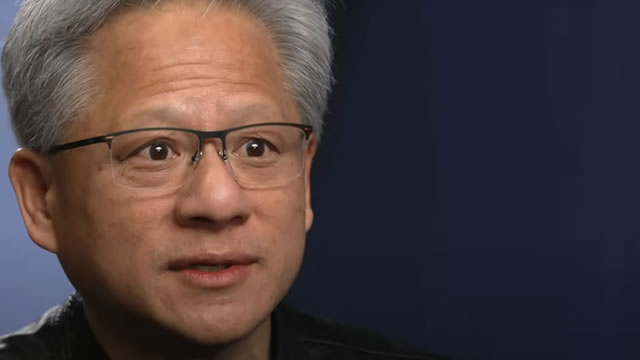
Artificial Intelligence Bubble? Not According to Nvidia's CEO Jensen Huang
The Motley Fool· 2025-11-25 10:05
Core Viewpoint - Nvidia's CEO Jensen Huang argues against the existence of an AI bubble, citing significant technological transformations in computing and AI that justify current valuations [2][3]. Group 1: Major Platform Shifts - The first major shift is from CPUs to GPUs, with GPUs capable of processing multiple tasks simultaneously, representing a significant advancement in computing power [4][5]. - The second shift is from classical machine learning to generative AI, which utilizes large datasets to create new content, impacting various sectors such as search ranking and ad targeting [6]. - The third shift involves agentic AI systems that can make independent decisions based on data, seen as the next frontier in computing, with applications in self-driving technology and legal assistance [9]. Group 2: Market Dynamics and Future Outlook - Nvidia reported strong earnings that exceeded Wall Street estimates, indicating robust demand for AI-related technologies [2]. - The transition to accelerated computing and generative AI is deemed foundational and transformational, respectively, with significant implications for infrastructure growth in the coming years [9]. - Investors are advised to maintain a long-term perspective and consider dollar-cost averaging, especially for companies with high valuations, as the AI market may continue to grow before any potential pullback [10][11].
曾参与击毙本·拉登的神秘硅谷企业,市值突破 4000 亿美金
3 6 Ke· 2025-11-25 09:43
Core Insights - Palantir has evolved from a secretive startup serving the CIA to a technology giant with a market capitalization soaring from $17 billion at its IPO to $400 billion, demonstrating its significant growth and influence across various sectors including defense, finance, and healthcare [1][32]. Group 1: Company Background and Evolution - Palantir was founded in 2003 by Peter Thiel and Alex Karp, inspired by the need to address the fragmented intelligence systems exposed by the 9/11 attacks [4][5]. - The company's name, derived from "palantíri" in "The Lord of the Rings," reflects its founders' belief in technology as a double-edged sword that can reveal truths while also being misused [4][6]. - Initial dissatisfaction from U.S. intelligence agencies regarding Palantir's products led to a shift in approach, allowing engineers to work directly with analysts to better understand real-world needs [5][6]. Group 2: Technological Innovations and Applications - Palantir's Gotham platform played a crucial role in the successful operation to capture Osama bin Laden, integrating vast amounts of data to create actionable intelligence [8][9]. - The company transitioned its battlefield-tested technologies into commercial applications with the launch of the Foundry data analysis platform, which has received positive feedback from various industries [16][17]. - Palantir's unique "ontology" framework allows for the systematic organization of knowledge, enabling businesses to convert disparate data into actionable insights [17][18]. Group 3: Business Model and Deployment Strategy - The Forward Deployed Engineer (FDE) model involves deploying engineers on-site with clients to ensure deep integration of technology with business needs, enhancing responsiveness and effectiveness [18][21]. - This model emphasizes a dual-team structure, where one team identifies key issues and the other develops practical solutions, fostering a collaborative environment [23][25]. - Palantir's FDE approach has proven effective in adapting AI technologies to meet specific client requirements, showcasing its ability to bridge the gap between advanced technology and real-world applications [27][28]. Group 4: Market Performance and Future Outlook - Palantir's market capitalization has increased dramatically, from approximately $17 billion at its IPO to over $400 billion by September 2025, reflecting its strong performance in the tech sector [32]. - The company has positioned itself as a leader in AI integration, with its AIP (Artificial Intelligence Platform) providing tailored solutions that enhance operational efficiency for major corporations [31][32]. - Despite its success, Palantir faces ethical scrutiny regarding its partnerships with government agencies and the potential misuse of its technology, raising questions about the implications of its data-driven solutions [34][35].


转型撰稿人重出江湖!“大空头”伯里开博炮轰AI泡沫:英伟达(NVDA.US)就是当年思科(CS...
Xin Lang Cai Jing· 2025-11-25 09:16
Core Insights - Michael Burry, known for his successful shorting of the U.S. subprime mortgage crisis, has launched a paid Substack service focusing on financial markets while expressing skepticism about the current AI hype [1][2] - Burry's Scion Asset Management has officially terminated its registration, interpreted as a rational exit from a high-valuation market, although he clarified he is not retiring and is managing a personal fund [1] - Burry draws parallels between the current AI boom and the 1990s internet bubble, suggesting that history is repeating itself [2] Company and Industry Analysis - Burry's first article on his Substack discusses his early investment interests and compares the current AI hype to the internet bubble, indicating a potential overvaluation in the market [2] - Major tech companies, including Microsoft, Google, Meta, Amazon, and Oracle, are projected to invest nearly $3 trillion in AI infrastructure over the next three years, with Nvidia positioned as a central player in this trend [3] - Burry criticizes the current investment climate for ignoring profitability concerns and overestimating growth potential based on the assumption that technology will reshape the economy [3] - Burry has established short positions against Nvidia and Palantir, with a clear stance against Nvidia's accounting practices, which he believes may inflate reported profits [4] - He estimates that accounting maneuvers by cloud service providers could understate depreciation expenses by approximately $176 billion from 2026 to 2028, leading to inflated profits across the industry [4] - The debate over whether an AI bubble exists has polarized business leaders, with some warning of irrational exuberance while others, including Nvidia's CEO Jensen Huang, remain optimistic about the technological revolution driving real demand [5]
转型撰稿人重出江湖!“大空头”伯里开博炮轰AI泡沫:英伟达(NVDA.US)就是当年思科(CSCO.US)
智通财经网· 2025-11-25 09:04
Core Viewpoint - Michael Burry, known for his successful shorting of the U.S. subprime mortgage crisis, has launched a paid Substack service focusing on financial markets, expressing skepticism about the current AI hype, particularly targeting Nvidia [1][2]. Group 1: Transition from Asset Management to Paid Insights - Burry's Scion Asset Management officially terminated its registration on November 10, with plans to liquidate the fund and return capital to investors due to a prolonged divergence between market valuations and his assessments [2]. - Despite the fund's closure, Burry clarified he is not retiring and is instead focusing on a personal fund and his new Substack column titled "Cassandra Unchained," which has attracted over 21,000 subscribers at a monthly fee of $39 [2]. Group 2: Historical Parallels and AI Bubble Concerns - Burry compares the current AI boom to the late 1990s internet bubble, suggesting that investors are overly optimistic about exponential growth while ignoring profitability concerns [3][4]. - He highlights that major tech companies, including Microsoft, Google, and Nvidia, are committing nearly $3 trillion to AI infrastructure over the next three years, reminiscent of past speculative bubbles [4]. - Burry recalls past assurances from Federal Reserve officials, drawing parallels between current statements about AI profitability and previous reassurances about housing market stability before the subprime crisis [3][4]. Group 3: Short Positions and Accounting Critiques - Burry's Scion Asset Management has established short positions against Nvidia and Palantir, with the latter's short position being approximately $9.2 million, contrary to market rumors [5]. - He criticizes major cloud service providers for manipulating accounting practices by extending asset lifespans, potentially inflating reported profits by an estimated $176 billion from 2026 to 2028 [6]. - Burry questions Nvidia's recent earnings report, arguing that its supporters overlook the eventual exposure of accounting and economic realities [6]. Group 4: Diverging Opinions Among Business Leaders - The debate over whether an AI bubble exists has polarized top business leaders, with some, including OpenAI's CEO and Microsoft co-founder Bill Gates, warning of irrational exuberance similar to past tech bubbles [7]. - Conversely, optimistic leaders from hardware supply and core development sectors, such as Nvidia's CEO Jensen Huang, believe the current investment surge is driven by genuine technological demand [7]. - Figures like Meta's CEO Mark Zuckerberg and Amazon's founder Jeff Bezos maintain a cautious stance, acknowledging signs of market overheating while asserting that long-term value will materialize as technology progresses [7].
软件ETF(515230)收红,AI驱动云与算力景气获市场关注
Mei Ri Jing Ji Xin Wen· 2025-11-25 08:10
Core Insights - AI technology has become a core driving force in the computer and software development industry, with significant capital expenditures from major cloud providers [1] - The combined investment of Amazon, Microsoft, Google, and Meta in AI-related infrastructure is expected to exceed $110 billion by Q3 2025, primarily for data centers and AI infrastructure [1] - AI is significantly boosting cloud business revenues, with Amazon AWS backlog orders exceeding $200 billion, Microsoft Azure experiencing a growth rate of 40%, and Google Cloud revenue share increasing to 14.8% [1] - The demand for AI computing power remains robust, with NVIDIA's data center revenue reaching a record $51.2 billion in a single quarter, and Blackwell chips projected to generate $500 billion in future quarters [1] - AI technology is also driving revenue growth for SaaS companies, with firms like ServiceNow and Palantir achieving substantial income increases, including Palantir's U.S. commercial business revenue growing by 121% year-over-year [1] - The overall industry is characterized by high growth in AI-driven cloud business, strong demand for computing power, and accelerated application deployment [1] Software ETF Insights - The software ETF (515230) tracks the software index (H30202), which selects publicly traded companies involved in application software, system software development, and related services [1] - This index reflects the overall performance of publicly listed companies in the software industry, focusing on the information technology sector [1] - The index highlights the innovation capability and growth potential of the industry, making it suitable for investors interested in technology-focused allocations [1]
We May Witness Stock Market History in 2026, With the Potential Bursting of 3 Bubbles at the Same Time
The Motley Fool· 2025-11-25 08:06
Group 1: Market Trends and Innovations - Wall Street is witnessing signs of breakdown in several hyped trends and innovations that have historically driven stock market growth [1][3] - The internet's arrival in the mid-1990s significantly altered the growth trajectory for American businesses and retail investors [2] - Currently, three major trends are emerging simultaneously: Artificial Intelligence (AI), Quantum Computing, and Bitcoin treasury strategy, raising concerns about potential simultaneous market bubbles in 2026 [3] Group 2: Artificial Intelligence (AI) - AI is viewed as a transformative technology that could rival the internet, enabling software to make decisions without human oversight [4] - Despite high sales growth in AI infrastructure, there are concerns about the optimization of AI solutions and the return on investment for businesses [5] - AI stock valuations are difficult to justify, with companies like Palantir Technologies (PLTR) exhibiting a trailing-12-month price-to-sales (P/S) ratio of 102, which is unsustainable historically [6][8] Group 3: Quantum Computing - Quantum computing is identified as a second potential market bubble, with stocks like IonQ, Rigetti Computing, and D-Wave Quantum experiencing significant price increases [8][9] - These companies face challenges due to the untested nature of quantum technology and the long timeline required for practical business applications [11] - Current valuations for quantum computing stocks are extremely high, with P/S ratios of 130, 906, and 246, indicating bubble territory [12] Group 4: Bitcoin Treasury Strategy - The Bitcoin treasury strategy involves companies using cash or issuing stock to purchase Bitcoin, which is perceived as a hedge against inflation [14][15] - Companies adopting this strategy are generally losing money and diluting shareholder value, raising concerns about sustainability [18][19] - Bitcoin itself is facing scrutiny regarding its real-world utility, with potential implications for the valuation of companies holding Bitcoin on their balance sheets [20]