
健民集团

Search documents
健民集团(600976) - 健民集团第十一届董事会第六次会议决议公告
2026-01-23 08:00
证券代码:600976 证券简称:健民集团 公告编号:2026-001 健民药业集团股份有限公司 1、关于向中国健康促进基金会捐赠的议案 同意:9 票 弃权:0 票 反对:0 票 公司拟以自有资金向中国健康促进基金会捐赠人民币 150 万元,用于支持儿童 呼吸与药学相关课题研究项目。详见中国证券报、证券时报、上海证券报及上海证 券交易所网站(http://www.sse.com.cn)《健民药业集团股份有限公司关于对外捐赠 的公告》。 二○二六年一月二十四日 特此公告。 健民药业集团股份有限公司 第十一届董事会第六次会议决议公告 公司董事会及全体董事保证本公告内容不存在任何虚假记载、误导性陈述或者 重大遗漏,并对其内容的真实性、准确性和完整性承担个别及连带责任。 董事会 健民药业集团股份有限公司于 2026 年 1 月 21 日发出召开第十一届董事会第六 次会议的通知,并于 2026 年 1 月 23 日以通讯方式召开本次会议,会议应参与表决 的董事 9 人,实际参与表决的董事 9 人,符合《公司法》和《公司章程》的规定。经 到会董事充分讨论,审议通过如下议案: ...

武汉创新药加速落地 “稻米造血”新药将进入省内八成医疗机构
Chang Jiang Ri Bao· 2026-01-18 00:46
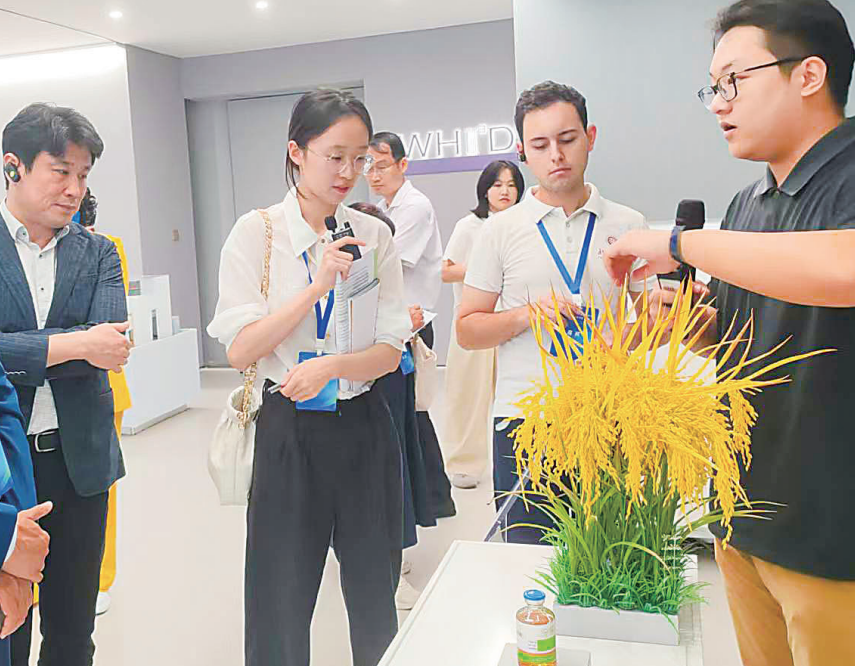
1月16日,由省、市医保部门联合举办的国家医保谈判药品及商保创新药品落地对接活动在汉举行。值 得一提的是,"双目录"政策与协同平台让武汉创新药首次快速触达全省医疗机构,患者今后也将用上更多新 药好药。 本次对接活动上,武汉禾元生物科技股份有限公司(以下简称禾元生物)、健民药业集团股份有限公司 (以下简称健民药业)等7家本土重点药企携13款核心产品亮相,与宜昌、襄阳等地多家三甲医院、商保机 构精准对接,现场达成近20项初步合作意向,武汉创新药供需对接成功率较企业单独推广提升75%。禾元生 物、健民药业等企业省内市场份额将翻倍,带动上游研发企业扩产、中游配套企业集聚,与光谷生物城形成 研发—生产联动,预计年增产业链产值超10亿元,加速形成"研发—中试—生产—临床应用—产业集聚"的良 性闭环。 "'双目录'政策与协同平台打通了创新药'政策赋能—临床落地—产业升级'关键链路,政府搭台比企业单 打独斗效率高三倍以上。"禾元生物负责人介绍,企业研发的全球首款重组人白蛋白注射液(又称"稻米造 血"),此前仅在3家头部医院应用。借助此次平台,该产品已与15家医疗机构达成深度合作,力争3个月内 覆盖全省80%以上医疗机构,可缓 ...

研判2025!中国创新药械行业政策、产业链、获批上市数量、市场规模及市场支付结构分析:批准上市数量创历史新高,市场持续扩容,商业险赔付占比小[图]
Chan Ye Xin Xi Wang· 2026-01-14 01:20
Core Insights - The innovative pharmaceutical and medical device market is a crucial part of China's healthcare industry, experiencing rapid growth despite its late development compared to developed economies [1][6] - By 2025, the number of approved innovative drugs reached 69, and innovative medical devices reached 73, marking a historical high in approvals [1][7] - The market size for innovative drugs and devices is projected to grow from 162 billion yuan in 2025 to 440 billion yuan by 2035, driven by demographic changes, clinical needs, and favorable policies [1][7] Group 1: Market Overview - The innovative drug and device market in China is expected to see significant growth, with projections of 2,186 billion yuan in 2026 and 4,102 billion yuan by 2030 [1][7] - The number of innovative drugs approved for market entry in 2024 is 48, while 65 innovative medical devices are expected to be approved [1][6] - The market is characterized by a high number of new drug approvals, with China ranking second globally in the number of drugs under development [1][6] Group 2: Payment Structure - In 2024, personal cash expenditure on innovative drugs and devices is estimated at 786 billion yuan, accounting for 49% of total spending, while insurance funds contribute approximately 710 billion yuan (44%) [7] - By 2035, it is anticipated that personal cash expenditure will decrease to 20%, while insurance fund contributions will rise to 36% [7] Group 3: Industry Chain - The innovative drug and device industry chain includes upstream components such as raw materials and research services, midstream research and manufacturing, and downstream distribution and application [8][9] - The government has been enhancing the policy framework to support the entire chain from research to application, facilitating faster approvals and market entry [9] Group 4: Future Outlook - The innovative drug and device industry in China is poised for opportunities due to ongoing national strategic support, the integration of new technologies like AI, and improved payment environments [11] - Challenges include insufficient global clinical capabilities and geopolitical factors affecting international expansion [11]

湖北一年新增4个一类创新药 药品原始创新获历史最佳成绩
Chang Jiang Shang Bao· 2026-01-13 23:52
Core Insights - In 2025, Hubei province achieved a record high with 4 new Class I innovative drugs and 3 Class III innovative medical devices approved for market, with Wuhan contributing 3 of the Class I drugs [1][2] Group 1: Innovative Drug Developments - Hubei's new Class I innovative drugs include two significant products from local companies: He Yuan Bio (688765.SH) and Jianmin Pharmaceutical (600976.SH) [1][2] - He Yuan Bio's recombinant human albumin injection (rice-based) is the first approved recombinant human serum albumin product in China, addressing the issue of reliance on imported albumin [2][5] - Jianmin Pharmaceutical's pediatric heat-reducing patch is the only approved traditional Chinese medicine gel patch for children in the last 20 years, filling a market gap for pediatric external treatments [3] Group 2: Policy Support and Industry Ecosystem - Hubei's innovative achievements are supported by a robust industrial ecosystem, with over 3,000 biopharmaceutical companies in the Optics Valley Biotech City, creating a comprehensive industry chain from R&D to production [4] - The Hubei provincial government aims to double the biopharmaceutical industry's revenue to 250 billion yuan by 2027, with specific targets for companies exceeding 500 million yuan, 100 million yuan, and 50 million yuan in revenue [4] - The provincial drug regulatory authority has implemented measures to enhance the approval process for innovative products, significantly boosting the vitality of the pharmaceutical industry [4][5]
“无人区”变成“新高地”——解码武汉创新药爆发背后的三重支撑
Chang Jiang Ri Bao· 2026-01-13 01:06
Core Insights - In 2025, Wuhan achieved a historic breakthrough in innovative pharmaceuticals with three Class I innovative drugs receiving "National Drug Approval" [1][17] - This achievement reflects a two-decade commitment to innovation, showcasing a deep integration of government, industry, academia, research, and medical sectors [1][5] Group 1: Innovation Journey - The journey of innovation is marked by perseverance, as exemplified by Yang Daichang, who led a team for 20 years to develop the world's first plant-derived recombinant human serum albumin [2][5] - The extraction efficiency of human serum albumin from rice improved from 2.75 grams per kilogram to 30 grams, with purity increasing from 99.9% to 99.9999% over 20 years [2][5] - The development of the "Children's Bovine Gallstone Heat-Reducing Patch" by Jianmin Pharmaceutical Group took 20 years, emphasizing the modernization of traditional Chinese medicine [5][6] Group 2: Ecosystem and Support - Wuhan is building a robust ecosystem for life and health industry innovation, supported by top medical education resources from institutions like Huazhong University of Science and Technology and Wuhan University [6][9] - The region hosts 32 tertiary hospitals and over 7,000 health institutions, facilitating a deep integration of clinical needs, technological research, and industrial innovation [7][9] - The "Optics Valley Biocity" has attracted over 4,200 enterprises, focusing on strengthening the biopharmaceutical and high-end medical equipment industry clusters [9][12] Group 3: Government and Regulatory Support - The local government has played a crucial role in supporting innovative companies, providing financial assistance and facilitating connections for funding [12] - The Hubei Provincial Drug Administration has implemented reforms to expedite the approval process for innovative drugs, significantly reducing the time to market [14][16] - A modernized regulatory framework, including the establishment of a smart drug supervision platform, enhances the stability and predictability of the industry [16]
一年内3个一类创新药获批上市 武汉药品原始创新与研发居全国前列
Chang Jiang Ri Bao· 2026-01-13 01:00
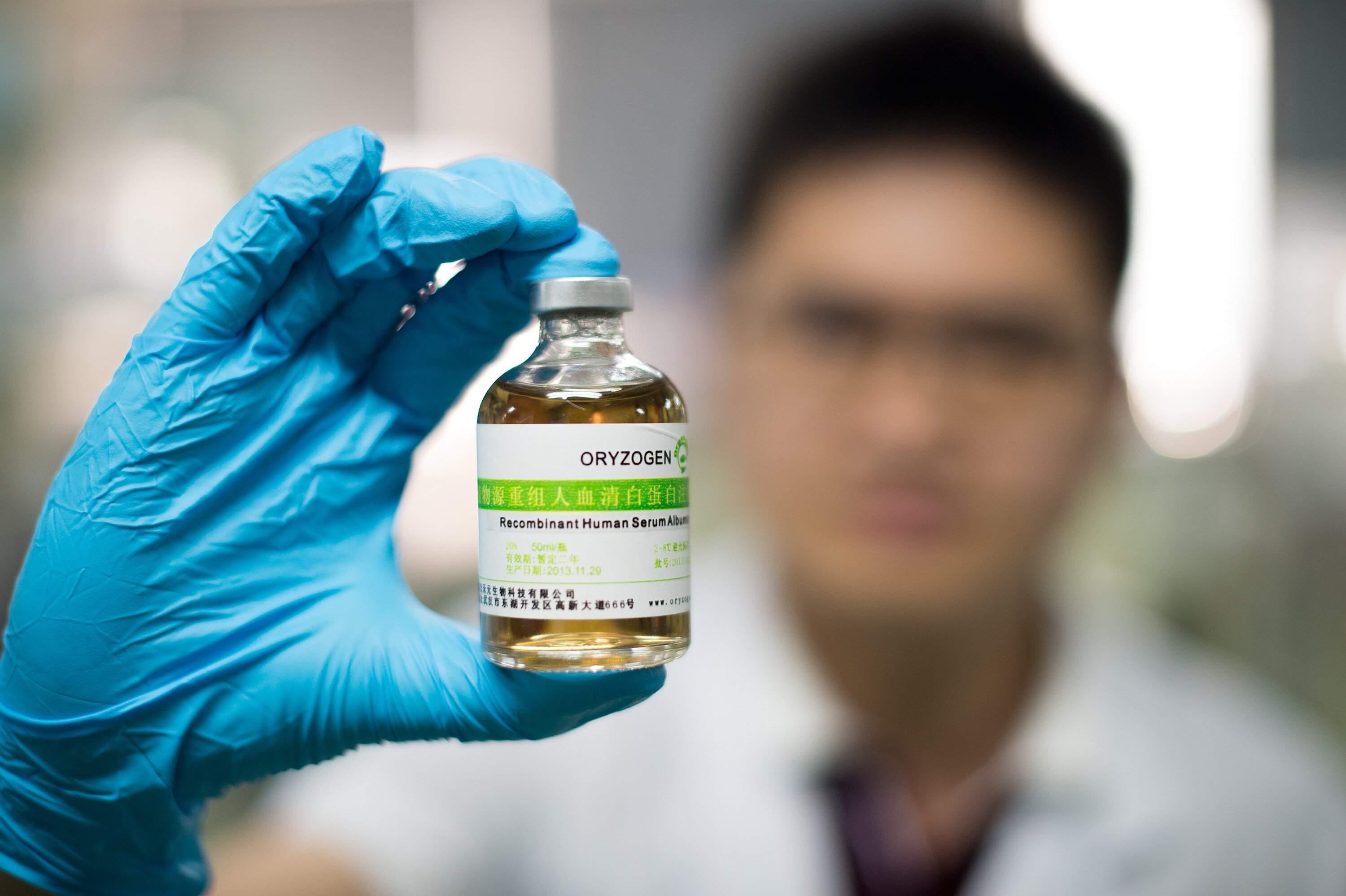
Group 1 - The National Medical Products Administration announced the approval of three Class I innovative drugs from Wuhan, marking the city's best historical performance in original drug innovation and research [1] - The approved drugs are classified as "global firsts" or "fill market gaps," highlighting their significance in the pharmaceutical industry [2] - The first drug, "Recombinant Human Albumin Injection (Rice)," developed by Wuhan Heyuan Biotechnology Co., utilizes genetic engineering to produce human-like albumin from rice, effectively turning rice into a "blood bank" [2] Group 2 - The second drug, "Children's Cow Bile Heat-Reducing Patch," developed by Jianmin Pharmaceutical Group, is the only approved traditional Chinese medicine gel patch for children in the last 20 years, filling a clinical gap in pediatric fever treatment [2] - The third drug, "Oral Hexavalent Recombined Rotavirus Live Attenuated Vaccine," developed by Wuhan Institute of Biological Products, is the world's first hexavalent rotavirus vaccine, capable of preventing six types of rotavirus-induced diarrhea, breaking the long-standing monopoly of foreign companies [2]
2025年1-11月湖北省工业企业有20440个,同比增长2.63%
Chan Ye Xin Xi Wang· 2026-01-12 03:23
Group 1 - The core viewpoint of the article highlights the growth of industrial enterprises in Hubei Province, with a total of 20,440 enterprises reported as of January-November 2025, marking an increase of 524 enterprises compared to the previous year, representing a year-on-year growth of 2.63% and accounting for 3.89% of the national total [1][1][1] Group 2 - The article mentions several listed companies, including Baichuan Energy (600681), Liangpin Puzi (603719), Junyao Health (605388), and others, indicating their relevance in the industrial sector [1][1][1] - A report by Zhiyan Consulting titled "2026-2032 China Industrial Cloud Industry Market Deep Assessment and Investment Opportunity Forecast" is referenced, suggesting a focus on future investment opportunities in the industrial cloud sector [1][1][1] - The data regarding the number of industrial enterprises in Hubei is sourced from the National Bureau of Statistics and organized by Zhiyan Consulting, emphasizing the credibility of the information [1][1][1]

中药板块12月31日跌0.3%,*ST长药领跌,主力资金净流出3.99亿元
Zheng Xing Xing Ye Ri Bao· 2025-12-31 08:59
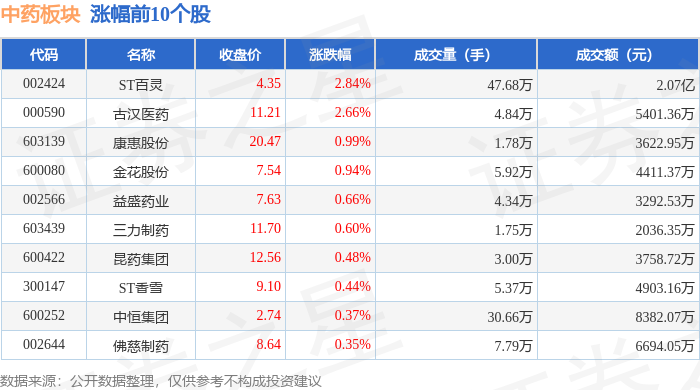
Market Overview - The Chinese medicine sector experienced a decline of 0.3% on December 31, with *ST Changyao leading the drop [1] - The Shanghai Composite Index closed at 3968.84, up 0.09%, while the Shenzhen Component Index closed at 13525.02, down 0.58% [1] Stock Performance - Notable gainers in the Chinese medicine sector included: - ST Ziling: closed at 4.35, up 2.84% with a trading volume of 476,800 shares and a turnover of 207 million yuan [1] - Guohan Pharmaceutical: closed at 11.21, up 2.66% with a trading volume of 48,400 shares and a turnover of 54.01 million yuan [1] - Major decliners included: - *ST Changyao: closed at 0.87, down 8.42% with a trading volume of 828,300 shares and a turnover of 73.23 million yuan [2] - ST Huluwa: closed at 7.62, down 4.63% with a trading volume of 176,200 shares and a turnover of 134 million yuan [2] Capital Flow - The Chinese medicine sector saw a net outflow of 399 million yuan from institutional investors, while retail investors contributed a net inflow of 376 million yuan [2] - The sector's capital flow details indicate: - Dong'e Ejiao had a net inflow of 27.6 million yuan from institutional investors, but a net outflow of 14.69 million yuan from speculative funds [3] - Guohan Pharmaceutical experienced a net inflow of 8.03 million yuan from institutional investors, but a net outflow of 9.69 million yuan from retail investors [3]




中药板块12月30日跌0.32%,*ST长药领跌,主力资金净流出2.31亿元
Zheng Xing Xing Ye Ri Bao· 2025-12-30 09:00
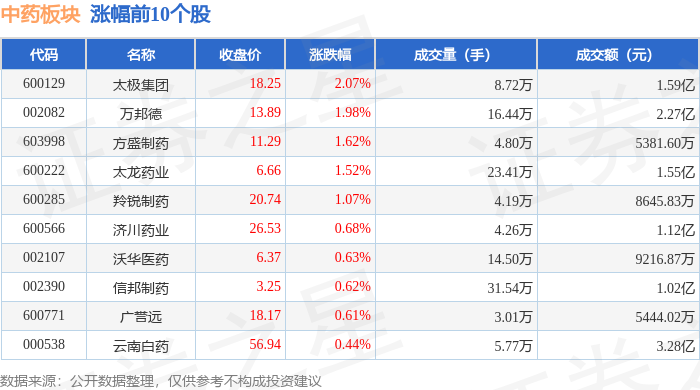
Market Overview - The Chinese medicine sector experienced a decline of 0.32% on December 30, with *ST Changyao leading the drop [1] - The Shanghai Composite Index closed at 3965.12, down 0.0%, while the Shenzhen Component Index closed at 13604.07, up 0.49% [1] Stock Performance - Notable gainers in the Chinese medicine sector included: - Taiji Group (600129) with a closing price of 18.25, up 2.07% [1] - Wanbangde (002082) at 13.89, up 1.98% [1] - Fangsheng Pharmaceutical (603998) at 11.29, up 1.62% [1] - Conversely, *ST Changyao (300391) saw a significant drop of 19.49%, closing at 0.95 [2] Trading Volume and Value - The trading volume and value for key stocks were as follows: - Taiji Group: 87,200 shares traded, with a transaction value of 159 million [1] - Wanbangde: 164,400 shares traded, with a transaction value of 227 million [1] - Fangsheng Pharmaceutical: 48,000 shares traded, with a transaction value of 53.82 million [1] Capital Flow - The Chinese medicine sector experienced a net outflow of 231 million from institutional investors, while retail investors saw a net inflow of 280 million [2] - The capital flow for specific stocks included: - Wanbangde with a net inflow of 48.79 million from institutional investors [3] - Taiji Group with a net inflow of 18.53 million from institutional investors [3] - *ST Changyao had a net outflow of 19.49% [2]


中药材价格&中药OTC数据更新
2025-12-29 01:04
Summary of Conference Call on Traditional Chinese Medicine Industry Industry Overview - The conference call focuses on the Traditional Chinese Medicine (TCM) industry, specifically the pricing of medicinal materials and the over-the-counter (OTC) market dynamics [1][3]. Key Points and Arguments - **Price Decline of Medicinal Materials**: The price of natural cow bile has decreased from over 1.4 million yuan per kilogram to 1.1 million yuan, indicating weak demand impacting upstream production companies [1][3]. - **Performance of OTC Products**: Data from nearly 100,000 small and medium-sized chain pharmacies, representing 20% market share, shows that products related to cold relief, such as Lianhua Qingwen capsules and pediatric Chiqiao Qingre granules, performed well in November, expected to drive growth in Q4 and Q1 of the following year [1][3]. - **Stability in Orthopedic and Digestive Products**: Sales of orthopedic and digestive products, such as Lingzhi Pharmaceutical's hemorrhoid ointment and Yunnan Baiyao's plaster preparations, remain stable. Yunnan Baiyao's Qixue Kang has maintained high double-digit growth since Q4 2024 due to academic promotion in grassroots medical institutions and chain pharmacies [1][3]. - **Pressure on Qi and Blood Supplement Products**: Products like Mayinglong hemorrhoid ointment and some from Jianmin Group face growth pressure, but this is expected to ease by December this year and into next year [1][3]. - **Healthy Inventory and Cash Flow Management**: Companies with excellent inventory management and stable cash flow, such as Mayinglong and Jiangzhong, have maintained positive growth since January, with no historical burdens [1][3][4]. - **Long-term Price and Demand Relationship**: There is a close relationship between medicinal material prices and demand. The decline in prices since Q3 of last year reflects weakened demand in Q1 and Q2, which has begun to impact the upstream raw materials market [1][5]. Additional Important Insights - **Focus on Stable Companies**: Investors are advised to pay attention to companies with stable operations, good cash flow, and effective inventory control, as well as the stabilization of medicinal material prices and the recovery of the OTC market [2][4]. - **Monitoring Market Dynamics**: Continuous monitoring of medicinal material price stabilization and monthly OTC data recovery is crucial for assessing the overall recovery of the OTC market [5].