
微盟集团

Search documents
智通港股通占比异动统计|2月11日
智通财经网· 2026-02-11 00:40
Core Viewpoint - The report highlights significant changes in the shareholding ratios of various companies under the Hong Kong Stock Connect program, indicating both increases and decreases in investor interest. Group 1: Shareholding Ratio Increases - JunDa Co., Ltd. (02865) saw the largest increase in shareholding ratio by +2.13%, reaching 51.99% [2] - Haotian International Investment (01341) increased by +1.70%, with a new holding ratio of 69.87% [2] - Longpan Technology (02465) experienced a +1.24% increase, bringing its holding ratio to 46.54% [2] - Xixiangfeng Group (02473) had a notable increase of +24.28% over five days, with a holding ratio of 26.79% [5] - Nanhua Futures Co., Ltd. (02691) increased by +4.32% over five days, reaching a holding ratio of 16.01% [5] Group 2: Shareholding Ratio Decreases - Dongfang Electric (01072) experienced the largest decrease of -1.68%, with a holding ratio of 22.33% [3] - Lion Group Holdings (02562) saw a reduction of -1.17%, now holding 47.64% [3] - Shandong Molong Petroleum Machinery (00568) decreased by -1.01%, with a holding ratio of 55.05% [3] - Over the last five days, Shandong Molong experienced a significant decrease of -7.56%, with a holding ratio of 55.05% [6] - Weimeng Group (02013) decreased by -4.06% over five days, now at 26.55% [6]
微盟集团获Infini Global Master Fund增持约1.72亿股 每股作价2.26港元
Xin Lang Cai Jing· 2026-02-11 00:02
Group 1 - Infini Global Master Fund increased its stake in Weimob Group (02013) by acquiring 172.123 million shares at a price of HKD 2.26 per share, totaling approximately HKD 389 million [1] - After the acquisition, Infini Global Master Fund's total shareholding in Weimob Group reached approximately 347 million shares, representing a holding percentage of 8.39% [1]

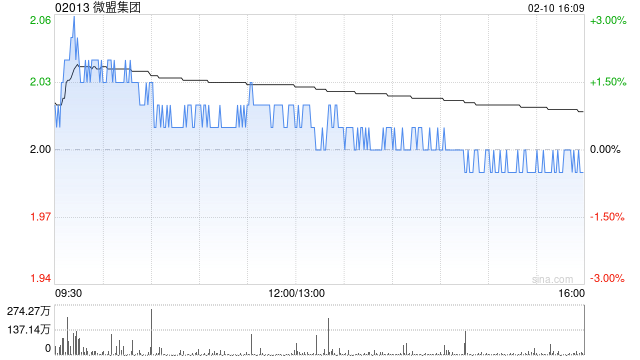
Infini Global Master Fund增持微盟集团约1.72亿股 每股作价2.26港元
Zhi Tong Cai Jing· 2026-02-10 11:26
香港联交所最新资料显示,2月2日,Infini Global Master Fund增持微盟集团(02013)1.72123亿股,每股作 价2.26港元,总金额约为3.89亿港元。增持后最新持股数目约为3.47亿港元,最新持股比例为8.39%。 本交易涉及其他关联方:Infini Capital Management Limited ...
Infini Global Master Fund增持微盟集团(02013)约1.72亿股 每股作价2.26港元
智通财经网· 2026-02-10 11:18
Group 1 - Infini Global Master Fund increased its stake in Weimob Group (02013) by acquiring 172.123 million shares at a price of HKD 2.26 per share, totaling approximately HKD 389 million [1] - After the acquisition, Infini Global Master Fund's total shareholding in Weimob Group is approximately 347 million shares, representing a holding percentage of 8.39% [1] - The transaction involves other related parties, specifically Infini Capital Management Limited [1]
智通港股通占比异动统计|2月10日
智通财经网· 2026-02-10 00:38
Core Insights - The report highlights significant changes in the Hong Kong Stock Connect holdings, with notable increases and decreases in ownership percentages for various companies [1][2]. Group 1: Companies with Increased Holdings - Xixiang Group (02473) saw the largest increase in holdings, up by 4.02%, bringing its total to 25.63% [2]. - Hang Seng China Enterprises (02828) increased by 3.51%, now holding 4.11% [2]. - Yingfu Fund (02800) rose by 3.09%, with a current holding of 3.91% [2]. - In the last five trading days, Xixiang Group (02473) experienced a remarkable increase of 23.17% in holdings [3]. - Other notable increases include Nanhua Futures (02691) at 3.99% and Sanhua Intelligent Control (02050) at 3.96% [3]. Group 2: Companies with Decreased Holdings - Shandong Molong (00568) had the largest decrease, down by 1.27%, now at 56.06% [2]. - Changfei Fiber Optic (06869) decreased by 1.25%, with a current holding of 57.02% [2]. - Chifeng Gold (06693) saw a reduction of 1.17%, now holding 39.00% [2]. - Over the last five trading days, Shandong Molong (00568) experienced a significant drop of 5.47% in holdings [3]. - Other companies with notable decreases include Weimeng Group (02013) at -3.58% and Chifeng Gold (06693) at -3.16% [3]. Group 3: Long-term Trends - Over the past 20 days, Xixiang Group (02473) has increased by 22.56%, maintaining a holding of 25.63% [4]. - Jun Da Co. (02865) saw a 20.81% increase, now at 49.86% [4]. - Baiaosaitu-B (02315) increased by 10.35%, with a current holding of 25.40% [4].
浙商证券浙商早知道-20260209
ZHESHANG SECURITIES· 2026-02-09 10:50
证券研究报告 | 浙商早知道 报告日期:2026 年 02 月 10 日 浙商早知道 2026 年 02 月 10 日 :王禾 执业证书编号:S1230512110001 :021-80105901 :wanghe@stocke.com.cn 市场总览 重要点评 http://www.stocke.com.cn 1/4 请务必阅读正文之后的免责条款部分 ❑ 大势:2 月 9 日上证指数上涨 1.41%,沪深 300 上涨 1.63%,科创 50 上涨 2.51%,中证 1000 上涨 2.26%,创业板 指上涨 2.98%,恒生指数上涨 1.76%。 ❑ 行业:2 月 9 日表现最好的行业分别是通信(+5.17%)、综合(+4.7%)、传媒(+3.5%)、电子(+2.97%)、计算机 (+2.88%)。 ❑ 资金:2 月 9 日全 A 总成交额为 22702 亿元,南下资金净流出 18.87 亿港元。 ❑ 【浙商非银 孙嘉赓/许盈盈】非银金融 行业点评:中国 RWA 监管框架落地,香港 Web3 产业迎新变局—— 20260208 ❑ 【浙商传媒互联网 冯翠婷】传媒 行业点评:周报:完美世界《异环》三测超预期 ...
卓正医疗上市首日股价飙升,健康服务消费龙头迎来价值重估时刻
Zhi Tong Cai Jing· 2026-02-09 01:50
此外,一众知名基石投资者亦为公司市场价值提供背书:包括金域医学、小鹏汽车董事长何小鹏先生, 及明略科技、微盟集团、库洛游戏、手回集团等腾讯生态企业,其中腾讯集团作为公司重要战略股东持 有近20%股份。 此次IPO,卓正医疗可谓收获了资本市场的热烈反响:公开发售阶段获2730.73倍认购,暗盘交易亦持续 火热,富途证券暗盘一度上涨105%,报122.9港元/股,不计手续费每手(50股)最高赚3150港元;老虎 证券暗盘一度涨97%,报118.2港元/股,每手可赚超2915港元。 2025年2月6日,卓正医疗(02677)正式于香港联合交易所主板挂牌上市。上市首日,公司股价大幅飙 涨,盘中最高抵达90.25港元高点,较发行价59.9港元上涨50.67%,最终收于68.5港元。 实际上,资本市场的热烈反馈,早已在另一组数字中埋下了伏笔:2024年,卓正医疗总就诊人次达90 万,平均每位客户年就诊近4次;家庭会员达10.8万户,平均每户会员家庭年消费超过6次;会员续费率 和患者回头率持续攀升,截至2025年8月分别达到67%与82.7%,超八成患者选择复购。 这些数字的背后,是数十万家庭与患者,早早用另一种方式给卓正 ...
智通港股通占比异动统计|2月9日
智通财经网· 2026-02-09 00:37
Core Viewpoint - The report highlights the changes in the Hong Kong Stock Connect holdings, indicating significant increases and decreases in ownership percentages for various companies, which may signal investment trends and market sentiment. Group 1: Increased Holdings - Xixiangfeng Group (02473) saw the largest increase in holdings, up by 5.65% to a total holding of 21.61% [1][2] - Junda Co., Ltd. (02865) increased by 2.40%, reaching a holding of 48.66% [1][2] - Beijing Jingcheng Machinery Electric Company (00187) rose by 2.19%, with a holding of 48.50% [1][2] - In the last five trading days, Xixiangfeng Group (02473) had a remarkable increase of 19.13% [3] - Sanhua Intelligent Control (02050) increased by 4.06%, now holding 33.53% [3] - Nanhua Futures Co., Ltd. (02691) saw a 3.60% increase, bringing its holding to 14.63% [3] Group 2: Decreased Holdings - China Metallurgical Group Corporation (01618) experienced the largest decrease, down by 0.64% to a holding of 33.76% [1][2] - Longpan Technology (02465) decreased by 0.62%, now at 44.92% [1][2] - Lion Holdings (02562) saw a reduction of 0.59%, with a holding of 49.34% [1][2] - Over the last five trading days, Junda Co., Ltd. (02865) faced a significant drop of 13.34% [3] - Shandong Molong Petroleum Machinery Company (00568) decreased by 3.73%, now holding 57.33% [3] - Weimeng Group (02013) saw a reduction of 3.66%, with a holding of 27.00% [3]
趋势研判!2026年中国互联网餐饮行业发展历程、产业链、发展现状、重点平台及未来趋势:互联网普及与消费观念转变,推动互联网餐饮规模超万亿元[图]
Chan Ye Xin Xi Wang· 2026-02-07 01:25
Core Insights - The internet dining market is rapidly growing due to increasing consumer demand for convenient, high-quality dining services, with a projected market size of approximately 1.38 trillion yuan by 2025, reflecting a year-on-year growth of 7.68% [1][12] - Government support for the internet dining sector is strengthening, with policies aimed at enhancing food safety and promoting the industry through initiatives like consumer vouchers [1][12] - The shift in consumer preferences towards quality and personalized dining experiences is driving the evolution of the internet dining market [1][12] Internet Dining Industry Overview - Internet dining is a new business model that reconstructs dining service processes through mobile internet technology, primarily categorized into online takeout and O2O dining [4] - Major online takeout platforms include Meituan Waimai, Taobao Shanguo, and JD Waimai, while O2O dining platforms include Dazhong Dianping and Weimeng [4] Industry Development History - Significant capital influx into the internet dining sector began in 2014, leading to rapid expansion of platforms like Ele.me and Meituan [4] - By 2017, the online takeout market surpassed 300 billion yuan, marking a 13.6-fold increase since 2011, with mobile payment coverage reaching 86% [4] Current Industry Status - China's dining revenue reached 4.67 trillion yuan in 2019, with a growth rate of 9.38%, but saw a decline in 2020 due to the pandemic [8] - The dining revenue is expected to reach 5.8 trillion yuan by 2025, growing at a rate of 4.06% [8] Internet User Growth - As of mid-2025, China's internet user base is projected to reach 1.12 billion, with an internet penetration rate of 79.7%, indicating strong growth potential for the internet dining sector [10] Competitive Landscape - The internet dining market is highly competitive, dominated by major platforms like Meituan and JD Waimai, which leverage significant capital investments to expand their market share [12] - Traditional dining businesses are increasingly entering the internet dining space, either by launching their own delivery services or partnering with existing platforms [12] Existing Challenges - The industry faces challenges such as food safety issues, high delivery time complaints, and increased pressure on small merchants due to rising commission rates [16] Future Trends - The industry is expected to undergo smart upgrades, focusing on AI and big data to enhance operational efficiency and customer experience [16] - A shift towards green practices is anticipated, promoting resource conservation and waste reduction [16] - Regulatory frameworks are expected to evolve towards more precise and real-time monitoring of food safety [16]



美股科技股大震荡,资金却逆势抢筹港股,机构认为AI投资仍是主线
Di Yi Cai Jing· 2026-02-06 13:04
Core Viewpoint - The recent emergence of AI Agents like OpenClaw has triggered a significant pullback in the global tech sector, raising questions about whether this is the beginning of a narrative bubble burst or a buying opportunity [1][2]. Group 1: Market Performance - As of February 5, the Nasdaq 100 index has seen a cumulative decline of 3.93% for the week, while the S&P 500 Software and Services index has dropped for seven consecutive trading days [1]. - The Hang Seng Tech Index and the STAR Market 50 Index have also experienced declines of 6.51% and 5.76%, respectively [1]. - Major tech stocks such as Samsung Electronics, SK Hynix, and SoftBank have faced varying degrees of price drops [1]. Group 2: AI Agent Impact - The recent popularity of AI Agents, particularly OpenClaw, is identified as a key catalyst for the ongoing decline in the tech sector [2]. - OpenClaw allows users to execute complex workflows through natural language commands, showcasing significant advancements over earlier AI Agents [2]. - The introduction of specialized plugins for AI Agents, such as those by Anthropic, indicates a shift towards more practical applications in fields like law and finance [2]. Group 3: Capital Expenditure Trends - Major tech companies are maintaining high levels of capital expenditure, with Alphabet projecting its 2026 capital spending to reach between $175 billion and $185 billion, nearly double its 2025 spending [3]. - Amazon anticipates a capital expenditure of approximately $200 billion in 2026, significantly higher than its expected 2025 spending of $131 billion [3]. - Following these announcements, Alphabet's stock fell over 7% in after-hours trading, while Amazon's shares dropped more than 4% [3]. Group 4: Investment Strategies - Despite the downturn in the tech sector, some investors are increasing their positions, with notable figures like Dong Bin purchasing shares in Nvidia, Meta, and Google [4]. - Dong Bin believes that increased capital expenditure will enhance Google's competitive edge, viewing the current sell-off as shortsighted [4]. Group 5: Southbound Capital Trends - There is a clear trend of capital "bottom-fishing" in Hong Kong stocks, with southbound funds recording net purchases exceeding 50 billion yuan in the first week of February [5]. - The top five ETFs by net inflow in the past week were predominantly Hong Kong tech-themed ETFs, with the Hang Seng Tech ETF alone attracting 3.148 billion yuan [5]. Group 6: Market Sentiment and Future Outlook - Citic Securities expresses skepticism about the overly optimistic market sentiment regarding AI Agents potentially replacing traditional software, citing limitations in current large language models [6]. - The firm suggests that the narrative of AI "consuming" software remains largely theoretical, with practical applications still limited to simpler tasks [6]. - However, industry experts maintain that the AI wave and technological self-reliance remain central themes, with potential long-term productivity gains expected from ongoing AI advancements [6][7].


