
Babycare

Search documents
代工之殇与资本退潮:Babycare要在存量市场杀出条血路
Sou Hu Cai Jing· 2025-11-05 02:15
Core Insights - The global demand for high-quality and reasonably priced maternal and infant products creates opportunities for Chinese brands like Babycare to expand internationally [2] - Babycare has accelerated its expansion with the opening of its first store in Hong Kong and a total of over 260 stores globally [2] - The brand faces significant challenges in its globalization process, particularly in quality control and competition in mature markets like Japan [4][6] Expansion and Market Presence - Babycare's "star product," the purple cover wet wipes, has entered approximately 8,000 offline stores in Japan, marking a significant milestone as the first Chinese maternal and infant brand in Japan's 7-ELEVEn convenience store system [2] - The company is also expanding into top global commercial complexes, such as those in Dubai, to build an international retail network [2] Quality Control Challenges - Babycare's reliance on an OEM model poses risks, particularly in markets with strict safety regulations like Japan, where consumer sensitivity to product quality is high [4][5] - The brand has faced multiple quality issues, including reports of foreign objects in products and non-compliance with safety standards, which threaten its reputation [4][5] Competitive Landscape - The competitive environment in overseas markets, especially Japan, is highly concentrated, with established players dominating market share, making it difficult for newcomers like Babycare to gain traction [6] - Local brands have a strong foothold in key product categories, creating significant barriers for Babycare to penetrate these markets [6] Financial and Strategic Challenges - Babycare's IPO process has faced delays, and the exit of major investors has raised concerns about its financial stability and future strategic direction [8] - The brand's marketing strategies have led to controversies, impacting its public perception and customer trust [9] Market Dynamics - The decline in newborn numbers in China is shifting the maternal and infant market from growth to competition for existing market share, presenting new challenges for brands like Babycare [12] - The overall growth rate of the maternal and infant market is slowing, necessitating a reevaluation of Babycare's growth strategies [12] Recommendations for Improvement - Babycare needs to enhance its quality control measures by moving away from pure OEM reliance and implementing more robust supply chain management [12] - The brand should focus on understanding and empathizing with mothers' needs rather than relying on provocative marketing tactics [13] - Expanding its product offerings to include family solutions could help Babycare increase customer lifetime value and loyalty [14]

2025年婴童尿裤行业洞察报告解读(29页附下载)
Sou Hu Cai Jing· 2025-10-30 13:42
Market Overview - The baby diaper market is experiencing high growth despite a slowdown in the overall maternal and infant market, with the online retail transaction scale of maternal and infant products in China expected to reach 1.4 trillion yuan in 2024, maintaining a high year-on-year growth rate [1][24]. - From January to June 2025, the baby diaper segment showed outstanding performance with a year-on-year growth rate of 54%, leading other subcategories in the baby market [2][27]. Social Media Trends and Demand Insights - The social media presence of baby diapers has significantly increased, with Douyin becoming the primary channel for expectant parents to access diaper-related content, reflecting a heightened consumer interest throughout the pregnancy and parenting cycle [3][31]. - Topics such as diapers and maternal and infant products have gained substantial traction on platforms like Douyin and Xiaohongshu, indicating strong consumer engagement [3][31]. - The volume of discussions around diapers and pull-up pants has seen remarkable year-on-year growth of 74% and 69% respectively, showcasing robust market demand [4][34]. Brand Competitive Landscape - Major brands in the baby diaper market are maintaining growth momentum, with domestic brands like Babycare and Yiying leading in social media engagement [5][35]. - Babycare's Jinshan Camellia diapers and Pampers' Black Gold diapers have shown strong performance in terms of social media volume and interaction, indicating significant market influence [6]. Consumer Demand and Product Trends - Core consumer demands for diapers include breathability, comfort, and softness, with different product types (e.g., diapers, pull-up pants) emphasizing varying functional needs [7][43]. - There is a notable preference for natural materials such as Class A cotton and pure cotton, with ingredients like camellia and probiotics gaining popularity, reflecting consumers' focus on safe materials for infants [7][47]. - Key usage scenarios include outings, sleep, and seasonal variations, which impose specific functional and design requirements on diapers [8]. Social Media Marketing Performance - Social media advertising for the baby diaper industry increased by 29% year-on-year in 2025, with Douyin and Xiaohongshu emerging as the primary platforms for marketing efforts [10]. - Brands like Babycare, Huggies, and Pampers have invested significantly in Douyin, achieving notable marketing effectiveness through authentic parenting content [10]. - On Xiaohongshu, brands such as Babycare and BEBEBUS have leveraged the platform's focus on maternal and infant education to enhance engagement [10]. Future Trends and Marketing Recommendations - Brands are encouraged to continue innovating in product design, focusing on skincare, underwear-like features, and advanced absorption technologies to meet consumer demands for high-quality diapers [11]. - Marketing strategies should be tailored to the unique characteristics of each platform, with Douyin emphasizing lifestyle content and Xiaohongshu focusing on educational and experiential sharing [11]. - Enhancing user interaction through authentic experiences and emotional resonance is vital for building brand loyalty [12]. Summary - The baby diaper market is projected to maintain high growth in 2025, with increasingly refined consumer demands regarding product functionality, materials, and usage scenarios. Increased investment in social media marketing, particularly on Douyin and Xiaohongshu, is evident. Future strategies should prioritize product innovation and tailored marketing approaches to enhance competitiveness [13].

对话Babycare副总裁:将联合行业伙伴,构建更广泛的母婴公益生态
Xin Lang Cai Jing· 2025-10-17 08:42
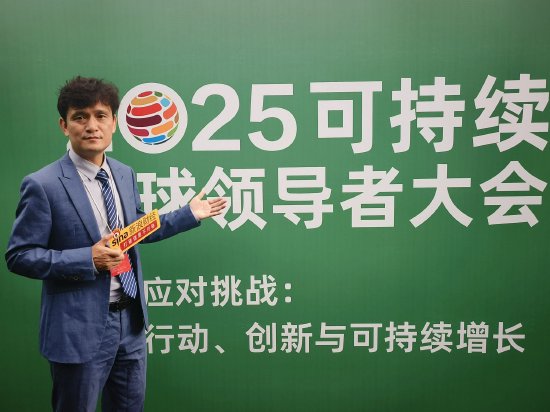
专题:2025可持续全球领导者大会&首届绿色产业与可持续消费博览会 公益正日益成为企业ESG和品牌内核的重要组成部分,Babycare如何规划其公益事业的未来蓝图?Paul 表示,"首先,我们正在推进的项目会继续夯实,并希望更多力量加入进来,一起推动更大的改变,携 手共建母婴友好社会。" 其次,在ESG长期策略上,Babycare将聚焦产品本身,致力于逐步推进绿色产品、绿色包装,实现可持 续生产、可持续运营和可持续消费。他介绍,公司将稳步推进从原料选择、产品设计、工艺过程到生产 加工的全链路绿色升级。同时,Babycare正联合国家级协会及行业机构,参与相关标准的制定,旨在为 宝宝和妈妈提供更安全、更可靠的产品。 2025可持续全球领导者大会于10月16日-18日在上海市黄浦区世博园区召开。Babycare副总裁Paul 向新 浪财经表示,"新一代宝妈在育儿过程中存在更多元化的诉求,品牌需深入理解并回应其需求。" 谈及Babycare在可持续发展方面做出的努力,他表示,"近年来,Babycare除提供安全可靠的产品外,还 围绕母婴生活场景推出多项公益服务。例如,通过'爱的2平方'母婴室项目,已在全国累计共建4 ...
妈妈们最需要的房间,上海只有2600间
后浪研究所· 2025-10-16 12:32
Core Insights - The article highlights the challenges faced by mothers in finding suitable breastfeeding rooms in public spaces, emphasizing the inadequacy of existing facilities and the need for improvement in quality and accessibility [7][11][21]. Group 1: Current Situation of Breastfeeding Rooms - There are only 2,643 breastfeeding rooms across all cities in mainland China, with many second-tier cities having fewer than 10 [7]. - Many mothers experience difficulties in locating breastfeeding rooms, often finding that the presence of a room does not guarantee accessibility [9][11]. - Over 60% of surveyed mothers believe that the quality of breastfeeding rooms needs improvement, citing issues such as insufficient facilities, unpleasant odors, and rooms being occupied by non-breastfeeding individuals [12][21]. Group 2: Impact on Mothers - The lack of convenient breastfeeding facilities has led to a decrease in outdoor activities for over 60% of mothers, who feel anxious about finding suitable places to breastfeed or change diapers [15]. - Mothers often have to carry large bags filled with supplies due to the inadequacy of breastfeeding rooms, which adds to their stress when going out [17][19]. - Many mothers resort to makeshift solutions when breastfeeding rooms are inadequate, sacrificing their comfort and dignity in the process [20]. Group 3: Initiatives and Improvements - Recent years have seen a push for the establishment of breastfeeding rooms as standard in public spaces, with policies aimed at increasing their availability and quality [21][23]. - Some cities have successfully implemented comprehensive coverage of breastfeeding rooms in key public areas, such as Guangzhou [23]. - Companies like Babycare are actively involved in improving breastfeeding room facilities, having built over 400 rooms across various public spaces and focusing on user-friendly designs [28][31].

2025年中国消费型育儿产品行业市场深度分析及投资战略咨询报告
Sou Hu Cai Jing· 2025-09-26 08:11
Group 1 - The core viewpoint of the article highlights the significant growth of the consumption-oriented parenting products market in China, driven by the "three-child policy" and consumption upgrades, with the market size expected to reach 87.2 billion yuan in 2024 [1][12] - Consumption-oriented parenting products are characterized by their consumable nature, high-frequency usage, and the need for regular replenishment or updates, distinguishing them from durable parenting products [5][6] - The industry chain of consumption-oriented parenting products includes upstream raw material supply, midstream production and brand operation, and downstream sales and distribution, with each segment closely interconnected [8][9] Group 2 - The competitive landscape of the consumption-oriented parenting products industry is intense, with international brands like Huggies and Pampers historically holding significant market shares, but local brands such as Babycare are rapidly gaining ground due to their cost-effectiveness and understanding of the local market [2] - The market structure for consumption-oriented parenting products in 2024 shows that baby care products dominate with a 76.6% share, followed by bedding products at 12.2% and feeding products at 11.2% [14][15] - The report utilizes various analytical models such as SCP, SWOT, PEST, and regression analysis to comprehensively assess the market environment, industry policies, competitive landscape, technological innovations, and market risks [2]
京东发布电商客服Agent原生应用京小智5.0,面向中小商家免费开放
Zhong Jin Zai Xian· 2025-09-25 11:33
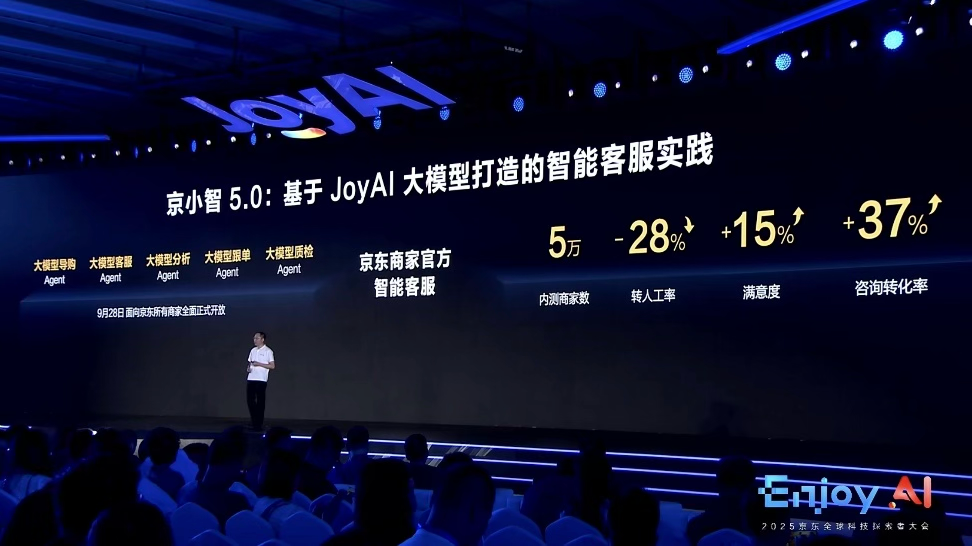
Core Insights - The JD Global Technology Explorer Conference (JDD) announced the launch of JD Xiaozhi 5.0, an intelligent customer service product for e-commerce, which will be available for free to small and medium-sized merchants starting September 28 [1][8] - The e-commerce industry's intelligent customer service is transitioning from a "cost optimization tool" to a "brand growth engine," with JD Xiaozhi 5.0 leveraging the JoyAI large model and multi-Agent collaboration technology [1][8] Product Features - JD Xiaozhi 5.0 redefines pre-sales guidance and multi-modal intelligent customer service capabilities, creating a comprehensive Agent matrix that covers customer service, guidance, order tracking, analysis, and quality inspection [1][4] - The product enables proactive service with decision-making capabilities, allowing small and medium-sized merchants to easily implement the intelligent customer service without additional operational investment [1][4][8] Performance Metrics - Data from 50,000 stores in the beta test shows that JD Xiaozhi 5.0 has reduced the manual intervention rate by over 28%, increased user satisfaction by over 15%, and improved pre-sales consultation conversion rates by over 37% [1] - The intelligent customer service Agent has achieved a fivefold increase in reasoning efficiency and a 36% improvement in accuracy when matching product details with user inquiries [2] Merchant Empowerment - JD Xiaozhi 5.0 includes over 20 high-frequency scenarios for merchants, such as product inquiries and promotional consultations, which can be activated without configuration [4][6] - The system supports merchants in uploading documents in any format, automatically parsing and converting them into a structured knowledge system, significantly reducing manual maintenance workload [4] Sales Enhancement - The pre-sales guidance Agent has improved conversion rates by 27.6% and reduced manual intervention rates by 43% for merchants using the service [6] - The follow-up Agent tracks the entire customer journey from inquiry to repurchase, ensuring continuous service and support [6] Analytical Capabilities - The analysis Agent utilizes semantic analysis to extract actionable business insights from consultation data, achieving over 90% accuracy in analysis [7] - A case study highlighted how a merchant identified and addressed a high customer churn rate by responding to product demand insights, leading to successful inventory adjustments [7] Quality Control - The quality inspection Agent provides real-time service quality monitoring with a 90% accuracy rate, significantly lowering the costs and error rates associated with manual quality checks [7]

2025年中国新消费品牌势能创新增长研究白皮书-百思特
Sou Hu Cai Jing· 2025-09-23 07:23
Core Insights - The report highlights the emergence of new consumer brands in China, emphasizing the need for innovative marketing strategies to thrive in a rapidly changing competitive landscape [1][2][18] - The PMC (Potential Marketing Communication) theory is introduced as a framework for understanding the growth logic and innovative models of new consumer brands [1][2][18] Group 1: Market Dynamics - The competitive environment has drastically changed, with the rise of new consumer demographics and the advent of new consumerism, leading to the decline of traditional brand marketing methods [1][2][18] - New consumer brands like Gao Fan and Li Du have achieved exponential growth through innovative approaches, such as premium product offerings and immersive consumer experiences [1][2][19][20] Group 2: Brand Growth Characteristics - New consumer brands share common growth characteristics, including a focus on niche markets, preference for high-end positioning, and the use of content marketing over traditional advertising [1][2][19][20] - Successful brands have utilized strategic public relations and new retail channels, such as online short video and live-streaming e-commerce, to reach target audiences effectively [1][2][19][20] Group 3: PMC Marketing Innovation Model - The PMC model encompasses several key elements: market growth positioning, celebrity endorsements from entrepreneurs and KOLs, and the creation of star products that stand out in the market [2][18][46] - The report also analyzes successful case studies of traditional brands that have revitalized their market presence through innovative strategies, such as Yaya's transformation and the collaboration of Da Bai Tu with new brands [2][18][46] Group 4: Case Studies of New Consumer Brands - Gao Fan achieved a sales breakthrough of 1.7 billion yuan in three years, becoming the top brand in high-end down jackets [19] - Li Du transformed its business model, resulting in a 60-fold revenue increase over ten years and becoming the first stock of light bottle liquor in Hong Kong [20][22] - Three Dunsan, with its freeze-dried coffee innovation, reached a valuation of 4.5 billion yuan, outperforming Nestlé in the instant coffee market [28][29] - Lululemon surpassed Adidas in market capitalization, becoming the third-largest sports brand globally, with a revenue growth of over 10 times in a decade [30][32] Group 5: Future Trends - The report emphasizes the importance of emotional and cultural values in brand building, suggesting that brands must create additional benefits to remain competitive in the new commercial era [2][18][46] - The shift from traditional advertising to customer value innovation is identified as a fundamental change in brand-building strategies, with a focus on building brand equity through authentic consumer engagement [46][47]

2025中国新消费品牌势能创新增长研究白皮书
Sou Hu Cai Jing· 2025-09-22 15:57
Core Insights - The report highlights the failure of traditional brand marketing models in the new commercial era, emphasizing that new consumer brands achieve exponential growth through innovative strategies [1][10][16] - It introduces the PMC (Potential Marketing Communication) model, which focuses on customer value innovation, niche market penetration, and content marketing as key drivers for brand growth [1][16][48] Group 1: Market Environment Changes - The competitive landscape has dramatically shifted, leading to the decline of traditional brands and the rise of new consumer groups and consumption ideologies [1][10][14] - New consumer brands are not relying on traditional advertising but are instead focusing on value innovation and brand engagement to drive growth [1][10][46] Group 2: Case Studies of New Consumer Brands - High Fan achieved the top position in high-end down jackets within three years, breaking the 2000 price barrier with innovative materials and marketing strategies [1][18] - Li Du created the most expensive light bottle liquor in China, becoming the first liquor stock in Hong Kong, with a tax revenue increase of 100 times over ten years [1][19][21] - Orange Du led the domestic makeup market, achieving significant sales growth by expanding product categories and targeting diverse consumer demographics [1][22][24] - Babycare entered the top tier of the mother and baby market within three years, offering a wide range of products and achieving over 50 billion in sales by 2024 [1][26][28] - Three Dots Half surpassed Nestlé in the instant coffee market, achieving a valuation of 4.5 billion with innovative product offerings and marketing strategies [1][29][30] - Lululemon's market value surpassed Adidas, becoming the third-largest sports brand globally, with a revenue increase of 19% in 2023 [1][31][35] - Tineco achieved a valuation of 10 billion within five years by redefining the cleaning appliance market through user-centric innovations [1][36][37] - De You created a new category in wet toilet paper, achieving over tenfold growth in four years, with a market share exceeding 50% [1][38][40] - NIO became the highest-valued car company in China within six years, surpassing traditional automotive giants through innovative branding and customer engagement strategies [1][41][42] Group 3: New Marketing Strategies - The shift from advertising to customer value innovation is a fundamental change in brand building, with a focus on creating star products and enhancing consumer experience [1][47] - Niche market selection has become the primary path for new consumer brands, allowing them to build competitive advantages in less saturated markets [1][48] - High-end strategies have led to exponential growth for many new consumer brands, emphasizing the importance of brand equity and emotional connection with consumers [1][49]

重塑消费链路:2025小红书四大营销趋势引领新增长
Sou Hu Cai Jing· 2025-09-16 02:21
Group 1: Platform Trends Insights - In 2025, Xiaohongshu will see four significant marketing trends: high decision-making product explosion, emotional marketing, proactive consumption, and refined marketing strategies [1][9][14] - The GMV of home decoration and home appliances on Xiaohongshu has increased by over 100%, while the medical and health sector has seen a growth of over 60% despite negative industry growth [1][10] - Emotional words in user-generated content (UGC) are becoming crucial for brand communication, with 13 billion attribute words and 75 million emotional words identified [1][11] Group 2: Industry Trends Insights - The modern consumer is no longer passive; they exhibit high autonomy through inquiry and sharing, necessitating brands to stimulate user engagement throughout the purchasing process [2][14] - Z-generation parents are becoming the main force in the maternal and infant market, emphasizing personalized and scientific parenting, leading to more cautious and diverse consumption decisions [2][24] - The health sector is diversifying, with brands encouraged to target four core groups: active lifestyle enthusiasts, gamers, everyday life participants, and entertainment seekers [2][32] Group 3: Beauty and Fragrance Trends - The beauty and fragrance industry is witnessing diversification trends, including pastel aesthetics and Chinese cultural themes, prompting brands to innovate and create emotionally valuable products [3][39] - The food and beverage industry is shifting from "eating to be full" to "eating for enjoyment," with a focus on new experiences and high emotional value [3][51] - Brands are encouraged to engage consumers in product definition and iteration through co-creation mechanisms, enhancing user involvement in the product lifecycle [3][54]

托育政策落地 母婴消费新蓝海正崛起
Xiao Fei Ri Bao Wang· 2025-08-26 03:05
Group 1 - The new childcare policies in China, including a yearly subsidy of 3600 yuan for families with children aged 0-3 and free education for children in their last year of preschool, are expected to significantly boost consumer confidence and spending in the maternal and infant sector [1][2] - The maternal and infant market in China has reached a scale of 4.2 trillion yuan in 2023, with projections to exceed 5 trillion yuan by 2025, reflecting a compound annual growth rate of approximately 9.3% [1] - The rising costs of childcare, with average annual expenses for families with children aged 0-6 often exceeding 30,000 yuan, have been a burden, but the new subsidies will alleviate some of these costs, allowing families to invest more in quality consumption [2][3] Group 2 - The unique nature of the maternal and infant market is driven not only by price but also by parents' pursuit of safety and quality, which may lead families to prioritize higher-quality products in areas such as formula, baby food, and diapers [3] - Domestic brands in the maternal and infant sector, such as Feihe and Junlebao, are gaining market share in the premium formula segment, supported by policy subsidies and consumer upgrades, enhancing the overall competitiveness of the domestic maternal and infant industry [3][4] - The maternal and infant consumption sector encompasses a vast industry chain, including food, healthcare, education, and technology, with the potential for "spillover consumption" effects in emerging product categories like smart baby monitors and sleep-assist robots [3][4] Group 3 - The new childcare policies not only provide economic relief but also instill confidence in families, linking the prosperity of maternal and infant consumption to broader economic vitality and consumer upgrades [4] - The anticipated shift in maternal and infant consumption from necessity to enhanced quality reflects a significant transformation in the industry, promising to improve the quality of life for families and bolster societal birth confidence [4]