Capri Holdings Limited

Search documents
Sonos Set to Report Q1 Earnings: Here's What You Should Know
ZACKS· 2026-02-02 14:46
Core Viewpoint - Sonos, Inc. (SONO) is set to report its first-quarter fiscal 2026 results on February 3, with anticipated revenues between $510 million and $560 million, reflecting a year-over-year decline of 7% to growth of 2% [2][9] Financial Performance Expectations - The Zacks Consensus Estimate for revenues is $538.7 million, indicating a decline of 2.2% from the previous year [2] - The consensus estimate for earnings is 81 cents, compared to 64 cents in the prior-year quarter [2] - Sonos expects a GAAP gross margin of 44%-46% and an adjusted EBITDA increase of 27% with a margin expansion of approximately 500 basis points [9][11][12] Strategic Initiatives - Sonos is focusing on a strategic shift towards an integrated system that connects various media formats and experiences, moving away from standalone products [4] - The company plans to launch new hardware in the second half of fiscal 2026, targeting new spaces and use cases [4] - Significant investments are being made in software upgrades and AI-driven experiences, enhancing system capabilities [5] Market Position and Growth Potential - Recent product launches, such as Arc Ultra and Sub 4, have contributed to strong growth in the home theater category [5] - Management highlighted an estimated $12 billion internal revenue opportunity from ongoing enhancements and new products [6] - A renewed pricing strategy aims to attract high-quality households, with a focus on engaging the existing customer base [7] Challenges and External Factors - Sonos anticipates headwinds from cautious discretionary spending, higher promotions, and uncertain tariff policies, which may impact margins [12] - The company expects tariff rates of 20% for Vietnam and 19% for Malaysia, necessitating price increases on certain products in 2025 [13]



高盛消费者研究-与高盛消费行业专家及交易员的对话
Goldman Sachs· 2026-01-30 03:12
Investment Rating - The report indicates a constructive outlook for the U.S. consumer sector, with a focus on the anticipated impact of tax refunds and lower withholding tax policies, which are expected to increase disposable income by $100 billion [2][10]. Core Insights - The consumer sector is benefiting from a rotation in market sentiment, although investor positions remain low. The upcoming $100 billion tax refund is expected to provide strong support from February to April, but caution is advised for potential declines at the end of Q1 [1][10]. - Investors are optimistic about the consumer sector but have not significantly increased their positions due to uncertainties in the job market and pressures from AI in the second half of the year. Funds are flowing more into interest-sensitive large consumer sectors like industrials and real estate [1][4]. - Companies such as Ralph Lauren, Capri, Levi's, and Macy's are favored by investors, while Walmart and Dick's Sporting Goods face more scrutiny [5]. Summary by Sections Consumer Market Attitude - Investors generally hold a constructive attitude towards the U.S. consumer market at the beginning of 2026, driven by expected tax refunds and a robust fourth-quarter performance. The consumer discretionary sector has risen by 7% year-to-date, while the housing sector has increased by 10% [2]. Retail Performance - Discount retailers Ross and TJ Maxx are expected to deliver strong performance, with comparable sales projected to exceed 7% and 6%, respectively [6]. Conversely, Best Buy has seen negative sentiment since Black Friday, with expectations of continued low performance [7]. Technology Sector Dynamics - The technology sector's developments, including layoffs at Amazon, are noted as potential influences on the retail sector. Market differentiation remains high, with a significant drop in the spread between hedge fund VIP and short portfolios [8]. Tax Refund Impact - The anticipated $100 billion tax refund is expected to significantly support consumer spending, particularly among low-income groups, with spending trends likely to continue into April or May 2027 [10]. Company Preferences - Investors currently favor companies like Ralph Lauren, Wayfair, and Warby Parker, while companies like Walmart and Dick's Sporting Goods are viewed with skepticism due to valuation concerns [5][11]. Valuation Concerns - There are notable valuation concerns regarding Tapestry, with suggestions to buy discount retail stocks on pullbacks rather than chasing high prices [11]. Market Sentiment Post-ICR Conference - Despite some disappointing earnings reports, investor sentiment remains positive towards certain sectors, with a focus on individual stock potential rather than overall sector trends [12].
Billionaire Bernard Arnault kicked off LVMH's earnings call with a dash of dark humor
Business Insider· 2026-01-28 07:15
LVMH CEO Bernard Arnault started a Tuesday earnings call with some dry humor, telling investors that his company will see the end of winter. The French luxury tycoon, who is worth $197 billion, announced the company's full-year 2025 results during a call with investors."I'm delighted to present to you the figures for 2025, to begin with a good piece of news," he said. "I think we'll make it through the winter." He said that LVMH's results were "solid" in a challenging geopolitical and economic climate, an ...


Alphabet upgraded, Micron initiated: Wall Street's top analyst calls
Yahoo Finance· 2026-01-22 14:37
The most talked about and market moving research calls around Wall Street are now in one place. Here are today's research calls that investors need to know, as compiled by The Fly.Top 5 Upgrades: Citi upgraded Enphase Energy (ENPH) to Neutral from Sell with a price target of $37, up from $31. The firm sees limited downside risk in the shares.TD Cowen upgraded Capri Holdings (CPRI) to Buy from Hold with a price target of $32, up from $26. A sharper price point strategy, combined with desirable trend-right s ...

Saks Global Reveals Top 30 Unsecured Creditors, Chanel Hit Hardest in Bankruptcy
Yahoo Finance· 2026-01-14 17:36
Core Viewpoint - Saks Global has filed for bankruptcy, allowing the fashion industry to begin moving forward [1] Group 1: Bankruptcy Details - Saks Global has accumulated $2.2 billion in debt from bonds taken to acquire Neiman Marcus Group in 2024, leading to a complex bankruptcy situation [2] - Unsecured creditors, including vendors, are expected to receive only a small fraction of what they are owed due to the significant debt [2] Group 2: Impact on Designers - Smaller designers owed money by Saks Global are facing severe financial strain, leading to layoffs and potential bankruptcies [3] - Major fashion brands are also affected, with Chanel claiming $136 million, Kering owed $59.9 million, Rosen-X owed $41.4 million, and Capri Holdings owed $33.3 million [4] Group 3: Future Outlook - Saks Global is under new leadership from CEO Geoffroy van Raemdonck, who previously guided Neiman Marcus Group through bankruptcy in 2020, aiming to revitalize operations [4] - Some brands, like Ermenegildo Zegna Group and Brunello Cucinelli, express optimism about the future and the potential for Saks Global to emerge stronger post-bankruptcy [6][7]
Inside Saks Global’s Bankruptcy Filing: Christian Louboutin Is Owed $21.6 Million, Jimmy Choo Parent Capri’s Tally Is $33.3 Million
Yahoo Finance· 2026-01-14 12:56
Core Insights - Saks Global, the parent company of Saks Fifth Avenue, Neiman Marcus, and Bergdorf Goodman, has filed for Chapter 11 bankruptcy, securing $1.75 billion in financing to continue operations during the process [1] Group 1: Unsecured Creditors - Major footwear brands are among the largest unsecured creditors, with Christian Louboutin owed $21.6 million and Capri Holdings (parent of Michael Kors and Jimmy Choo) owed $33.3 million [2] - Chanel is owed $136 million, while Kering, the parent company of Gucci and Balenciaga, is owed $59.9 million [3] - The filing lists over 10,000 creditors, with small independent brands facing significant risks in the current luxury market [4] Group 2: Financial Details - Saks Global's assets and debts are estimated to be between $1 billion and $10 billion, with $2.2 billion in bonds related to the acquisition of Neiman Marcus and an additional $600 million in debt from a recent refinancing [5] Group 3: Leadership Changes - Richard Baker has stepped down as CEO of Saks Global after a brief tenure, with Geoffroy van Raemdonck, former CEO of Neiman Marcus Group, being appointed as a potential successor [6] - Van Raemdonck stated that this moment presents an opportunity to strengthen the business's foundation for the future [7]
Saks Global Files for Chapter 11 Bankruptcy
Yahoo Finance· 2026-01-14 08:27
Core Viewpoint - Saks Global has filed for Chapter 11 bankruptcy, facing significant financial challenges due to high debt, poor vendor relations, and a failed luxury retail model [4][9][21]. Financial Situation - The company entered bankruptcy court with over 10,000 creditors and assets and debts estimated between $1 billion and $10 billion, including $2.2 billion in bonds from the Neiman Marcus acquisition and an additional $600 million from a recent refinancing [9][20]. - Amazon has expressed that its equity in Saks Global is now "presumptively worthless" due to the retailer's failure to meet budgets and accumulating hundreds of millions in unpaid invoices [2][16]. Management Changes - Geoffroy van Raemdonck has been appointed as the new CEO to navigate the bankruptcy process, succeeding Richard Baker [5][6]. - The management team is being restructured with the appointment of experienced executives, including Darcy Penick as president and chief commercial officer and Lana Todorovich as chief of global brand partnerships [7]. Vendor Relations - Vendors have halted shipments to Saks Global, and there are concerns that many may never receive payment for outstanding invoices, particularly affecting smaller designers [8][15]. - The company has struggled with vendor relations, leading to a reduction in the number of brands it carries and impacting merchandise flow [14][25]. Market Position and Strategy - Saks Global's strategy has involved resetting the luxury customer experience through personalization and improved customer service, but the effectiveness of this strategy is now in question due to the bankruptcy [31]. - The luxury retail sector is facing increased competition and challenges, with Saks Global's issues reflecting broader trends in the industry [21][30]. Future Outlook - The bankruptcy proceedings may lead to store closures and a reevaluation of the business model, with potential implications for the luxury retail landscape in the U.S. [15][26]. - Authentic Brands Group is reportedly interested in parts of Saks Global's business, indicating potential shifts in ownership or strategy during the bankruptcy process [17].
二手高奢与本土新锐夹击,轻奢品牌如何反攻?
Sou Hu Cai Jing· 2026-01-12 04:10
Core Insights - The luxury brand sector, particularly the affordable luxury segment, is facing significant challenges due to tightening consumer spending and competition from both high-end second-hand markets and local brands [2][3][4] Group 1: Market Performance - Despite overall pressure, the Chinese market remains a strategic priority for luxury brands, with notable sales growth reported: Coach's sales in the Greater China region increased by 21% year-on-year for Q1 FY2026, while Ralph Lauren saw a 30% increase in the same period [3] - The second-hand luxury market in China is projected to reach a transaction volume of 38.4 billion yuan by 2025, with high-end brands like Chanel and Louis Vuitton leading in sales [4] Group 2: Competitive Landscape - The rise of local brands and the expansion of the second-hand luxury market pose significant threats to international affordable luxury brands, with local brands like Shanxiaoyousong and Qiu Zhen rapidly gaining market share [10][11] - Local brands are leveraging highly localized strategies, focusing on specific consumer demographics and cultural resonance, which has proven effective in attracting younger consumers [14][16] Group 3: Brand Strategies - International affordable luxury brands are responding to market pressures by revitalizing their product lines and redefining their brand positioning to appeal to younger consumers [20][23] - Brands are shifting their distribution strategies to enhance accessibility, with plans for more localized store openings and experiential retail environments [25][26] - Marketing efforts are increasingly focused on local culture and social media engagement, with brands collaborating with celebrities and utilizing platforms like Xiaohongshu and Douyin to enhance visibility [28][30]




设计趋同、高价低质、假货泛滥……山下有松的“虚火”还能撑多久?|贵圈
Xin Lang Cai Jing· 2026-01-04 00:46
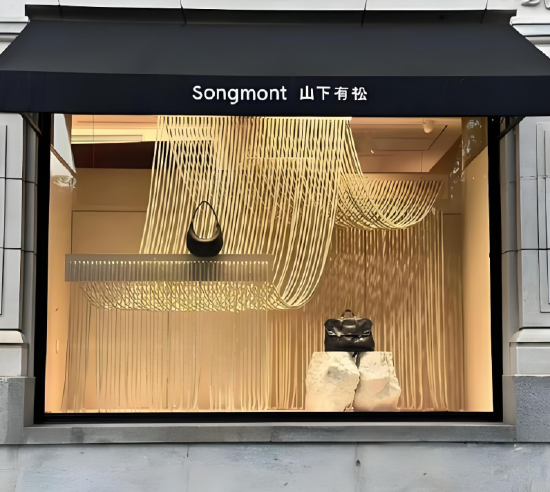
Core Insights - The brand Songmont, also known as "山下有松," has rapidly gained mainstream attention, with significant milestones including LVMH chairman Bernard Arnault purchasing products and the brand's participation in Paris Fashion Week [1][17] - Despite impressive growth, the brand faces challenges such as rampant counterfeiting, consumer complaints about design similarities and high prices, and quality control issues [1][4][11] Sales Performance - In the first three quarters of this year, Songmont's online sales in China increased by approximately 90%, while competitors like Gucci and MK saw declines of 50% and 40% respectively [17] - Songmont has consistently improved its ranking in the Tmall Double Eleven sales event, moving from third place in 2023 to first place in 2024, surpassing Coach with an annual GMV of around 500 million yuan [17][21] Consumer Sentiment - Consumer feedback is polarized, with loyal fans praising the brand's unique design and quality, while critics highlight issues such as design uniformity, high prices, and frequent price increases [18][19] - A specific product, the "菜篮子" bag, saw its price rise from 880 yuan in 2021 to 1380 yuan in 2025, reflecting a nearly 60% increase [4][19] Market Positioning - Songmont is positioned among mid-to-high-end domestic brands, with some products priced over 4000 yuan, and has tested the high-end market with items exceeding 10,000 yuan [21] - The brand's pricing strategy considers multiple factors, including material costs, craftsmanship, and market positioning, as stated by customer service representatives [21] Expansion Strategy - The brand has expanded its physical presence, increasing its number of stores from 11 to 20 within a year, primarily in first-tier and new first-tier cities [22] - Despite the expansion, many stores are not yet profitable, with online sales currently supporting offline operations [22] Product Diversification - Songmont is diversifying its product offerings, launching a clothing line in November 2024 and a fragrance line in November 2025, with prices comparable to luxury brands [24][10] - The brand aims to create a cohesive aesthetic experience, integrating bags, clothing, and fragrances to attract a specific consumer demographic [24] Counterfeit Issues - Counterfeiting has become a significant issue, with a complete supply chain for fake products emerging, often sold at prices 1/5 to 1/10 of the original [25][11] - The brand is actively working to combat counterfeiting, with legal teams addressing the issue both domestically and internationally [27] Brand Challenges - The brand faces a paradox where increased visibility leads to more counterfeiting, complicating the maintenance of its unique identity and high-end perception [27] - Experts suggest that to build a stronger brand moat, Songmont should enhance its product innovation, establish technical barriers, and improve copyright protection [27]
Guggenheim's Simeon Siegel calls Lululemon's proxy fight the ‘friendliest'
Youtube· 2025-12-30 16:16
Retail Sector Insights - The retail sector is seeing a mix of established brands and emerging opportunities, with a focus on companies like TJX and Planet Fitness, which are recognized as strong businesses but may be trading at high valuations [2][6] - Birkenstock is highlighted as a potential growth stock that is not currently valued as such, presenting an interesting investment opportunity [3][5] - Capri Holdings, particularly Michael Kors, is noted for its turnaround potential following the Versace sale, indicating a cleaner balance sheet and a recovery trajectory [4][5] Valuation Perspectives - The concept of a "sleep easy at night" premium is discussed, where investors are willing to pay higher multiples for consistent businesses like Walmart and Costco, reflecting a shift in valuation metrics [9][10] - The discussion emphasizes that high valuations can be justified by future growth expectations, suggesting that current multiples may not be as high when considering long-term growth [8][9] Competitive Landscape - The competition between Walmart and Amazon is analyzed, with both companies seen as winners in the retail space, indicating a healthy competitive environment [12][13] - Lululemon is under scrutiny due to its brand saturation and potential overstretching, with activist investors pushing for changes in leadership and strategy [14][15][16]