
Coach

Search documents
2026年第3周:服装行业周度市场观察
艾瑞咨询· 2026-02-02 00:05
Group 1: Luxury Goods Market Trends - The luxury goods industry is shifting towards high-quality growth, with major players like LVMH and Richemont adjusting strategies to focus on core businesses and supply chain control [2] - LVMH is divesting non-core brands and enhancing supply chain and experiential layouts, while Richemont is strengthening its jewelry business and divesting loss-making e-commerce [2] - Kering is selling its beauty business to concentrate on eyewear and jewelry manufacturing, indicating a trend of precise investment and asset optimization in the industry [2] Group 2: Retail Industry Transformation - The retail supermarket sector is facing a transformation challenge, with some companies attempting to emulate successful models like "胖东来" but experiencing limited success [3] - The retail industry has evolved through four stages, culminating in a "fashion" phase post-2023, where consumer rational needs and emotional values must be met [3] - Creating fashionable retail spaces requires attention to store design, product selection, and customer experience to enhance customer dwell time and increase sales [3] Group 3: Footwear Trends - The footwear trend for 2025 is characterized by diversification and personalization, with consumers prioritizing comfort and self-expression over limited edition collaborations [4] - 3D printing technology is becoming a focal point in the industry, with brands like Nike and Adidas innovating their product lines [4] - Domestic footwear brands are improving in design and quality, challenging previous biases, while the popularity of thin-soled shoes faces criticism for lack of innovation [4] Group 4: Luxury Brands and High-End Retail - High-end retail spaces in first-tier cities are experiencing a wave of luxury brand withdrawals, driven by low foot traffic and the rise of online channels [5] - Major luxury brands are shifting focus to online sales and core business areas, leading to a transformation in high-end retail strategies [5] - Shopping centers are adapting by introducing new concepts and experiences to attract customers, moving from traditional retail to experiential consumption [5] Group 5: Emerging Brands and Market Dynamics - Bubble Mart reported a revenue of 13.876 billion yuan in the first half of 2025, a 204.4% increase year-on-year, driven by cross-brand collaborations [7] - The "排骨羽绒服" has transformed from an unpopular item to a trending fashion piece, achieving significant sales growth through social media and influencer marketing [8] - The Swedish outdoor brand Haglöfs is entering the Chinese market with plans to open 25 stores by the end of 2025, targeting high-net-worth individuals [9] Group 6: Strategic Adjustments in Established Brands - The brand Wolf Claw is undergoing a strategic shift towards the mid-to-high-end market after being acquired by Anta, closing its online flagship store [10][11] - Anta's strategy includes leveraging Wolf Claw to fill gaps in the high-end outdoor market, reflecting a broader trend of brand repositioning in response to market dynamics [10][11] - Li Ning is expanding its coffee business while also entering the high-end outdoor market, indicating a multi-faceted growth strategy [18]




Klarna Sees Triple-Digit Spending Growth Across Entertainment, Experiences, and Automotive This Holiday Season
Businesswire· 2025-12-23 14:31
Core Insights - Klarna reports significant increases in U.S. holiday spending, with triple-digit year-over-year growth in categories such as entertainment (+130%), experiences (+115%), and automotive products (100%) from December 1 to December 22, indicating a shift towards experiential and high-value purchases this season [1][2] Consumer Trends - In traditional retail, footwear emerged as the most-clicked category, with popular items including Nike Air Force 1 '07, UGG Lowmel, Adidas Samba OG, and classic Jordan styles [3] - Headphones ranked as the second most-clicked category, with strong interest in Apple AirPods 4, AirPods Pro (2nd Gen), and premium models from Sony and Bose [4] - Gaming interest focused on console upgrades, particularly Microsoft's Xbox Series X and Series S, along with newer systems like the Nex Playground Game System [4] - Handbags saw steady engagement, with consumers favoring practical styles from brands like Michael Kors, Coach, Lululemon, and Marc Jacobs [5] - Fragrances dominated clicks, with bestsellers including Carolina Herrera Good Girl, Dior Sauvage, and Viktor & Rolf Flowerbomb [5] Company Overview - Klarna is a global digital bank and flexible payments provider, boasting over 114 million active users and processing 3.4 million transactions daily [6] - The company partners with over 850,000 retailers, including major brands like Uber, H&M, Saks, Sephora, Macy's, Ikea, Expedia Group, Nike, and Airbnb, to enhance consumer payment experiences [6]


Activist investor wants Ralph Lauren veteran to lead Lululemon
Yahoo Finance· 2025-12-18 11:14
Core Insights - Lululemon's CEO succession plans are under scrutiny, with founder Chip Wilson highlighting the presence of several qualified candidates for the role [3] - Elliott Investment Management has acquired a stake exceeding $1 billion in Lululemon and is advocating for Jane Nielsen, a former executive at Ralph Lauren, to become the new CEO [4][7] - Analysts, including those from Needham, view Nielsen as a strong candidate due to her successful track record in revitalizing brands, although they note that Lululemon's challenges differ from those faced by Ralph Lauren and Coach [5][6] Company Developments - CEO Calvin McDonald is set to step down, prompting the search for a new leader who can drive growth and transformation [7] - CFO Meghan Frank will co-lead the company in the interim, emphasizing the need for experience in growth and transformation for the next CEO [7] Market Reactions - Elliott's push for Nielsen is based on her strategic experience and past successes in improving share price, gross margin, and earnings per share at Ralph Lauren [4] - Analysts recognize Nielsen's turnaround capabilities but caution that Lululemon's issues stem from product missteps and increased competition, rather than the distribution challenges faced by her previous companies [5][6]

FRT Expands Its Portfolio With Village Pointe Buy: Can It Fuel Growth?
ZACKS· 2025-12-02 15:31
Core Insights - Federal Realty (FRT) has announced the acquisition of Village Pointe, an open-air lifestyle center in Omaha, for $153.3 million, which spans 453,000 square feet and is located in a prime commercial area with affluent demographics [1][9] Group 1: Acquisition Details - Village Pointe attracts approximately 6 million annual visits and serves a trade area of over half a million people, making it a significant asset for FRT [2][9] - The center features a mix of high-performing national and premium lifestyle retailers, including Apple, Sephora, Coach, and Nordstrom Rack, enhancing its market position [2][9] - The property is strategically located near top-ranked schools and major employers such as Berkshire Hathaway, PayPal, and LinkedIn, indicating strong growth potential [3] Group 2: Strategic Portfolio Moves - FRT's acquisition strategy focuses on market-dominant retail assets to create long-term growth opportunities through operational expertise [3] - Recent acquisitions by FRT include Annapolis Town Center for $187 million and Town Center Plaza and Town Center Crossing for $289 million, indicating a trend of strategic portfolio rebalancing [4] Group 3: Market Performance and Valuation - FRT shares have increased by 3% over the past three months, outperforming the broader industry but underperforming the S&P 500 Index [8] - The company trades at a forward 12-month price-to-FFO of 13.28, which is below the industry average and its one-year median of 13.36, reflecting a Value Score of F [11] Group 4: Earnings Estimates - The Zacks Consensus Estimate for FRT's full-year 2025 EPS has been revised upward, suggesting a year-over-year growth of 6.8% [12] - Current estimates for the upcoming quarters indicate stable earnings projections, with EPS estimates for the current year at 7.23 and next year at 7.42 [13]


Teen brands win over wary Black Friday shoppers while other deals disappoint
Fortune· 2025-11-30 22:31
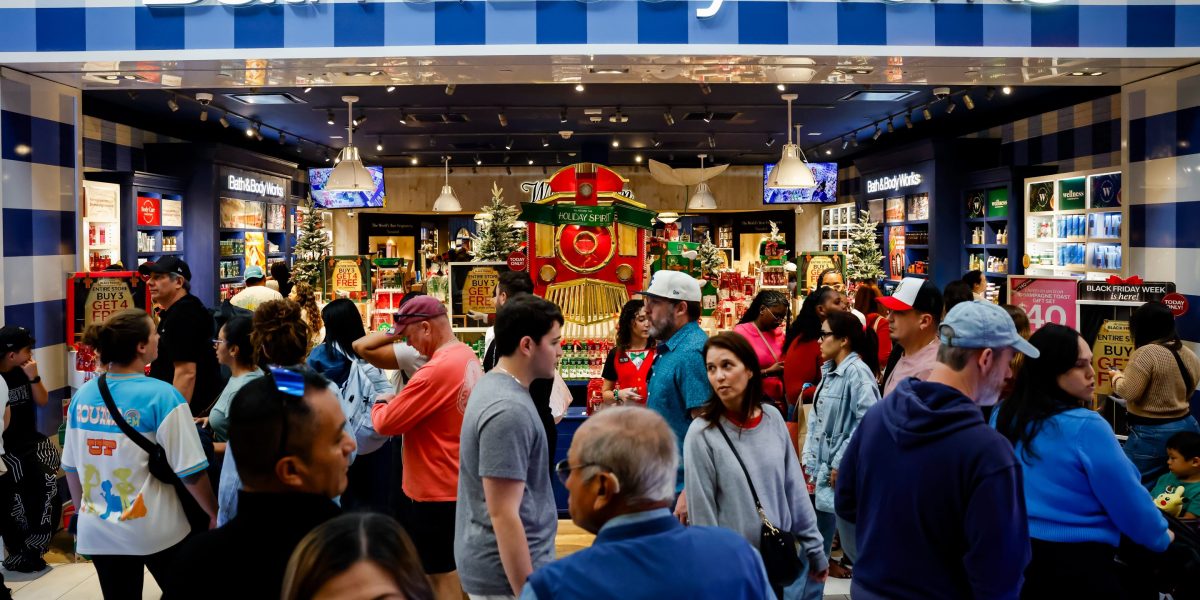
Core Insights - Teen brands have successfully attracted shoppers during Black Friday despite economic challenges, with stores like Edikted, Kendra Scott, and Bath & Body Works seeing significant foot traffic [1][4][6] - Other retailers, particularly high-end brands, experienced disappointing turnout and customer dissatisfaction due to perceived lack of substantial discounts [2][8][9] Retail Performance - Stores targeting younger consumers, such as Alo Yoga and Brandy Melville, reported busy shopping environments, indicating a shift in consumer preferences towards brands popular on social media platforms like TikTok [4][5] - Bath & Body Works offered compelling promotions, such as a buy three, get four free deal, which drew large crowds [6] Consumer Behavior - Shoppers are increasingly focused on maximizing deals, with many seeking essential items rather than indulging in luxury purchases [7][14] - The overall sentiment among consumers suggests a more cautious approach to spending, with expectations of lower unit sales despite stable overall spending [13][14] Economic Context - The holiday shopping season is influenced by economic factors such as inflation, stagnant wages, and a cooling job market, leading to a more restrained consumer outlook [12][15] - Retailers are facing challenges in providing significant discounts due to tariffs and reduced seasonal hiring, impacting the overall shopping experience [15]

Movado Group(MOV) - 2026 Q3 - Earnings Call Transcript
2025-11-25 15:02
Financial Data and Key Metrics Changes - Revenue growth of 3.1% to $186.1 million for the third quarter, with a 5.9% increase excluding the Middle East [4][5] - Gross margin improved by 80 basis points to 54.3% compared to 53.5% last year, despite a $4.5 million impact from U.S. tariffs [5][15] - Adjusted operating income grew over 40% to $12.6 million, with positive operating cash flow of $1.3 million for the first nine months [5][17] - Net income for the third quarter was $10.2 million, or $0.45 per diluted share, compared to $8.5 million, or $0.37 per diluted share in the previous year [17] Business Line Data and Key Metrics Changes - Movado brand sales grew 17.7%, with overall sales in Movado company stores increasing by 9.4% on a comparable store basis [9] - Licensed brands saw a 6.4% growth overall, with a 2.9% increase on a constant currency basis [10] - Strong performance in specific collections such as Coach's Sammy Collection and Tommy Hilfiger's TH Oxford family [10][11] Market Data and Key Metrics Changes - U.S. net sales increased by 6.9%, while international net sales increased by 0.6%, with strong performances in Europe and Latin America [14][15] - The Middle East market showed softer results, but the company is working on rebuilding its strategy in that region [4][15] Company Strategy and Development Direction - Focus on building brands sustainably, driving innovation, and improving financial results [4][6] - Plans to return to growth in the Middle East next year and continue to invest in brand-building efforts while improving profitability [4][25] - Emphasis on capturing momentum from younger consumers embracing analog watches [12] Management's Comments on Operating Environment and Future Outlook - Management expressed optimism about improving dynamics in the fashion and accessible luxury watch categories, driven by innovation and interest from younger consumers [6][12] - The company is not providing a fiscal 2026 outlook due to current economic uncertainty and unpredictable tariff developments [20] Other Important Information - The company ended the quarter with $183.9 million in cash and no debt, and a quarterly dividend of $0.35 per share was approved [6][19] - Capital expenditures for the first nine months were $3.5 million, with approximately 100,000 shares repurchased under the share repurchase program [19] Q&A Session Summary Question: Is the success in sales due to influencers or design trends with Gen Z? - Management indicated it is a combination of both increased social media coverage and innovative designs resonating with younger consumers [22] Question: Does having sold-out conditions impair sales? - Management clarified that sold-out conditions are planned for select product families and that they expect to replenish styles soon [23] Question: Will the success in sales change spending levels for the fiscal year? - Management emphasized a balance between investing in brand-building and improving profitability [25]

双11奢侈品消费“翻红”
Sou Hu Cai Jing· 2025-11-23 05:06
如果大家去商场逛逛,会发现那些奢侈品专柜确实冷清了不少,然而实际上,购买奢侈品的"大军"其实依旧庞大,只不过当 中许多人似乎换了一个购买方式,从"正价入手"来到了"折扣捡漏"赛道。 就拿最近双11数据来说,网上有声音也说今年是有史以来"最沉默"的一届双11,没想到奢侈品的表现却意外亮眼,据天猫公 布,10月20日正式开售后,平台奢牌整体成交同比两位数增长,Balenciaga、Burberry、Canada Goose、Coach、MiuMiu、 Ralph Lauren等品牌均在天猫实现高双位数增长。 年年都说奢侈品卖不动了,事实真的如此吗? 何况这些特卖平台的商品来源,一般都是利用供应链优势,直接与经销商甚至品牌方谈下来的合作,既保证了折扣低价,又 保证了正品品质,消费者可以花更合理的价格买到心仪的品牌,这何乐而不为呢? 特别是主打品牌特卖的唯品会(VIPS.US),今年1-9月,其奢侈品销售额同比增长就超过了30%。双11期间,多个大牌表现尤 为亮眼,其中EA7涨了38%,BALLY涨了35%,Burberry涨了22%,汤丽柏琦更是猛增60%。 这些数据无一不证明,消费者不是不爱买奢侈品了,只不过不再 ...
海外视点丨别再关注中国市场的低迷情绪——奢侈品行业高管表示,消费者已经回归
Sou Hu Cai Jing· 2025-11-17 16:12
Group 1 - Chinese consumers are returning to the luxury goods market, with executives from Prada, Coach, EssilorLuxottica, and Value Retail noting a stabilization in demand after months of weakness [2] - The luxury goods industry has seen a significant slowdown in growth since the pandemic, influenced by high youth unemployment, a sluggish real estate market, and weak consumer confidence [2] - Prada's CFO Andrea Bonini expressed a "cautiously optimistic" outlook, indicating that a more "normalized" environment may not emerge until 2026 [3] Group 2 - Coach reported a strong growth momentum, with a 20% increase in business in China, attributed to its market positioning appealing to more cautious consumers [3] - Coach has been expanding its local presence, leveraging 25 years of market experience, including establishing a joint design studio and expanding in regional cities like Wuhan [3] - Approximately 40% of Coach's growth is derived from international markets, indicating resilience against U.S. tariffs [4] Group 3 - UBS research indicated that Burberry's sales in the Greater China region grew by 3%, exceeding expectations, while Richemont reported that sales to Chinese customers were "almost flat," showing significant improvement from previous declines [4] - Richemont's sales in the Asia-Pacific region increased by 10%, with expectations for continued growth momentum before the end of the year [4]


Forget the China gloom — luxury bosses say shoppers are back
CNBC· 2025-11-16 06:57
Core Insights - Chinese luxury market is showing signs of stabilization after a period of weakness, with executives from major brands expressing cautious optimism about demand recovery [1][3][15] Company Performance - Prada's CFO noted a stabilization in demand, suggesting a more normalized market may emerge by 2026 [3] - Coach reported a 20% growth in its China business, indicating strong momentum and effective positioning to attract cautious consumers [5][6] - Burberry's Greater China sales increased by 3% last quarter, surpassing expectations, while Richemont experienced a significant improvement from earlier declines [7] - LVMH reported a 1% growth in the third quarter, marking its first quarterly increase this year, with positive signs from mainland China [8] Market Trends - The luxury sector in China has been affected by high youth unemployment, a prolonged property downturn, and weaker household confidence, impacting discretionary spending [2] - Analysts caution against assuming a full rebound, noting that improvements may be due to easier comparison bases rather than a broad-based recovery [10][11] - Global brands are increasingly localizing their strategies in response to intensified competition from Chinese labels, with some dedicating over 40% of revenue to China-focused marketing [11] Consumer Behavior - The rise of social media platforms like Xiaohongshu and Douyin is prompting companies to rethink their content and product strategies [12] - EssilorLuxottica reported broad-based growth across regions, indicating that consumers are not trading down but are attracted to product innovation [13]

关税重压之下,美国商家今年“黑五”打不起折了
Hua Er Jie Jian Wen· 2025-11-12 03:40
Core Insights - The discounts during this year's Black Friday shopping season are expected to be significantly lower than in previous years due to tariff pressures and ongoing inflation impacting retailers' profit margins [1][2] - Retailers are facing a difficult choice between protecting profits and attracting price-sensitive customers amid declining disposable income [1][2] Group 1: Impact of Tariffs and Inflation - Tariff policies from the Trump administration have led to increased costs for many companies, from small sellers on Amazon to well-known brands, forcing them to reduce discount offerings [1] - Upstream Brands reported that the cost of a copper herb stripper has risen from under $20 last year to about $30 this year due to metal tariffs, making discounts financially unfeasible [1] - Therabody has raised product prices by 5% to 7% due to tariffs, indicating an inability to offer significant discounts as in previous years [1] Group 2: Consumer Spending Trends - GlobalData's Neil Saunders noted that retailers are in a dilemma, wanting to protect profits while knowing consumers expect discounts in a competitive environment [2] - A PricewaterhouseCoopers survey predicts a 5% decline in average consumer spending during this holiday season [2] - The University of Michigan's consumer confidence index has reached near historical lows, reflecting a challenging environment for retailers [2] Group 3: Brand Strategies - Some brands, including Coach and Nike, are proactively reducing discounts to maintain their premium brand image, which adds to the challenges for consumers seeking significant savings [2] - Coach's CEO Todd Kahn emphasized the company's strategy to avoid deep discounts to ensure products are perceived as worth full price, a strategy also adopted by Nike and Levi Strauss & Co. [2]