
Dell

Search documents
HP Inc. Earnings Preview: What Wall Street Is Watching
247Wallst· 2026-02-24 18:35
Core Viewpoint - HP Inc. is under pressure as its stock has declined 17% year-to-date, trading near its 52-week low of $18.12, with significant concerns regarding memory cost inflation and the sustainability of the PC refresh cycle impacting its earnings outlook [1]. Group 1: Financial Performance - HP's fiscal Q4 2025 revenue was $14.64 billion, exceeding the consensus estimate of $14.49 billion and representing a 4% year-over-year growth [1]. - Non-GAAP EPS for Q4 2025 was $0.93, slightly above expectations of $0.92 [1]. - Personal Systems revenue grew by 8% due to increased average selling prices and a 7% increase in unit sales, while Printing revenue declined by 4% year-over-year [1]. Group 2: Earnings Guidance and Challenges - For fiscal Q1 2026, consensus estimates are a non-GAAP EPS of $0.77 and revenue of $13.925 billion [1]. - Management has indicated a 30-cent headwind to full-year earnings due to projected memory cost increases, which now account for 15% to 18% of the cost of a typical PC [1]. - The company is implementing strategies to mitigate memory cost impacts, including qualifying lower-cost suppliers and redesigning products for reduced memory configurations [1]. Group 3: Market Sentiment and Analyst Ratings - Wall Street analysts are cautious, with 10 out of 17 analysts rating the stock as a hold, 3 as a sell, and 1 as a strong sell, with an average price target of $23.21 [1]. - Major firms like Morgan Stanley and Bank of America have sell ratings with price targets set at $18 [1]. Group 4: Future Outlook - HP's Investor Day is scheduled for April 23, where management will discuss the impact of AI on the business, making the upcoming earnings results critical for setting the narrative [1]. - The demand for AI PCs (AIPCs) is expected to increase, with AIPCs representing over 30% of shipments in Q4 and projected to reach 40% to 50% in fiscal 2026 [1].



BUZZ HPC CEO Craig Tavares on Canada’s AI infrastructure play
Yahoo Finance· 2026-02-16 14:37
Core Insights - BUZZ HPC is focused on building sovereign AI infrastructure in Canada, aiming to reduce reliance on foreign entities and enhance national infrastructure [2] - The company has secured $30 million in AI contracts and is targeting $140 million in annual recurring revenue (ARR) [3] - BUZZ HPC's ARR has increased from approximately $1 million per month a year ago to over $3 million per month currently, with a goal of reaching $10 million per month [3] Company Strategy - BUZZ HPC positions itself as one of the few Canadian-owned data center and GPU cloud service providers, emphasizing secure domestic AI compute capacity [2] - The company is pursuing a disciplined growth strategy, focusing on compounding contracted revenue rather than making large capital expenditure announcements [3] - Partnerships with Dell and Bell Canada are integral to BUZZ HPC's strategy, reinforcing its commitment to sovereign AI and enterprise-grade standards [3] Market Position - The emphasis on operational discipline is highlighted as crucial for long-term success in the AI sector, with a focus on scaling revenue before taking on additional risk [3]
HP Inc. (HPQ) Balances Procurement Strategy With Security Commitments
Yahoo Finance· 2026-02-11 17:20
Group 1 - HP Inc. is considering sourcing memory chips from Chinese manufacturers, marking a significant shift in procurement strategy for major PC brands that have traditionally relied on suppliers from the US, South Korea, and Taiwan [1][3] - Dell and HP have started qualifying DRAM chips from ChangXin Memory Technologies, while Acer and Asus are also requesting locally-made memory chips from their Chinese partners [2] - The move comes amid a severe memory shortage affecting electronics supply chains, with major players like Samsung, SK Hynix, and Micron focusing their manufacturing on high-bandwidth memory for AI data centers [3] Group 2 - HP has renewed its multi-year agreement with Karamba Security to license XGuard cybersecurity software for its printer products, extending a partnership that began in 2020 [4] - The agreement covers networked and cloud-connected printers, which are treated as computing devices vulnerable to cyberattacks, with XGuard technology integrated into the firmware to enhance security [5] Group 3 - HP Inc. develops and sells personal computers, printers, and related hardware, software, and services, serving both consumer and enterprise markets globally [6]
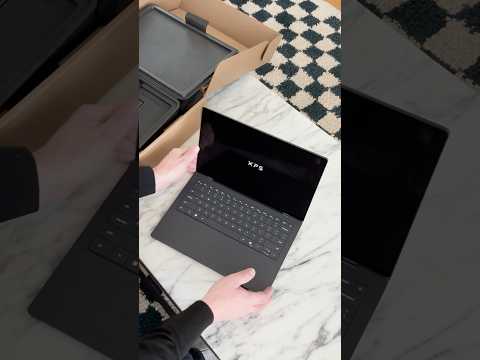
Unboxing Dell’s New $2,200 XPS 14 Laptop That Has an OLED Touch Display 💻
CNET· 2026-02-11 06:05
XPS is back! 💻 The new Dell XPS 14 with an OLED touch display features an Intel Core Ultra X7-358H, 32GB-RAM, 1TB-SSD, and more. Dell points out that the XPS 14 is smaller than the 13-inch MacBook Air and claims that the XPS 16 is the world’s smallest 16-inch laptop. Let’s unbox it. #dell #laptop #dellxps #intel #unboxing ...
X @Bitcoin Magazine
Bitcoin Magazine· 2026-02-10 20:39
FUN FACT: In 2014, Dell accepted payment of 85 #Bitcoin worth $50,000 for a server order.Today, that 85 #BTC is worth $5.8 million. https://t.co/6xLsaCQTRf ...
存储超级周期下的关键答卷 联想集团Q3财报成全球硬件行业试金石
Ge Long Hui· 2026-02-10 01:42
Core Viewpoint - The global storage chip industry is experiencing an unprecedented "super cycle" driven by the explosive demand for AI infrastructure, leading to significant price increases in core categories such as DRAM, NAND, and HBM. This situation has made the profitability of end-device and infrastructure manufacturers a focal point for capital markets [1]. Group 1: Lenovo's Financial Performance - Lenovo Group is set to release its Q3 financial report for the fiscal year 2025/26, which is considered a critical indicator of how well end-device manufacturers can withstand cost pressures amid soaring global storage chip prices [1]. - Bloomberg forecasts Lenovo's Q3 revenue to reach approximately $20.76 billion, reflecting a year-on-year growth of about 10.4% from $18.8 billion [1]. - Despite achieving an adjusted net profit of $512 million in Q2 (a 25% year-on-year increase), analysts have lowered the average net profit expectation for Q3 to about $463 million due to significant fluctuations in storage chip costs [2]. Group 2: Supply Chain and Inventory Strategy - Lenovo's unique supply chain strategy has garnered significant market attention, as the company has strategically accumulated storage chips, with inventory levels approximately 50% higher than normal, potentially supporting production until the end of 2026 [3]. - The operational profit margin for Lenovo's Intelligent Devices Group (IDG), which includes personal computers and related businesses, was reported at 7.3% in Q2, and the market is keenly observing whether this performance can be sustained in Q3 [2]. - IDC has warned that hardware inflation caused by storage shortages could lead to a decline in global PC shipments by as much as 8.9% in 2026, highlighting the potential risks in the market [3].

Micron Stock Can’t Stop Going Up and Goldman Sachs Knows Exactly Why
Yahoo Finance· 2026-02-09 13:02
Quick Read AI data centers will consume 70% of global HBM production in 2026. Device makers are cutting output and raising prices. Micron’s stock surged 312% on HBM shortages that gave memory makers pricing power. Retail prices for some HBM have jumped nearly 7-fold since October. The HBM market will grow from $4B in 2023 to $130B by 2030. Bloomberg forecasts Micron capturing 25% of it. Investors rethink 'hands off' investing and decide to start making real money When it comes to electronic devic ...

X @The Wall Street Journal
The Wall Street Journal· 2026-02-04 19:02
Zach Dell, the son of billionaire computer pioneer Michael Dell, seeks to shore up the Texas power grid with an army of batteries installed one home at a time https://t.co/S8Okz77wsl ...
SMCI stock's post-earnings rally may be a ‘trap' — smart money says sell
Invezz· 2026-02-04 15:25
Core Viewpoint - Super Micro Computer (SMCI) experienced a significant stock rally following a report of over $12.7 billion in revenue for Q2, but institutional investors are cautious about the sustainability of this growth, suggesting the rally may be a "trap" [1] Group 1: Financial Performance - SMCI's revenue more than doubled to $12.7 billion in the second quarter, driven by delayed sales finally being recognized [1] - Despite record revenue, the adjusted gross margin has plummeted to 6.3%, indicating a severe decline in profitability [1] - The company is operating with razor-thin margins, positioning itself as a high-volume, low-margin "box mover" [1] Group 2: Business Model Concerns - A significant 63% of Q2 revenue came from a single large data center client, creating a risky "single point of failure" scenario [1] - The company is facing challenges from rising freight costs, component shortages, tariffs, and expensive logistics, which are impacting its profitability [1] - SMCI's governance issues from 2024-2025 continue to affect its business stability, with major clients diverting orders to more stable partners [1] Group 3: Market Position and Investment Outlook - The opportunity cost of investing in SMCI is high, as the company deals with past accounting issues and auditor resignations [1] - Competitors like DELL and HPE are gaining market share with stronger balance sheets and more transparent corporate structures [1] - Investors are encouraged to consider higher-quality stocks in the AI sector that do not carry the same risks as SMCI [1]

Goldman Sachs Assumes Penguin Solutions (PENG) Coverage with Buy Rating, $25 PT
Yahoo Finance· 2026-01-31 14:47
Core Insights - Goldman Sachs has initiated coverage of Penguin Solutions with a Buy rating and a revised price target of $25, down from $26, while noting the company's FY2026 outlook is uncertain but remains optimistic about its AI infrastructure momentum [1][4] Financial Performance - In FQ1 2026, Penguin Solutions reported revenue of $343 million, reflecting a 1% year-over-year increase, driven by a 41% annual surge in Integrated Memory business revenue to $137 million due to DDR5 technology and AI computing demand [2] - Advanced Computing revenue increased by 9% sequentially to $151 million [2] Challenges and Future Outlook - The company experienced an 18% sequential decline in its Optimized LED business due to weak demand in China and large US OEM sectors [3] - Management indicated challenges with the high-margin Penguin Edge business, which is expected to wind down by the end of fiscal 2026, alongside a 9% decline in services net sales [3] - Penguin Solutions anticipates a stronger second half of the year by focusing on enterprise and sovereign AI opportunities, leveraging partnerships with Dell, CDW, and Nvidia to diversify its customer base beyond traditional hyperscalers [3]