General Motors

Search documents
Stellantis takes massive $26B hit after moving away from EVs
Fox Business· 2026-02-06 17:11
Core Viewpoint - Stellantis announced a $26.5 billion charge due to a reduction in electric vehicle (EV) production, reflecting a misjudgment of consumer demand for EVs, which is larger than similar charges taken by Ford and General Motors [1][6]. Group 1: Company Strategy and Leadership Changes - Stellantis had ambitious EV goals under former CEO Carlos Tavares, aiming for EVs to constitute 100% of European sales and 50% of U.S. sales by 2030, but he was ousted in 2024 after a significant drop in U.S. sales [2]. - The new CEO, Antonio Filosa, acknowledged that previous assumptions about EV demand were "over optimistic" and emphasized a strategic reset to focus on customer preferences globally and regionally [5]. Group 2: Financial Impact and Market Response - The $26.5 billion charge includes costs related to quality issues and a reduction in the EV supply chain, as well as adjustments to warranty provisions due to poor product quality and job cuts in Europe [6][7]. - Following the announcement, Stellantis shares fell over 22% in New York and more than 23% in Milan, indicating a negative market reaction to the news [10][11]. Group 3: Industry Context and Future Projections - Fully electric vehicles accounted for 19.5% of European sales and only 7.7% of new U.S. car sales last year, highlighting the challenges faced by automakers in transitioning to EVs [5]. - Stellantis forecasts a mid-single-digit increase in net revenue for 2026 and a low-single-digit adjusted operating income margin, with expectations of positive industrial free cash flows by 2027 [11].



The EV retreat just saw its biggest charge yet — a $26 billion write-down from Jeep-maker Stellantis
Business Insider· 2026-02-06 16:03
Core Viewpoint - Stellantis is taking a €22 billion ($26 billion) charge as part of a major reset of its electric vehicle strategy, marking the largest write-down in a series of recent EV-related charges by global automakers, totaling $55 billion across the industry [1][2]. Group 1: Financial Impact - Volkswagen recorded a $3.5 billion charge in September linked to its electric division [2]. - Ford announced a $19.5 billion charge in December after canceling plans for large EVs [2]. - General Motors reported a $6 billion write-down due to reduced EV production [2]. Group 2: Strategic Shift - Stellantis CEO Antonio Filosa stated that the reset is aimed at aligning with customer preferences, acknowledging past overestimations of the energy transition pace [6]. - The company is shifting focus back to gas-powered vehicles, reintroducing models like the V8 Hemi-powered Ram pickup series and the six-cylinder Dodge Charger [10]. Group 3: Historical Context - Stellantis was formed in 2021 through the merger of Fiat Chrysler Automobiles and PSA Group, investing heavily in EV infrastructure under previous CEO Carlos Tavares [7]. - The anticipated consumer demand for EVs did not materialize, leading to a 70% profit drop during Tavares' final year [8]. Group 4: Product Line Adjustments - Stellantis has canceled or delayed several electric vehicle models, including the Chrysler Airflow and the all-electric Ram 1500 [8]. - The company discontinued its fleet of plug-in hybrid vehicles, ceasing production of models like the Jeep Wrangler 4xe and Chrysler Pacifica Hybrid [9]. - Remaining electric launches by 2026 include the $65,000 Jeep Recon and an extended-range Ram 1500 REV [9]. Group 5: Market Reaction - Following the announcement of the significant EV write-down, Stellantis shares fell by 25.5%, trading at approximately $7.10 per share shortly after market opening [11].

Stellantis stock plunges 25% as auto giant takes $26.5B charge from electric vehicle retreat
New York Post· 2026-02-06 15:11
Core Viewpoint - Stellantis shares dropped significantly by 25% after announcing a $26.5 billion charge related to a business overhaul, including a retreat from electric vehicle ambitions [1][10] Financial Impact - The stock's decline could mark the largest one-day drop on record, erasing over 5 billion euros from the company's market capitalization [2] - The majority of the $26.5 billion charge includes $17.3 billion (14.7 billion euros) for realigning product plans with customer preferences, particularly a pullback in fully-electric products [5] Strategic Direction - Stellantis CEO Antonio Filosa emphasized the company's commitment to operate as a unified group despite speculation about selling off some brands [4] - The company aims to remain at the forefront of electric vehicle developments but will adjust its pace based on demand rather than command [7] Future Projections - Stellantis is forecasting a net loss for 2025, with expectations of a mid-single-digit percentage increase in net revenue and a low-single-digit increase in adjusted operating income margin for 2026 [8] - The company acknowledged the impact of previous poor operational execution on its current situation [8] Industry Context - Other automakers like Ford and General Motors have also reported significant charges related to reduced electric vehicle plans, but Stellantis' charge is notably larger than theirs [6]
Should You Buy Rivian Stock While It's Under $20?
The Motley Fool· 2026-02-05 09:05
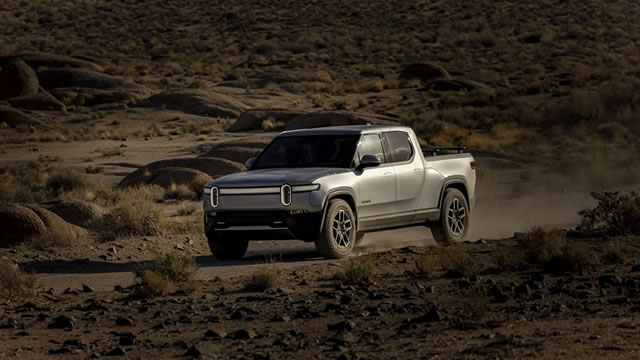
Core Viewpoint - Rivian Automotive is an innovative electric vehicle (EV) company with potential, but current financials indicate it may not be a good investment at this time due to high risks and losses [1][2][8]. Financial Performance - Rivian's revenue for Q3 2025 reached $1.5 billion, representing a 78% increase compared to Q3 2024 [9]. - The company reported a consolidated gross profit of $24 million for the same quarter, an improvement of $416 million [9]. - Despite the revenue growth, Rivian incurred a significant loss of $2.75 billion in the first nine months of 2025, although this was an improvement from a $4 billion loss in the same period of 2024 [9]. - Rivian's gross margin stands at just 2%, which is considered very low in the automotive industry, especially when compared to Tesla's gross margin of 17% [10]. Market Position - Rivian ranked sixth in EV sales last year, selling less than half of what Chevrolet (General Motors) sold and less than a tenth of Tesla's nearly 600,000 EVs sold in 2025 [4]. - The American EV market is heavily dominated by Tesla, which holds a 43.1% market share, while other major players like General Motors, Ford, Hyundai, and Volkswagen collectively account for 31.6% [3]. Product Development - Rivian currently offers the R1 model, available as a truck or SUV, starting at around $70,000 [7]. - The company plans to introduce the R2 model, a more affordable SUV starting at $45,000, and has a future R3 model in development [7]. Industry Trends - The end of the EV tax credit in late 2024 negatively impacted overall EV sales in the U.S., which dropped by 36% in Q4 2024, although total EV sales for 2025 saw only a slight decline compared to 2024 [6]. - Despite slowing sales, the EV segment is expected to persist as costs decrease and vehicle ranges improve [6].

Jim Cramer on Tesla: “It Has a Chance to Blast off, But It Hasn’t”
Yahoo Finance· 2026-02-04 20:18
Group 1 - Tesla, Inc. is not just a car company but is evolving into a robotics and Cybercab company, indicating a shift in its business model and potential growth areas [1][3] - Jim Cramer expressed a bullish sentiment towards Tesla, suggesting that the market's perception can change rapidly, and he is inclined to buy Tesla stock due to its new focus on robotics and autonomous vehicles [3] - Tesla designs and sells electric vehicles and is also involved in solar energy and storage systems, highlighting its diversified business operations beyond just automotive [3] Group 2 - There is a belief that certain AI stocks may offer greater upside potential compared to Tesla, suggesting a competitive landscape in the investment space [4]

Top 10 AI Stocks for 2026: Seeking Alpha Quant Picks & Analysis
Seeking Alpha· 2026-02-04 16:54
Market Overview - The market has experienced significant volatility, with geopolitical events and economic uncertainties contributing to fluctuations. January saw a rotation between safe haven stocks and technology stocks, with commodities initially rising before pulling back [8][9][12]. - The AI sector is facing challenges, with fears of overvaluation leading to sell-offs, particularly among major technology stocks. The Nasdaq index was down nearly 2% at one point, driven by concerns surrounding NVIDIA and other AI-related investments [10][24]. AI Market Insights - The global AI market is projected to reach $3 trillion by 2033, driven by the demand for AI infrastructure and the rapid adoption of AI technologies. ChatGPT has seen a surge in active users, growing from 200 million to over 1 billion in just two years [16][17]. - AI stocks have outperformed traditional sectors, with chipmakers and technology firms leading the way. The demand for AI infrastructure has outpaced supply, particularly for memory chips [22][37]. Top AI Stocks for 2026 - The top 10 AI stocks identified have a forward revenue growth rate of 38% and a forward EPS growth rate of 99%, significantly outperforming the S&P 500's growth rates of 6% and 10.6% respectively [39]. - The stocks were selected from major AI-focused ETFs and analyzed using a quantitative model to identify strong performers based on various metrics [36][37]. Individual Stock Highlights - **Lumentum Holdings (LITE)**: Market cap of $27 billion, ranked 1st in its sector. The stock has increased by 402% over the past year, with strong growth metrics [41][43]. - **Micron Technology (MU)**: Market cap of $466 billion, ranked 1st in the semiconductor industry. The stock is up 387% over the past year, with a forward EPS growth rate of 222% [46][52]. - **Ciena (CIEN)**: Market cap of $35 billion, ranked 2nd in communications equipment. The company has a long-term growth rate of 44% [54][55]. - **General Motors (GM)**: Market cap of $1.46 trillion, recognized for its integration of AI in automotive technology. The stock is up 76% over the past year [57][59]. - **Taiwan Semiconductor (TSM)**: Market cap of $1.46 trillion, ranked 2nd in semiconductors. The company has a long-term EPS growth rate of 30% [60][61]. - **Hut 8 Corp (HUT)**: Market cap of $6 billion, ranked 1st in application software. The stock has returned 160% over the past year [62][63]. - **Celestica (CLS)**: Market cap of $32 billion, ranked 2nd in electronic manufacturing services. The stock is up 136% over the past year [64][66]. - **Credo Technology Holding (CRDO)**: Ranked 4th in semiconductors, with a long-term EPS growth rate of 69% [70][71]. - **AppLovin Corporation (APP)**: Despite a rocky year, the stock is up 31% and has strong growth metrics [72][74]. - **Globus Medical (GMED)**: Market cap of $12 billion, focused on AI and robotics in healthcare. The stock is up 68% over the past six months [78][80].






Ivanhoe Mines Founder and Executive Co-Chairman Robert Friedland Meets with U.S. President Donald J. Trump at the White House for the Launch of Project Vault, a $12 Billion Strategic Critical Minerals Stockpile
TMX Newsfile· 2026-02-03 14:30
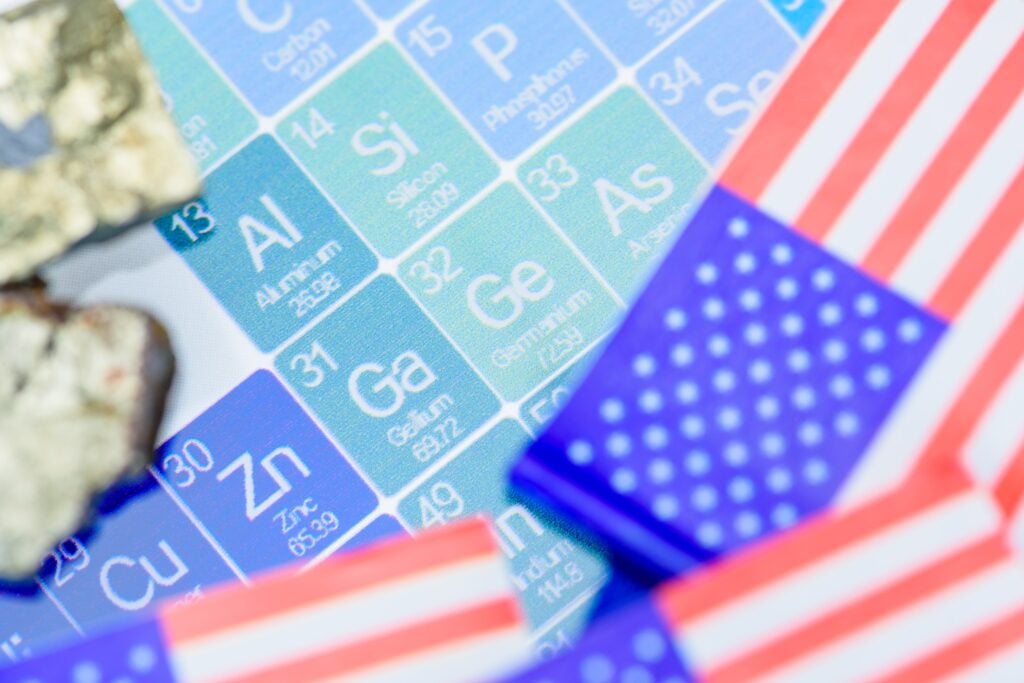
Core Insights - Ivanhoe Mines is in advanced discussions with Gécamines and Mercuria to supply the U.S. with critical minerals from the Kipushi Mine, which is known for its ultra-high-grade zinc-copper-lead-germanium-gallium production [1][5] - Project Vault, a $12 billion initiative, aims to build a strategic reserve of critical minerals in the U.S., combining $1.67 billion in private capital with a $10 billion loan from the Export-Import Bank [2][3] Group 1: Project Vault and Its Implications - Project Vault was officially launched on February 2, 2026, in the Oval Office, with key figures from the mining and manufacturing sectors in attendance, including Robert Friedland and Mary Barra [3][4] - The initiative is designed to enhance supply chain security for critical minerals, which are essential for various industries [2] Group 2: Kipushi Mine Production and Resources - The Kipushi Mine's 2026 production guidance is set at 240,000 to 290,000 tonnes of zinc concentrate, which also includes significant quantities of germanium and gallium [8] - The mine's 2018 Measured and Indicated Mineral Resources are estimated at 11.78 million tonnes, with a zinc grade of 35.34%, and contain approximately 9.2 billion pounds of zinc and 24.4 million ounces of germanium [9] Group 3: Strategic Importance of Minerals - Germanium and gallium are identified as strategic metals used in various high-tech applications, including electronic devices and solar power arrays [10] - The demand for these critical minerals has surged due to advancements in technology, particularly in AI and big data centers [9]


Piper Sandler Sees $2.8 Billion EBIT Upside for Ford (F)
Yahoo Finance· 2026-02-03 09:34
Core Insights - Ford Motor Company (NYSE:F) is recognized for having one of the lowest forward PE ratios among stocks, with Piper Sandler maintaining an Overweight rating and a price target of $16, citing potential warranty enhancements as a significant upside for 2026 [1] - Piper Sandler estimates that resolving quality issues could lead to an EBIT increase of up to $2.8 billion in 2026 compared to 2025, translating to a $0.54 year-over-year increase in EPS, bolstering Ford Pro's performance, which is noted as Ford's highest-margin business [3] - Barclays analyst Dan Levy has reissued a Hold rating on Ford, raising the price target from $12 to $13, reflecting a revised forecast for the mobility segment in the Q4 earnings outlook [4] Financial Performance - Ford has historically outspent General Motors on warranty costs as a percentage of vehicle price in 24 of the last 27 quarters, indicating ongoing quality concerns [1] - The potential EBIT increase of $2.8 billion in 2026 could significantly enhance Ford's financial performance if quality issues are addressed [3] Business Segments - Ford designs, manufactures, markets, and services a comprehensive range of vehicles, including cars, trucks (notably the F-Series), SUVs, commercial vans, and luxury Lincoln models [4] - Ford Pro is highlighted as the company's highest-margin business, with access to the housing sector, which could further contribute to earnings growth [3]

America's 50 most iconic brands, from Main Street to Silicon Valley
Yahoo Finance· 2026-02-02 17:43
Core Insights - The article highlights the significant American companies that have shaped the nation's identity and economy as it approaches its 250th birthday, emphasizing their cultural and historical impact rather than just financial metrics [1][2]. Group 1: Visa - Visa was established in 1958 as BankAmericard, launching the first consumer credit card in the U.S. [3][6] - The company rebranded as Visa in 1976 and went public in 2008, currently holding a market cap of $632 billion [4][6]. - Visa operates in over 220 countries and territories, accepted at more than 175 million merchants [7]. Group 2: Meta (Facebook) - Facebook was founded in 2004 by Mark Zuckerberg and quickly grew to 1 billion users by 2012, later rebranding to Meta in 2021 [9][13][14]. - The platform has faced controversies regarding user data and misinformation but remains a dominant social media service with over 3 billion regular users [15]. Group 3: Boeing - Boeing, established in 1916, is a leading aerospace company known for producing commercial jets and military aircraft [15][16]. - The company has faced challenges in recent years, including safety allegations and COVID-19 impacts, but continues to be a major player in the industry with a market cap of $185 billion [20][21]. Group 4: Tesla - Tesla was founded in 2003, with Elon Musk joining in 2004, and has become synonymous with electric vehicles, launching the Model 3 in 2017 as the best-selling electric car [23][27]. - The company has a market cap of $1.4 trillion and is recognized for driving electric vehicles into the mainstream [28]. Group 5: Patagonia - Patagonia was founded in 1973 by Yvon Chouinard, known for its commitment to sustainability and donating 1% of sales to environmental causes [30][33]. - The company has expanded from climbing gear to a wide range of outdoor apparel and is estimated to have a market cap of $3 billion [33]. Group 6: Intel - Intel was founded in 1968 and became a leader in semiconductor technology, introducing the first programmable microprocessor in 1971 [34][35]. - The company has maintained a significant market presence, controlling approximately 75% of the CPU market as of 2025 [38]. Group 7: HP - HP was established in 1939, initially focusing on sound equipment and later becoming a leader in personal computers and printers [40][42]. - The company split into HP Inc. and Hewlett Packard Enterprises in 2015, with HP Inc. having a market cap of $18 billion [45]. Group 8: Nike - Nike was founded in 1964 as Blue Ribbon Sports and rebranded in 1971, becoming a dominant player in the sportswear market with a 14% share in 2024 [46][50]. - The company gained fame through its endorsement deal with Michael Jordan, significantly boosting its brand recognition [48]. Group 9: Kodak - Kodak was founded in 1888 and became a pioneer in photography, introducing innovations like roll film and the first digital camera [51][54]. - The company filed for bankruptcy in 2012 and now focuses primarily on commercial printing and imaging [56]. Group 10: IBM - IBM was established in 1911 and became synonymous with computing, initially focusing on tabulating machines and later dominating the PC market [59][62]. - The company has shifted its focus to consulting, software, and cloud computing, with a market cap of $291 billion [67]. Group 11: Paramount Pictures - Paramount Pictures, founded in 1912, is recognized as the longest-operating major studio in Hollywood, producing numerous iconic films [68][70]. - The studio has undergone various mergers and continues to be a significant player in the entertainment industry with a market cap of $12 billion [74]. Group 12: Netflix - Netflix was founded in 1997 as a DVD rental service and transitioned to streaming in 2007, becoming a leader in the industry [77][80]. - The company has a market cap of $351 billion and announced plans to acquire Warner Bros. Discovery in 2025 [81]. Group 13: FedEx - FedEx was founded in 1971, revolutionizing overnight delivery with a centralized hub model [83][84]. - The company has introduced several innovations in the shipping industry and has a market cap of $74 billion [88]. Group 14: Motown - Motown Records, established in 1959, played a crucial role in integrating Black artists into mainstream pop music [91][92]. - The label produced numerous hits and helped launch the careers of many iconic artists, although it faded in prominence during the 1970s [94][96]. Group 15: PepsiCo - PepsiCo was formed in 1965 through the merger of the Pepsi-Cola Company and Frito-Lay, becoming a leading global food and beverage brand [99][100]. - The company is known for its innovative marketing strategies and has a significant rivalry with Coca-Cola [101]. Group 16: Levi Strauss - Levi Strauss, founded in 1853, is known for creating the first riveted blue jeans, which have become a cultural staple [104][106]. - The company continues to sell a wide range of apparel and remains a significant player in the fashion industry [106]. Group 17: Microsoft - Microsoft was founded in 1975 and became a leader in software development, particularly with its Windows operating system [109][110]. - The company has expanded into gaming, cloud services, and AI, with a market cap of $7.8 billion [112]. Group 18: The Home Depot - The Home Depot was established in 1978, focusing on providing a wide range of building supplies and home improvement products [115][116]. - The company has a strong commitment to community initiatives, particularly supporting veterans, and has a market cap of $3.2 trillion [118]. Group 19: WK Kellogg Company - WK Kellogg Company was formed from the original Kellogg's brand, known for its iconic cereals and snacks [121][123]. - The company underwent a reorganization in 2023, with its cereal business spun off into a new entity [123].
Trump Set To Launch $12 Billion Critical Mineral Stockpile To Counter China Dependence: Report - Apple (NASDAQ:AAPL), American Resources (NASDAQ:AREC)
Benzinga· 2026-02-02 13:39
Core Insights - Project Vault is a strategic initiative by the U.S. government to establish a critical-minerals stockpile with an initial funding of $12 billion, aimed at reducing reliance on Chinese rare earth minerals [1][2] - The funding structure includes $1.67 billion from private capital and a $10 billion loan from the U.S. Export-Import Bank, which is expected to authorize the loan shortly [1][2] - The initiative is designed to protect U.S. tech firms, automakers, and manufacturers from supply shocks related to critical minerals [2] Group 1 - Project Vault aims to create a stockpile of critical minerals to mitigate supply chain risks and reduce dependence on China [2] - The U.S. Export-Import Bank is anticipated to vote on a 15-year loan to support this initiative [2] - American Resources Corp. has entered into a $1.4 billion deal to develop a domestic rare earth magnet supply chain through partnerships with ReElement Technologies and Vulcan Elements [3]