Northvolt

Search documents
百战百败:欧洲动力电池的时代泥潭
远川研究所· 2025-12-10 13:14
以下文章来源于远川科技评论 ,作者徐珊珊 今年6月的欧洲电池展,大众旗下电池公司 PowerCo 的COO Sebastian Wolf 面对在场同胞毫不客气,表示欧洲在动力 电池环节已经被东亚人远远甩在了后面[1]: 我们正在从老师变成学生。 入职大众前,Sebastian Wolf在博世爬过技术的雪山,在孚能科技趟过业务的草地。这番话的背景是欧洲电池公司接二 连三垮台,2020年至今,中国电池公司在欧洲市场的份额从10%提高到了65%,仅宁德时代一家就占了45%。 作为动力电池产业的老革命,Sebastian Wolf可谓看在眼里,痛在心上。 欧洲车企在电动化上步履蹒跚,但在动力电池这个赛道上,欧洲可谓起步早、决心强、投入大。动力电池既承载着减 碳环保的大义,又肩负着欧洲汽车工业再续辉煌的重任,精神文明物质文明两手都要抓。 过去几年,欧洲大陆围绕动力电池量产开启了浩浩荡荡的制造业复兴运动,既艰苦卓绝、又筚路蓝缕,遗憾的是直到 今天,Made by Europe的量产电芯依然为零。 远川科技评论 . 刻画这个时代(的前沿科技) 目前,全球动力电池装机量TOP10榜单中,中国公司占据六席,日韩公司占据四席,前 ...



全球EV电池产能将达需求的3倍
日经中文网· 2025-12-01 02:48
Core Insights - The global electric vehicle (EV) battery market is facing an oversupply situation, with production capacity expected to reach three times the actual demand by 2030, particularly in North America [2][12] - Major automakers like Ford and General Motors are adjusting their production plans due to declining EV demand and regulatory changes, leading to significant cuts in battery production capacity [5][7] Group 1: Market Overview - Chinese companies hold a 70% share of the global EV battery market, prompting the U.S. and Japan to push for domestic battery production to reduce reliance on China [2][10] - As of September, there are over 1,000 battery-related investment projects in the U.S., but some have been halted due to the unexpected slowdown in EV demand [6][10] Group 2: Company-Specific Developments - Ford's EV business has been struggling, with losses exceeding three years, leading to a 35% reduction in planned battery capacity and potential discontinuation of the F-150 Lightning model [5][9] - General Motors announced layoffs of 1,550 workers at its joint battery plants with LG Energy Solutions due to short-term EV demand decline [6][9] - Panasonic has postponed the full operational timeline for its Kansas battery factory, initially set for the end of 2026, due to reduced sales from major client Tesla [7][9] Group 3: Future Projections - The North American battery production capacity is projected to quadruple in the next five years, exacerbating the oversupply issue [2][12] - Analysts predict that the oversupply of EV batteries could lead to financial burdens for many manufacturers, especially those that have continued to invest under government support [12]


欧盟5000亿欧元砸向本土!中国锂电迎来最大危机?
Sou Hu Cai Jing· 2025-11-28 15:43
来源:环球零碳 首图来源:Ai生成 摘要: 《欧洲电池协议》明确提出强化本土生产、公共采购向本土电池倾斜,这一里程碑式协议或将重塑全球锂电产业竞争格局,给中国锂电产业带来深远影 响。 撰文 |Penn 编辑 | 小雨 →这是《环球零碳》的第1776篇原创 电池制造长期以来被视为欧盟的战略性技术领域,其成功不仅决定着电动汽车、储能等行业的竞争力,也直接关系到欧盟2050年实现气候中和的长期目 标。 早在2017年,欧盟委员会就曾提醒整个欧洲不可逆转地依赖进口电池将成为未来风险之一。从那时起,为降低对亚洲制造商的依赖并构建完整的本土产业 链,欧盟就开始持续推进电池自主战略。 过去两三年,欧洲通过产业政策和脱碳政策,试图寻求缩小与亚洲的差距,吸引投资建立替代供应链,以减少对亚洲竞争者的依赖。 然而,承载着欧洲电池复兴希望、被誉为"欧洲宁德时代"的Northvolt的破产,给欧洲的电池雄心泼上了一盆冷水。随后,欧洲的电池企业逐渐回归理性, 纷纷缩减发展雄心并与亚洲竞争对手结成合作伙伴关系。 在此背景下,欧洲先进可充电电池与锂电池协会(RECHARGE)与欧洲电池伙伴关系协会(BEPA)近日联合发布了具有里程碑意义的战 ...
西方“洋务运动”沦为笑话,血亏一千多亿后,欧盟对中国服软了
Sou Hu Cai Jing· 2025-11-22 14:08
说起欧洲电池产业,这几年最热闹的项目就是瑞典的Northvolt了。公司2016年成立,由前特斯拉供应链高管彼得·卡尔森领头,一开始就打着建立欧洲本土 电池链的旗号,目标直指减少对亚洲尤其是中国供应商的依赖。 成立没几年,融资就跟开了挂一样,2019年一轮就拉来10亿美元,大众、金盛这些大玩家都进场了。到2024年,总融资额超过140亿美元,订单簿上堆着550 亿美元的合同,宝马、沃尔沃、大众这些欧洲车企早早下单,等着用本土电池。 欧盟这边也把Northvolt当成宝贝,欧洲投资银行直接给低息贷款,瑞典政府批地批补贴批得飞起。工厂选在谢莱夫特奥那个北极圈附近的小镇,说是用当地 风电水电最环保,审批一路绿灯。 2021年第一条线投产,2023年又签下50亿美元巨额债务融资,号称欧洲史上最大绿色贷款。那个时候,欧洲媒体天天吹,Northvolt就是欧洲电池独立的关键 一环,能扛起绿色转型大旗,对标中国宁德时代和比亚迪。 钱砸得凶,订单看着多,大家都觉得欧洲终于要翻身了。车企们抢着签协议,投资者排队扔钱,欧盟官员去工厂视察合影,气氛热烈得不行。Northvolt估值 一度冲到上百亿美元,成了欧洲最贵独角兽之一。谁能 ...
全球动力电池过剩风险隐现,原因何在?
Zhong Guo Qi Che Bao Wang· 2025-11-21 07:31
Core Insights - The global electric vehicle battery production is expected to exceed demand significantly, with North America facing the most acute overcapacity risk [2][3][7] - By 2030, global battery production is projected to reach three times the demand, particularly in North America where capacity could quadruple [3][7] - The rapid expansion of battery production capacity is driven by government incentives and policies, but the actual market demand has not kept pace, leading to potential oversupply [6][7] Group 1: Industry Trends - The electric vehicle battery production capacity is growing at a rate of 43% from 2020 to 2025, outpacing the 32% growth in electric vehicle sales during the same period [6][7] - The Inflation Reduction Act in the U.S. has provided significant policy support for the electric vehicle industry, leading to aggressive capacity planning that may result in three times the actual market demand by 2025 [7][8] - The slowdown in electric vehicle sales growth in North America and Europe has led to a mismatch between supply and demand, exacerbating the risk of overcapacity [7][8] Group 2: Company Developments - A U.S. automaker is collaborating with South Korea's SK On to build a $5.8 billion battery plant in Kentucky, which has partially started production but lacks a confirmed full production date [3][4] - Ford is considering halting production of its flagship electric pickup, the F-150 Lightning, which could impact local employment and the economy [3][4] - Panasonic's battery plant in Kansas has faced delays in full production due to declining sales from its major customer, Tesla [4][6] Group 3: Market Adjustments - Some companies are beginning to adjust their production strategies in response to the changing market conditions, such as Panasonic's flexible capacity allocation for energy storage and power batteries [9][10] - The European Union's battery carbon footprint certification is pushing companies to enhance their environmental practices, which may lead to the exit of less competitive firms from the market [9][10] - The establishment of a €2 billion fund in Germany to support battery and hydrogen companies in creating zero-carbon industrial parks promotes cross-industry collaboration [10] Group 4: Future Outlook - The anticipated overcapacity in the battery market is viewed as a cyclical adjustment following a period of rapid expansion, with a focus on technological innovation and sustainable development as key to long-term success [11] - The industry is shifting towards a model that emphasizes resource recycling and environmental protection, moving away from traditional competition based solely on capacity expansion and cost control [11] - Companies that can adapt to these changes and maintain a commitment to innovation and sustainability are expected to thrive in the evolving market landscape [11]


德国老牌电池巨头歇业,估值160亿瞬间归零!欧洲新能源还有救吗
Sou Hu Cai Jing· 2025-11-18 18:39
以下是对原文的改写,力求提升质量,调整顺序,丰富细节,并使用更流畅自然的语言: 欧洲电池产业的雄心壮志,在短短两年内遭遇了接连不断的挫折。曾经备受瞩目的德国BMZ集团,这家成立于1994年,一度估值超过20亿欧元的电池巨 头,在2025年10月底黯然宣布破产保护。而在此之前,另一家寄托着欧洲希望的瑞典Northvolt,也在耗尽了高达400亿美元的巨额投资后,步履蹒跚地走上 了类似的困境之路。这两起标志性事件,无疑为欧洲电池产业敲响了警钟,引发了人们对于其发展前景的深刻反思:究竟是什么原因导致了这场"失守"? 回溯过往,欧洲在电池产业的布局上起步并不晚。早在2017年,欧盟便高调启动了"电池联盟",试图整合资源,集中力量攻克技术难关。随后的几年里,欧 盟及成员国政府纷纷慷慨解囊,仅2020年就累计投入了高达17亿欧元的补贴。从2019年至2020年,更是通过"欧洲共同利益重要项目"拨付了超过60亿欧元的 专项资金。2024年底,一项高达8.52亿欧元的电池专项资金再次启动,彰显了欧洲对于电池产业的坚定决心。 然而,巨额资金的投入并未能换来预期的效果。这些资金如同撒胡椒面一般,被分散到了众多规模不一的中小项目上 ...
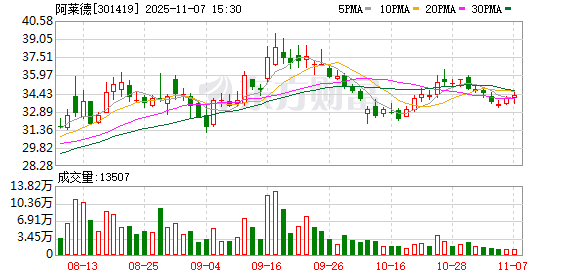
阿莱德:公司产品可应用于储能领域
Mei Ri Jing Ji Xin Wen· 2025-11-07 08:52
Core Insights - The company has indicated that its products can be applied in the energy storage sector, highlighting its role as a partner in this field [1] - Polarium, a Swedish renewable energy company, specializes in lithium-ion battery energy storage systems and collaborates with various manufacturers in the global energy storage market [2] Group 1 - The company confirmed its involvement in the energy storage sector and its partnership with relevant enterprises [1] - Polarium focuses on providing reliable backup power solutions for the global telecommunications market and has established a supply chain collaboration with companies like Northvolt [2] - Polarium is engaged with 2,158 global energy storage device manufacturers, indicating a broad industry collaboration [2]

谁在追逐欧洲电池产业的新浪潮
Di Yi Cai Jing· 2025-11-06 05:39
Core Insights - European economies like the UK and Germany are either restarting or planning to restart subsidies for electric vehicles (EVs) early next year, indicating a renewed focus on the EV market [1][5] - Local battery manufacturers in Europe, such as Northvolt and ACC, have faced significant challenges, including production inefficiencies and quality issues, leading to Northvolt's potential bankruptcy and ACC's halted investment plans [2][3] - The disparity in battery production capabilities between Chinese and European companies is evident, with Chinese firms demonstrating a more effective approach to scaling production and market penetration [8][13] Group 1: Market Dynamics - The European EV market is experiencing a turnaround, with a 34% year-on-year increase in sales in September 2025, reaching 307,000 units [5] - Subsidy policies in Europe are increasingly tied to local production requirements, such as the French policy mandating that vehicles be assembled in the EU and batteries manufactured in the European Economic Area [5] - Investment in the European battery sector is expected to rebound, with Richard Grtner suggesting that the worst is over for the industry [5][12] Group 2: Company Challenges - Northvolt, once a highly anticipated battery manufacturer in Europe, has encountered severe issues with product delivery and quality, leading to its potential bankruptcy proceedings in 2024 [2][3] - ACC, a joint venture involving Stellantis, Mercedes-Benz, and TotalEnergies, has also suspended its investment plans in Germany and Italy, reflecting broader struggles within the European battery sector [2][3] - The challenges faced by these companies highlight a lack of understanding of battery technology and production processes among European manufacturers [3][4] Group 3: Competitive Landscape - Chinese battery companies are rapidly expanding their presence in Europe, with significant investments and new factories being established, such as Guoxuan High-Tech's €1.2 billion plant in Slovakia [9][14] - CATL, the largest battery manufacturer globally, is also making substantial investments in Europe, including a €7.34 billion factory in Hungary with a planned capacity of 100 GWh [11] - The competitive landscape is shifting, with Richard Grtner estimating that Chinese battery factories could capture up to 80% of the European market share, leaving the remainder for American, Korean, and Japanese firms [13][14] Group 4: Strategic Adjustments - Chinese companies are adapting their strategies in Europe, often opting for joint ventures to navigate local regulations and market dynamics, as seen with CATL's partnership with Stellantis in Spain [14][15] - The approach of Chinese firms contrasts with their previous preference for wholly-owned operations, indicating a shift towards collaboration and local partnerships to enhance market access [14][15] - The evolving global economic landscape necessitates that Chinese battery manufacturers remain flexible and responsive to international conditions and local policies [15]



谁在追逐欧洲电池产业的新浪潮 | 海斌访谈
Di Yi Cai Jing· 2025-11-04 08:49
Core Insights - European economies like the UK and Germany are either restarting or planning to restart subsidies for electric vehicles (EVs) in early 2024, indicating a renewed focus on the EV market [6][7] - Local battery manufacturers in Europe, such as Northvolt and ACC, have faced significant challenges, including quality issues and investment halts, while Chinese and American companies are increasingly entering the European market [3][4][11] - The competitive landscape in the European battery market is shifting, with expectations that Chinese companies could capture up to 80% of the market share, while local firms struggle to keep pace [20][21] Industry Developments - Northvolt, once a leading battery manufacturer in Europe, is facing bankruptcy due to severe product delivery and quality issues, leading to a potential acquisition by the American startup Lyten [3][10] - ACC, a joint venture involving Stellantis, Mercedes-Benz, and TotalEnergies, has suspended its investment plans in Germany and Italy, highlighting the difficulties faced by European battery firms [3][4] - The European battery market is witnessing a resurgence, with a 34% year-on-year increase in EV sales in September 2025, driven by renewed subsidies and local production requirements [6][7] Investment Trends - Significant investments are flowing into the European battery sector from both Chinese and American companies, indicating a strategic shift in the competitive landscape [8][19] - Companies like CATL and Envision are expanding their production capabilities in Europe, with CATL's factory in Hungary set to have a capacity of 100GWh and an investment of €7.34 billion [16][22] - Gotion High-Tech has launched a €1.2 billion battery super factory in Slovakia, with an initial capacity of 20GWh, targeting orders from Skoda, a Volkswagen subsidiary [15][22] Competitive Landscape - The competition among battery manufacturers is intensifying, with a focus on who can effectively build and operate battery factories [19] - Chinese battery manufacturers are adapting their strategies in Europe, often opting for joint ventures to align with local regulations and market conditions [21][22] - The market share of South Korean companies like LG Energy Solution and SK On has decreased, while Chinese firms are gaining ground, with CATL and others becoming dominant players [19][20]

曾估值160亿!又一电池企业宣布破产
起点锂电· 2025-11-02 09:14
Group 1: Event Overview - The 2025 Solid-State Battery Industry Annual Conference and the Solid-State Battery Golden Ding Award Ceremony will take place on November 8, 2025, at the Guangzhou Nansha International Convention Center [2] - The event is organized by Qidian Solid-State Battery, Qidian Lithium Battery, and the SSBA Solid-State Battery Alliance, focusing on new technologies and building a new ecosystem [2] - The event is expected to attract over 1,000 participants and will feature concurrent activities such as the CINE Solid-State Battery Exhibition and the 2025 Qidian Sodium Battery Industry Annual Conference [2] Group 2: Company Insights - BMZ, a German battery company, has filed for bankruptcy protection, following similar actions by Britishvolt and Northvolt [2][7] - Established in 1994, BMZ initially sourced lithium-ion cells from Asia and later aimed to develop its own batteries, acquiring TerraE to build a large-scale battery factory in Germany [3][4] - Despite plans to achieve 4GWh and later 8GWh production capacities, BMZ has not yet achieved local mass production and remains reliant on Asian suppliers for battery cells [4] Group 3: Financial Challenges - BMZ's bankruptcy is attributed to a liquidity crisis caused by the loss of a major customer in the energy storage sector, leading to significant financial burdens [5] - Prior to the crisis, BMZ attempted to mitigate its situation by announcing a 20% workforce reduction, affecting around 160 positions, but these efforts were insufficient [5] - The company’s management is now working on a restructuring plan to separate core operations into a new corporate structure, with transitional funding from shareholders to maintain customer relationships [6] Group 4: Industry Implications - The failure of BMZ and other European battery companies highlights the challenges faced by the region in establishing a competitive electric vehicle battery industry [6][7] - The situation reflects a broader trend of difficulties in the European market, where ambitions to reduce reliance on Chinese dominance in the electric vehicle sector are faltering [7]