
Palantir

Search documents
US retail investors fuel surge in leveraged ETF trading, study shows
Reuters· 2026-02-24 05:07
Skip to main content Exclusive news, data and analytics for financial market professionalsLearn more aboutRefinitiv US retail investors fuel surge in leveraged ETF trading, study shows February 24, 20265:07 AM UTCUpdated ago By Suzanne McGee The data shows that the proliferation of these exchange-traded vehicles, which allow investors to speculate on short-term moves in an underlying stock, has been almost entirely driven by their allure for these retail investors. The study also found that last year tradin ...


The great AI scare sell-off is still permeating Wall Street; a speculative blog from the not-so-distant future stands as the latest culprit
The Market Online· 2026-02-24 00:56
Core Viewpoint - The ongoing tech sell-off in the U.S. is significantly influenced by developments in AI, with IBM experiencing its steepest drop in history, reflecting broader market concerns about the tech sector's sustainability amidst AI advancements [1][5]. Group 1: Market Dynamics - The tech sector is under pressure, with a notable sell-off driven by fears that AI advancements are cannibalizing traditional tech stocks [2][3]. - FAANG ETFs and software stocks like Salesforce and Adobe are among the first to feel the impact, indicating a broader trend of U.S. investors divesting from tech [3][9]. - The consumer discretionary, tech, and financial sub-indices of the S&P 500 remain negative year-to-date, highlighting the rapid growth of investor fears [9]. Group 2: AI Developments - IBM's recent price action is linked to the emergence of AI programs like Anthropic's 'Claude,' which are seen as potential competitors to existing software solutions [5][9]. - Agentic AI, which can autonomously create code and fulfill roles traditionally held by humans, poses a significant threat to companies like Adobe and Salesforce, potentially reducing their revenue from SaaS contracts [6][9]. - The speculative nature of AI's impact on the economy is underscored by a report suggesting that AI could lead to a 'Ghost GDP,' where economic activity does not translate into consumer spending [14][15]. Group 3: Speculative Insights - A speculative blog post titled "The 2028 Global Intelligence Crisis" has contributed to market panic, suggesting that AI disruption could lead to a collapse in labor GDP and the mortgage market [11][12]. - The report's narrative resonates with existing market fears, indicating a consensus view among investors regarding the potential negative implications of AI on the economy [12][15]. - The concept of a 'Ghost GDP' suggests that while investments in AI may increase, they do not benefit the workforce, leading to decreased consumer spending and economic downturn [14][15].


Innodata Inc. (INOD) Expands Role as AI Data Engineering Partner
Yahoo Finance· 2026-02-23 21:16
Innodata Inc. (NASDAQ:INOD) is one of the AI stocks that will go to the moon. On January 29, Innodata Inc. (NASDAQ:INOD) was selected by Palantir to provide high-quality training data and data engineering services. The company is to provide specialized annotation, multimodal data engineering, and generative AI workflow support for select programs. Innodata Inc. (INOD) Expands Role as AI Data Engineering Partner In addition, Innodata Inc teams are to work directly within Palantir’s development and deploym ...

Dow Jones free fall today: Why is the Dow Jones falling so sharply - Dow, S&P 500 and Nasdaq plunge deep into the red
The Economic Times· 2026-02-23 15:37
Market Overview - The Dow Jones Industrial Average fell 689 points, or 1.39%, closing at 48,936.45, raising concerns of a broader market crash [1][24] - The S&P 500 and Nasdaq Composite also declined, with the S&P 500 down 0.67% to 6,863.01 and the Nasdaq down 0.60% to 22,749.39 [1][11] Tariff Impact - A primary driver of the market decline is the announcement of a 15% global tariff increase, which raises import costs and could lead to inflation and squeezed profit margins for multinational companies [3][24] - The Dow is more sensitive to global trade issues compared to tech-heavy indexes, as many of its components rely on international supply chains [5][24] Investor Sentiment - Investors are reacting to uncertainty surrounding the tariffs, with fears of retaliation from Europe and other economies, as well as concerns over whether official tariff documents have been signed [6][7][24] - The Nasdaq's decline indicates a risk-off behavior, with growth and technology stocks typically falling during periods of macro uncertainty [8][24] Commodity Movements - Gold prices surged 2.7% to $5,217.90, reflecting increased inflation fears and geopolitical uncertainty, while silver gained 5.25% [2][9][12] - Oil prices also rose, suggesting that markets are pricing in inflation risk rather than an immediate demand collapse [9][13] Cryptocurrency Trends - Bitcoin fell below $66,000, indicating stress in crypto markets, as it continues to behave like a risk asset during periods of market volatility [10][14][24] Federal Reserve Position - The Federal Reserve is taking a cautious approach to future interest rate decisions, with Governor Christopher Waller indicating that tariff-related inflation may be short-lived [15][24] - The Fed's decisions will be data-dependent, and rate cuts are not expected in March unless economic data deteriorates significantly [21][24] Market Outlook - Investors are questioning whether the current market conditions represent a short-term selloff or the beginning of a deeper correction, with tariff uncertainty being the dominant market driver [19][25] - Upcoming events, including the March 6 jobs report and the Fed's March meeting, will be critical in determining market direction [23][25]


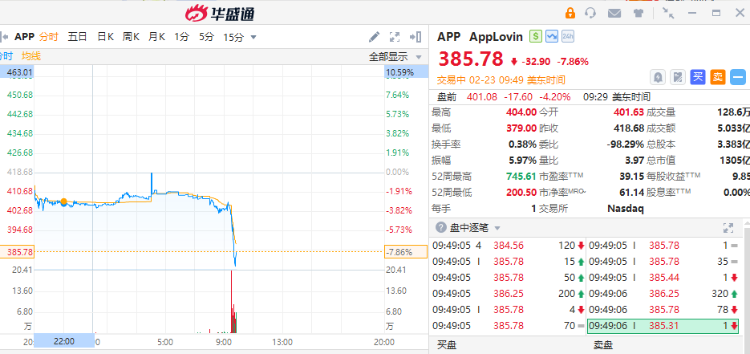
美股异动 | 存储概念Sandisk逆势领涨5%!软件板块再度暴跌,AppLovin大跌超8%
Xin Lang Cai Jing· 2026-02-23 15:32
Core Viewpoint - The U.S. stock market opened lower with significant fluctuations, while the storage concept Sandisk rose by 5%, contrasting with the mixed performance of major tech stocks, where Nvidia increased by over 1% and Tesla, Microsoft, and Amazon fell by more than 2% [1] Group 1: Stock Performance - The three major U.S. stock indices experienced a low opening and volatility [1] - Sandisk, a storage concept stock, led the gains with a rise of 5% [1] - Major tech stocks showed a mixed performance, with Nvidia up over 1% and Tesla, Microsoft, and Amazon down more than 2% [1] Group 2: Software Sector - The software sector faced a significant decline, with AppLovin dropping over 8% [1] - DoorDash saw a decrease of over 7%, while Palantir and CrowdStrike fell by more than 5% [1] - Other companies like ServiceNow and Datadog also experienced declines of over 4% [1] Group 3: Pharmaceutical Sector - Novo Nordisk's stock plummeted by 14% after the company reported that its weight loss drug Cagrisema was less effective than Eli Lilly's Zepbound [1] - In contrast, Eli Lilly's stock rose by 3% following this news [1]

对标 Palantir 与 MiniMax,海致科技(02706)凭什么撑起千亿市值预期?
Zhi Tong Cai Jing· 2026-02-23 01:26
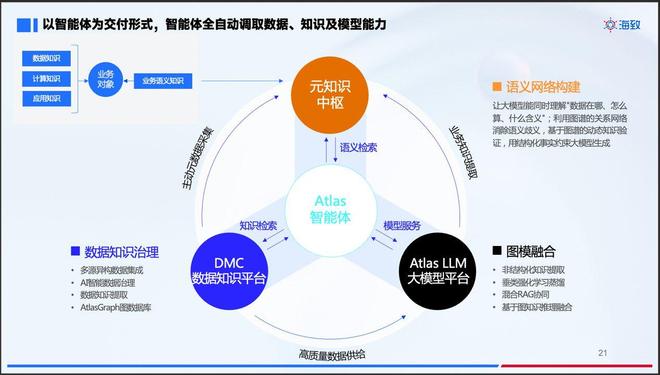
战略先手:卡位不可替代的垂直入口,破解大模型 2B 落地核心鸿沟 近期开源AI 智能体 Open Claw 创始人斯坦伯格的一则论断,在全球 AI 行业引发轩然大波——其公开断 言,未来 80% 的 APP 将会消失,个人 AI 智能体将成为取代这类应用的核心力量。但他同时明确指 出,医疗、金融、法律等专业垂直领域应用,将成为少数不会被通用 AI 完全替代的核心品类。 智通财经APP获悉,2026年开年的港股市场,AI新股始终是资本追逐的核心主线。继壁仞科技、 MiniMax、智谱 AI 接连引爆打新热潮后,被誉为 "图模融合第一股"、"中国版 Palantir" 的海致科技 (02706) ,上市首日即收涨242.2%,次日、第三日续涨29.6%、28.4%,且成交额放量,二级市场承接力 远超市场预期。 市场热议中,散户投资者的追捧多聚焦于其 "AI 除幻" 的稀缺赛道标签,但鲜少被深度拆解的是,为何 智谱、无极资本等产业资本与顶级机构,愿意以基石投资者身份扎堆入局? 这绝非单纯的 AI 风口跟风,更不是无逻辑的概念吹捧。 海致科技能在通用大模型内卷的行业红海之中,走出独立的资本热度与成长曲线,核心在于其早 ...
对标 Palantir 与 MiniMax,海致科技(02700)凭什么撑起千亿市值预期?
智通财经网· 2026-02-23 01:18
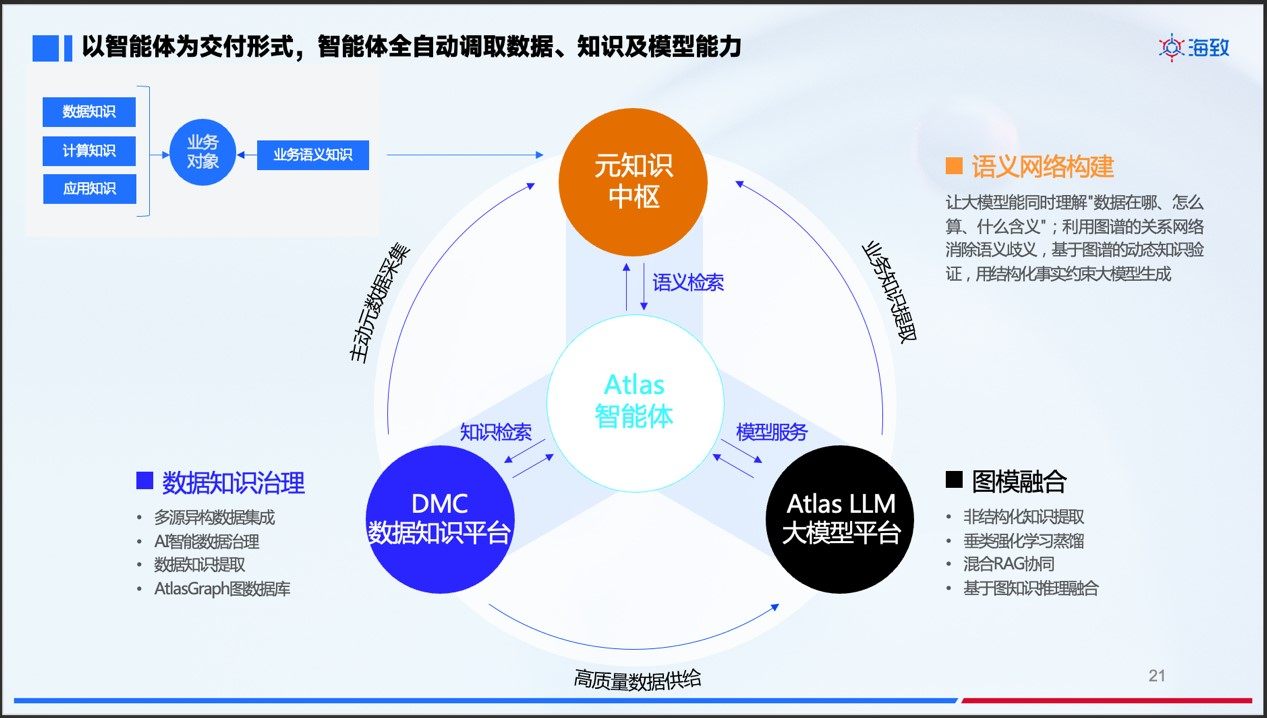
Core Viewpoint - The Hong Kong stock market in early 2026 is heavily focused on AI IPOs, with HaiZhi Technology (02706) experiencing a significant surge in its stock price, indicating strong market interest and potential for growth [1] Group 1: Market Dynamics - The AI IPOs have become a central theme for capital chasing, with HaiZhi Technology's first-day increase of 242.2% and subsequent gains of 29.6% and 28.4% on the following days [1] - The market's enthusiasm is driven by retail investors attracted to the "AI de-illusion" niche, while institutional investors recognize the strategic value of investing in HaiZhi Technology [1][4] Group 2: Strategic Positioning - HaiZhi Technology has positioned itself uniquely by identifying the core contradictions in the large model industry's application, focusing on vertical integration rather than following the general model trend [3] - The company’s Atlas AI system is compatible with over 100 large language models, enhancing its adaptability and market reach [3] Group 3: Competitive Advantages - HaiZhi Technology has established a strong customer retention rate of 92% for its government clients, indicating high customer loyalty and significant switching costs for clients [3] - The company has built a robust client base, with over 360 government and enterprise clients, which provides a solid foundation for future growth [11] Group 4: Technological Edge - The company has developed a unique technology stack in knowledge graphs and graph computing, which is difficult for competitors to replicate [5] - HaiZhi Technology's approach aligns closely with global leaders like Palantir, focusing on building enterprise decision-making systems through graph-based methodologies [5][7] Group 5: Financial Performance - HaiZhi Technology's revenue for 2024 is projected to reach 5.03 billion RMB, significantly outperforming competitors like MiniMax and Zhipu AI [11] - The company has achieved a compound annual growth rate of 26.8% from 2022 to 2024, with a remarkable revenue growth of 872.2% for its core Atlas AI product in 2024 [11] Group 6: Market Valuation - Current market valuations suggest that HaiZhi Technology is significantly undervalued compared to its peers, with potential for a market capitalization exceeding 100 billion RMB [12][15] - Analysts predict that the company's market value could approach 120 billion RMB by the end of 2026, driven by its strong positioning in the B2B AI application market [15]
警惕初创公司“Palantir化”:如果没有核心平台,你只是一个穿了西装的埃森哲
3 6 Ke· 2026-02-21 00:03
Core Insights - The article discusses the trend of startups adopting a "Palantir-like" model, emphasizing the deployment of Forward Deployment Engineers (FDEs) to create customized workflows for clients, akin to special forces rather than traditional software companies [1][2][10]. Group 1: The Appeal of the Palantir Model - The allure of the Palantir model lies in its ability to integrate disparate systems and deliver customized platforms quickly, which is particularly appealing to startups aiming for significant contracts [2][10]. - The surge in FDE job postings, with reported increases of 800% to 1000% this year, indicates a growing trend among AI startups to ensure effective deployment through on-site engineering support [10][12]. Group 2: Unique Attributes of Palantir - Palantir's success is attributed to its unique combination of a robust product platform, embedded elite engineers, and proven performance in critical government and defense environments, which most companies struggle to replicate [9][21]. - The company's approach is not merely about automating existing processes but involves pushing clients to adopt new workflows, which is a rare courage among vendors [18]. Group 3: Challenges of Imitating the Model - Many startups attempting to emulate Palantir may end up as high-cost service firms without the competitive advantages that come from a true platform [2][10]. - The article warns that not every problem warrants a "Palantir-level" solution, especially in less critical environments where the ROI does not justify extensive customization [15][16]. Group 4: Key Considerations for Adoption - Companies should assess the criticality of the problems they are solving, the concentration of their customer base, and the regulatory environment before adopting a Palantir-like model [23]. - The article suggests that startups should view FDE deployment as scaffolding rather than the foundation of their business, ensuring that they do not become trapped in a service model [25][30]. Group 5: Practical Steps for Implementation - Startups are encouraged to focus on building strong foundational components rather than fully customized workflows, allowing for scalability and reusability [26]. - Engaging FDEs as integral parts of product development rather than just delivery can create a feedback loop that enhances product quality and customer satisfaction [27].
国泰海通首次覆盖迅策(3317.HK):数据为王,打造中国版Palantir
Ge Long Hui· 2026-02-20 01:53
Core Viewpoint - The report from Guotai Junan Securities provides a "Buy" rating for Xunce (3317.HK) with a target price of HKD 104.78, reinforcing its positioning as the "Chinese version of Palantir" and highlighting its leading status and long-term value in the real-time data infrastructure sector driven by AI large models and applications [1] Group 1: Valuation and Growth Potential - The report employs both PE and PS valuation methods, referencing comparable companies like Palantir and Snowflake, resulting in a target market value of HKD 33.8 billion and a target price of HKD 104.78, indicating over 50% upside potential from the report's publication date [2] - Revenue projections for the company are set at HKD 1.183 billion, HKD 2.177 billion, and HKD 3.311 billion for 2025-2027, with year-on-year growth rates of 87%, 84%, and 52% respectively, indicating a clear growth trajectory [2] Group 2: Market Position and Industry Leadership - The company is recognized as a leading provider of AI real-time data infrastructure in China, offering solutions for real-time data processing and analysis, capable of collecting, cleaning, managing, analyzing, and governing heterogeneous data within seconds [3] - According to Frost & Sullivan, the company holds the top position in the Chinese real-time data infrastructure and analytics market, with an 11.6% market share in the asset management sector, achieving full coverage of the top ten asset management firms in China [3] Group 3: Product Flexibility and Diversification - The company's products are highly modular, with over 300 functional modules developed by the end of 2025, allowing for flexible combinations into seven core solutions that cover both data infrastructure and asset management applications [4] - The company is accelerating its expansion into diversified industries such as financial services (beyond asset management), urban management, production management, and telecommunications, with revenue from diversified sectors reaching 61% in 2024, becoming a major growth driver [4] Group 4: Market Opportunity and Growth Rate - The report highlights that the rapid development of AI large models and applications is increasing the demand for real-time, unified, and efficient data processing platforms, with the current penetration rate of the real-time data infrastructure and analytics market in China being less than 4% [5] - The market is expected to grow at a CAGR of 46.1% from 2020 to 2024, reaching a size of HKD 50.5 billion by 2029, with a projected CAGR of 22.0% from 2024 to 2029, indicating a vast market opportunity [5]

X @Cassandra Unchained
Cassandra Unchained· 2026-02-19 21:40
Someone else post the video, since I cannot.This is for posterity. This is it right here.He says I only got one call right. My writing is AI slop (the F?). I have no idea what Palantir does.He's loading up the truck here at $300+ billion.He read my 10,000 words and his only criticism is "AI slop?" You didn't read it bud. Plus it is 16,000 words now, stay current.Being an original is hard, and do not let anyone tell you different. ...