
Mobileye Global Inc.

Search documents
Lyft Scales Into Europe: Can It Take Market Share From Uber?
MarketBeat· 2025-04-24 11:16
Core Insights - Lyft is attempting to increase its market share outside the United States by acquiring the FreeNow mobility platform, which operates in 19 countries [4][6] - The acquisition is expected to double Lyft's annual ride volume to over 160 million, leveraging FreeNow's established customer base of 6.3 million users [6] - Lyft's stock forecast indicates a potential upside of 43.98%, with a 12-month price target of $16.45 [5] Financial Performance - Lyft reported a 17% year-over-year growth in gross bookings, reaching $16.1 billion [15] - Revenue increased by 31% year-over-year to $5.8 billion [15] - The company achieved a net income of $22.8 million, a significant improvement from a loss of $340.3 million in 2023 [15] - Adjusted EBITDA rose to $382.4 million compared to $222.4 million in 2023 [15] - Free cash flow improved to $849.7 million from a loss of $98.2 million in 2023 [15] - Total rides increased by 17% year-over-year to 828 million in 2024, marking Lyft's first full year of GAAP profitability [15] Market Position - Uber dominates the U.S. ride-hailing market with a 76% market share, while Lyft holds 8% of the global ride-hailing market [4] - Lyft's strategy to target markets where Uber has less concentration is seen as a logical move [4] - The FreeNow acquisition positions Lyft to compete more effectively in the European market [4][6] Future Developments - Lyft plans to roll out autonomous vehicles (AVs) in partnership with May Mobility and Mobileye as early as summer 2025 [11][12] - The partnership with Marubeni aims to deploy thousands of AVs on the Lyft platform starting in Dallas by 2026 [13]




BARCLAYS-全球投资组合经理文摘 -压力重重
2025-04-23 10:46
Summary of Key Points from the Conference Call Industry Overview - **U.S. Autos & Mobility**: The industry view has been downgraded to Negative due to multiple near-term pressures including earnings challenges, consumer health risks, and uncertainties surrounding auto tech investments. Auto tariffs are expected to persist, and current valuations do not fully account for these risks [5][13][67]. Core Insights - **Earnings Pressure**: The near-term investment case for the U.S. autos sector is increasingly difficult, with expectations of earnings pressure and potential withdrawal of 2025 guidance due to the uncertain environment. The consensus earnings estimates for Q1 2025 have been revised down to -2% for Europe and 7% for the U.S. [5][19][21]. - **Tariff Impact**: The revised definition of semiconductors under U.S. tariffs could affect an additional $261 billion in imports from major Emerging Asian economies, with Taiwan and Vietnam being the most impacted. This change may reduce the effective tariff rate on China's exports to the U.S. [6][29][27]. - **Sector Preferences**: There is a preference for suppliers over OEMs in the current environment, with favorable traits including low financial leverage, high margins, and strong pricing power. Specific companies like Autoliv (ALV) have been upgraded due to their defensive positioning [5][15][18][67]. Earnings Expectations - **1Q Earnings**: While beats on Q1 EPS are expected due to better-than-anticipated production and pricing, these are likely to be disregarded in the current market context. The overall sentiment suggests that earnings growth is stagnating, with significant downside risks in the event of a recession [5][19][21][22]. - **Valuation Concerns**: European equities are currently pricing in approximately 0% EPS growth, with potential downside if a recession occurs. The market has already reflected a ~10% pullback from February highs, indicating a cautious outlook [20][22]. Additional Insights - **Market Volatility**: The upcoming earnings season is expected to be scrutinized more than usual due to heightened volatility and tariff-related concerns. Investors are advised to focus on companies with relatively cheap or expensive earnings volatility [25][24]. - **Sector Dynamics**: Cyclical sectors are anticipated to drive EPS growth in Europe, but earnings momentum is weakening. Defensive sectors are catching up as revisions for cyclicals remain negative [23][22]. Rating Changes - **Downgrades**: General Motors (GM) has been downgraded to Equal Weight, with a significant reduction in EBIT estimates from $14.4 billion to $8.6 billion for 2025. Other companies like Aptiv (APTV), Mobileye (MBLY), and Visteon (VC) have also been downgraded due to risks associated with auto tech uptake [14][16][67]. Conclusion - The U.S. autos sector faces significant challenges from tariffs, earnings pressures, and macroeconomic uncertainties. The focus on suppliers and defensive positions may provide some resilience, but overall market conditions remain precarious with potential for further downgrades in earnings expectations.
重磅发布:Canalys 2025年中国ADAS SoC厂商领导力矩阵,揭晓年度“冠军厂商”名单
Canalys· 2025-04-14 09:18
Core Viewpoint - Canalys recently released the second evaluation results of the "2025 China ADAS SoC Vendor Leadership Matrix," recognizing seven companies as "Champion Vendors," including Nvidia, Qualcomm, Horizon, Texas Instruments (TI), Mobileye, Ambarella, and Chipone, highlighting their significant contributions to the automotive industry's development [1] Group 1: Evaluation Criteria and Results - The evaluation method for ADAS SoC vendors includes feedback from ADAS Tier 1 suppliers, automotive OEMs, and ecosystem partners, combined with professional assessments of vendors' technical solutions and market strategies [2] - A total of 17 ADAS SoC vendors were covered in this evaluation, with the recognized "Champion" vendors demonstrating industry-leading comprehensive strength across multiple key dimensions, including technological innovation, market performance, collaboration depth, and ecosystem influence [2] Group 2: Market Evolution and Trends - In 2024, China's ADAS technology is expected to accelerate, with mainstream L2 solutions maturing and L2+ features, particularly high-speed NOA (Navigation Assisted Driving), being introduced to more cost-effective models [4] - The ongoing "price war" from 2024 to 2025 is shifting from a price-centric competition to a focus on enhancing product value and technological content, driving manufacturers to accelerate the launch of new products and versions to maintain competitive advantages [4] Group 3: Strategic Importance of ADAS - ADAS is now considered a critical component of automotive strategy, significantly influencing product planning and market advancement strategies, with OEMs actively building scalable ADAS solutions supported by robust SoC chips and software platforms [5] - The optimization of ADAS functions is ongoing to address more complex driving scenarios, enhancing the overall safety and practicality of the systems, making platformization and serialization capabilities of ADAS chips a core demand for OEMs [5] Group 4: Competitive Landscape and Global Expansion - As NOA hardware and software improve and become more widespread, the market is witnessing an influx of participants, with OEMs placing greater emphasis on mass production capabilities and rapid iteration of AI models and algorithms to enhance ADAS system effectiveness [6] - With China becoming the world's largest automotive exporter, Chinese automakers are actively expanding into international markets, driving additional demand for ADAS chips, particularly in L2 systems, where SoC vendors offering competitive low to mid-range ADAS solutions will gain a significant advantage [6] Group 5: Global Market Adaptation - The scalability of ADAS SoCs is becoming a crucial success factor, requiring vendors to possess a global perspective in technology and solution design to meet diverse regional demands and standards [7] - Despite challenges posed by changes in U.S. tariffs and potential countermeasures from China, these dynamics present opportunities for innovation and strategic adjustments within the global automotive industry [7]

重磅发布:Canalys 2025年中国ADAS SoC厂商领导力矩阵,揭晓年度“冠军厂商”名单
Canalys· 2025-04-14 09:18
Champions冠军 持续展现出卓越的综合实力,通过高效的协同合作推动行业进步,充分发挥自身优势,保障 业务的稳定持续,并通过有竞争力的技术方案与前瞻性的战略升级,加速市场拓展,在ADAS SoC领域树立了 标杆地位。 其他厂商则被划分为 Contenders竞争者 (需要提高竞争力和/或改善合作伙伴关系的市场领跑厂商)、 Scalers攀登者 (具备吸引生态伙伴合作特质的潜在"新星"厂商)以及 Foundations初级者 (合作伙伴满意度 较低和/或承诺不足的厂商)。 Canalys近日发布《2025年中国ADAS SoC供应商领导力矩阵》第二期评估结果,共七家厂商荣膺"冠军厂 商"称号,分别是:英伟达、高通、地平线、德州仪器(TI)、Mobileye、安霸和芯擎科技。 该报告通过对厂商在先进ADAS辅助驾驶系统领域的市场表现与合作能力进行综合评估,表彰他们在推动汽车 行业发展方面所做出的突出贡献。其中,英伟达、高通、地平线、德州仪器和安霸成功巩固其领先地位,而 Mobileye与芯擎科技则首次晋级"冠军阵营",彰显其在中国市场的快速成长与技术突破。 Canalys中国ADAS SoC厂商榜单评选标准 ...
旗舰车芯片延期,英伟达的“王炸”让谁更焦虑?
3 6 Ke· 2025-04-14 00:46
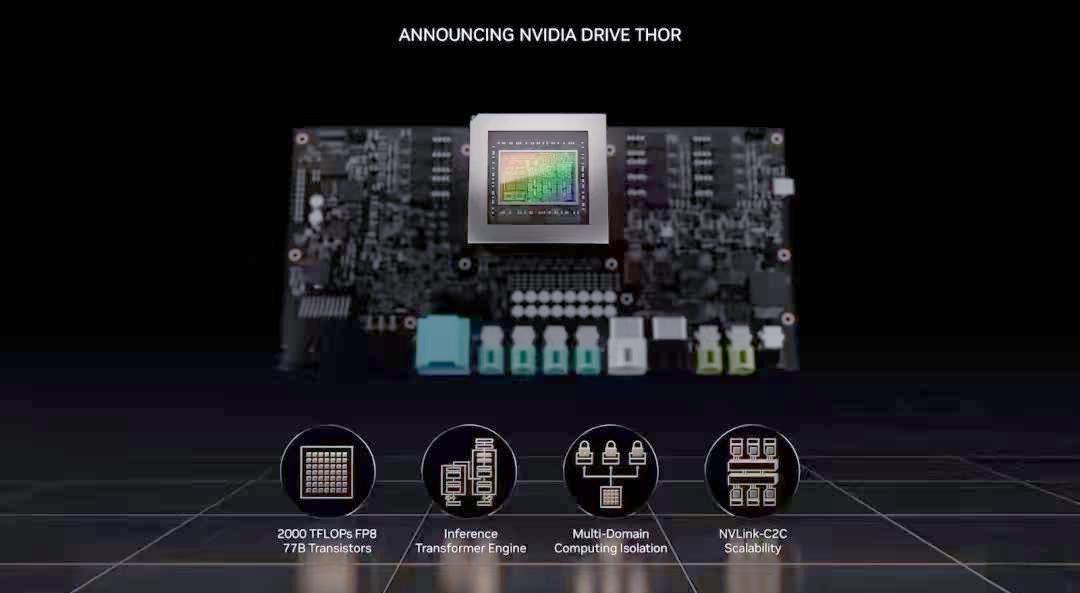
Core Insights - Nvidia's flagship Thor autonomous driving chip, initially planned for mass production in 2024, has faced multiple delays, potentially pushing the timeline to 2026, with only a low-performance version expected to be available [1][5][9] Group 1: Product Delays and Impacts - The Thor chip, boasting a peak performance of 2000 TOPS, was anticipated to dominate the market but has encountered significant production delays, affecting Nvidia's market strategy and partnerships with automotive companies [3][5][9] - The delays have led automotive manufacturers, such as Xiaopeng Motors, to accelerate their own chip development efforts, reducing reliance on Nvidia [9][11] Group 2: Technical Challenges - The production issues are attributed to design challenges with the Blackwell GPU architecture, which is tailored for large language models and generative AI, as well as potential manufacturing defects identified by TSMC [7][11] - The complexity of the chip architecture and external supply chain challenges, including U.S. export controls on semiconductor manufacturing, have further complicated the production timeline [7][11][16] Group 3: Competitive Landscape - Competitors like Qualcomm and Mobileye are launching integrated automotive computing solutions, increasing pressure on Nvidia to ensure Thor's performance and functionality remain superior [11][13] - The trend of automotive companies developing their own chips is growing, which could diminish Nvidia's market dominance as firms seek to reduce dependency on external suppliers [13][16] Group 4: Strategic Concerns for Nvidia - Nvidia's automotive business, while previously a strong growth engine, still represents a small portion of the company's overall revenue, raising concerns about its long-term viability if delays continue [16] - The ongoing delays and competition may jeopardize Nvidia's relationships with key automotive partners, as seen with Mercedes-Benz, which has expressed frustration over unmet product expectations [16]

Best Stock to Buy Right Now: Uber vs. Lyft?
The Motley Fool· 2025-04-02 12:05
Core Viewpoint - The ride-sharing industry in the U.S. is primarily dominated by two companies, Uber and Lyft, each with distinct business models and financial performances [1][2]. Business Model: Uber vs. Lyft - Uber operates globally in over 70 countries and has scaled back its ambitions to focus on markets where it ranks No. 1 or No. 2, enhancing profitability [3][4]. - Lyft operates only in the U.S. and Canada, citing reasons such as cash constraints and regulatory challenges for not expanding internationally [5]. - Uber has a food delivery segment, Uber Eats, while Lyft has chosen not to enter this market, focusing instead on its core mission of ride-sharing [6]. - Both companies are involved in micro-mobility and have partnerships in autonomous vehicle technology, with Uber collaborating with Waymo and Lyft with Mobileye, May Mobility, and Nexar [7]. Financials: Uber vs. Lyft - In 2024, Uber reported revenue of $44 billion, an 18% increase from the previous year, with gross bookings also rising by 18% to $162.7 billion [9]. - Uber's free cash flow surged 105% to $6.9 billion, and adjusted EBITDA reached $6.5 billion [10]. - Lyft's revenue increased by 31% to $5.79 billion, with bookings growing 17% to $16.1 billion, driven by initiatives like price lock and advertising [10]. - Lyft's adjusted EBITDA was $382.4 million, up 72% year-over-year, and free cash flow was $766.3 million, a significant improvement from a loss in the previous year [11]. Valuation: Uber vs. Lyft - Uber's valuation shows a free cash flow multiple of 22 and an EV/EBITDA of 29, indicating strong growth potential for an industry leader [13]. - Lyft trades at less than 7 times trailing free cash flow and an EV/EBITDA of 20, but its net income and GAAP operating loss suggest it may not be as attractive as it appears [14]. Investment Considerations - Both companies have appealing attributes, with Lyft innovating through features like Women+ and price lock, which are positively impacting its performance [15]. - Uber has streamlined its operations, achieving profitability and consistent growth through new offerings like Uber One [16]. - Overall, Uber is viewed as the better investment due to its balance of growth, profitability, and reasonable valuation, while Lyft presents a potential opportunity for risk-tolerant investors due to its strong revenue growth and product innovations [17].

Mobileye selects Valens Semiconductor's VA7000 MIPI A-PHY chipsets for automated and autonomous driving projects
Prnewswire· 2025-04-02 10:30
Company Overview - Mobileye is a leader in autonomous driving and driver-assistance technologies, leveraging expertise in AI, computer vision, and integrated software and hardware [3] - Valens Semiconductor specializes in high-performance connectivity solutions, with its chipsets used in various applications including ADAS and autonomous driving [4] Collaboration Highlights - Mobileye has selected Valens' VA7000 chipsets for their automated and autonomous driving platforms, emphasizing the chipset's superior performance after extensive testing [1][2] - The collaboration is seen as a validation of the MIPI A-PHY standard, which is designed for high-speed sensor and display connectivity in the automotive industry [2] Technology Significance - MIPI A-PHY is the first automotive industry standard for high-speed connectivity, enabling high-bandwidth and low-latency communication essential for next-generation ADAS [2] - The MIPI A-PHY ecosystem is expanding, attracting new companies to design products based on this standard, with Valens being a key contributor [2] Market Impact - The partnership between Mobileye and Valens marks a significant milestone for the automotive industry, indicating the growing importance of high-performance connectivity in enhancing vehicle safety and functionality [2]


3 Stocks Powering the Future of Autonomous Driving
MarketBeat· 2025-02-27 12:15
Core Insights - The autonomous vehicle industry is rapidly advancing, with Waymo's robotaxis achieving significant milestones, including 5 million rides and over 25 million miles driven, and plans for expansion into new cities by 2025 [1] - Mobileye Global is a key player in the autonomous driving sector, providing advanced driver assistance systems (ADAS) and a comprehensive Mobileye Drive platform [2] - Lyft plans to introduce Mobileye-powered robotaxis in Dallas by 2026, with intentions to scale across multiple cities [4] - Luminar Technologies advocates for LiDAR technology in autonomous vehicles, despite facing cash burn and competition from Mobileye's imaging radar [7][8] - Aptiv, through its joint venture Motional, is testing Level 4 autonomous driving technology and has secured significant new business bookings [12][13] Group 1: Industry Developments - The age of autonomous vehicles is approaching, with increasing adoption of robotaxis and regulatory support from the new administration [1] - Waymo's success has revived interest in the robotaxi market, attracting potential partners and operators [5] Group 2: Key Companies - Mobileye Global is recognized for its advanced driver assistance systems and the Mobileye Drive platform, which utilizes a combination of cameras and AI technology [2][3] - Luminar Technologies emphasizes the advantages of its LiDAR technology, claiming superior range and precision compared to camera-based systems [8][9] - Aptiv's partnership with Hyundai in the Motional venture is focused on developing Level 4 autonomous driving capabilities, with significant operational milestones achieved [11][12]

从 1000 多款车的数据,看新车生命周期如何压缩
晚点LatePost· 2024-08-20 15:59
汽车逐渐从耐用消费品,变成消费电子。 文丨赵宇 以下文章来源于晚点Auto ,作者晚点团队 晚点Auto . 从制造到创造,从不可能到可能。《晚点LatePost》旗下汽车品牌。 2023 年,中国市场发布了 126 款新车型(不包括改款),其中 44% 的新车在发布后的月销量始终低于 1000 辆,只有 23 款月销量到过 5000 辆、7 款到过 10000 辆。 制图丨黄帧昕 编辑丨黄俊杰 数据支持丨汽车之家研究院 2017 年是中国汽车销量的最高峰,已经开始出现技术公司颠覆汽车行业的讨论。常见的对比是,手机厂商 每年一换代,快速迭代。而汽车品牌两三年一改款、五六年才换代,生命周期太长,发展太慢。 更早的时候,头部车企推出的经典款车型,比如甲壳虫、卡罗拉,甚至可以连续畅销几十年,全生命周期 累计销量达到数千万辆。 当新能源车普及、价格战打到第 20 个月,汽车产品更新换代的规则被改写。一款全新车型的研发周期被 缩短到 12-15 个月,而有的车型改款快进到一年两次。 我们分析了汽车之家研究院提供的过去 9 年 1088 款车的数据,发现 2022-2023 这两年发布的新能源 车,有超过 80% 的型号 ...



Zeekr Intelligent Technology(ZK) - Prospectus(update)
2024-05-03 21:13
TABLE OF CONTENTS As filed with the Securities and Exchange Commission on May 3, 2024. UNITED STATES SECURITIES AND EXCHANGE COMMISSION Washington, D.C. 20549 AMENDMENT NO.5 TO FORM F-1 REGISTRATION STATEMENT UNDER THE SECURITIES ACT OF 1933 ZEEKR Intelligent Technology Holding Limited (Exact name of Registrant as specified in its charter) Not Applicable (Translation of Registrant's name into English) 3711 (State or other jurisdiction of incorporation or organization) No. 1388 Minshan Road Xinqi Street, Bei ...