
普元信息

Search documents
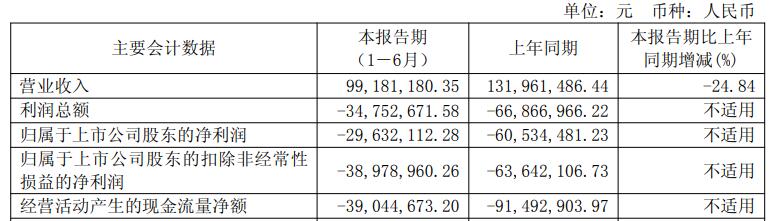
普元信息扣非连亏3年半 2019年上市超募2.5亿元
Zhong Guo Jing Ji Wang· 2025-10-09 06:32
Core Points - The company reported a revenue of 99.18 million yuan for the first half of 2025, representing a year-on-year decline of 24.84% [1] - The net profit attributable to shareholders was -29.63 million yuan, an improvement from -60.53 million yuan in the same period last year [1] - The net profit attributable to shareholders after deducting non-recurring gains and losses was -38.98 million yuan, compared to -63.64 million yuan in the previous year [1] - The net cash flow from operating activities was -39.04 million yuan, an improvement from -91.49 million yuan year-on-year [1] Financial Performance - The company recorded net profits attributable to shareholders after deducting non-recurring gains and losses of -15.07 million yuan in 2022, -31.11 million yuan in 2023, and -8.21 million yuan in 2024 [2] - The company was listed on the Shanghai Stock Exchange's Sci-Tech Innovation Board on December 4, 2019, with an initial offering price of 26.90 yuan per share and issued 23.85 million new shares [2] - The total amount raised from the initial public offering was 642 million yuan, with a net amount of 585 million yuan after deducting issuance costs [2] - The final net amount raised exceeded the original plan by 250 million yuan, with the funds allocated for cloud application platform upgrades, big data platform upgrades, and R&D center upgrades [2] IPO Costs - The total issuance costs for the initial public offering amounted to 57.01 million yuan, including underwriting and sponsorship fees of 44.00 million yuan [3]


民营经济爱拼会赢韧性足
Jing Ji Ri Bao· 2025-09-29 22:16
Core Insights - The Chinese government emphasizes the importance of private enterprises and has made significant policy commitments to support their development, indicating a clear direction for the growth of the private economy [1][2]. Institutional Support - The implementation of the "Private Economy Promotion Law" marks a significant step in providing legal protection for private enterprises, enhancing investment confidence and stabilizing market expectations [2][3]. - The establishment of a dedicated bureau for private economic development by the National Development and Reform Commission signifies a structured approach to fostering the growth of private enterprises [2][3]. Market Environment - The reduction of market access negative lists from 151 to 106 items reflects a commitment to creating a fairer competitive environment for private enterprises, with a focus on eliminating discriminatory practices [4]. - The introduction of the "Fair Competition Review Regulations" aims to prevent improper market interventions, contributing to a more transparent market environment [4]. Innovation and Development - Private enterprises are increasingly recognized as key players in technological innovation, with over 92% of national high-tech enterprises being privately owned [6]. - The government has introduced various funding and support measures to bolster innovation within private enterprises, enhancing their capacity to undertake significant technological challenges [6]. International Trade - Private enterprises have shown remarkable performance in foreign trade, with their import and export scale surpassing 12 trillion yuan in the first half of the year, marking a historical high [8]. - High-tech product exports have increased by 12.5%, indicating a strong competitive edge in international markets [8]. Transformation and Upgrading - Many private enterprises are actively pursuing transformation and upgrading strategies, focusing on new energy and green technologies to adapt to market changes [9]. - The shift towards a modern corporate governance structure is evident, with companies like Jiuzhoutong Pharmaceutical Group enhancing their management efficiency through digital transformation initiatives [10].
人工智能从实验室走向市场
Jing Ji Ri Bao· 2025-09-27 21:52
Core Insights - AI is becoming a key driver for the growth of private enterprises in the Yangtze River Delta region, transforming traditional industries and fostering innovation in emerging sectors [1][2][3] Group 1: AI Integration in Traditional Industries - Wan Shi Li Group has developed the world's first AI textile model to design silk scarf patterns based on user keywords, showcasing AI's role in product design [1] - The company has introduced a waterless dyeing machine that can produce finished products in as little as 2 hours with zero wastewater discharge, emphasizing AI's importance in enhancing competitiveness [1] - The integration of AI in traditional industries is seen as essential for survival and competitiveness, according to Wan Shi Li's chairman [1] Group 2: AI Applications in Emerging Industries - Companies like Hangzhou Yun Shen Chu Technology are leveraging AI for applications in power inspection, emergency rescue, and security patrols, indicating a broadening of AI's application scope [1] - The automotive sector in the Yangtze River Delta is significant, with over 1,500,000 electric vehicles equipped with AI voice interaction systems from companies like Sibili Technology [2] - The region accounts for 40% of China's new energy vehicle production and over 25% globally, providing numerous application scenarios for AI [2] Group 3: Collaborative Ecosystem and Innovation - The Yangtze River Delta has a dense manufacturing ecosystem that fosters rapid growth in AI applications, with companies like Shanghai Heihu Network Technology improving collaboration efficiency for over 4,000 large factories [3] - The region's collaborative innovation ecosystem is exemplified by companies like Suzhou Green's Harmonic Drive Technology, which relies on a network of suppliers and manufacturers [4] - The synergy between AI companies and traditional manufacturing is shortening product development cycles and enhancing overall quality [5] Group 4: Policy Support and Market Environment - Local governments are providing supportive policies that facilitate the growth of AI enterprises, with Suzhou having 32 listed companies and 7 unicorns in the AI sector [8] - The favorable business environment in Zhejiang promotes the development of private enterprises, contributing to market vitality [8] - The Yangtze River Delta's government support is characterized by a service-oriented approach, allowing companies to thrive independently while receiving necessary guidance [8] Group 5: Global Market Expansion - AI companies in the Yangtze River Delta are looking to expand into global markets, leveraging their experience in diverse application scenarios [10] - The shift from reliance on imported components to domestic production of core components has reduced costs and ensured long-term development security [9]


来了就是“城市合伙人” “校园苏州日” 端出十万岗
Su Zhou Ri Bao· 2025-09-27 00:28
"江南水乡让我向往,顶尖的先进材料企业更是适合我职业发展的舞台。"昨天(9月26日),2025 年"校园苏州日"全国秋招启动暨合肥高校专场活动上,安徽大学材料专业研三学生金钊说。 苏州百余家优质用人单位与合肥高校学子双向奔赴,现场热火朝天;智能招聘平台FlashOffer助力 岗位精准匹配,人才政策送到招聘现场;青春市集既有科技范,又有文化味,吸引高校学子"打卡"体 验,为城市点赞。 江南最抚凡人心,苏州更懂少年志。2025年"校园苏州日"全国秋招活动已全面启动,苏州携超十万 个优质岗位,与全国学子共赴"秋日之约"。 工作生活"两全其美",青年人才频频点赞 "辅导员发布信息后,我马上报了名。今天有专门的大巴把我们接到活动现场,方便、暖心!"金钊 说,他的姐姐前些年就到苏州工作,如今已购房定居,并向他极力推荐苏州,这是他希望到苏州就业的 重要原因。 专场招聘热火朝天,AI平台精准匹配岗位 当天下午,高层次人才招聘会现场人头攒动、气氛热烈。求职者纷纷在心仪的企业展位前驻足咨 询,详细了解岗位要求、薪资待遇及福利保障。 "中国科大是我们的'目标院校',招聘会开始不久,我们就已经收到了20多份简历,其中有两三份 AI ...
向“新”发力 向“质”前行——走进江浙沪三地民企,感受民营经济发展活力
Ren Min Ri Bao· 2025-09-25 05:46
Policy Empowerment - The establishment of the "Enterprise+" service platform in Suzhou aims to create a supportive environment for entrepreneurs, facilitating connections and cooperation among businesses [1] - Suzhou has 15,618 private national high-tech enterprises and 587 specialized "little giant" enterprises, reflecting the continuous growth and innovation in the private sector [2] - Shanghai has implemented various measures to support companies in integrating into global supply chains and expanding internationally [2] Technological Breakthroughs - The integration of innovation, industry, and talent is crucial for achieving technological advancements, as seen in the development of autonomous robots and AI-driven solutions in various sectors [4][5] - The establishment of the Yangtze River Delta Innovation Alliance aims to enhance collaboration between enterprises and academic institutions, facilitating technology transfer and talent development [7] Entrepreneurial Spirit - Companies like Wan Shili are promoting a model that combines silk production with culture and technology, significantly benefiting local farmers and enhancing community employment [8] - The commitment to high-quality development is evident in the efforts of private enterprises to innovate and address critical technological challenges, such as the advancements in solar cell materials by Hangzhou Xinna Optoelectronics [9][10]
AI办公本是如何弯道超车的?
虎嗅APP· 2025-09-24 09:37
Core Viewpoint - The article discusses how the company, Sibilchi, successfully transitioned from a B2B voice technology provider to a C-end market player with its AI notebook, overcoming skepticism and establishing itself as a significant competitor in the smart office sector [2][5][17]. Group 1: Market Entry and Initial Challenges - Sibilchi had been focused on B2B voice technology for 17 years before entering the C-end market with its first AI notebook, facing skepticism due to established competitors like iFlytek and Huawei [5][10]. - Internal divisions existed within the company regarding the shift to C-end products, with some advocating for continued focus on B2B business [5][6]. Group 2: Product Innovation and User-Centric Approach - The decision to use a flexible color screen instead of the industry-standard e-ink screen was driven by user feedback indicating a need for faster response times in office settings [6][7]. - The first AI notebook, Pro, launched in June 2024, exceeded sales expectations and challenged the notion that B2B companies could not succeed in the C-end market [7][10]. Group 3: Advanced Features and User Feedback - The latest X5 series introduced features like multi-agent collaboration and on-device large models, allowing the AI notebook to evolve from a mere recorder to a decision-making tool [10][11]. - The X5 can operate offline, ensuring data security and privacy, which is crucial for users in sensitive environments [11][12]. Group 4: Target Market and Positioning - Sibilchi's AI notebook is positioned as a professional tool rather than an entertainment device, targeting corporate managers, government users, and professionals who require efficient office solutions [14][17]. - The company aims to redefine the concept of office notebooks, focusing on productivity and user needs rather than competing with consumer tablets [14][17]. Group 5: Market Potential and Future Outlook - The smart office market in China is projected to grow at an annual rate of 15.58%, reaching approximately 176.8 billion yuan by 2025, providing a favorable environment for Sibilchi's growth [17].

向“新”发力 向“质”前行
Ren Min Ri Bao· 2025-09-23 22:12
Policy Empowerment - The establishment of the Suzhou Entrepreneurs' Home serves as a comprehensive service platform integrating party building, policy promotion, cultural exchange, and industry chain connection, aiming to create a supportive business environment [1] - Suzhou has 15,618 private national high-tech enterprises and 587 private national specialized and innovative "little giant" enterprises, reflecting the continuous optimization of the business environment [2] - Zhejiang has implemented three lists and three mechanisms to enhance the investment environment, ensuring a market-oriented, legal, and international business climate [3] Technological Breakthroughs - The four-legged robot "Jueying X30" developed by Yunshenchu Technology has achieved commercial applications in power inspection and emergency firefighting, capturing 85% of the domestic power inspection market [5] - The integration of the innovation chain, industry chain, and talent chain is crucial for technological breakthroughs, as demonstrated by the collaboration of various enterprises and institutions in the Yangtze River Delta [7] Entrepreneurial Spirit - The Wan Shili Group has integrated silk, culture, and technology, creating a new model that has significantly increased local farmers' incomes by over 30% through a collaborative farming approach [8] - The company has also focused on developing high-end medical imaging equipment, demonstrating a commitment to innovation and long-term goals [8] - The establishment of the Zhejiang New Generation Entrepreneurs Association aims to cultivate a new generation of entrepreneurs with strong political direction, business acumen, and cultural depth [10]
向“新”发力 向“质”前行 ——走进江浙沪三地民企,感受民营经济发展活力
Ren Min Ri Bao· 2025-09-23 21:52
Policy Empowerment - The Suzhou government has established a comprehensive service platform for private entrepreneurs, integrating party leadership, policy promotion, cultural exchange, and industry chain connections, aiming to enhance the business environment [1] - Suzhou has 15,618 private national high-tech enterprises and 587 specialized "little giant" enterprises, reflecting the continuous growth of technology companies and innovation achievements [2] - Zhejiang has implemented three lists and three mechanisms to create a market-oriented, law-based, and international business environment, ensuring that government commitments are fulfilled [3] Technological Breakthroughs - The integration of innovation chains, industry chains, and talent chains is crucial for achieving technological breakthroughs, as seen in the development of advanced robotics and automation technologies [4][6] - The establishment of the Yangtze River Delta Innovation Alliance aims to coordinate resources among enterprises, universities, and research institutions to enhance technological support for various applications [7] Entrepreneurial Spirit - Private enterprises are increasingly embodying a sense of responsibility and commitment to national prosperity, as demonstrated by initiatives that combine personal ambition with societal contributions [8][9] - The Zhejiang province is fostering a new generation of entrepreneurs through training and networking opportunities, aiming to build a capable and responsible entrepreneurial workforce [10]
同心聚力促“质”变——江浙沪民营经济发展一线调研
Xin Hua Wang· 2025-09-23 03:36
Core Insights - The private economy in Jiangsu, Zhejiang, and Shanghai is experiencing a wave of quality improvement and innovation breakthroughs, driven by policy empowerment and market innovation [1][2][4] Group 1: Industry Collaboration and Innovation - The collaboration in industrial chains is becoming increasingly tight, with cross-industry technology integration deepening [1] - A total of 125 companies have provided 148 high-quality products and services, enhancing supply-demand matching and cross-industry integration through platforms like "Suzhou Private Entrepreneurs' Home" [2] - Companies like Xijing Technology are leveraging AI and autonomous driving to provide digital green solutions globally, indicating a significant increase in international competitiveness [3] Group 2: Technological Advancements in Traditional Industries - Traditional industries are revitalizing through personalized manufacturing and digital applications, as seen in the silk industry where technology and culture are combined to enhance production [4][5] - The introduction of innovative products, such as the waterless dyeing machine, showcases the integration of technology in traditional sectors [4] Group 3: Policy Support and Market Integration - Government initiatives are facilitating better resource allocation for private enterprises, including access to computing power, talent, and application scenarios [2] - Shanghai's efforts to support companies in integrating into global supply chains include specialized training and the establishment of service groups [3] Group 4: Community and Network Development - The establishment of new industry associations in Suzhou is promoting resource sharing and collaboration among private enterprises, enhancing the effectiveness of united efforts in the private sector [7] - Initiatives in Hangzhou focus on engaging younger demographics in digital economy sectors, emphasizing the importance of community and network in economic development [6]
短线防风险 181只个股短期均线现死叉
Zheng Quan Shi Bao Wang· 2025-09-19 08:29
Core Points - The Shanghai Composite Index closed at 3820.09 points, with a decline of 0.30% and a total trading volume of 23494.13 billion yuan [1] - A total of 181 A-shares experienced a death cross, where the 5-day moving average fell below the 10-day moving average [1] Group 1: Stocks with Significant Death Cross - Changshan Pharmaceutical (300255) saw a decline of 3.71% with a 5-day moving average of 46.98 yuan, which is 1.63% lower than the 10-day moving average [1] - Zero Point (301169) decreased by 1.44%, with a 5-day moving average of 45.25 yuan, 1.33% lower than the 10-day moving average [1] - Dongxin Peace (002017) dropped by 5.00%, with a 5-day moving average of 26.02 yuan, 1.28% lower than the 10-day moving average [1] Group 2: Additional Stocks with Death Cross - Xiyu Co. (000960) increased by 0.73%, but its 5-day moving average of 21.23 yuan is 1.20% lower than the 10-day moving average [1] - ST Lifang (300344) fell by 1.98%, with a 5-day moving average of 5.14 yuan, 1.19% lower than the 10-day moving average [1] - Zhongse Co. (000758) had a slight increase of 0.16%, with a 5-day moving average of 6.62 yuan, which is 1.12% lower than the 10-day moving average [1]