
法国巴黎银行

Search documents
日元没有“速效药”!日本央行渐进紧缩难逆转结构性颓势,华尔街唱空声浪高涨
Sou Hu Cai Jing· 2025-12-26 01:36
Core Viewpoint - The Japanese yen is facing structural weakness with no quick fix, as major financial institutions predict further depreciation against the US dollar by 2026, potentially reaching levels of 160 yen or lower per dollar [1][2]. Group 1: Economic Factors - The significant interest rate differential between the US and Japan, negative real interest rates, and ongoing capital outflows are key drivers of the yen's depreciation [1]. - The yen has seen a slight increase of less than 1% against the dollar this year after four consecutive years of decline, but expectations for a reversal due to Bank of Japan's rate hikes and Federal Reserve's rate cuts have not materialized [1]. - The return of arbitrage trading, where investors borrow low-yielding yen to invest in higher-yielding currencies, is making it more difficult for the yen to rebound [2]. Group 2: Market Predictions - Morgan Stanley's chief forex strategist predicts a pessimistic outlook for the yen, forecasting a dollar-to-yen exchange rate of 164 by the end of 2026, citing cyclical pressures and the impact of higher interest rate expectations in other regions [2]. - BNP Paribas anticipates that the global macro environment will favor risk sentiment, which typically benefits arbitrage strategies, leading to a dollar-to-yen rate of 160 by 2026 [3]. - Bank of America highlights that Japan's direct foreign investment has remained stable, indicating a persistent outflow of capital that could continue to pressure the yen [3]. Group 3: Government and Policy Responses - The Bank of Japan's lack of aggressive rate hikes and the persistence of negative real interest rates are seen as critical factors maintaining the yen's weakness [4]. - There is growing concern about potential government intervention as the yen approaches levels that previously triggered official action, although analysts believe that intervention alone may not be sufficient to reverse the yen's downward trend [4][5]. - The focus remains on the upcoming fiscal strategy from the Japanese government, which could influence market sentiment and the yen's trajectory [5].
日元看空声音渐响:受日本央行审慎政策影响,贬值趋势或延续至2026年
Xin Lang Cai Jing· 2025-12-25 22:30
格隆汇12月26日|摩根大通与法国巴黎银行等机构的策略师预计,受美日利差及负实际利率驱动,日元 汇率到2026年底将走软至160甚至更低。尽管日本央行在加息,但由于市场已消化其他地区的更高利 率,加之日元基本面疲软,明年周期性力量可能进一步利空日元。虽然日元目前已接近此前触发干预的 水平,官方干预风险重回视野,但仅凭干预手段恐难扭转日元的贬值趋势。 ...
Yen Bearish Voices Build for 2026 on Cautious BOJ Policy Path
Yahoo Finance· 2025-12-25 22:00
Core Viewpoint - The Bank of Japan's recent interest rate hike has not provided a lasting boost to the yen, leading to increased skepticism about the currency's structural weaknesses and the outlook for its recovery [1]. Group 1: Yen Forecasts and Market Sentiment - Strategists from JPMorgan Chase & Co. and BNP Paribas SA predict the yen could weaken to 160 per dollar or lower by the end of 2026, influenced by significant US-Japan yield gaps, negative real interest rates, and ongoing capital outflows [2]. - The yen has gained less than 1% against the US dollar this year after four consecutive years of decline, with a brief rise past 140 per dollar in April before losing momentum due to uncertainties surrounding US tariff policies and political risks in Japan [3]. - Junya Tanase, chief Japan FX strategist at JPMorgan, holds a particularly bearish forecast for the yen, predicting it could reach 164 per dollar by the end of 2026, citing weak fundamentals and potential cyclical forces that may further depress the currency [4]. Group 2: Economic Indicators and Market Dynamics - Current market expectations indicate that the next Bank of Japan rate hike is not fully anticipated until September, while inflation remains above the central bank's 2% target, putting additional pressure on Japanese government bonds [5]. - The resurgence of carry trades, where investors borrow low-yielding yen to invest in higher-yielding currencies, is creating additional challenges for the yen's recovery, with leveraged funds showing significant bearish positions on the currency [6]. - Analysts suggest that global macro conditions in the coming year may support risk sentiment, which could benefit carry strategies and keep the dollar-yen exchange rate elevated, with expectations of the dollar-yen rising to 160 by the end of 2026 [7].
华尔街转舵!日美欧分化引外资撤退,A股成热门, 2026行情要变天
Sou Hu Cai Jing· 2025-12-25 12:08
大家好,我是乔叔,今天咱们就说说为啥今年全球资金纷纷涌向中国股市,这背后到底藏着啥门道。 到2025年,华尔街的大笔资金像"迷路的羊",在全球市场里左冲右突。日本一点点收紧之前宽松的钱袋 子,美国说不定明年就放水,欧洲还是磨磨唧唧、举棋不定。 迎头赶上,各种新兴经济体还在倒腾自己的政策。受不了这种东一榔头西一棒槌的调子,投资圈的人不 敢往美股继续加码,新兴市场又有违约风险,到头来,大家只能盯着中国。 中国成资本新宠的路是怎么走出来的 这时候中国市场就成了那些不知该把钱往哪搁的大玩家的新目标。一开始,还有点小心翼翼,但很快, 各家巨头竟然旗帜鲜明站队高喊"看好中国"。 不光是哪个圈子的风向变了,而是资金真跳进来了,是觉得中国变得更靠谱了。这不是一时的跟风,而 是他们经过反复权衡,觉得这个地方安全、回报也足。 机器人产业不仅量大,还灵活到让同行羡慕,甚至半数高端制造工厂都在中国落地。 全球最关注"硬科技"带来的持续增长,这让资本有了等得起、敢押注的信心,也让市场的想象空间一下 子变大了。 估值便宜、资金充沛,吸引力没商量 | 机构名称 | 核心观点与预测 | 关键理由 | | --- | --- | --- | ...

建设银行举办全球金融同业研讨会并发布服务方案
Zhong Guo Xin Wen Wang· 2025-12-24 09:04
Group 1 - The core event was the "Pudong Appointment - CCB Global Financial Industry Seminar" held by China Construction Bank (CCB) in Shanghai, attended by nearly 60 foreign financial institutions and organizations [1][3] - CCB's CFO, Sheng Liuyong, delivered a keynote speech on opportunities in domestic economic and financial development by 2026, discussing global economic order changes and financial openness [3][5] - The seminar included discussions on the construction of Shanghai as an international financial center and opportunities for foreign investors in the Chinese gold market [3][5] Group 2 - CCB launched the "Global Financial Industry Client Service Plan," which includes 20 product categories across four major business areas: transaction banking, financial markets, cross-border capital markets, and credit financing [5] - The event featured representatives from major financial institutions like Goldman Sachs and BNP Paribas, focusing on topics such as capital market connectivity and cross-border investment services [3][5] - CCB's various departments, including international business, asset custody, and investment banking, participated in the event to enhance collaboration with global financial peers [6]


欧美银行股年内大涨
第一财经· 2025-12-23 15:33
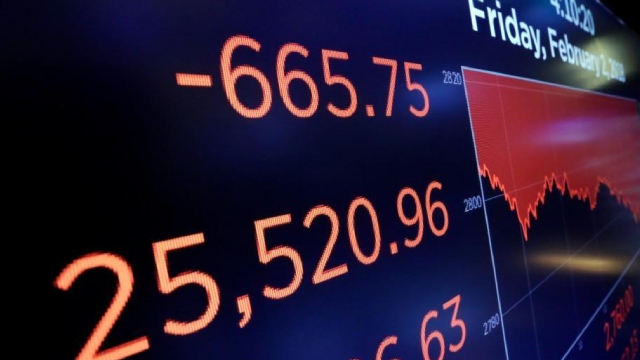
Core Viewpoint - The article highlights the significant performance of European and American bank stocks in 2025, with European banks showing a more pronounced recovery compared to their American counterparts, driven by multiple macroeconomic factors and a shift in monetary policy [3][4]. Group 1: European Bank Performance - The STOXX Europe 600 Banks index has risen approximately 65% in 2025, making it one of the best-performing industry indices in Europe [3]. - Analysts suggest that the rise in European bank stocks is more of a structural recovery rather than a typical cyclical rebound, as the sector had been undervalued for a long time [4]. - Major European banks have seen substantial stock price increases, with Deutsche Bank up about 97%, HSBC up approximately 48%, BNP Paribas up around 35%, and UBS up about 30% [4]. Group 2: American Bank Performance - The KBW Bank Index has increased about 31% in 2025, while the S&P 500 Banks Index has risen approximately 32% [3]. - Major U.S. banks like Citigroup have seen stock price increases of about 68%, Goldman Sachs up around 57%, and Morgan Stanley up approximately 43% [8]. - The resilience of U.S. banks is attributed to their diversified business structures, which help mitigate traditional credit cycle fluctuations [8]. Group 3: Future Outlook - For 2026, the focus is shifting from "valuation recovery" to "profit verification," with European banks needing to see a real recovery in credit demand and a reduction in geopolitical risks to maintain their momentum [10]. - In the U.S., the market will be closely watching the Federal Reserve's policy direction, with the potential for volatility in bank stocks depending on economic conditions and policy uncertainty [10]. - The bank stock market in 2026 is expected to be more selective, emphasizing the importance of profit quality, risk management, and structural differences across markets [10].

Improving Junk Bond Quality Could Boost This ETF
Etftrends· 2025-12-23 13:59
Group 1 - The core sentiment regarding junk bonds is becoming increasingly positive, suggesting a favorable economic climate for these assets heading into 2026 [2] - BNP Paribas anticipates a slowdown in GDP growth to a range of 1.5% to 2%, which is seen as supportive for high-yield bonds [3][7] - The Neuberger Berman Flexible Credit Income ETF (NBFC) has a significant allocation of 39.6% to non-investment grade bonds, indicating its focus on junk bonds while maintaining a diversified credit approach [4][5] Group 2 - The actively managed nature of NBFC allows for flexible adjustments in non-investment grade allocations based on market conditions, which can enhance credit quality [5] - High-yield corporate bonds do not necessarily require strong equity market performance to achieve good returns, making them potentially attractive in a modest growth environment [6][7] - There is a growing demand for higher quality junk bonds, particularly those with potential for upgrades, which aligns with NBFC's strategy of allocating over 30% to the highest non-investment ratings [8]
欧美银行股年内大涨!是迟到的修复,还是新周期开端?
Di Yi Cai Jing· 2025-12-23 13:17
Core Viewpoint - The future performance of European and American bank stocks will increasingly depend on the sustainability of earnings rather than further valuation expansion [4]. Group 1: European Bank Stocks - European bank stocks have shown significant recovery in 2025, with the STOXX Europe 600 Banks index rising approximately 65% year-to-date, making it one of the best-performing sectors in Europe [1]. - Analysts suggest that the rise in European bank stocks is more of a structural recovery rather than a typical cyclical rebound, as their valuation levels were significantly lower than their U.S. counterparts prior to this increase [2]. - The negative impact of the prolonged low-interest-rate environment on European banks' profitability has been a key factor suppressing their valuations [2]. - Major European banks have seen substantial stock price increases, with Deutsche Bank up about 97%, HSBC up approximately 48%, BNP Paribas up around 35%, and UBS up about 30% year-to-date [2]. Group 2: American Bank Stocks - American bank stocks have demonstrated more stable performance in 2025, with notable increases such as Citigroup up about 68%, Goldman Sachs up approximately 57%, and JPMorgan Chase up around 35% [5]. - The core strength of the U.S. banking system lies in its profitability and diversified business structure, which helps mitigate traditional credit cycle fluctuations [5]. - The valuation recovery for U.S. banks began earlier than for European banks, with the market already pricing in expectations of an economic soft landing and interest rate cuts [5]. Group 3: Future Outlook - For 2026, the consensus is shifting from "valuation recovery" to "earnings verification," with European banks needing to see a substantial recovery in credit demand and a reduction in geopolitical risks to maintain their strong performance [6]. - In the U.S., the focus will be on the Federal Reserve's policy path, with large banks expected to maintain capital returns if interest rate cuts are gradual and the economy achieves a soft landing [6]. - The bank stock market in 2026 is expected to be more selective, requiring investors to pay closer attention to earnings quality, risk management, and structural differences between markets [6].



上市银行年内增持达892.87亿元
Shen Zhen Shang Bao· 2025-12-23 01:34
Core Viewpoint - Recently, listed banks in China have experienced a surge in share buybacks, indicating strong confidence from management and major shareholders in the banking sector [1] Group 1: Share Buybacks - Nanjing Bank has conducted a significant buyback of over 128 million shares in a single transaction [1] - Zhejiang Commercial Bank's management team collectively increased their holdings, marking a notable trend in the sector [1] - Suzhou Bank also saw an increase in shares held by its major shareholder [1] Group 2: Investment Statistics - A total of 17 A-share listed banks have implemented share buybacks this year, with a cumulative investment amount reaching 89.287 billion yuan, the highest among all 31 industries [1] - Six banks have received over 1 billion yuan in cumulative buybacks, with Nanjing Bank leading all A-share companies in total buyback amount for the year [1] Group 3: Specific Bank Actions - On December 16, Zhejiang Commercial Bank announced a buyback by 13 executives and key personnel, totaling 6.7122 million shares, the largest single buyback in December [1] - Nanjing Bank's major shareholder, BNP Paribas, increased its stake through QFII, raising the combined holding ratio to 18.06%, surpassing the previous maximum level of 18.04% [1] - This marks the second consecutive month of share buybacks by BNP Paribas in Nanjing Bank [1]


上市银行年内增持 达892.87亿元
Shen Zhen Shang Bao· 2025-12-22 23:00
Core Viewpoint - Recent surge in share buybacks among listed banks in China, with significant increases in holdings by major shareholders and management teams [1] Group 1: Share Buybacks - A total of 17 A-share listed banks have implemented share buybacks this year, with a cumulative buyback amount reaching 89.287 billion yuan, the highest among all 31 industries [1] - Six banks have seen cumulative buyback amounts exceeding 1 billion yuan, with Nanjing Bank leading all A-share companies in buyback amounts for the year [1] Group 2: Specific Bank Activities - On December 16, Zheshang Bank announced a collective buyback by 13 executives and key personnel, totaling 6.7122 million shares, marking the largest single buyback in December [1] - Nanjing Bank's major shareholder, BNP Paribas, increased its holdings through QFII, raising the combined shareholding ratio to 18.06%, surpassing the previous maximum level of 18.04%, and marking a historical high for the bank [1]