
蔚蓝锂芯

Search documents
复牌“一字”涨停 澳洋健康将易主 高负债与业绩承诺引关注
Zhong Guo Zheng Quan Bao· 2025-09-16 15:12
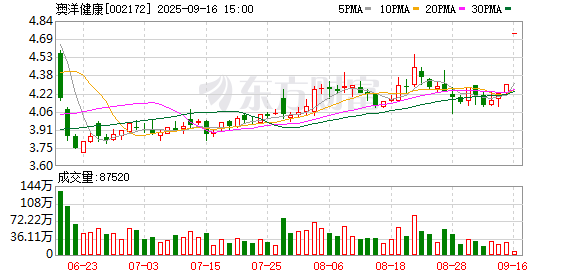
Core Viewpoint - The recent change in control of Aoyang Health has raised concerns regarding its financial stability, high debt levels, and the feasibility of future performance commitments following the transfer of ownership to a local state-owned platform [2][5][6]. Group 1: Control Change Details - Aoyang Health's stock was suspended on September 9 due to the planned change in control, with trading resuming on September 16 after a "limit-up" increase [2][3]. - The control change involved Aoyang Group transferring 153 million shares (20% of total shares) to Zhangjiagang Yuesheng Technology at a price of 3.87 yuan per share, totaling 593 million yuan, which represents a 10% discount from the last trading price before suspension [3][4]. - Following the transfer, Aoyang Group's shareholding will decrease from 30.74% to 10.74%, and the voting rights will drop to 5.74%, while Yuesheng Technology will become the new controlling shareholder with 20% ownership [4]. Group 2: Financial Performance and Challenges - Aoyang Health reported a 12.49% year-on-year decline in revenue for the first half of 2025, totaling 903 million yuan, and a 15.46% drop in net profit, amounting to 31.56 million yuan [6]. - The company is facing significant financial pressure, with a net cash flow from operating activities of -55.13 million yuan, indicating a tight cash flow situation [6]. - As of mid-2025, Aoyang Health's total assets were 1.968 billion yuan, with total liabilities reaching 1.822 billion yuan, resulting in a high debt ratio of 92.58%, which is well above the industry average [6]. - The performance commitment agreement stipulates that Aoyang Health must achieve a net profit of no less than 30 million yuan annually and maintain a net asset of at least 200 million yuan by the end of 2025, which appears challenging given the current financial situation [6]. Group 3: Historical Context - The change in control signifies the exit of Shen Xue Ru, the founder of the "Aoyang System," from the A-share capital platform he established, which has seen multiple ownership changes in recent years [7]. - Shen Xue Ru founded Aoyang Group in 1998, initially focusing on textile manufacturing and later diversifying into various sectors, including healthcare and real estate [7].


复牌“一字”涨停,澳洋健康将易主,高负债与业绩承诺引关注
Zhong Guo Zheng Quan Bao· 2025-09-16 15:11
Core Viewpoint - The recent change in control of Aoyang Health has led to a significant stock price increase, raising concerns about the company's high debt levels and the feasibility of future performance commitments [1][4]. Group 1: Control Change Details - Aoyang Health's stock was suspended on September 9 due to a planned change in control, with trading resuming on September 16 after a "limit-up" increase [1][2]. - The control change involves Aoyang Group transferring 20% of its shares to Zhangjiagang Yuesheng Technology at a price of 3.87 yuan per share, representing a 10% discount from the last trading price before suspension [2][3]. - Following the transfer, Aoyang Group's shareholding will decrease from 30.74% to 10.74%, and the voting rights will be significantly reduced, with Yuesheng Technology becoming the new controlling shareholder [3]. Group 2: Financial Performance and Challenges - Aoyang Health reported a 12.49% decline in revenue to 903 million yuan and a 15.46% drop in net profit to 31.56 million yuan in the first half of 2025, continuing a downward trend from 2024 [4][5]. - The company has a total debt of 1.82 billion yuan against total assets of 1.968 billion yuan, resulting in a high debt-to-asset ratio of 92.58%, which is significantly above the industry average [4]. - Performance commitments have been established, requiring Aoyang Health to achieve a minimum net profit of 30 million yuan annually and maintain a net asset value of at least 200 million yuan by the end of 2025, amidst current financial difficulties [4][5].
澳洋健康一字板涨停 71岁沈学如再卖一家上市公司控制权
Mei Ri Jing Ji Xin Wen· 2025-09-16 09:36
Core Viewpoint - The transfer of control in Aoyang Health is significant as it marks the second time the founder, Shen Xueru, has relinquished control of a publicly listed company, indicating a strategic shift in ownership and management [1][2]. Group 1: Share Transfer Details - Aoyang Group plans to transfer 20% of its shares (153 million shares) in Aoyang Health at a price of 3.87 yuan per share, totaling approximately 600 million yuan [1]. - After the transfer, Aoyang Group's shareholding will decrease from 30.74% to 10.74%, while Yuesheng Technology will hold 20% of the shares [2]. Group 2: New Ownership Structure - The new controlling shareholder will be Yuesheng Technology, and the actual controller will change to the Zhangjiagang Economic and Technological Development Zone Management Committee [2]. - Post-transaction, Aoyang Group, Shen Xueru, and Shen Qing will collectively hold 12.99% of the total shares but will only have 7.99% of the voting rights [2]. Group 3: Business Performance and Commitments - Aoyang Health's main business includes medical services, pharmaceutical logistics, and biotechnology, with a focus on developing a network of hospitals [3]. - An earnings commitment agreement has been established, ensuring that from 2025 to 2027, the audited net profit will not be less than 30 million yuan annually [3]. - Aoyang Group and Shen Xueru have committed to maintaining a net asset of at least 200 million yuan by the end of 2025 and a net cash flow from operating activities of no less than 60 million yuan for the same year [3]. Group 4: Financial Performance - In the first half of 2025, Aoyang Health reported a revenue of approximately 903 million yuan, a year-on-year decrease of 12.49%, and a net profit of about 31.56 million yuan, down 15.46% [4]. - As of the end of the first half, Aoyang Health's total assets were 1.968 billion yuan, with a net asset of 166 million yuan, but the cash flow from operating activities was negative [4].
蔚蓝锂芯跌2.02%,成交额4.76亿元,主力资金净流出9245.45万元
Xin Lang Cai Jing· 2025-09-16 02:41
Company Overview - Jiangsu Weilan Lithium Chip Co., Ltd. is located at 456 Jintang West Road, Zhangjiagang City, Jiangsu Province, established on September 30, 2002, and listed on June 5, 2008. The company's main business includes metal logistics, LED, and lithium battery sectors [1]. - The revenue composition of the company is as follows: lithium battery products account for 42.81%, metal logistics products for 31.93%, LED products for 23.08%, and others for 2.18% [1]. Financial Performance - For the first half of 2025, Weilan Lithium Chip achieved operating revenue of 3.727 billion yuan, representing a year-on-year growth of 21.59%. The net profit attributable to the parent company was 333 million yuan, showing a significant year-on-year increase of 99.09% [2]. - Since its A-share listing, the company has distributed a total of 473 million yuan in dividends, with 132 million yuan distributed in the last three years [3]. Stock Performance - As of September 16, the stock price of Weilan Lithium Chip decreased by 2.02%, trading at 17.44 yuan per share, with a total market capitalization of 20.119 billion yuan. The stock has increased by 64.14% year-to-date, but has seen a decline of 3.06% over the last five trading days and 5.88% over the last 20 days [1]. - The company has appeared on the "Dragon and Tiger List" four times this year, with the most recent appearance on January 10, where it recorded a net purchase of 636.599 million yuan [1]. Shareholder Information - As of June 30, 2025, the number of shareholders for Weilan Lithium Chip was 170,300, a decrease of 10.96% from the previous period. The average number of circulating shares per shareholder increased by 12.07% to 6,369 shares [2]. - The top circulating shareholders include Hong Kong Central Clearing Limited, holding 17.7637 million shares (an increase of 2.2697 million shares), and Southern CSI 1000 ETF, holding 10.6312 million shares (an increase of 2.0150 million shares) [3].

宁德时代钠新电池通过新国标认证 A股盈利居前钠离子电池概念股一览
Xin Lang Cai Jing· 2025-09-15 23:56
Group 1 - The core point of the article is that CATL has successfully certified its sodium-ion battery under new national standards, making it the first in the world to achieve this certification [1] - The sodium-ion battery is currently being developed and implemented for passenger vehicles, with progress reported as smooth [1] - The certification allows the sodium-ion battery to enter both domestic and international markets for energy storage and low-speed electric vehicles, addressing previous limitations due to the lack of national standards [1] Group 2 - There are 17 stocks in the A-share market related to sodium-ion battery concepts, primarily consisting of small and mid-cap stocks [1] - Among these, CATL has a total market capitalization of 1.63 trillion yuan, while only three other companies exceed 50 billion yuan in market capitalization: Guoxuan High-Tech, Great Wall Motors, and Xinwangda [1] - In the first half of the year, nine sodium-ion battery concept stocks reported profits exceeding 100 million yuan, with CATL leading at 30.485 billion yuan, followed by Shenhuo Co., Xinwangda, and Huayang Co. [1]

中信建投以ESG理念助推可持续发展
Zheng Quan Ri Bao Wang· 2025-09-13 04:36
Core Viewpoint - The company has significantly improved its ESG rating to A and has been recognized in various sustainability reports, showcasing its commitment to green and low-carbon transformation while achieving substantial financial growth in recent years [1][2]. Group 1: Financial Performance - In the first half of 2025, the company's revenue reached 10.74 billion yuan, a year-on-year increase of 19.93% [1]. - The net profit attributable to shareholders was 4.509 billion yuan, reflecting a year-on-year growth of 57.77% [1]. Group 2: Governance and Compliance - The company has continuously improved its corporate governance and compliance management, adhering strictly to laws and regulations in both domestic and international markets [2]. - The integration of party leadership with corporate governance has been emphasized to drive high-quality development [2]. Group 3: Green Financing Initiatives - The company has established a sustainable financial framework aimed at supporting the real economy and promoting green development [3]. - From 2021 to 2024, the company completed over 40 green financing projects, raising more than 90 billion yuan, and underwrote 352 green bonds with a total issuance scale of nearly 190 billion yuan [3]. Group 4: Carbon Finance and Market Participation - The company has actively participated in carbon market transactions and infrastructure development, achieving significant milestones in carbon trading [5]. - In 2022, the company completed its first EU carbon emissions quota transaction and participated in the inaugural trading day of the Hong Kong carbon market [5]. Group 5: Social Responsibility and Community Support - The company has committed over 88 million yuan to public welfare and support initiatives from 2021 to 2024, with more than 50 million yuan allocated for consumption assistance [6]. - Various forms of assistance, including financial and educational support, have been provided to poverty-stricken areas, enhancing local infrastructure and business capabilities [7].

孚能科技上市5年累亏45亿 实控人变更后营收下滑存货上升
Xin Lang Cai Jing· 2025-09-12 06:28
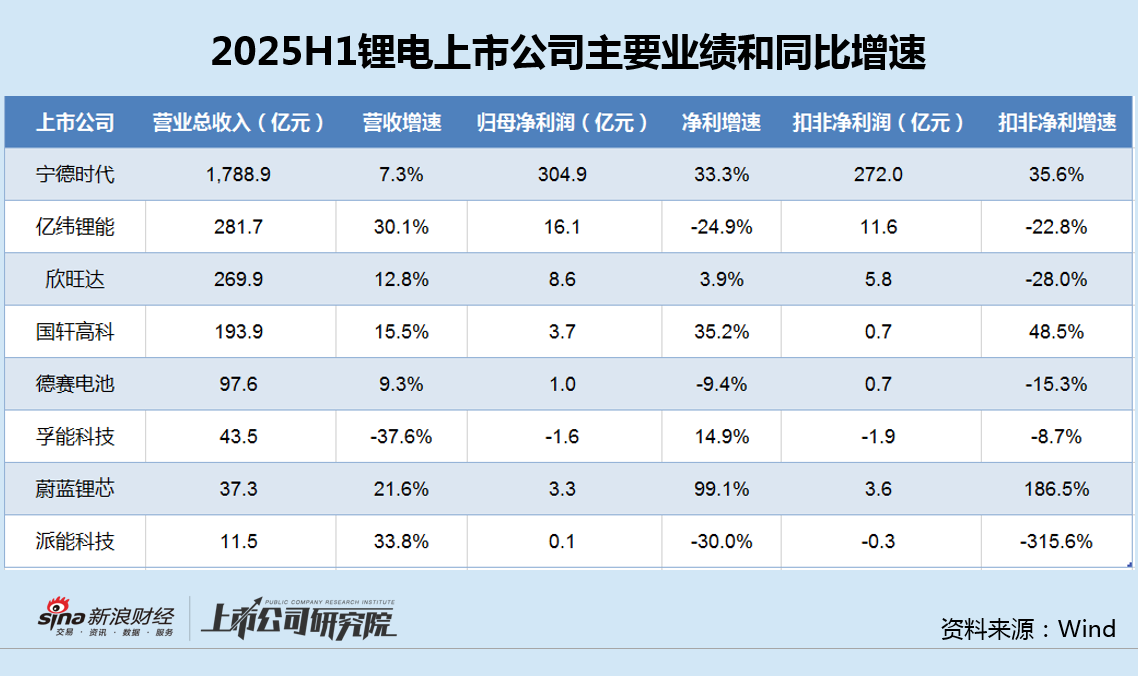
Core Viewpoint - The performance of lithium battery companies listed on the A-share market shows a significant divergence in net profits, with most companies experiencing revenue growth while net profits reveal a stark contrast, particularly for Funeng Technology, which continues to face operational challenges [1][4]. Group 1: Company Performance - Funeng Technology reported a revenue of 4.35 billion yuan in the first half of the year, a year-on-year decline of 37.6%, making it the only major lithium battery company to experience a revenue drop [1][3]. - The company's net profit attributable to shareholders was -160 million yuan, although this loss was reduced by 14.92% compared to the previous year, marking the fifth consecutive year of losses [1][4]. - In contrast, other companies like CATL and EVE Energy showed positive revenue growth, with CATL achieving 178.89 billion yuan in revenue, a 7.3% increase, and a net profit of 30.49 billion yuan, up 33.3% [3]. Group 2: Inventory and Production Issues - Funeng Technology's inventory increased to 3.565 billion yuan, a 58% year-on-year rise, with inventory turnover days extending to 149.27 days, up 71% [4][7]. - Despite the inventory buildup, the company is expanding production capacity, with a projected output of 20 GWh for 2023 and a capacity of 55 GWh by the end of the year [7]. - The company acknowledged that its new production capacity is still in the ramp-up phase, indicating potential underutilization of capacity [7]. Group 3: Ownership and Strategic Changes - In January 2023, Funeng Technology underwent a significant change in control, with the major shareholder shifting to Guangzhou Industrial Investment Holding Group, which is now the actual controller [7][8]. - Following this change, the company received support in terms of funding, financial coordination, and research collaboration, but faces challenges in balancing technological investment with profitability [8]. - The new shareholders have plans to reduce their stakes, indicating a potential shift in strategic focus as the company navigates its financial and operational hurdles [8].

锂电中报|欣旺达核心业务利润下滑 回款情况继续恶化欲赴港再融资
Xin Lang Zheng Quan· 2025-09-12 05:40
Core Viewpoint - The lithium battery companies listed in A-shares have shown revenue growth in the first half of the year, but there is a significant divergence in net profit performance among them [1]. Group 1: Financial Performance - A majority of companies reported revenue growth, with CATL achieving revenue of 1,788.9 billion yuan, a year-on-year increase of 7.3%, and a net profit of 304.9 billion yuan, up 33.3% [3]. - In contrast, companies like EVE Energy and Xinwangda experienced declines in net profit, with EVE's net profit down 24.9% and Xinwangda's down 28.0% [3][4]. - Xinwangda's revenue reached 269.9 billion yuan, a 12.8% increase, but its net profit was only 8.6 billion yuan, reflecting a modest growth of 3.9% [3]. Group 2: Profitability Challenges - Xinwangda's non-recurring net profit fell by 28.0% year-on-year, indicating a significant decline in core business profitability [4]. - The company's gross margin decreased to 15.79%, down 4.77 percentage points, and its net margin dropped to 0.91%, a substantial decline of 46.81% [4]. - The decline in profitability is attributed to the drop in revenue from energy storage batteries, which generated 76 billion yuan with a gross margin of only 9.8% [4]. Group 3: Cash Flow and Debt Situation - Xinwangda's operating cash flow decreased by 39.8% to 10.4 billion yuan, with a negative cash flow of 4.9 billion yuan in the second quarter [4]. - The company's accounts receivable reached 164 billion yuan, a 20.6% increase, with a collection period of 107 days, indicating significant cash flow pressure [5][8]. - The asset-liability ratio rose to 65.46%, up 5.18 percentage points, with interest-bearing debt increasing by 26.25% to 258.1 billion yuan [8]. Group 4: Strategic Moves and Market Position - Xinwangda has submitted an application for an IPO on the Hong Kong Stock Exchange, aiming to become the third lithium battery company to achieve dual listing [8]. - The company faced challenges with its previous plans to spin off its power battery segment due to significant losses exceeding 50 billion yuan [8]. - The overall capacity utilization rate for Xinwangda has declined, with consumer battery utilization dropping from 94.2% in 2022 to 84.3% in the first quarter of 2025 [8].

锂电中报|派能科技核心业务利润转亏:毛利率与研发投入持续背离 主要股东大比例质押后连续减持
Xin Lang Zheng Quan· 2025-09-12 05:36
Core Viewpoint - The lithium battery companies listed in A-shares have shown revenue growth in the first half of the year, but net profits exhibit a significant divergence, with some companies facing substantial profitability pressures [1][3]. Group 1: Company Performance - Pioneering Technology achieved a revenue of 1.15 billion yuan, a year-on-year increase of 33.8%, but its net profit dropped to 10 million yuan, a decline of 30.0% [1][3]. - The sales gross margin for Pioneering Technology was 18.44%, down from 37.28% in the same period last year, and the net profit margin was only 0.88%, continuing to decline [3][4]. - The company’s R&D expenses were 159 million yuan, a decrease of 17.25%, raising questions about the effectiveness of its R&D investments as gross margins have been declining [4]. Group 2: Financial Health - As of June 2025, Pioneering Technology's accounts receivable stood at 951 million yuan, with a concerning ratio of accounts receivable to profit at 2164.36%, indicating potential bad debt risks [7]. - The company's inventory reached 1.094 billion yuan, a 51.94% increase compared to the beginning of the period, significantly outpacing the revenue growth of 33.75% [7]. - Operating cash flow for the first half was 298 million yuan, a decline of 35.87%, with a continuous downward trend observed in recent periods [7]. Group 3: Shareholder Actions - The second-largest shareholder, Paili (Ningbo) Venture Capital Partnership, has pledged 90.34% of its shares and has repeatedly reduced its holdings, raising concerns about the company's future amid increasing competition and declining product prices [7]. - In early August, Paili Venture Capital announced plans to further reduce its stake in Pioneering Technology, potentially cashing out approximately 106 million yuan based on the stock price at that time [7].
调研速递|天津国安盟固利接受公司投资者等调研 透露多项业务进展要点
Xin Lang Cai Jing· 2025-09-11 13:56
Core Viewpoint - The company is focusing on the development and commercialization of advanced battery materials, particularly in the context of the growing electric vehicle market and the transition to solid-state batteries. Research and Technology Development - In the first half of 2025, the company achieved a breakthrough in sales with over a thousand tons of patented technology applied in humanoid robot batteries, contributing to revenue and profit growth [2] - The company is pursuing multiple technological routes in the cathode materials sector, emphasizing high nickel and single crystal materials while also exploring medium nickel high voltage and polycrystalline materials [2] Competitive Strategy and Solid-State Battery Progress - The company is implementing a high-end and differentiated competition strategy for its ternary cathode materials, positioning itself in the leading tier of the small power sector [3] - Solid-state electrolyte products have completed technical standardization and passed pilot testing with leading solid-state battery companies, indicating potential applications across various fields [3] Product Matrix and Sodium Battery Development - In response to the changing market dynamics post the 50% penetration rate of electric vehicles, the company is advancing its cathode material R&D to create a diverse product matrix [4] - The sodium battery cathode materials are being developed using both layered oxide and polyanion dual technology routes, with the first generation showing significant performance advantages [4] Capacity Utilization and Client Relationships - The capacity utilization rates for ternary materials and lithium cobalt oxide were reported at 72.25% and 93.82% respectively, with no structural capacity bottlenecks identified [5] - The company is actively expanding production to address potential capacity shortages for next-generation materials, maintaining stable client concentration among its top five customers [5] Cost Control and Business Model Innovation - The company has established a raw material price monitoring mechanism and optimized procurement strategies to mitigate price volatility risks [6] - Strategic partnerships with upstream and downstream players are being pursued to enhance collaboration through capital cooperation [6] R&D Investment and Future Plans - R&D expenses in the first half of 2025 reached 47.57 million yuan, reflecting a year-on-year increase of 45.57%, with key technological breakthroughs achieved across multiple fields [7] - The company will continue to focus on the core business of new energy battery materials, promoting the iteration and industrialization of cathode materials, solid-state electrolytes, and lithium supplementation agents [7]