
诺诚健华

Search documents
医药股今早显著反弹 凯莱英及药明生物均涨超6%
Xin Lang Cai Jing· 2025-12-19 03:06
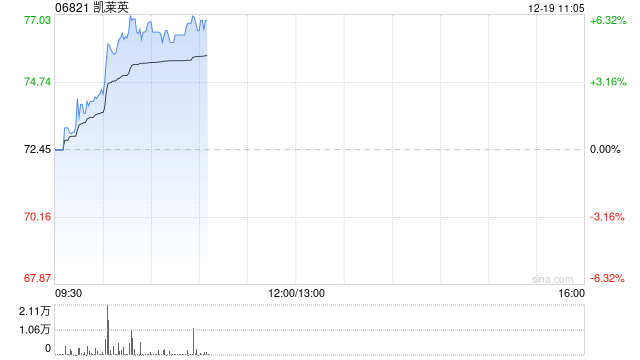
Group 1 - Pharmaceutical stocks showed a significant rebound today, particularly in the CRO and innovative drug sectors [1][3] - Companies such as Kelaiying (06821) saw an increase of 6.07%, trading at 76.85 HKD [1][3] - WuXi Biologics (02269) rose by 6.05%, reaching 34.70 HKD [1][3] - Sangfor Pharmaceuticals (01530) increased by 4.65%, priced at 26.58 HKD [1][3] - Innovent Biologics (09969) experienced a rise of 4.70%, trading at 13.80 HKD [1][3]

港股异动 | 医药股显著反弹 药明生物(02269)涨超6% 三生制药(01530)涨超5%
智通财经网· 2025-12-19 03:02
兴业证券认为,近期创新药板块情绪回落,随着BD持续落地,该行认为当前板块景气度可持续,"创新 +国际化"创新药产业趋势不变,短期调整后创新药板块弹性进一步提升。同时,可继续重点关注基本 面已开始改善的创新药产业链,当前在投融资数据、订单和业绩层面均看到向好趋势。 消息面上,据券商中国日前报道,北京时间12月18日凌晨,参议院官网显示,搭载修订版《生物安全法 案》的美国2026财年国防授权法案(2026NDAA)获通过。新版本生物安全法未具体点名任何一家公 司。有券商研究机构认为,2025年法案进展阶段性落地,行业回归中长期增量逻辑。 智通财经APP获悉,医药股今早明显反弹,CRO、创新药方向居前。截至发稿,凯莱英(06821)涨 6.28%,报77港元;药明生物(02269)涨6.11%,报34.72港元;三生制药(01530)涨5.04%,报26.68港元; 诺诚健华(09969)涨4.25%,报13.74港元。 ...
诺诚健华跌2.09%,成交额9401.38万元,主力资金净流出1040.39万元
Xin Lang Cai Jing· 2025-12-18 06:00
Core Viewpoint - Nocera Biopharma's stock has experienced a significant decline recently, despite a strong year-to-date performance, indicating potential volatility in the market [1][2]. Group 1: Company Overview - Nocera Biopharma, established on November 3, 2015, and listed on September 21, 2022, is primarily engaged in the research, production, and commercialization of biopharmaceuticals, focusing on unmet clinical needs in oncology and autoimmune diseases [2]. - The company's revenue composition includes 87.67% from drug sales, 12.04% from technology licensing, and 0.15% each from testing and research services [2]. - Nocera Biopharma operates mainly in China and the United States, with a product pipeline that includes ICP-022, ICP-B04, ICP-490, ICP-192, and ICP-723 [2]. Group 2: Financial Performance - For the period from January to September 2025, Nocera Biopharma reported a revenue of 1.115 billion yuan, reflecting a year-on-year growth of 59.85%, while the net profit attributable to shareholders was -64.41 million yuan, an increase of 76.61% year-on-year [2]. - The company's stock price has increased by 78.99% year-to-date, but it has seen declines of 7.76% over the last five trading days, 9.06% over the last 20 days, and 18.29% over the last 60 days [1]. Group 3: Shareholder Information - As of September 30, 2025, Nocera Biopharma had 16,500 shareholders, an increase of 8.66% from the previous period [2]. - The top ten circulating shareholders include various funds, with notable changes such as a decrease in holdings by 富国精准医疗灵活配置混合A and new entries like 万家优选 and 平安医疗健康混合A [3].

InnoCare Announces Approval of Phase II/III Clinical Trial of Novel TYK2 Inhibitor Soficitinib for Chronic Spontaneous Urticaria in China
Globenewswire· 2025-12-18 01:48
Core Viewpoint - InnoCare Pharma has received approval for a Phase II/III clinical trial of its novel TYK2 inhibitor, soficitinib, aimed at treating chronic spontaneous urticaria (CSU), addressing significant unmet medical needs in the dermatology market [1][6]. Group 1: Drug Development - Soficitinib is a selective TYK2 inhibitor being developed for various T-cell related autoimmune disorders, including CSU, atopic dermatitis, and vitiligo [2]. - The drug works by blocking signaling pathways such as IL-4, IL-13, and IL-31, which are involved in mast cell activation and inflammation, thereby reducing symptoms like itch and wheals in CSU patients [3]. Group 2: Market Potential - Chronic spontaneous urticaria affects approximately 50 million patients globally, with the CSU treatment market projected to reach $3 billion by 2029 [5]. - The disease typically lasts two to five years, with some cases extending beyond five years, indicating a substantial need for long-term treatment options [4]. Group 3: Company Overview - InnoCare Pharma is focused on developing first-in-class and best-in-class drugs for cancer and autoimmune diseases, with a robust pipeline targeting ten major autoimmune diseases [6]. - The company operates in multiple locations, including Beijing, Nanjing, Shanghai, Guangzhou, Hong Kong, and the United States, emphasizing its commitment to addressing unmet medical needs both in China and globally [6].

【价值发现】239.59%最佳任期回报!鹏华基金经理金笑非如何用“三维决策框架”打造投资闭环?
Sou Hu Cai Jing· 2025-12-17 02:54
Core Insights - The A-share market has shown a fluctuating upward trend since 2025, with the pharmaceutical and biotechnology sector performing exceptionally well, dominating the top ten stock fund rankings in the first half of the year [2] - Jin Xiaofei, a representative mid-generation fund manager at Penghua Fund, has achieved remarkable performance with his managed funds, utilizing a unique "dual-line resonance" framework to navigate crowded sectors [2][3] Investment Performance - Jin Xiaofei has been with Penghua Fund since July 2012, accumulating a tenure of 9 years and 174 days, managing assets totaling 5.375 billion yuan, with a best-term return of 239.59% [3] - The Penghua Medical Technology Stock A fund, under Jin's management, has shown significant excess returns, with a total return of 74.19% since its inception on June 2, 2015, and a return of 73.03% this year [5] - The Penghua Innovation Upgrade Mixed A fund has also performed well, with a year-to-date return of 88.72% and a one-year return of 74.60% [15] Investment Strategy - Jin's investment strategy is centered on "fundamental trend investing," integrating a dual-dimensional analysis framework that focuses on both visible driving factors and market sentiment [3][4] - The "bright line" strategy emphasizes significant industry changes, while the "dark line" strategy identifies undervalued opportunities through reverse analysis of market emotions and capital flows [4] - Jin's approach includes a three-dimensional decision-making framework that considers long-term, mid-term, and short-term performance metrics to ensure robust investment logic [14][16] Stock Holdings and Performance - The fund has made strategic purchases in various stocks, including: - 1,126,260 shares of Nuocheng Jianhua, which saw a price increase of 213% during the holding period [7] - 217,760 shares of Dizhe Pharmaceutical, with a price increase of 90.49% [9] - 119,040 shares of Baijishenzhou, which appreciated by 257% [11] - 211,230 shares of Rongchang Bio, with a price increase of 121% [13] - The fund's holdings in stocks like Hailan Pharmaceutical and Zexing Pharmaceutical also demonstrated significant price increases during their respective holding periods [18][20] Market Outlook - Jin Xiaofei anticipates a new investment cycle in the pharmaceutical sector, with institutional holdings recovering from historical lows, and emphasizes the importance of beta opportunities in the current market [5][16] - The need for continuous optimization of risk control systems is highlighted, as the industry faces increasing competition and innovation [25]


High-value oncology deals drive China’s drug licensing boom
Yahoo Finance· 2025-12-16 10:30
Core Insights - The global interest in China's biopharma sector is driven by the lower costs of early clinical programs compared to the US and Europe, with expectations for increased dealmaking between China and the West as 2026 approaches [1][2] Group 1: Deal Trends and Values - There has been a significant rise in high-value deals between the West and China, with 20 transactions exceeding $500 million in 2023 alone [2] - Major deals in 2025 include Novartis's $5.36 billion agreement with Argo Biopharmaceutical, AstraZeneca's $5.3 billion deal with CSPC Pharmaceutical, and Zenas Biopharma's $2 billion agreement with InnoCare Pharma [2] - Chinese innovator drug licensing deals accounted for 28% of the innovator deals signed by large pharma in 2024, totaling $41.5 billion in value [3] Group 2: R&D and Therapeutic Focus - Western companies are increasingly seeking partnerships with Chinese biotech firms to enhance their pipelines with cost-effective therapies, particularly in oncology, immunology, and cardiometabolic health [4] - The rapid growth of China's clinical trial ecosystem has positioned the country as a leader in global study initiations in 2024 [5] - China is shifting from a reputation for generic drug manufacturing to developing innovative therapies, capturing global pharmaceutical attention [6] Group 3: Oncology and Innovative Therapies - Oncology remains a focal point for licensing agreements, with significant deals from companies like AbbVie, Pfizer, and GSK [9] - Antibody-drug conjugates (ADCs) developed in China are particularly appealing to Western dealmakers due to their innovative potential [10] - Next-generation biologics, including ADCs, bispecifics, and cell and gene therapies, are driving interest from investors and large pharmaceutical companies [11] Group 4: Future Outlook and Strategic Shifts - Immunology is expected to remain a key area of focus in 2026, alongside a rise in cardiometabolic deals targeting the obesity market [13] - The BIOSECURE Act could impact interactions between Western and Chinese companies, but industry leaders express confidence in the resilience of innovation-driven strategies [14][16] - Some Chinese companies are exploring self-commercialization strategies, although most will likely continue to rely on licensing deals in the near term due to a lack of global market experience [18][19]
港股午评 恒生指数早盘跌1.91% 自驾概念股逆市走高
Jin Rong Jie· 2025-12-16 05:08
Market Overview - The Hang Seng Index fell by 1.91%, down 490 points, closing at 25,138 points, while the Hang Seng Tech Index dropped by 2.41%. The early trading volume in Hong Kong was HKD 107.2 billion [1]. Autonomous Driving Sector - The Ministry of Industry and Information Technology of China officially announced the first batch of L3 conditional autonomous driving vehicle licenses, marking a significant step in the practical application of intelligent connected vehicles. Stocks related to smart driving rose against the market trend, with Zhejiang Shibao (01057) increasing by 13.9% and Youjia Innovation (02431) rising by 9.88% [1]. Pharmaceutical Sector - The innovative drug sector declined again, with a temporary vacuum in pharmaceutical BD transactions over the past six months. Notable declines included Innovent Biologics (09969) falling over 3.62% and I-Mab (01801) down by 2.39% [1]. Gold Sector - Gold stocks experienced a widespread decline. The BOCM index is set for rebalancing, and JPMorgan indicated that gold and silver face significant technical selling pressure. Zijin Mining International (02259) dropped by 5.93%, while Zijin Mining (02899) fell by 4.5% [1]. Solar Energy Sector - The solar energy sector weakened again, with the Solar Association confirming the establishment of a storage platform, while prices for solar glass remain under pressure. New Special Energy (01799) decreased by 2%, and Xinyi Solar (00968) fell by 3.6% [1]. Optical Communication Sector - Oracle's performance for the second fiscal quarter of 2026 fell short of market expectations, leading to a continuation of declines in the optical communication sector. Cambridge Technology (06166) and Yangtze Optical Fibre and Cable (06869) both dropped by over 5% [1]. ZTE Corporation - ZTE Corporation (00763) fell by over 4%, with the company adjusting some AI capabilities in its Doubao mobile assistant and recently announcing a significant share buyback [2]. Bole Technology - Bole Technology-B (02592) saw a decline of 11% after submitting a new drug clinical trial application for its ophthalmic candidate CBT-199 in the U.S. [3]. Domestic Beverage Sector - Hushang Ayi (02589) rose by over 4%, capitalizing on the growing trend of domestic new tea beverage brands expanding into international markets, specifically entering Malaysia and the U.S. [4].
港股午评|恒生指数早盘跌1.91% 自驾概念股逆市走高
智通财经网· 2025-12-16 04:05
Group 1 - The Hang Seng Index fell by 1.91%, losing 490 points to close at 25,138 points, while the Hang Seng Tech Index dropped by 2.41% [1] - The Ministry of Industry and Information Technology of China announced the first batch of L3 conditional autonomous driving vehicle licenses, marking a significant step in the development of intelligent connected vehicles in China [1] - Smart driving concept stocks rose against the market trend, with Zhejiang Shibao increasing by 13.9% and Youjia Innovation rising by 9.88% [1] Group 2 - Innovative drug concept stocks declined, with notable drops in companies such as Innovent Biologics, which fell over 3.62%, and I-Mab, which decreased by 2.39% [1] - Gold stocks experienced a widespread decline, with Zijin Mining International dropping by 5.93% and Zijin Mining Group falling by 4.5% due to significant technical selling pressure [1] - Photovoltaic stocks weakened again, with New Special Energy down by 2% and Xinyi Solar decreasing by 3.6%, amid ongoing price pressures on photovoltaic glass [1] Group 3 - Oracle's second fiscal quarter results for 2026 fell short of market expectations, contributing to a continued decline in the optical communication sector, with Cambridge Technology and Yangtze Optical Fibre and Cable both dropping over 5% [1] - ZTE Corporation saw a decline of over 4%, with the company recently announcing a large share buyback amid adjustments to its AI capabilities [2] - Bole Technology fell by 11% following the submission of a new drug clinical trial application for its ophthalmic candidate CBT-199 in the U.S. [3] Group 4 - Hushang Ayi saw an increase of over 4% as the domestic new tea beverage brand expands into international markets, specifically Malaysia and the United States [4]
创新药概念再度走低 诺诚健华(09969.HK)跌超5%
Mei Ri Jing Ji Xin Wen· 2025-12-16 03:27
Group 1 - The innovative drug concept stocks have declined again, with notable drops in share prices for several companies [1] - Innovent Biologics (09969.HK) fell by 5.09%, trading at HKD 12.86 [1] - CSPC Pharmaceutical Group (01093.HK) decreased by 3.99%, with shares priced at HKD 7.21 [1] - Sinopharm Group (01801.HK) saw a decline of 3.36%, with its stock at HKD 79 [1]
诺诚健华20251215
2025-12-16 03:26
Summary of the Conference Call for 诺诚健华 Company and Industry Overview - The conference call focuses on 诺诚健华 (Nuo Cheng Jian Hua) and its drug 奥布替尼 (Obutinib) for the treatment of systemic lupus erythematosus (SLE), a chronic autoimmune disease affecting over 8 million patients globally, with more than 1 million in China [2][3]. Key Points and Arguments Clinical Trial Results - The IIb clinical trial results for 奥布替尼 show a significant SL4 response rate at week 48 of 57.1% in the 75 mg QD group compared to 34.4% in the placebo group (p<0.05), indicating substantial efficacy in treating SLE [2][5]. - In a subgroup of patients with more severe disease (baseline steroid dose ≥10 mg/day or baseline urine protein ≥1 g/24 hours), the 75 mg QD group demonstrated even greater efficacy, with differences of 30% and 36% compared to the placebo group [5][8]. - 奥布替尼 exhibited good safety and tolerability, with no new safety signals identified, aligning with the BTK inhibition mechanism and SLE disease biology [2][6]. Steroid Reduction - The treatment group showed a significant reduction in glucocorticoid use, with 71.1% of patients successfully reducing their steroid dose to below 7.5 mg/day compared to 43.6% in the placebo group, highlighting the potential to minimize long-term steroid-related side effects [2][6]. Future Clinical Trials - 诺诚健华 plans to initiate a Phase III clinical trial with 484 patients, focusing on the same efficacy endpoints as the IIb trial, expected to start patient enrollment in Q1 2026 [2][7]. - The trial design aligns with international standards, incorporating mandatory steroid reduction protocols to meet the higher requirements set by the CDE for SLE drug trials [4][9]. Market Potential and Commercialization - 奥布替尼 is the first BTK inhibitor to enter Phase III trials for SLE, presenting a significant market opportunity, especially given the limited availability of new small molecule drugs in the past 20 years [3][8]. - The company plans to establish its own commercialization team post-approval and has synergistic effects with other T2 inhibitors to support market promotion [4][10]. Regulatory Landscape - The CDE has tightened clinical requirements for SLE drugs, necessitating lower steroid doses and more rigorous trial designs. 诺诚健华's Phase III study aims to meet these stringent standards to ensure data consistency with global results [9][10]. International Collaboration - 诺诚健华 has partnered with Xenios to advance overseas market opportunities, focusing on SLE and multiple sclerosis (MS) projects, with expectations for the IIb results to inform future international development strategies [12][13]. Additional Important Information - 奥布替尼's mechanism of action shows high selectivity for BTK, with significant inhibition in preclinical models, supporting its development as an effective SLE treatment [3][8]. - The drug's oral formulation offers advantages in convenience and compliance, avoiding issues associated with large molecule biologics [8]. This summary encapsulates the critical insights from the conference call regarding 诺诚健华's developments in SLE treatment with 奥布替尼, highlighting its clinical efficacy, safety profile, market potential, and strategic plans for future trials and commercialization.